Executive Summary
Over the decades, the work that financial advisors do has changed considerably – from product sales to investment management to more 'holistic' financial advice and behavioral coaching. As the advisor's offerings have shifted, so too have their fee models: product sales have evolved towards an assets under management (AUM) model. Some of today's advisors, facing a plethora of fee options, have opted to leave the AUM model behind – marking the rise of fee-only financial advisors.
In this article, Sydney Squires, Senior Financial Planning Nerd, discusses the challenges – and opportunities – of various fee-only models, and what advisors who are looking to scale these models can do. "Fee-only" can comprise many different things: advisors who bundle AUM fees to include financial planning and investment management; flat-fee advisors who charge a combination of retainer, hourly, and project-based fees for their work; and advice-only advisors who do no investment management whatsoever. Flat-fee, subscription, hourly, and project-based models offer an alternative by more directly connecting what clients pay with the advice they receive. For that reason, flat-fee models can be particularly well-suited to clients with more investable assets, who may be more sensitive to AUM fees overall.
At the same time, the fundamental challenge is that relative to AUM-model advisors, flat-fee advisors often do a comparable amount of work – while generating substantially less revenue per client. Hourly pricing illustrates the gap particularly well: advisors charge an average of approximately $300 per hour, yet spend nearly 2 hours on unbillable activities for every billed hour. Meanwhile, an advisor who charges around 1% and spends roughly 21 hours annually servicing a $1 million AUM client effectively earns about $500 per hour. Accordingly, the viability of a flat-fee model depends less on whether advisors can charge flat fees, and more on whether those fees are priced appropriately. After all, a flat fee must not only cover client meetings and plan preparation, but also prospecting, marketing, compliance, administration, implementation support, and other unbillable work. Tracking time – even for a month – can reveal how much work actually goes into servicing each client (especially new clients).
These issues are part of why many fee-only advisors end up incorporating AUM into their pricing, as it can be a useful proxy for client complexity and help the advisor ensure that their revenue increases over time as their experience grows. If advisors want to avoid this and remain completely flat-fee, doing so may require adjusting fees to reflect client complexity – especially as the value of their expertise (and time!) grows and client needs shift.
Ultimately, flat-fee advice does not need to mean lower-fee advice, but advisory firms must be thoughtful about implementing mechanisms for revenue growth within their own practices. As a starting point, advisors can ensure that they set consistent business practices about how frequently price increases take effect, and how those adjustments are calculated. This is especially important in years when the advisor implements new service offerings, but also included in this value is their growing experience and domain expertise. In short, advisors who accurately understand the true cost and value of their work, price to reflect client complexity, periodically raise their fees, and protect against uncompensated scope creep can build a flat-fee practice that is both financially sustainable and aligned with delivering valuable advice to the clients they are best equipped to serve!

The Evolution Of Fee-Only Advice Beyond 'Pure' AUM Fees
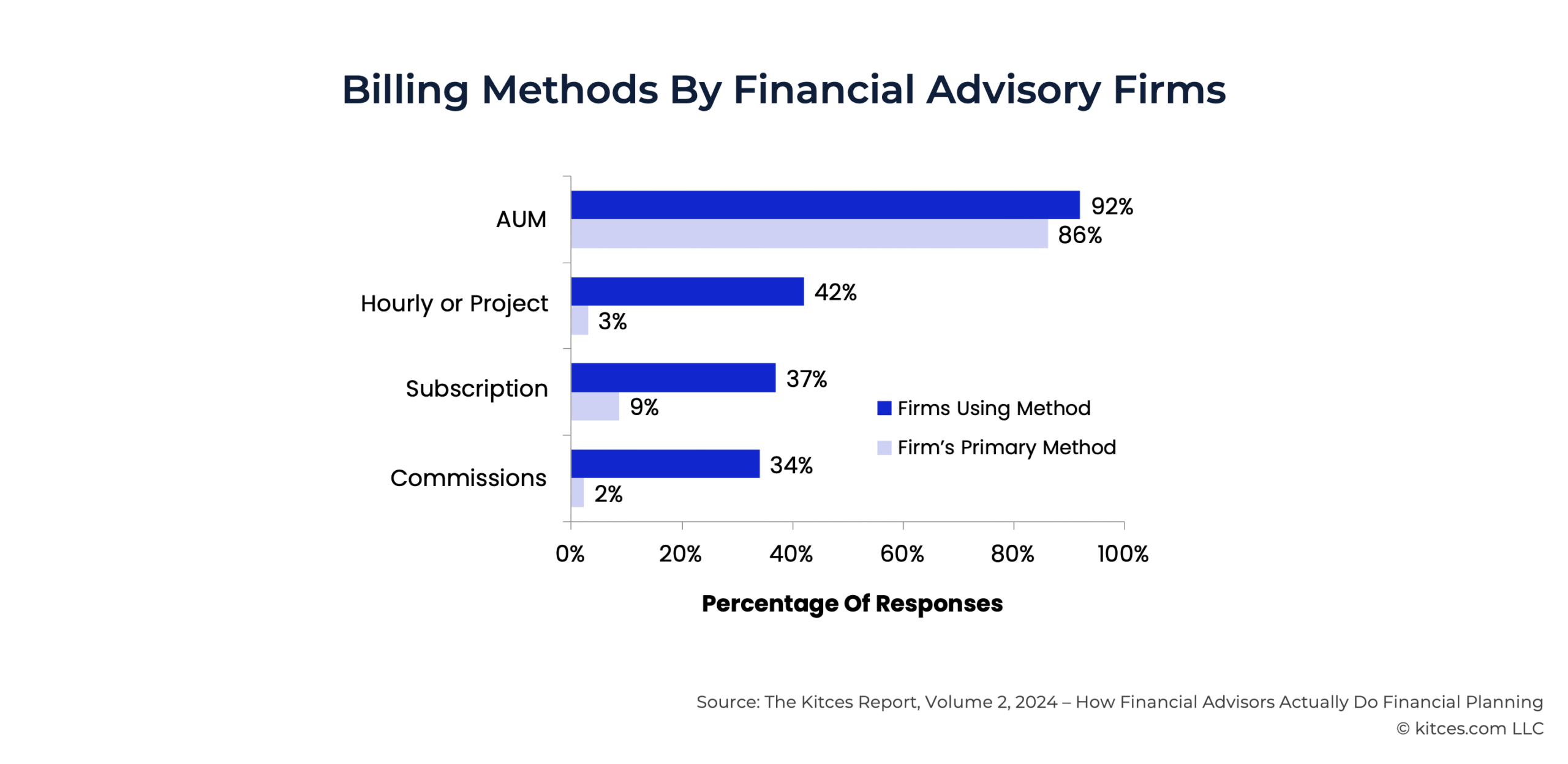
How advisors get paid – and what they get paid for – has evolved immensely over the decades. Historically, most people who held themselves out as 'financial advisors' were really in the business of selling financial products, with their compensation being based on sales commissions. Then, over time, the profession evolved away from a pure sales model towards one that was more advice-centric, albeit with the advisor usually still handling discretionary management of the client's investment portfolio – and so the typical compensation model came to be based on a percentage of the advisor's Assets Under Management (AUM). This is still the dominant compensation model for financial advisors, with the most recent (2024) Kitces Research on Advisor Productivity showing 92% of advisory firms billing based on AUM – and yet, over the years, the scope of many advisors' services has expanded far beyond investments alone, towards a spectrum that includes everything from cash flow planning to tax planning to behavioral finance coaching (and far beyond), such that portfolio management now makes up only a small fraction of the overall services that many financial advisors deliver to their clients. This growth in scope of services prompts the question: how do advisors price (and get paid for) all of that other work?
In practice, most advisors have simply carried on with the AUM fee model. According to 2024 Kitces Research on How Advisors Actually Do Financial Planning, 78% of fee-only advisors charge for their advice under an AUM model. Several variations on the AUM model exist: While some firms simply charge a flat percentage (e.g., 1%) for all assets, many firms tier their fees at certain asset levels so they end up charging a lower percentage for clients with higher assets than for those with fewer assets. Others specify a minimum annual fee so they can profitably serve clients with lower AUM. But the bottom line is that pure-AUM advisors who do planning in addition to asset management effectively 'bundle' their fees – in other words, while they charge based on AUM, they do not actually consider all of the AUM fee to go towards asset management. Rather, they consider some portion of the fee to be for asset management, and the rest to go towards 'everything else' that they do to service their clients.
 Share Your Perspective Now!
This article uses data from the 2024 Kitces Research Study on Advisor Productivity. Our research efforts are made possible by advisors like you participating in our surveys. We are currently surveying advisors for the 2026 edition of this report and would love for you to participate! Click this link to start the survey. Advisors fully completing the survey receive a custom personal scorecard comparing your practice with aggregated data from your advisor peers (expected in early 2027), an advance copy of the report (expected in early 2027), and an instantly granted three-month complimentary membership to Kitces.com (non-members only).
While bundling fees certainly has its advantages, it can ultimately present an operational challenge for advisors as the firm grows – namely, scope creep. It can be tempting for an advisor to continually add services without ensuring the commensurate compensation. Consider, for example, an advisor who seeks to deliver more value to clients by adding more education planning services, which will take 3 hours for each of the 50 client households that are in a relevant stage of life for education planning. This is an additional 150 hours of the advisor's time over a year. Multiply this effect by two or three new or expanded offerings, and unless the advisor is consistently moving upmarket and bringing in more revenue, the advisor may find themselves doing an immense amount of extra work without an equivalent increase in compensation.
And so a small but steadily growing cohort of advisory firms have explored 'unbundling' their fees from the pure-AUM model. At minimum, some advisors have begun charging a one-time, upfront planning fee to account for the extra work that it takes to produce an initial financial plan for a new client (often including one or several client meetings plus hours of back-office labor for data gathering, data entry, and analysis of the initial plan). But other advisors take the unbundling concept further: For instance, 27% of advisors charge separate fees for various parts of client work, meaning that they may have one fee schedule for asset management, another fee schedule for financial planning, and/or separate fees for additional hourly work. Notably, regardless of whether advisors bundle or unbundle their fees, they usually ended up charging about the same amount in practice.
Additionally, 10% of advisors are flat-fee. Most commonly, these advisors charge retainer/subscription fees based on an annual flat fee (that does not fluctuate along with asset values), although advisors in this category may still manage investments on their clients' behalf. This category also includes project-based and hourly advisors. Also within this group are advice-only advisors (5.4% of total respondents), who, as the name suggests, may give advice about financial planning, but do not engage in discretionary investment management (or other tasks) – rather, they give clients instructions on what they ought to do, and charge for this advice with hourly, retainer, or project-based fees. Put another way, all advice-only advisors are fee-only, but not all fee-only advisors are advice-only.
This is just the tip of the iceberg for the many ways that advisors can charge for their advice beyond AUM fees, ranging from recurring subscription fees (either flat or based on complexity or other client characteristics) to hourly and project-based fees. The truly customizable nature of advisory fee models is encouraging, since having more options to pay for financial advice can make that advice available to a wider range of clients from different circumstances. For instance, while it can take decades of high earnings and/or savings rates to accumulate enough assets to meet an AUM firm's minimum, it might take only one or two years of (admittedly high) earnings to be able to afford the equivalent retainer fee – even though the dollar amount of the fee might be the same in either case.
But from an advisor perspective, the many different fee options make for a more complicated decision about which one(s) to choose. There are tradeoffs between fee models both in terms of clients' perceptions of and willingness to pay, as well as scalability over time. Advisors who carefully choose one (or more) fee models according to what best fits their service offering are most likely to achieve sustainable, long-term success for both their firms and their clients.
Why Flat-Fee Planning Models Often Fail To Keep Up With AUM
Flat-fee financial advice purports to avoid many (not all) of the conflicts of interest that organically arise with AUM-based fees. For this type of advisor, their flat fees are typically exempt from market volatility, meaning that their advisory business is shielded from market declines… but their earnings also do not benefit from market growth.
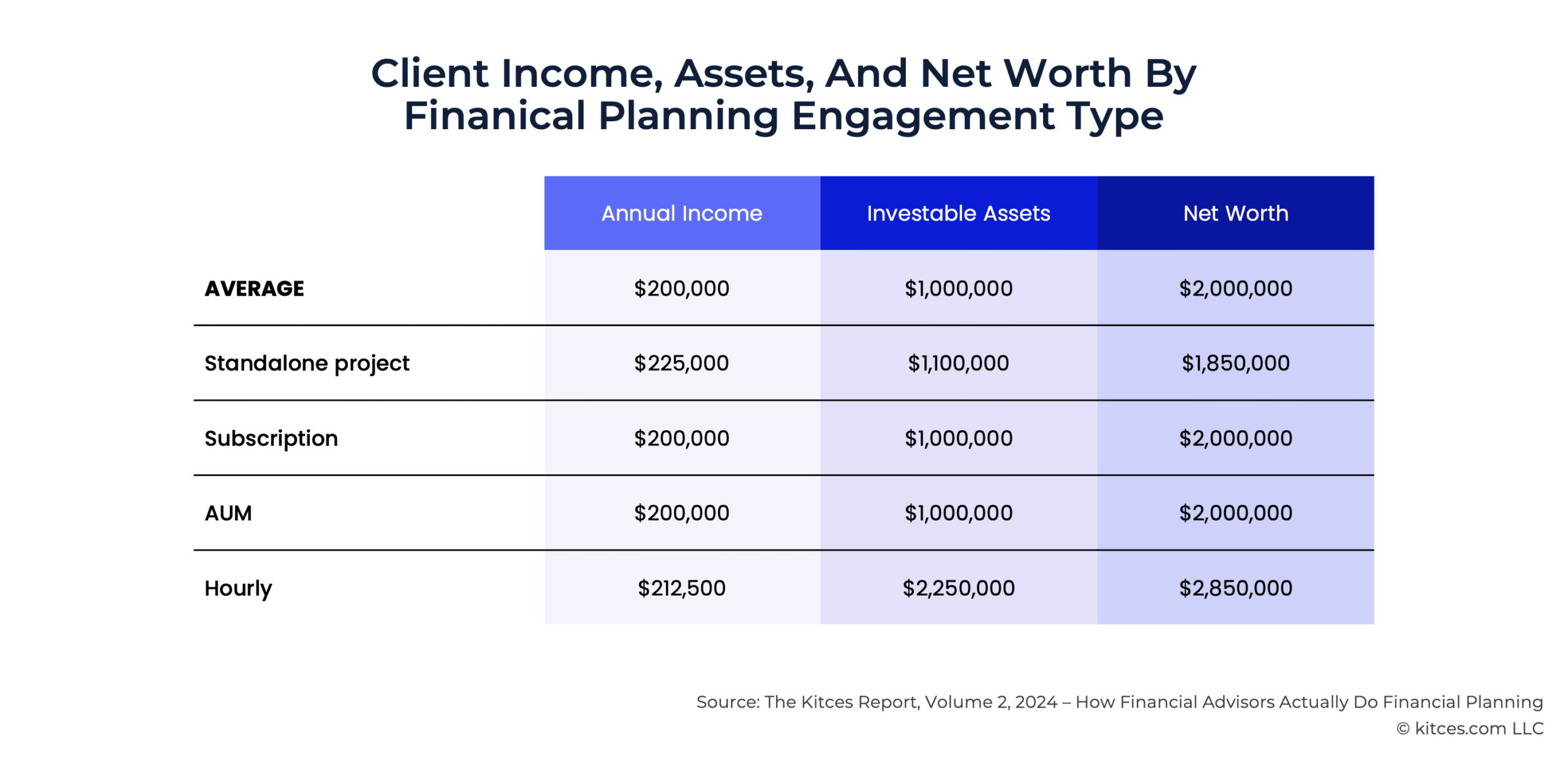
There is an ongoing discussion of how different fee schedules are perceived by clients. If a client is paying identical amounts for advice, does it 'feel' the same to pay from investable assets as it does to pay from a bank account? On the one hand, money in a checking account may feel more 'real' than the same amount in a portfolio, which presumably means more 'pain' is felt when the client must part with those dollars – but this sense of 'loss' may be offset by perceived greater transparency. While it's challenging to find a research study that goes beyond anecdotal evidence on client sentiment on fee schedules, 2024 Kitces Research on Advisor Productivity suggests clients' annual income didn't dramatically vary by fee model type, nor was there a substantial difference in the average age of clients. Which is to say, clients will be attracted to different fee models for reasons beyond these factors, such as a desire to delegate versus implement the majority of their financial decisions. Rather, the factors that made the most dramatic difference for the fee model that clients sought was investable assets and net worth.
Rather, net worth differences, not income, made clients particularly likely to seek out fee-only financial advice.
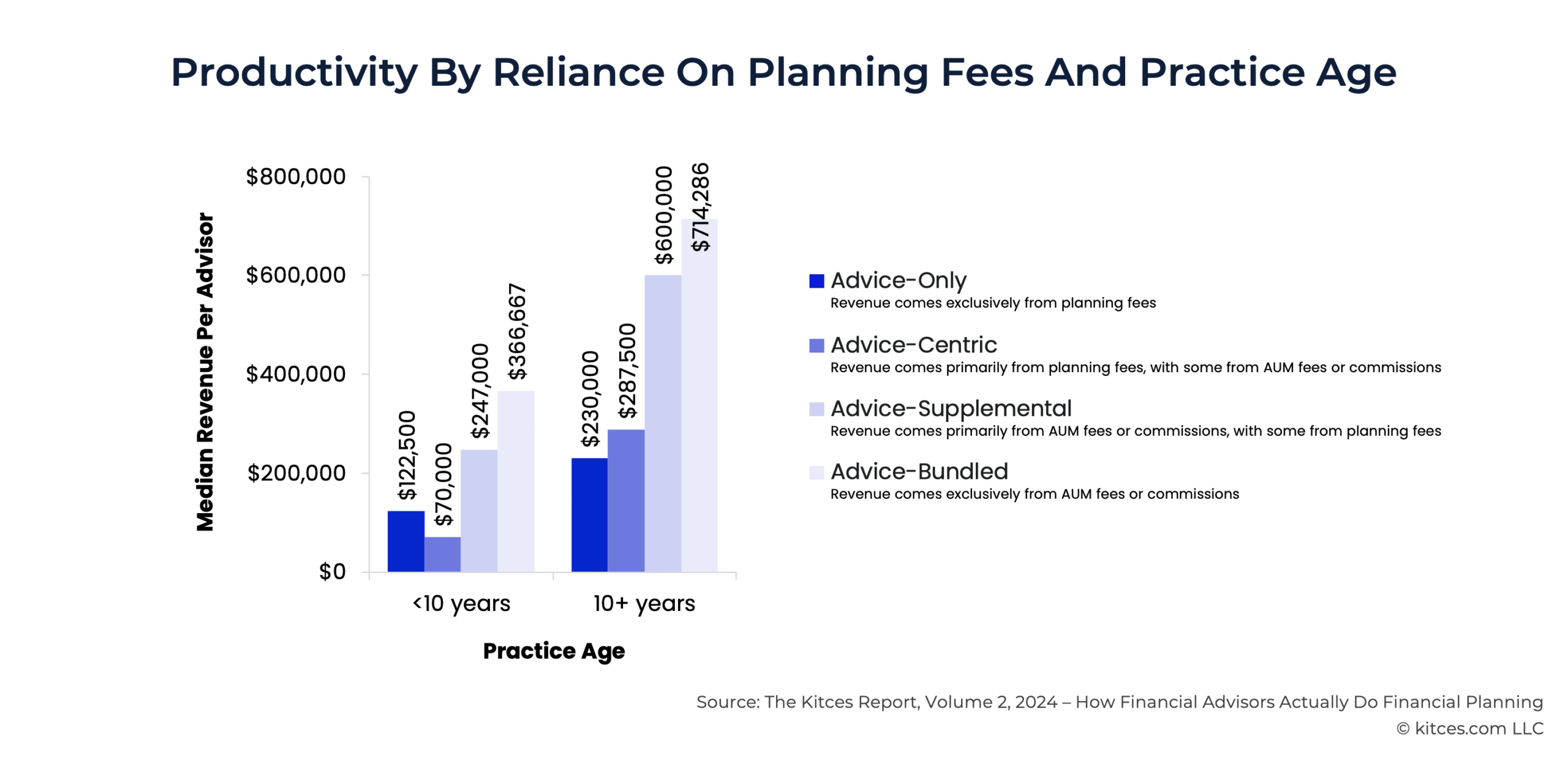
The reality is, achieving financial viability for flat-fee firms can be challenging. Advisory firms using fee-only planning schedules garner much lower revenue per client. As the graphic below demonstrates, advice-only firms (firms that do not make any revenue from AUM) start behind, relatively speaking, and this gap only broadens in the long-term. Once firms have a more established client base, advice-bundled or advice-supplemental firms tend to lead in productivity.
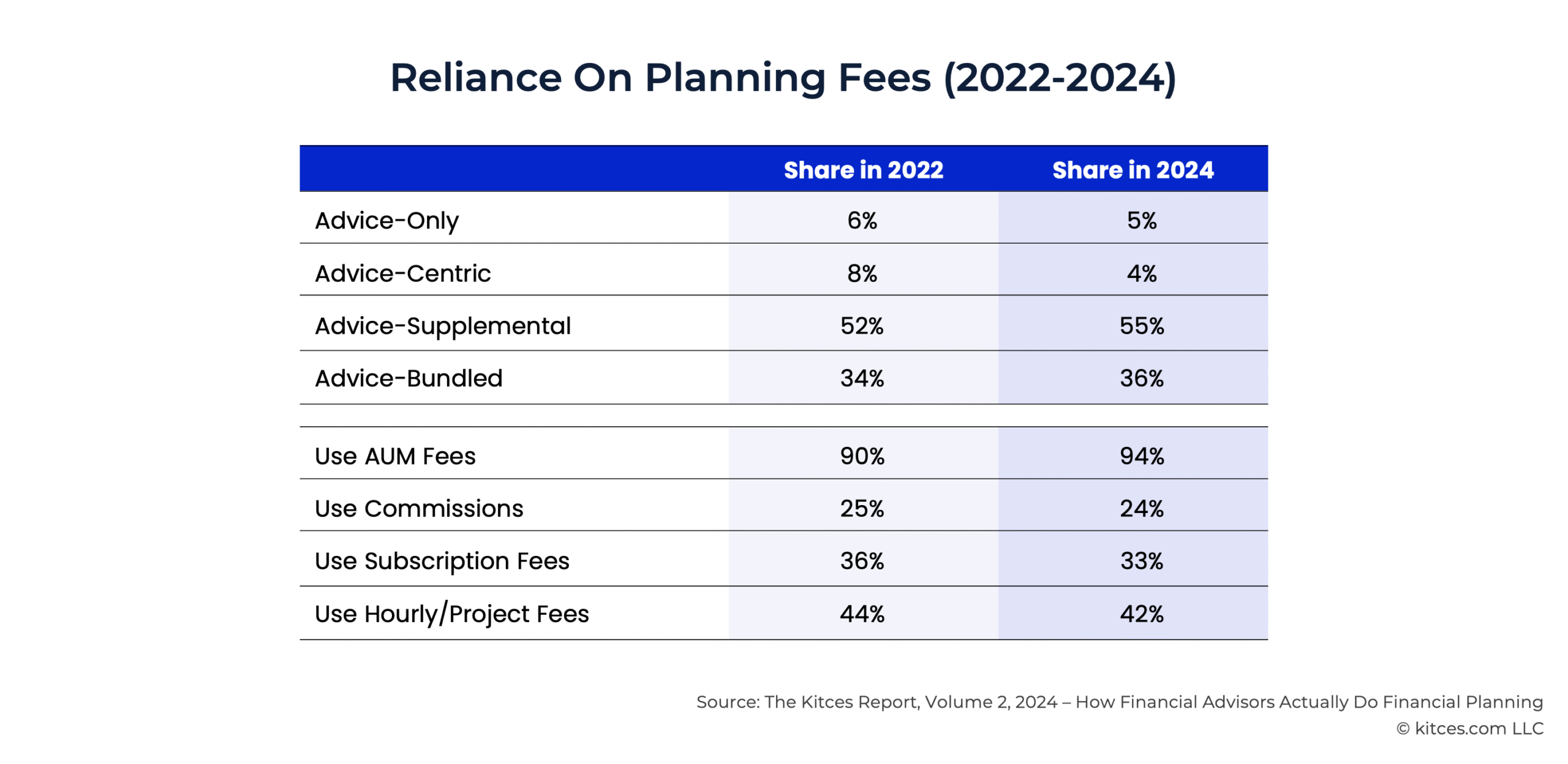
Because advice-only fee models lack the same exposure to market volatility as bundled models, fees also may not scale with client assets. Perhaps in part because of that, flat fee/advice-only firms tend to be less than a decade old. For example, the average advice-only firm (which only earned revenue from planning fees) in the 2024 Kitces Research on Advisor Productivity was 8.5 years old, whereas advice-bundled firms (which bundle advice fees with asset management or commission fees) tended to be 18 years old on average. Some of this is likely due to the fact that advice-only firms are relatively new in the advisory space. However, Kitces Research also shows most advisory firms tend to adopt a blended fee model over time, in order to access the advantages of the fee models they didn't originally begin with. For example, pure-AUM firms may adopt more flat-fee services in order to more competitively attract higher net-worth clients (or to avoid scope creep of expanded AUM services), while more mature advice-only firms may want the organic growth that comes from charging for AUM. When Kitces Research compared the fee models of different firms year over year, they found that firms were reliably pulled towards supplemental AUM or commission fees.
Advisory firms that charged AUM or commissions earned the most per client (an average of $7,500 per client). Advisors who charged only planning fees earned an average of $4,371 per client…which, while lower than AUM, is considerably better than firms that charged 'mostly' planning fees (which charged an average of $3,125 per client). Notably, advisors who charged subscription fees were increasingly more likely to create customized fee schedules – which can be useful to both client and advisor, but can also add additional administrative and documentation drag.
While these advisors tend to charge less, they tend to do equivalent amounts of work, although it manifests in different ways. For example, while advice-only advisors spend no time on asset management and also spent less time on client servicing tasks than other advisors, they were twice as likely to have created a new/updated plan for their clients in the last year, and they spent nearly twice as much time as on administrative tasks – suggesting an opportunity for these firms to outsource at a lower cost. (Even reducing the cost of a few hours of work a week can pay huge dividends over the year… and of course, outsourcing work is easier to do if the advisor is charging the appropriate fees and therefore earning sustainable revenue.)
Notably, almost all clients tend to require more work in the first few years of the relationship as the initial plan is completed and the first implementation steps are carried out. Which is why advisors who don't charge any kind of upfront planning fee tend not to realize a net profit from their clients (considering the cost of marketing, onboarding, meetings, and planning work) until 3–4 years into the relationship. The math of losing money on each new client makes things difficult for firms that want to grow their client base quickly, and so some firms now charge upfront planning fees – potentially coupled with reduced ongoing fees – to offset the initial costs. And while both AUM and flat-fee advisory firms report doing so, this practice is arguably more impactful for flat-fee firms – which generate less revenue per client on average and therefore take even longer to break even on each client.
The key point is not that advisors must sacrifice revenue or profitability to adopt a flat-fee model, nor that advisors who adopt them are blind to the challenges that it presents. In reality, although AUM remains the dominant fee model, many firms are starting to see flat-fee planning as the best model for them in the long term for a variety of reasons. But the takeaway from the Kitces Research data is that the firms that are most likely to achieve success with a flat-fee model are those who serve higher-net-worth clients, and charge fees corresponding with the level of service and planning complexity those clients require. Otherwise, charging flat fees (while still doing at least the same amount of planning work as AUM advisors) tends to result in a shift to an AUM-based model over time.
What Are Fee-Only Advisors Charging For Their Advice?
Given that there is a multiplicity of fee- and advice-only models, it's worth parsing where and how different advisory firms are earning their income. Fee-only advisors tend to bring in income through asset-based, subscription-based, hourly, and project plans.
Hourly Fees
While asset-based pricing has been discussed in-depth previously, it's worth noting that most fee-only advisors who use asset-based pricing or blended fees typically average out to approximately 1% of assets under management. As a client's net worth grows past $5M, these fees decrease to approximately 0.80%. Given that the average advisor spends about 21 hours per year maintaining an ongoing client relationship, this would come out to about $500/hour when working with a $1M client. However, when it comes to hourly advice, advisors charge $300 as an average hourly planning fee, regardless of how comprehensive a financial plan is. Hourly advisors charge an average of $2,886 for most financial plans, and an average of $3,875 for the most complex plans (with 20+ components considered, ranging from retirement distribution to college funding) that they create. (Conversely, the mean minimum for AUM account size – across all advisory firms that had a minimum – is approximately $846K. Which, when computed with the average of 1% of investable assets that many firms charge, means that AUM firms would earn approximately $8.5K for the same amount of work.)
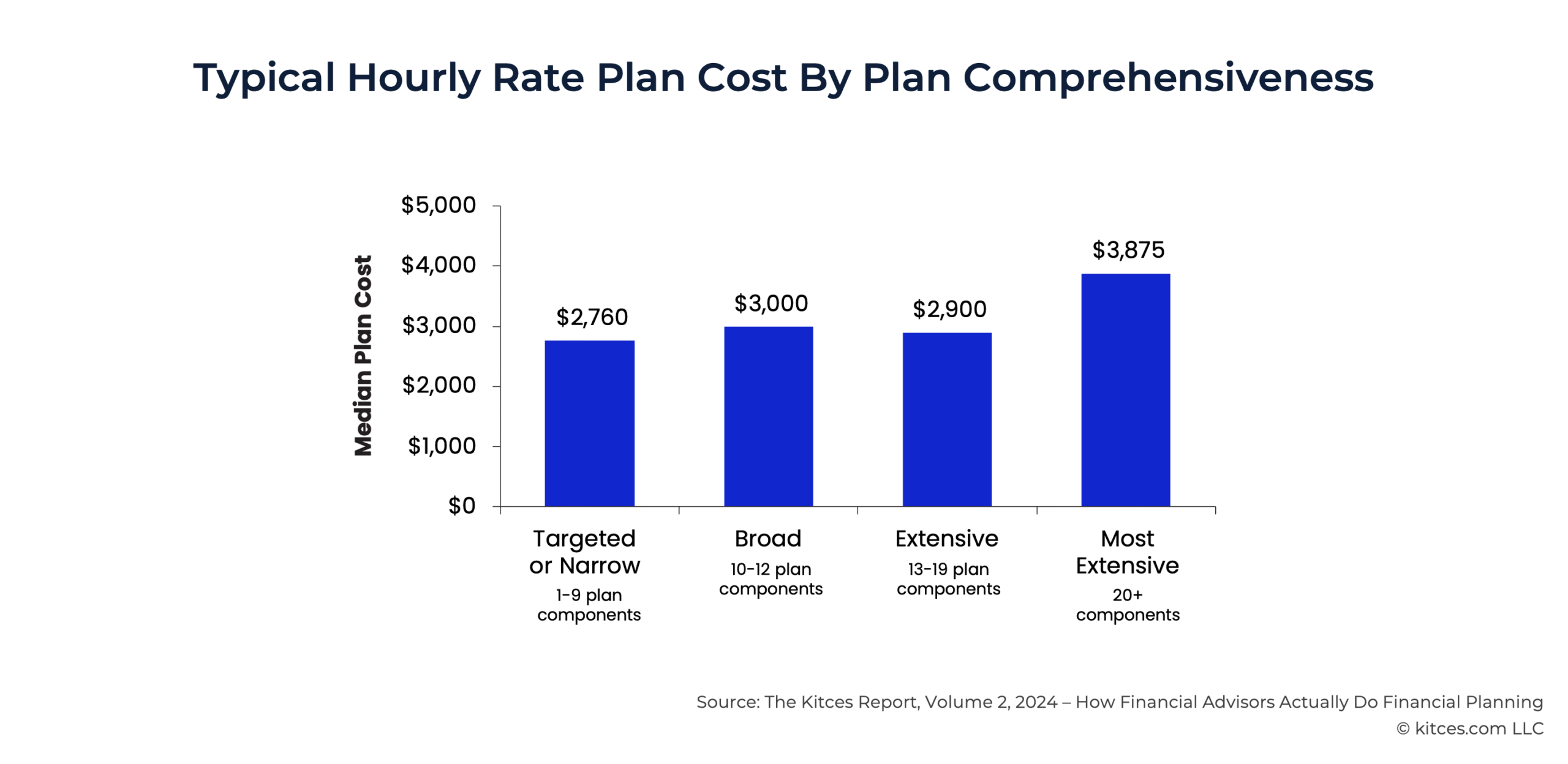
In short, one of the core challenges of hourly planning is that the advisor must account for the time spent marketing, prospecting, and engaging in administrative tasks that doesn't get directly billed for doing 'just' the creation of the financial plan. As Kitces Research on Advisor Productivity shows, hourly advisors spend an average of almost two hours of unbilled work for every billed hour – so that $300/hour fee can quickly become compromised. As such, the onus falls on the advisor to calculate the value of an hour holistically in order to protect their time from being sold at a discount (and to effectively communicate the value of this time). In the end, firms that successfully rely primarily on hourly and project-based plans tend to charge more for standalone plans than other firms, in order to 'right-size' the fee for the other components of their work.
Subscription Fees
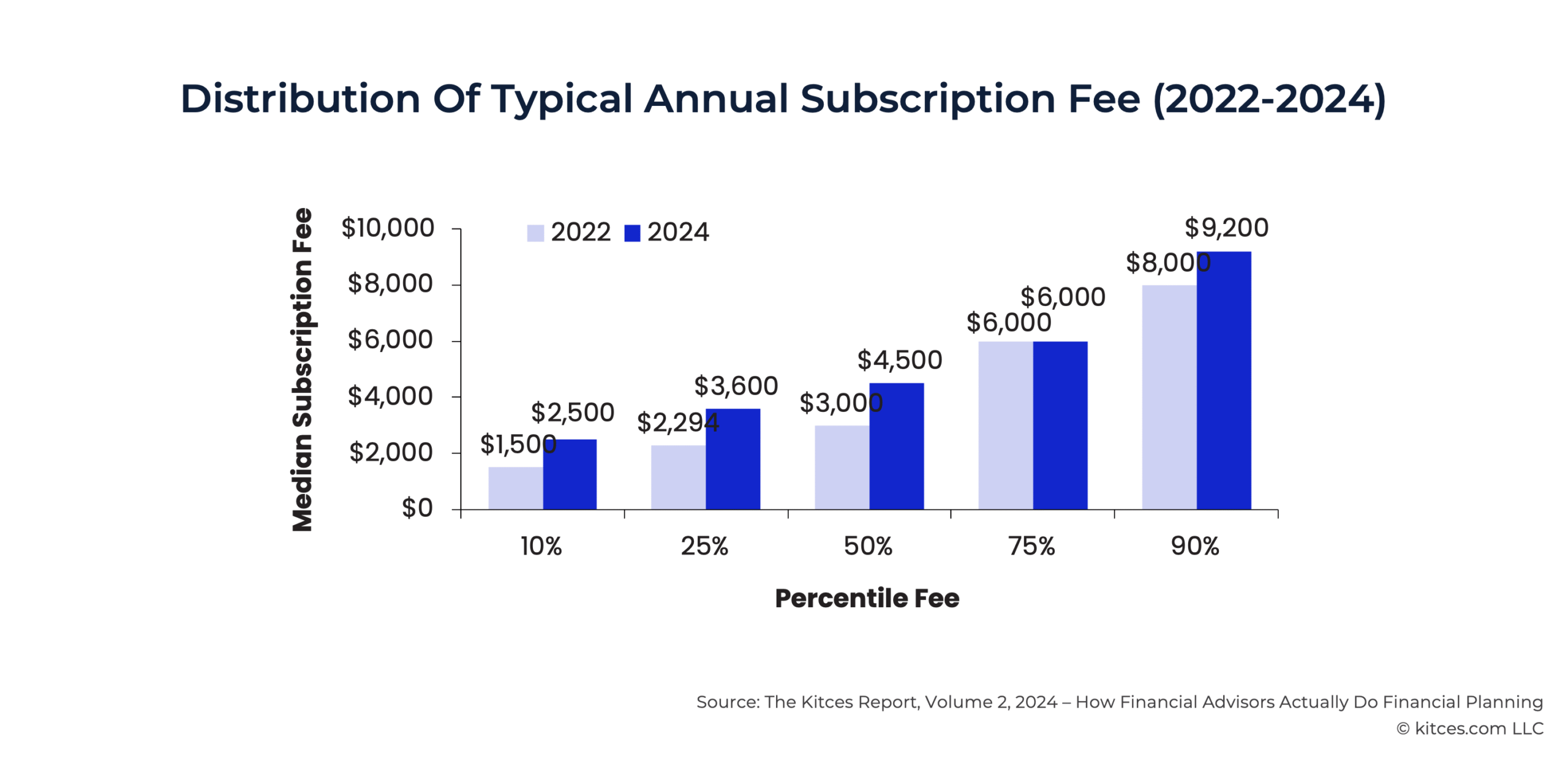
Subscription (or retainer) fees are the primary revenue source for just 9% of advisors (although 34% of advisors use them in some form, even if they aren't the advisor's primary fee model). And despite the common conception that subscription planning fees are an ideal solution for serving underserved clientele like the mass affluent who don't meet the minimum asset levels of many AUM-centric firms, they aren't altogether 'inexpensive' from the client perspective: In the 2024 Kitces Research on Advisor Productivity, the median annual subscription fee was $4,500 (up from $3,000 in 2022), while the top 10% of firms charged at least $9,200. The increase in fees reflects the fact that many firms may be resetting their fees as they mature beyond the startup stage (possibly realizing that the fee schedules they set in the first place were not sustainable given the amount of planning work needed for each client).
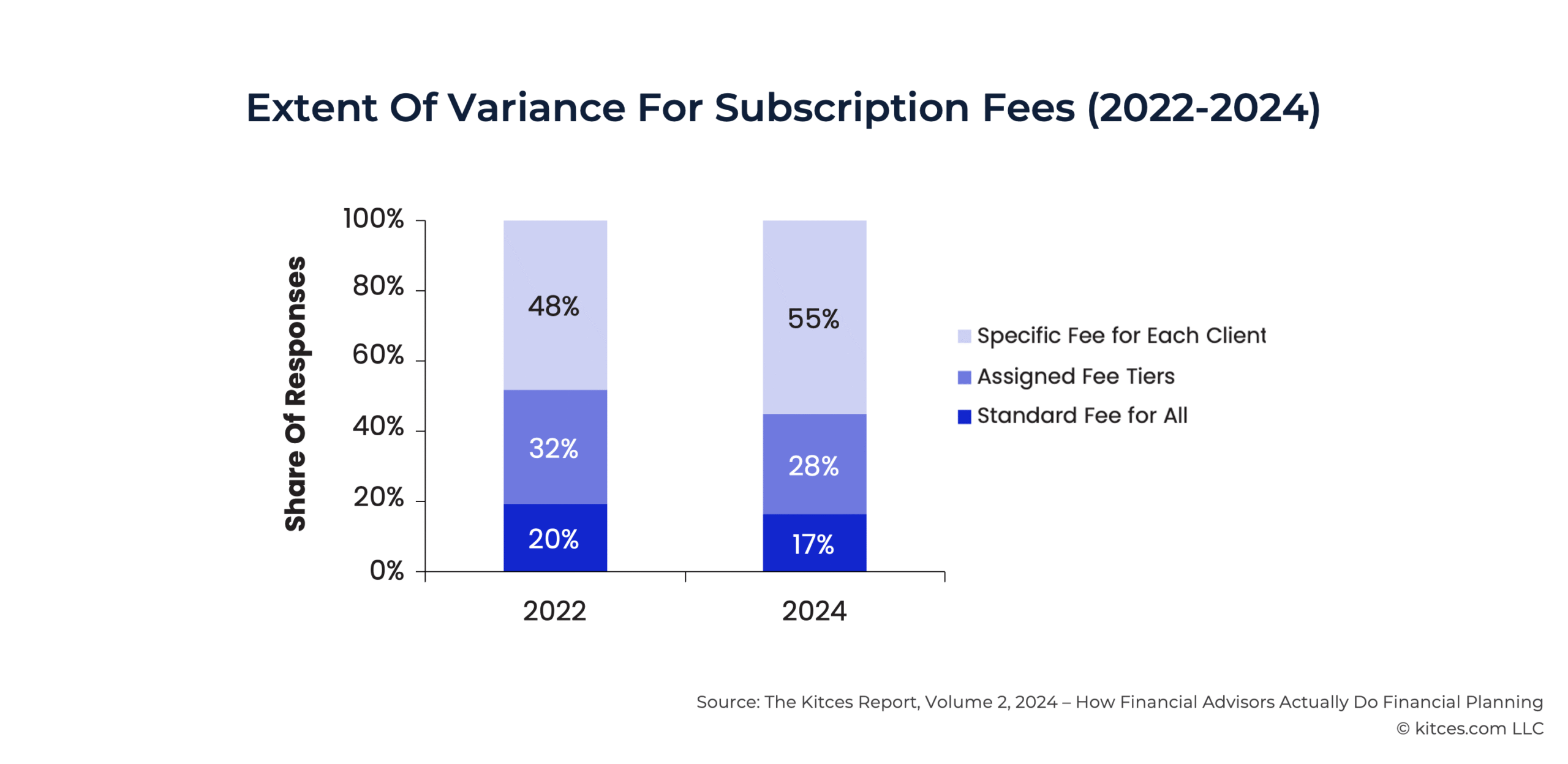
Subscription fees are also highly likely to be customized on a client-by-client basis, depending on the complexity of the relationship. Compared to AUM models (which charge clients the same amount for a given level of assets even though one client may have a much more complicated financial situation than another), and the hourly fee model (where hourly rates tend to be the same across all clients no matter the complexity), the subscription model gives advisors some flexibility to serve clients in a variety of situations while controlling for the cost of serving each.
However, it's notable that subscription fees on the whole still tend to be less than AUM fees, with the median $4,500 subscription fee coming in at less than half of the 'standard' $10,000 minimum AUM fee. And given that advice-only firms aren't likely to spend less time on client-facing work (or on other functions like marketing, meeting with prospects, and financial plan analysis) than their AUM counterparts, it can still be difficult for subscription fees to make up the gap in revenue and profitability between the AUM and fee-only models.
What Are Successful Flat-Fee Advisory Firms Doing?
While there are material challenges in successfully launching and scaling a flat-fee advisory firm compared to AUM, advisory firms can (and do) find success under the flat-fee model.
Given the issues described above, ultimately, if a flat-fee firm is to succeed, they need to find a way to price their time accurately… and to ensure that they can get 'raises' over time. As noted above, flat-fee firms tend to charge significantly less – both on an hourly and an annual basis – than AUM-based firms. And since flat-fee advisors also tend to do at least the same amount of planning work for their clients as AUM advisors, it's almost inevitable that they'll eventually move 'upstream' to the AUM model if doing so will allow them to earn significantly higher fees for similar levels of work.
While this finding may be disheartening for those hoping to increase the accessibility of advice across income levels, it doesn't mean that such work is impossible – either through a fee schedule structured for a handful of lower-paying clients or pro bono work.
For advisors who want to use a flat-fee model (and stay there), then, one of the first things to do is to set fees at a rate that won't be immediately underpriced compared to their AUM counterparts. First, firms must holistically calculate how much an hour of their time is worth – and ensure that their fees reflect their entire annual income needs, not 'just' their billable planning work. Given the duration of many advisor/client relationships, compromising on fees early on can have a multi-year impact on the firm's profitability as the revenue shortage compounds.
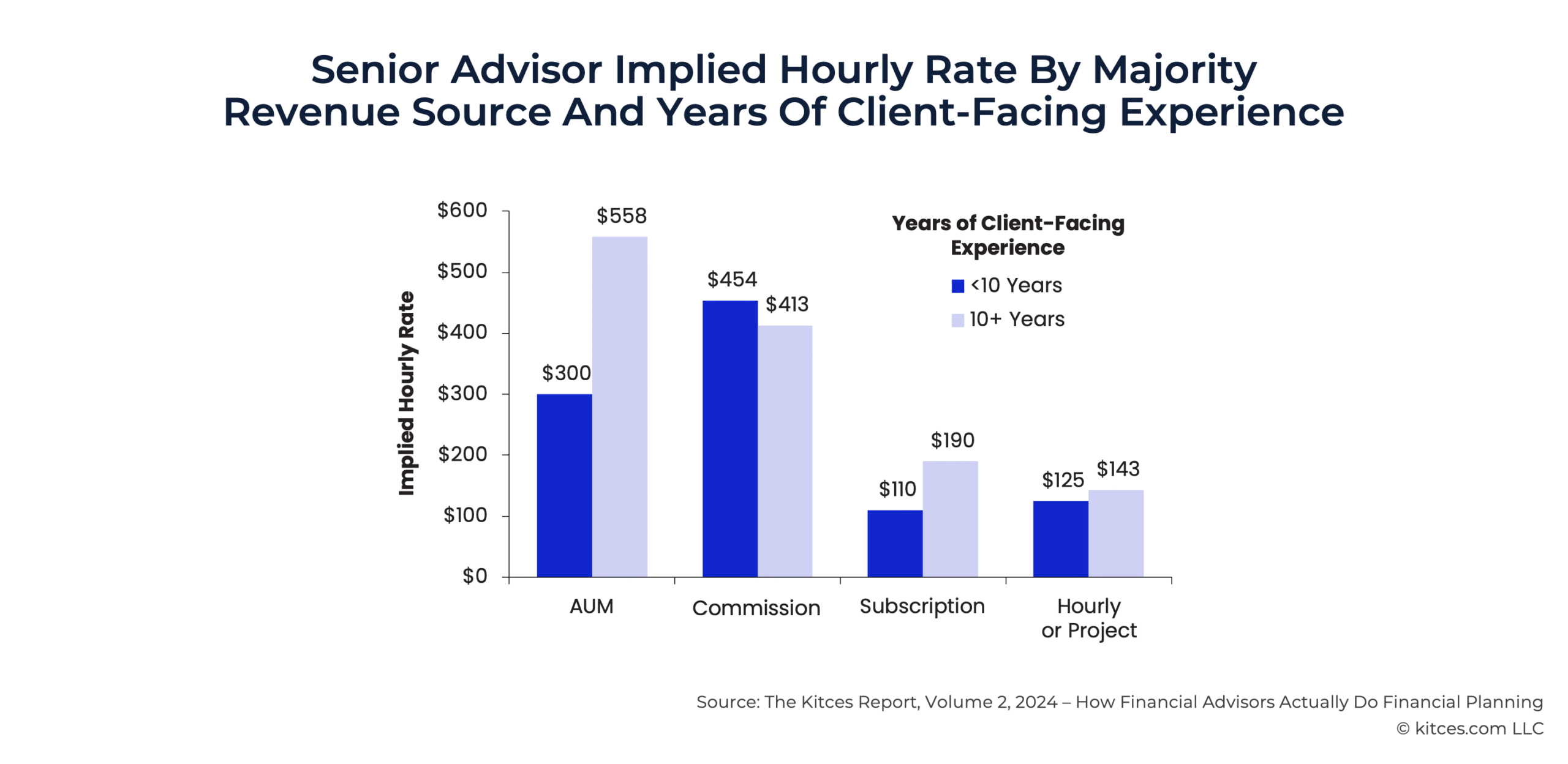
As the 2024 Kitces Research on Productivity study put it, "While affluent clients require more ongoing service hours than less affluent clients, it does not take three times the hours to serve a $3 million client as it does a $1 million client – despite the former often paying nearly three times the fee (depending on the advisor's fee structure). Instead, these clients are effectively paying a higher implied hourly rate for what they perceive to be their advisor's greater expertise, depth of services, and the time required to deliver them."
In other words, advisors will need to remain attuned to the value of planning work they are doing for the fee, especially as their experience accumulates, and make adjustments accordingly. More complex clients may be more expensive for firms to service unless they have a consistent way to reflect complexity in their fees. As a starting point, project- and hourly-based advisors may choose to track their time by using programs such as Toggl or Harvest to ensure that they capture and understand where all of their time is going – not just the hours spent directly on creating plans and meeting with clients but also on marketing, prospect meetings, compliance, and other operational tasks. Even doing this exercise for a month can be enlightening and reveal how much 'unbillable' time is being performed that will need to be accounted for in one way or another. Additionally, if an advisor works on a project basis, it may be helpful to evaluate whether there is additional 'drag' created in the implementation phase – for example, does the fee include time spent addressing follow-up questions?
On the other hand, fee-only advisors will need to ensure that, just as AUM-based advisors often get 'raises' through market growth, they can also anticipate and plan around cash flow that, at minimum, keeps pace with inflation. Therefore it becomes important for the advisor to both have a system in place to determine their 'minimum' fee adjustment, and also to set early expectations with clients about future fee adjustments. Something as simple as pro-actively informing clients that fee adjustments for the following year will be announced at the end of the current year can make those fee-adjustment conversations less painful for both parties. (And while the advisor may choose to have language in the client's contract that affirms these changes, it can be helpful to verbally set expectations as well.) Regardless, the important part is to account for how much the advisor's own expertise has grown!
Ultimately, the key point is that advice-only advisors may face additional challenges in creating a scalable firm relative to other models that are more inclusive of various fee sources. However, if advisors carefully monitor their time, understand how their expertise accumulates, and enforce guardrails to protect themselves from increases in client complexity without commensurate increases in revenue, a flat-fee model can be a viable and fulfilling option for many advisors and their clients alike.