Executive Summary
2026 has been another rollercoaster of a year to start, as the onset of the Iran War triggered a sharp selloff of nearly 10% in the first quarter, only for us to witness a 15%+ rebound in the subsequent two months, forcing advisory firms to both once again manage their early-year expenses, while meeting an uptick in demand for client conversations to navigate through the market volatility. At the same time, vendors leveraging AI continue to make the case that their increasingly capable tools will help advisory firms lift productivity and manage their costs… even as the pace of new AI rollouts leaves many advisors paralyzed in trying to figure out what to buy and when (as it seems like a new-new even-better-sounding provider emerges every month or two!). Yet for the time being, advisory firms still face the same core challenges they always have – delivery of services to clients, capacity of advisors and support staff as they grow and try to scale, and leveraging whatever technology they can to make all of it work better together (hopefully!).
But now as the summer approaches, we enter what for most advisors is still a season of respite – when most advisors take more time off (if only because clients are harder to pin down for summer meetings in the midst of summer vacations)… and find some time to read and catch up on a few good books!
For those who love to read, though (and especially for those who have limited time and will only get to read just one or two books over the summer), the perennial question is always, "So… what's a good book worth reading this summer?"
As a voracious reader myself, I've always been eager to hear suggestions from others of great books to read, whether it's something new that's just come out or an 'old classic' that I should go back and read (again or for the first time!). And so, in the spirit of sharing, a few years ago I launched my list of "Recommended (Book) Reading for Financial Advisors", and it was so well received that in 2013 I also started sharing my annual "Summer Reading List" for financial advisors of the best books I'd read in the preceding year. It quickly became a perennial favorite on Nerd's Eye View, and so I've updated it every year, with new lists of books in 2014, 2015, 2016, 2017, 2018, 2019, 2020, 2021, 2022, 2023, 2024, and a fresh round last year in 2025.
And now, I'm excited to share my latest Summer Reading list of top books for financial advisors in 2026, from what it really takes to achieve rapid-growth scaling (i.e., to actually 10X instead of 2X'ing), to a pair of books on how to more effectively scale yourself by 'buying back your time' and becoming a more effective manager, and a fascinating look at the history of the financial planning profession (as told by Bob Veres, who has 'seen it all' as a witness along the way!) along with another book on the broader history of money itself, to thinking through what it really takes to differentiate on a great client experience (beyond 'just' being highly competent as a financial planning professional and delivering great service), and how to instill more confidence, capability, and financial competency in our kids by teaching them the virtues of learning how to create value for others around them.
So as the summer season and summer vacations get underway, I hope that you find this suggested summer reading list of books for financial planners to be helpful… and please do share your own suggestions in the comments at the end of the article about the best books you've read over the past year as well!
Authors:




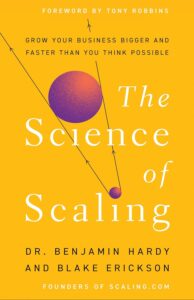
Michael's pick
The Science Of Scaling: Grow Your Business Bigger And Faster Than You Think Possible
(Ben Hardy and Blake Erickson)
For most of our history, financial advisory businesses were very small businesses, often no more than 1–3 people: a lead advisor ("producer") who sold products, and the administrative staff who supported that advisor/producer to get out there and sell more product. In this world, staff structures were small and largely incapable of scaling, because compensation was all commission-based, and in reality there was little appeal to taking on much staff overhead infrastructure when income effectively resets to $0 at the beginning of each new year. It wasn't until the emergence of the AUM model, and its recurring revenue, that advisory firms could start each new year by having and then being able to build upon all the cumulative revenue they generated from prior years, facilitating the emergence of size and "scaling up" an advisory firm (to tens and hundreds of millions, then billions, and now tens and hundreds of billions of AUM for the largest firms).
The caveat, though, is that while the AUM model (and more recently the subscription/retainer model) create the recurring revenue it takes to scale, that doesn't mean it's easy to do so. From building the systems and processes, to crafting the culture, deploying the technology (and figuring out whether to buy, build, or partner to get it), to hiring and expanding (and training and retaining) the team, scaling up is still challenging. Which is why, at best, most advisory businesses only grow incrementally with 10–15% growth rates, which allows them 5–7 years of making adjustments in time to handle the next doubling of the firm's overall size.
In their book "The Science Of Scaling", Hardy and Erickson explore what it takes to drive and especially to accelerate the pace of scaling up a business, in a world where most businesses tend to slow their growth as they get larger – not just because the denominator of the growth rate gets bigger, but because at some point, the engines that grew the business to where it is are not necessarily what it takes to get to the next level, and a more fundamental breakthrough in how the business pursues its growth and scaling efforts has to occur.
Accordingly, the bulk of "The Science Of Scaling" is exploring that rapid-growth scaling framework, built around three relatively simple (but deeply nuanced and challenging) steps.
The first is to "Change Your Frame", which is all about setting a much bigger goal than whatever the business currently has. Hardy and Erickson go so far as to suggest trying to come up with an "impossible" goal, one that seems so large (akin to Jim Collins' "Big Hairy Audacious Goal" or BHAG), that you can't imagine how it could ever be achieved given what the business currently does. But in reality, that's actually the whole point of setting the impossibly-big goal… when the frame changes that much, you can't keep doing things the way you've always done them, and you have to think about growth in whole new ways. Which often unlocks entirely new approaches. For instance, a firm licensing a system to help people repair their credit, that was working with 10 different credit repair firms, set a goal to work with not 100 but 1,000(!) firms, which was literally impossible with her "one new customer at a time" sales approach, but eventually led her identify and develop marketing partnerships with other software companies providing adjacent services that might also want to license her solution… and within 2 months, landed an 8,000(!) customer partnership.
The second step is to "Raise Your Floor", is all about recognizing that getting to the next level of scaling means entirely letting go of systems, approaches, and even whole segments of the market that can no longer serve the next phase of growth. In the context of the earlier example, this meant letting go of working with individual credit repair firms to instead pursue bulk-user marketing partnerships with software companies selling to those credit repair firms en masse. When it comes to financial advisors, it might mean going 'all-in' on a particular segment of clients (e.g., pivoting into just going after executives at a large company where the firm already has a few clients, who collectively pay more than the bottom half of clients combined), or raising the firm's minimums (saying 'no' to clients who can't financially fit into the much-bigger future the firm envisions). Of course, the reality is that making such "floor-raising" decisions can be very painful, given the amount of disruption they can cause, but again that's also the point… echoing the old Warren Buffet saying, "the difference between successful people and really successful people is that really successful people say 'no' to almost everything".
Which feeds into the third and final step, to "Accelerate Your Focus", as once you set a big-nigh-impossible goal, then raise the floor to only work with customers/clients who could possibly help you reach the impossible goal, everything else begins to fall by the wayside. And that is what creates the time and level of focus it takes to actually pursue the impossible goals to achieve the next level of scale, as otherwise the reality is that the business and its founder won't have the capacity to get there, effectively becoming so mired in incrementalism from where they are, that they can never achieve the scaling breakthrough it takes.
For those familiar with Hardy's prior work – most notably, his "10X Is Easier Than 2X" co-authored book with Dan Sullivan, "The Science Of Scaling" connects the dots by explaining how, exactly, successful people go about achieving that 10X level of growth. Except ironically, as the Science of Scaling and its "raise the floor, accelerate the focus" framework highlight, the reality is that engaging in this kind of 10X growth is actually quite difficult because of the level of change it requires in creating a new frame and a new focus (which for many will feel quite 'risky' in what it potentially leaves behind). Yet as the famous saying goes, "What got you here won't get you there", so for those who really are ready to make the change, Hardy's book provides an incredibly good framework for how, exactly, you prepare yourself to take that 10X leap!
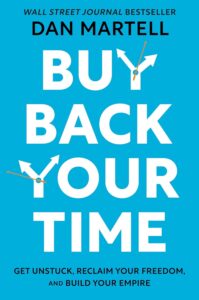
Michael's pick
Buy Back Your Time: Get Unstuck, Reclaim Your Freedom, And Build Your Empire
(Dan Martell)
When someone first begins their career as a financial advisor – or at least, hangs their own shingle to open their own advisory firm – the reality is that they have a lot of time, and not a lot of (or any) clients. Which means the first goal is simply to fill the time – first with marketing activities to get some clients, and then hopefully, ideally, with actual clients to serve who will pay them for their time and the expertise they can deliver as a service-provider. In this stage, every minute and hour that can be converted from a marketing/sales or "idle" time into productive client-compensated time represents growth for the business.
However, there does eventually come a point where the calculus begins to shift. Time that was once abundant becomes scarce, as the advisor's time capacity fills up with clients. Suddenly, there's not so much time to market and find new clients, because the advisor barely has the time to service the clients they've got. Growth opportunities turn from exciting expansion into a point of stress as the advisor tries to figure out where to fit that new client's planning needs into all the existing service work that has to be done. And if the advisor doesn't have a way to manage this, the almost inevitable conclusion is that even as revenue and profits rise, so too does the average number of hours in a work-week (to a potentially untenable at-risk-of-burnout threshold).
In "Buy Back Your Time", Martell explores how advisors (or any business owner) who reach this threshold can come back from the edge of burnout by reallocating their newfound revenue and profits to, somewhat literally, buy back their time… a metaphor for hiring staff to whom the business owner can delegate tasks, and in the process, trade away some of their money to buy back their time. At the least, the business owner reallocates their time to a healthier work/life balance; at the best, time is shifted into the tasks that the advisor truly enjoys and is good at and add the most value to the business, effectively reigniting the growth that may have otherwise stalled. Not because the firm invested into growth, per se, but as Martell highlights in his "Buyback Principle", when you hire to buy back your time so you can focus it into what really matters, growth is often the result anyway!
The starting point to getting on track is to break the logjam with an "Audit-Transfer-Fill" process, where first advisors engage in a time audit to understand where their time is really going (fortunately in the modern era, there are automated tech tools to help, but the basic goal is to find the intersection of what you personally hate doing but would be relatively easy or inexpensive for someone else to do), then begin to transfer those tasks to someone else (ideally, some who's better at them, and actually enjoys them), and then reallocate the time that's been freed up to something that adds more value to (and usually ends up growing) the business.
Notably, as a business grows, there are more and more things that can be handed off, and a business owner's time never stays unfilled for long. To that end, Martell espouses a "Replacement Ladder" of what will be delegated over time, starting with Administration (the client service tasks), then Delivery (e.g., hiring an associate advisor to help support clients and eventually a lead service advisor to take over clients), then Marketing (to drive more business development opportunities once service delivery is scaling past the founder), then Sales (so the founder is no longer the bottleneck around taking on new clients), and eventually Leadership (as the business develops a leadership team to run itself). Which also effectively sequences where the founder themselves should increasingly focus their time (as their time narrows to the remaining rungs of the ladder that haven't been handed off yet).
Ultimately, the core point is simply that to grow and scale a business, founder-owners – whether in the advisory business or otherwise – can't keep doing everything themselves, and need to eventually expand their team and hire and delegate. But what makes "Buy Back Your Time" so powerful is how Martell effectively frames these lessons from the perspective of the advisor/founder/business-owner themselves, where it's not about scaling the business, it's just literally about buying back your own time to re-focus it on what you enjoy that gives you energy and adds value to the business… even though the somewhat inevitable result of those efforts repeated over the years will be a business that steadily grows and scales!
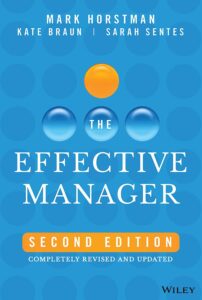
Michael's pick
The Effective Manager
(Mark Horstman, Kate Braun, and Sarah Sentes)
For many financial advisors, one of the biggest drawbacks of scaling up an advisory firm and expanding the team is that once it happens, you have to manage those new team members… and most financial advisors got into the business to serve clients and help them achieve their goals, not to be a manager of people. Yet the reality is that the financial advice is a service business, and service businesses require people to deliver the services… which means advisors who don't want to accept the mantle of management will forever be severely capacity-constrained in what they can achieve.
For advisors who do want to learn to manage, though, the question becomes how and what the best practices are, especially given that even amongst those who begin to manage teams, their primary focus remains on serving clients and growing the firm. Which means for most, advisors need to primarily learn how to be more effective 'player/coaches' who can expand their teams and then learn to get leverage directly from those teams.
In "The Effective Manager", management consultant Mark Horstman explores how financial advisors (or any manager) can expand and leverage their teams most effectively, drawing heavily on analogies from organizations like the military, where everyone who is a 'manager' in leading their team (of troops) must be highly effective and work alongside their teams, because everyone is together on the field of battle and the stakes are high. For which the motto "Mission First, People Always" becomes remarkably relevant.
To that end, Horstman teaches that the most important outcomes as a manager are to first and foremost, deliver results – why else be a manager and lead a team if not to achieve the goals of the organization. But results can't come at the cost of the team itself, which is why Horstman suggests the second-but-also-crucial mission of any manager is to retain your people… both for the practical reality that turnover is very expensive, and because "retain your people" creates a strong countervailing goal to delivering results. When results can't be sacrificed to retain your people, but your people can't be sacrificed to achieve the results, finding a balance between the two forms the very essence of what it means to be an effective manager.
From there, Horstman takes a very data- and research-driven approach to highlight what is most important to achieve that dual mandate, exploring a series of 15 different manager behaviors and then quickly narrowing down, Pareto-Principle-style, to the four that matter the most: 1) Get to know your people (because if you don't know, understand, and appreciate each of your team members as individuals, the connection won't be there and the results won't come); 2) Communicate about performance (because team members can't get better if they don't receive clear feedback about how they're doing and what's working, or not, in the first place); 3) Ask for more (because the best results don't come from teams that just get comfortable and maintain the status quo, they come from teams that have a healthy level of stress that challenges them to keep getting better); and 4) Push work down (because if you don't proactively try to delegate, by default you'll hold onto work that isn't really your highest and best use, and in the process you'll also take away the opportunities for your team to grow by learning to do and master that work themselves).
In a world where a lot of books about management and leadership are either overly prescriptive (to the point that it feels awkward and unnatural to try it for ourselves) or too generalist (and not instructive enough to know what to actually do), "The Effective Manager" strikes a healthy balance as a very research-driven book that explores what really actually works when it comes to managing teams successfully, and translating those points into concrete behaviors and actions that rising managers can take to try to be more effective with the teams they lead.
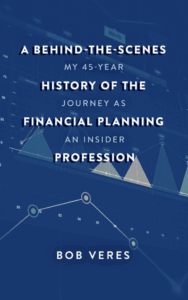
Ben's pick
A Behind-The-Scenes History Of The Financial Planning Profession: My 45-Year Journey As An Insider
(Bob Veres)
In the early 1980s, financial planning was just starting to coalesce into a recognized service offering, with the potential that it could become a whole career unto itself, as distinct from being an insurance agent or a stockbroker. One of the industry's two major professional associations at the time, the International Association for Financial Planning (IAFP), and its educational arm, the College for Financial Planning, dated back just over a decade to 1969. The first cohort of CFP professionals had received their marks in 1973 and went on to form the industry's other major professional organization, the Institute of Certified Financial Planners. (The IAFP and ICFP merged to become the Financial Planning Association (FPA) in 2000, while the College for Financial Planning continues today as a subsidiary of Kaplan, which acquired it in 2018.)
But despite the existence back then of many of the industry's current institutions (or their forebearers), the actual practice of financial planning in those early years was much different than what we'd recognize today. In those days, product sales still dominated the industry, even among those who held themselves out as financial planners: An advisor might create a detailed projection for a client seeking retirement planning advice (often running many pages thick, adding literal weight to the planning exercise), but the ultimate recommendation (and compensation) was driven by whatever products the financial planner had for sale, and the financial plan itself was effectively just a form of needs-based selling of insurance and investment products.
Thus the range of products recommended to clients ran the gamut from various forms of permanent life insurance to mutual funds (which back then had 8%+ sales loads) to more exotic assets like gemstones, oil derricks, and limited partnership tax shelters (which were highly popular for several years in the era of 70% top marginal tax rates due to the high upfront tax deductions they provided – at least until those deductions were disallowed by the Tax Reform Act of 1986 and the investments proved to have little other underlying economic value). And in practice, this often meant that recommendations were steered towards whatever provided the highest commission to the advisor, not by what was in the best interests of the client, as financial planners were literally in the product distribution business at the time.
This was the world of financial planning that Bob Veres encountered for the first time when he took a job as editor of Financial Planning magazine. Veres's recent book, "A Behind-The-Scenes History of the Financial Planning Profession", chronicles his observations from following the industry over the next 40-plus years – first at Financial Planning, and then with his long-running Inside Information newsletter (the name of which, as the book notes, is a tongue-in-cheek reference to the 'inside information' that wirehouse stockbrokers would tout when cold-calling potential customers).
As such, the book is full of entertaining anecdotes of Veres's personal experiences with the good and bad sides of the industry (particularly from those relatively unhinged early days). But the bigger overarching theme is about financial planning's evolution as a profession – from its beginnings as (at best) a pseudo-professional veneer to justify selling often-expensive insurance or investment (or limited-partnership) products, to becoming a movement of practitioners who actually honed their craft to better serve their clients.
Throughout his narrative, Veres is unsparing in his criticism for those he saw as counterproductive towards financial planning's journey as a profession. This includes the broker-dealer firms and product manufacturers that urged representatives to place product sales over the wellbeing of their clients (offering lavish bonuses and vacations to top 'producers'); regulators like the SEC that handed down burdensome reporting and disclosure rules for RIAs in the name of 'consumer protection' while also allowing the conflicted sales practices of the brokerage industry to continue in the name of 'consumer choice'; and former leadership of the FPA that made a series of strategic missteps leading to a declining advisor base over the years) and culminating in the misguided rollout of its "OneFPA" proposal to dissolve and consolidate local FPA chapters into a single consolidated unit in 2018 (which was ultimately revised and rolled back after massive pushback from FPA's own membership).
But Veres is equally profuse in his praise for those who helped move the profession forward over the years, from early planners like Lynn Hopewell who took a risk on a new 'fee-only' non-commissioned business model, to practitioners like Harold Evensky and Deena Katz who helped to popularize the importance of diversified low-fee investing to meeting goals (rather than striving to pick the 'best' stocks or mutual fund managers), to consultants like Mark Tibergien, Philip Palaveev, and Angie Herbers who have helped countless advisors professionalize their small one- or two-advisor practices into businesses that could both provide better service to clients and be financially successful for the advisors running them.
Ultimately, the book reflects Veres's hope that financial planning will continue to evolve and be recognized by the public as a profession. From the very beginning of the book, and throughout its pages, Veres holds up the field of medicine as an example for what financial planning can aspire to: going from quack doctors selling snake oil off the backs of wagons to phony medical schools and certificates (mostly made to legitimize the sales pitch of the snake oil salesmen) to an actual set of educational, practice, and ethics standards to differentiate the true professionals from the phonies that finally launched medicine to the highly respected profession it is today. This has clear parallels to the evolution of financial planning, which began with broker-dealers selling questionably suitable life insurance and limited partnerships, then created a professional designation that at first served mainly to legitimize product-sales-driven advice but eventually developed a set of real educational, practice, and ethical standards that CFP certificants are expected to abide by.
While there are many challenges ahead, as Veres outlines – from a regulatory regime that too often conflates product sales with real financial advice (to the confusion of consumers who look to regulators to help them determine what is or isn't legitimate), to the lack of formalized and consistent higher education standards such as found in law, medicine, and accounting, to the rise of PE-funded mega-RIAs and the looming potential conflicts between their PE investors' shorter-term profit-driven focus and the ability to serve their clients long-term goals effectively – the story ends on a note of hope that the clear social benefit of a mature and thriving financial planning profession (in his words, "a whole profession of people whose job was to help people navigate the complicated world of investments, taxes, Social Security, insurance – toward a safe and comfortable retirement and a host of personal goals") will eventually lead it to the "promised land" of being widely embraced as a profession that contributes to our collective well-being.
To that end, "A Behind The Scenes History Of Financial Planning" is a valuable resource for anyone who wants to more deeply understand the roots of the financial planning profession that we know today, and the need for more advisors who work to find new and better ways to serve their clients and push the profession to an even brighter future.
Adam's pick
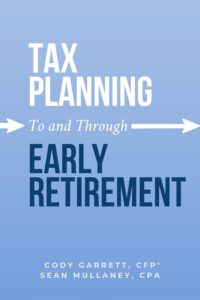
Tax Planning To And Through Early Retirement
(Cody Garrett and Sean Mullaney)
An individual on a 'traditional' retirement path might work well into their 60s (perhaps until reaching Medicare eligibility or their Full Retirement Age for Social Security benefits) before leaving the workforce completely. While this path is often supportive of financial success in retirement (e.g., by working [and saving] through one's highest-earning years), certain individuals might prefer to follow a different kind of retirement path, retiring (much) earlier in order to have more years to enjoy retirement while they are in good health.
Yet while early retirement might be a goal for many, actually making it happen is associated with a variety of financial planning considerations, not the least being the ability to save sufficient assets to be supportive of what could turn out to be a 40+ year retirement period. In addition, tax planning also comes to the forefront for early retirees, both during their working years (e.g., deciding the best vehicles for savings) and in early retirement (e.g., creating a drawdown strategy from accounts that receive different tax treatments).
In "Tax Planning To and Through Early Retirement", financial planners Cody Garrett and Sean Mullaney walk readers through the range of tax planning considerations leading up to and during early retirement. A core argument of the book is to "pay tax when you pay less tax", kicking off a discussion of strategies that can be implemented while an individual is in their working years and as they enter and progress through retirement. For example, the authors are proponents of what they call "The Compelling Three" tactics for saving for early retirement: making traditional workplace retirement account contributions (the book spends significant time 'running the numbers' on how how this can be an advantageous approach tax-wise during working years compared to making Roth contributions to these accounts, and addressing common concerns with it), Roth IRA contributions (to take advantage of its tax benefits over taxable brokerage accounts), and taxable brokerage account contributions (which can offer significant flexibility when it comes to generating income in a tax-efficient manner by having assets with after-tax basis and no retirement account restrictions to draw against, particularly in the first years of early retirement).
For those entering early retirement, the authors discuss drawdown strategies (e.g., generating cash flows from taxable accounts first to take advantage of long-term capital gains treatment and reduce income from taxable dividends, among other reasons) and potential tax-saving tactics that can be deployed in early retirement (e.g., tailored Roth conversions and capital gains harvesting to take advantage of low-income years Also, given that it is often one of the primary concerns of individuals pursuing early retirement, the book discusses health insurance options for early retirees and a detailed rundown of how the premium tax credit for Affordable Care Act (ACA) insurance plans works (as many early retirees will be using these plans in the years leading up to Medicare eligibility and could see significant savings by managing their income to maximize tax credits during this period).
While nominally written for an audience of aspiring and current early retirees, "Tax Planning To and Through Early Retirement" offers significant value for a range of financial advisors as well, from those early in their careers who want to better understand how to put tax planning theory into practice through detailed examples (e.g., on the benefits of tax timing and other concepts that apply to early and 'traditional' retirees alike) to more experienced advisors who want to brush up on certain technical topics (e.g., ACA premium tax credit qualification) that could ultimately provide clients considering or entering (early) retirement with significant hard-dollar tax savings!
Sydney's pick
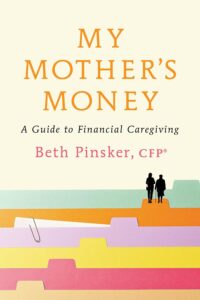
My Mother's Money: A Guide To Financial Caregiving
(Beth Pinsker)
Estate planning conversations are typically, at minimum, uncomfortable. Planning for one's own illness, decline, and death can at the least be disconcerting and make us feel vulnerable. And more often is simply outright unpleasant as clients dissect care plans, anticipate heirs' ability to manage money, weigh charitable and legacy plans, review asset allocation, and navigate other complex logistics they must contemplate in the face of their own mortality. As such, it is normal for client households to procrastinate part or all of these conversations as something that can be handled 'next time'.
However, unfortunately, once this decline typically begins, it can happen both quickly and slowly – that is to say, a compromising health event can mark a 'turning point' where it's too late to make decisions proactively, but then a person may live for several years in an incapacitated state where the consequences of not having taken action now stretch out. Which means 'next time' can become a devastating marker for families who haven't adequately prepared. And households that are prepared may still run into unexpected obstacles by sheer virtue of the complexity of various systems that need to work during this vulnerable, emotive period, given that the end of an individual's life is often intersects with medical, insurance, legal, and financial systems.
In "My Mother's Money", Beth Pinkser outlines her experience as her mother's primary caregiving during her final years of life. What makes this book unique, however, if that Pinkser herself is a Certified Financial Planner and long-standing personal finance journalist, who is familiar with the estate planning process. Yet during this journey, Pinkser still encountered unexpected roadblocks and complications, from genuine power of attorney (POA) access to the sheer emotional, financial, and physical tolls of end-of-life care.
Part-memoir, part-how-to, Pinkser draws from her experience to create valuable resources for planners (and family members) covering this process. To that end, "My Mother's Money" provides a series of templates and conversation starts that cover topics from account access to hospice planning.
What is underscored in "My Mother's Money", however, is the sheer burden that caregivers face. For example, Pinkser outlines how complex it was to activate the POA to get access to her mother's accounts – despite having the documentation prepared in advance and in-hand, and the bank tellers personally knowing Pinkser's money.
As a result of this experience – and the setbacks encountered – "My Mother's Money" provides a series of templates and conversation starters that cover topics from hospice resources to burial plans, which can be used to ensure that end-of-life and estate plans are wholly complete. And advisors that work with caretaking clients may want to help them analyze and navigate the 'true' costs of care – which can include reduction in their paid work (or leaving the workforce entirely) to provide family caretaking, and/or paying for additional, unexpected aid (particularly for those who don't have such job flexibility).
Ultimately, the key point is that whether planners are working with clients caring for loved ones in decline, or retirees who may be the 'typical' candidates for estate planning, the key takeaway from this book is that estate planning preparation may be uncomfortable, but it is nonetheless crucial. Advisors who can create genuine urgency – or at least work with estate planners to slowly iterate through this checklist – can make an enormous difference in the long term! And for some advisors, offering their clients a copy of the book may be an appealing way to help convey the importance of tackling their own estate planning issues!?

Sydney's pick
Better: A Surgeon's Notes On Performance
(Atul Gawande)
Health and money are primary shaping forces in most people's lives; a few decisions or points of divergence can make a tremendous difference. And those who have expertise, in either medicine or financial planning, often join because they want to help people– however, the science of effective treatment is often more complex than 'just' technical knowledge and bedside manner. Similarly, often, being a good advisor is about communication psychology, client implementation, iterative process improvement, and team implementation, and paying close attention to the less-obvious symptoms of issues lurking beneath the surface.
In "Better: A Surgeon's Notes on Performance", renowned surgeon and writer Atul Gawande details how medicine improves over time – across large populations, hospitals, and medical teams. Some of Gawande's writing relates to why patients (similar to clients of advisors) sometimes don't implement – from lack of education to other barriers (such as an example where soldiers refused to wear goggles because they were too ugly – despite the resulting injuries). Other studies relate to clinical teams, particularly related to change management – for example, when a single, slight slip in hygiene practices can result in severe illness or even death, clinical practices need to not only be excellent, but also practical and scalable. Finally, Gawande covers how surgeons themselves can perform better.
While the stakes for financial advisors may be lower than the immediate life-or-death consequences of general surgery, financial decisions can have far-reaching impacts as well, from tax planning to retirement spending to insurance and legacy decisions. The ramifications of many of these decisions can stretch decades, but there is rarely a single 'right' answer to different financial planning issues. Rather, the challenge for the advisor is how to parse a client's issues, circumstances, and goals to find a harmonious solution that clients will (actually) implement. And for advisors that lead teams, the persistent question is how to measure and ensure a consistent continuity of care throughout the firm.
For advisors wondering how to make their practices run better, Gawande advocates for consistent curiosity. Patients and staff can often articulate their pain points well, even if they seem innocuous – such as soldiers who refused to wear protective eyewear because it was ugly, despite the high risk of injury. Sometimes though, the reality is that the advisor didn't understand the client's concerns well enough and unwittingly "missed" something, such that the client does not implement the advice, because it did not solve their 'real' problem. Other times, the issues are surfaced effectively, but the articulated obstacles can be mindboggling; still, in responding to them, Gawande notes, etiquette is often just as crucial to successful implementation as knowledge. Occasionally, the solution is as simple as communicating clear expectations; other times, it may require looking ahead to newly developing technology to make a process more scalable and sustainable. The core takeaway is to be flexible, open-minded, and persistently curious – including about the expert's own performance and practices and how they might improve their own advice delivery to improve how often clients actually implement!
Sydney's pick
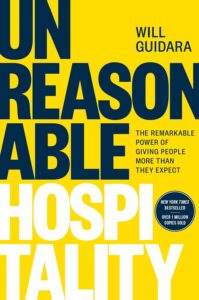
Unreasonable Hospitality
(Will Guidara)
In the financial planning profession, technical skills are crucial, but are also increasingly becoming 'table stakes'. That is to say, amidst the competition between large advisory firms, artificial intelligence, and robo-advisors, being able to arrive at the 'right' answer is important (and human advisors are particularly good at arriving at the 'right' answer in the broader context of a client's personal life and constraints), but it isn't everything. Instead, just as important is how the advisor and firm are experienced and 'feel' to prospective and current clients. This element often comes down to hospitality – and while it is often intangible, it is both crucial and attainable.
In "Unreasonable Hospitality", Will Guidara explains his experience as a general manager in the restaurant business and how (similar to the current state of many successful advisory firms), after the restaurant had honed their operational and technical skills, they realized that the only way forward was through creating a better experience. To explore the theme, Guidara then alternates between on-the-ground operations tactics used, and the high-end leadership takeaways, throughout the remainder of the book.
For advisors, hospitality can come down to many details early on in the relationship – from ensuring that prospects have clear expectations going into their initial meetings, to tracking small client details. Alternatively, hospitality can also be grand – like client appreciation events, gifts, or paying for certain services for clients. The key is to have a foundation of excellent hospitality – nice touches that are used universally – combined with unique touches that affirms to the client that the firm truly understands them.
Another core takeaway for advisory firms is that having the right team is crucial – in order to have a team that creates exceptional experiences, the right people have to not only be hired, but also retained. Delivering exceptional results often includes exceptional autonomy, which means that leaders have to be clear about the end vision for what the client should receive or experience, so team members can make autonomous decisions and stay aligned to the firm's vision. Yet when a team member really 'gets' the firm's vision, sometimes the best thing a leader can do is get out of their way and allow them to innovate about how best to serve clients in the moment. To balance this from an operational perspective, Guidara notes the 95/5 rule: 95% of a business's operational expenses must be planned down to the penny… so that 5% can be spent 'foolishly'. When autonomy is given to the right people – and rewarded – it can yield great results.
Ultimately, the key point is that hospitality and a great client experience comes down to clear expectations of the firm's vision and goals, and team communication so that every team member internalizes how to apply the vision and goals in their own context. When the entire firm can define a great experience – and has the autonomy to deliver it relative to their seat and responsibility – the clients have a great experience. This in turn leads to more referrals and growth, which then creates greater opportunities for unique touches!
Adam's pick
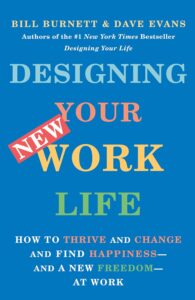
Designing Your New Work Life
(Bill Burnett and Dave Evans)
After working at a particular company or in a certain position for an extended period, individuals can sometimes fall into a professional 'rut'. Which can be particularly true when they feel as though they have limited autonomy in their work life (a key factor in determining financial advisor wellbeing, according to Kitces Research) and feel as though their work doesn't 'matter'. Which can lead them to start dreaming about a different job (which could be disruptive to their lifestyle) or leaving the workforce altogether and retiring (if they are actually financially prepared to do so).
In "Designing Your New Work Life", Stanford professors Dave Evans and Bill Burnett offer readers a proactive path to diagnosing what might ail them in the workplace (or, if they are currently in a good place professionally, what could make it even better), and how they can make improvements to their current job (or, if absolutely necessary, finding a new job or employer). Through conceptual discussions, real-life examples, and exercises, the authors encourage readers to first diagnose their current situation (identifying both positives and negatives about their current position) to unearth the root cause(s) of their dissatisfaction, which can then be broken down into what they call "Minimum Actionable Problems", which can be addressed more easily.
The heart of the book is a discussion of how employees can take matters within their own hands to 'design' a better work situation with their current employer rather than simply leave to look for greener pastures (though the authors also offer advice for "quitting well" if their situation truly is untenable). For instance, someone who is frustrated that they're not advancing within their firm might consider how they might realign their work activities to better match their employer's priorities. Alternatively, this individual might consider finding the types of responsibilities within the firm that would better match their strengths and that they could take on. Sometimes, this could mean being on the lookout for internal job openings that might be better tailored (or perhaps advocating for the creation of a new position altogether). And even for those who want to make a major change, the authors highlight that it's often possible to 'reinvent' one's career while staying within the same company (e.g., in the advisory context, moving from the advisory side to the operational side of the business, or vice versa). The key, though, is to keep an open mind on the available possibilities, rather than assuming that an individual is 'stuck' in their current role and circumstances.
Throughout the book, financial advisors will likely recognize examples that reflect the situations of clients going through workplace stress (which could make the book a good gift for clients?). In addition, advisors could find significant value from this book for themselves (even if they're content in their current position) by taking a step back to consider how their current job matches (or doesn't) their personal strengths and professional goals and learning strategies to help them improve their professional situation. Finally, advisory firm leaders could use the book to better identify signs of frustration amongst their employees (e.g., asking themselves whether they might be micromanaging in a way that could be limiting employee autonomy), and how to create a company culture that encourages career innovation (ultimately leading to better staff retention!).

Michael's pick
Grow Wellthy: The Financial Advisor's 4-Step Plan To Protect Your Health Like An Asset
(Stevyn Guinnip)
Playwright George Bernard Shaw is known for various versions of the famous quip: "Youth is wasted on the young", a recognition that when we're young we often take our vitality and health for granted, and it's not until our later years that we realize what precious things those are… often at the point that we no longer have them.
This challenge is often magnified in the context of business owners, who may go through many sacrifices of both their time and energy and health to build their business (or book of clients in the case of a financial advisor). Where the good news is that eventually, after investing so much of their time and energy and potentially sacrificing their health, they can build a firm that is big and successful enough that they have the financial freedom to buy back their time and reinvest it into their health… fulfilling a bizarre version of the Mexican Fisherman story where we give up so much just to achieve the wealth that allows us to afford what we already had and gave up in the first place.
Nonetheless, this is the path that so many of us as financial advisors have pursued, and so in "Grow Wellthy", health coach Stevyn Guinnip explores what financial advisors can do when we eventually reach the moment that she calls "The Big Swap"… where we go from the decades we've spent trading our health to build our wealth, and decide it's time to go the other direction and begin to trade some of our wealth to regain our health.
For most, the starting point is some version of "Eat Less and Exercise More", but Guinnip suggests that for high-stress professionals like financial advisors, this is not actually the best place to start. Instead, it begins with your Mind(set) and whether you're even ready to pay mental attention to your key health metrics (and start tracking them) and start strategizing around how you might change (akin to the client who isn't realistically going to take action if they don't first create the mental space and make the investment into creating a financial plan to begin with).
From there, allowing your body to Mend – winding down your accumulated stress levels and sleep deficit – becomes most important. As physiologically speaking, a financial advisor (or any person) who carries substantial stress and sleep debts will likely have metabolic challenges that make it almost impossible to lose weight and get healthier (as the body in its stressed state will fight to conserve fat for the battles it still anticipates fighting), and like any 'debt' will continue to accumulate interest that means even if you take proactive steps to get healthier they may do little more than offset the interest (and fail to pay down the principle).
Once Mindset and Mending are in place, advisors can pursue the more 'traditional' goals of better dietary habits (at the least, balancing amongst the major food groups), and getting more exercise (not just maintaining some level of daily activity, but building strength that helps with resilience, and working on mobility to avoid the injuries that can ultimately be the most debilitating). Which Guinnip ultimately characterizes as the "Four M's" – Mind, Mend, Meals, and Move – where advisors are only as healthy as their weakest score (as a shortfall in any one tends to constrain any benefits that might otherwise be achieved in boosting the other scores higher).
Ultimately, Guinnip's "Grow Wellthy" isn't necessarily any novel health science that might not be read in other books like Peter Attia's "Outlive", but it is presented well in the context of financial advisors (with whom Guinnip specifically works as a focus in her own career as a health coach), with financial-oriented metaphors that translate well, and a focus on the aspects that are especially relevant or problematic for advisors (e.g., advisors often have relatively healthy eating habits, it's the failure to Mend and address the metabolic impact of carrying high stress for years on end that is often the culprit). So for any advisors who, for better or worse, have traded their health to build wealth, and are now ready for Guinnip's "Big Swap", "Grow Wellthy" is a good read to start getting your health on track!
Michael's pick
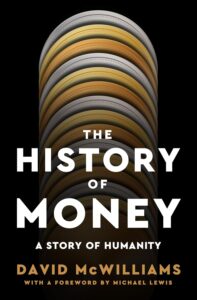
The History Of Money: A Story Of Humanity
(David McWilliams)
The traditional view of money is that it serves a few key functions that help to facilitate economic transactions: it serves as a medium of exchange (so people don't have to trade two bushels of wheat for three chickens, which is a problematic barter if they only needed one bushel of wheat…), a unit of account (so everyone can agree on a standard price for how much money is due if they sell wheat or are required to buy chickens), and as a store of value (so people can sell their wheat today and have confidence that their money will still be worth something to buy chickens when are needed later). To that end, the primary virtue of money when it was first created is that it helped to grease the wheels of economic growth and commerce, as it's far easier for transactions to occur with and through money than it was in the barter systems of old.
However, the reality is that money itself has gone through many innovations over the years, from commodities (e.g., bushels of grain) as money, to the evolution of charging interest for the right to use someone else's money (and the idea that you could make money with money), to the creation of coins as a standard currency for exchanging money, the emergence of credit as a way to not just borrow money but trade in a borrower's obligations, to more 'modern' creations like the introduction of fiat money that exists not by the underlying usability of the money (like commodities) or what the money is secured by (e.g., the gold standard) but collective societal trust that the money will be honored, and now even more modern innovations like cryptocurrencies.
What's interesting about "The History Of Money", though, is how David McWilliams demonstrates that innovations with and the evolution of money is also a driving force that impacts everything from art to politics to society itself. For instance, every great art boom (from ancient Greece to the Renaissance in Florence to the Dutch golden age in Holland) was preceded by an monetary invention that shifted the underlying economy to prosperity. Conversely, many of the greatest political hardships that countries have endured – culminating in events like the French Revolution – can trace their roots back to monetary disasters that constrained the money supply and thereby limited (or outright undermined) any potential for economic growth, with the resulting economic hardships triggering regime change.
In fact, money itself has been used as an instrument of war. Hitler had an infamous plan during World War 2 to create billions of counterfeit British currency that would be air-dropped into the country in the hopes of hyper-inflating and debasing the British economy. Similarly, Lenin sought after the October Revolution of 1917 in Russia to wring capitalism out of Russian society by intentionally triggering massive money printing to debase the Russian currency and destabilizing the existing societal order. Yet at the same time, money has also been an instrument of peace through much of its history; simply put, why take the risks of waging war on neighboring countries for their land and resources, when we can simply trade with them using money to get access to what we need?
Ultimately, it's not news to financial planners who sit across from clients every day that money is both deeply personal, and can be a profound tool for personal freedom (literally, the ability to accumulate enough money that you don't have to work for a living and instead can live your life doing whatever you want). But McWilliams effectively highlights how this impact of money is true not only at the individual level but also for society and the world at large, and in a light and entertaining read, documents how this evolution has played out over nearly 5,000 years, and how it continues to be as relevant as ever day in our current system of money (which, for all its faults, McWilliams shows is arguably a better system of money than any of the versions that preceded it, even as we continue to explore what the next stage of money might be with the emergence of cryptocurrencies and other emerging forms of "private money"!).

Michael's pick
Value Creation Kid: The Healthy Struggles Your Children Need To Succeed
(Lee Benson and Scott Donnell)
While it's fairly universal for parents to want to see their children be successful, financial advisors are often especially oriented towards the success of their children, both in the spirit of teaching good financial habits for them to be able to achieve their goals, and because so many financial advisors are business owners who are hopeful to see their children pursue a similar path (for their own entrepreneurial success, or even to become successors of the advisor's own business). Yet at the same time, the sometimes dark reality is that success as a business owner often comes through a long stream of trials and tribulations, and sometimes outright trauma… which are not the experiences we wish on our children, even if those are the experiences that may have helped to shape who we have become.
However, as Benson and Donnell highlight in their book "Value Creation Kid", there is an important difference between trauma (an emotional response to certain events, from accidents to abuse to natural disasters or loss or death) and other types of struggles (that may be challenging but don't result in trauma). After all, anyone who has had to master a skill, or work through a conflict, or change their behavior (for the better), or study when they weren't in the mood, has dealt with some version of struggle. And in those situations, there are opportunities as a parent to help them deal with and navigate through the struggle, in the process learning perseverance and building confidence.
With that as a foundation, Benson and Donnell then advocate that children should have the opportunity to create value – or struggle trying, or deal with the occasional consequences of failing to deliver value – in order to further develop their confidence and their capabilities (skillsets) … and simply to create a strong foundation for them to understand that creating value is path to get (more) financial compensation in the world, effectively building a key foundation for their future financial success.
Of course, the reality is that when this happens with children in the home, it quickly gets into a quagmire of other dynamics like allowances and chores, where many parents struggle to find a balance. The "Value Creation Kid" framework, that they dub the "Dinner Table Method" (and have created an app to help facilitate), builds around the idea that chores are Expectations (that are simply part of being the family and should be done regardless of financial considerations), that allowance should be tied to Expenses of the children (shifting money that is already spent on the kids outside of necessities to be money they're responsible for spending), and that all children should then have an opportunity to earn 'Extra Pay' by doing 'Gigs' that create value (which they can then use to buy more things in their spending plan that isn't covered by their allowance, so they can learn the benefits of working for money and then enjoying the benefits of getting to spend what they earned!).
Ideally, eventually there's no allowance at all, kids have Home Gigs to earn the baseline of their spending bucket, and extra-pay Gigs to spend even more if they want to. Notably, "Gigs" in this context are quite wide-ranging, and intended to be accessible for even young children. Examples include "Action Gigs" (things that require your hands and feet to accomplish, such as cleaning the garage, doing yard work, making meals, cleaning bathrooms, etc.), and "Brain Gigs" (that require you to think rather than do physical labor, such as watching extra educational videos, researching a topic for Mom & Dad, reading books, or even watching an informative Ted talk and writing down the lessons learned).
Ultimately, though, the system is simply built around the idea of kids taking on "extra" tasks (of increasing levels of complexity as they get older), where they can learn to do the task successfully (building capability), feel the success of having done it and earned something (building confidence), and that the money they increasingly earn and then allocate to cover a growing portion of their own expenses helps them build financial competency to be able to manage their spending and savings as they become young adults. Ultimately, bringing the whole system together (to manage spending allocations and an ongoing flow of Gig earnings) means that full immersion into the system likely necessitates buying and using their app (well worthwhile if you find the system valuable!?), though even those who don't want to go all-in on the system will still find the "Value Creation Kid" framework and its principles of encouraging healthy struggle to build capability and confidence to be helpful!
If you're still looking for more book ideas, be certain to also check out our prior summer reading lists, along with our overall list of recommended books for financial advisors. They may be lists we've published in the past, but if you haven't read the books yet, they're still new to you! 🙂
Top Must-Read Books for Financial Planners
2025 Summer Reading List of "Best Books" For Financial Advisors
2024 Summer Reading List of "Best Books" For Financial Advisors
2023 Summer Reading List of "Best Books" For Financial Advisors
2022 Summer Reading List of "Best Books" For Financial Advisors
2021 Summer Reading List of "Best Books" For Financial Advisors
2020 Summer Reading List of "Best Books" For Financial Advisors
2019 Summer Reading List of "Best Books" For Financial Advisors
2018 Summer Reading List of "Best Books" For Financial Advisors
2017 Summer Reading List of "Best Books" For Financial Advisors
2016 Summer Reading List of "Best Books" For Financial Advisors
2015 Summer Book List For Financial Advisors
2014 Summer Reading List Of Best Books For Financial Advisors
2013 Summer Reading List Of Top Financial Advisor Books
So what do you think? Will you be reading any of these books over the summer? Do you have any suggestions of your own that you're willing to share? Please share your own great reads in the comments below!