Executive Summary
 Welcome everyone! Welcome to the 500th episode of the Financial Advisor Success Podcast!
My guest on today's milestone podcast is me, interviewed by Kitces.com Financial Planning Nerd Adam Van Deusen.
In this episode, we talk in-depth about how I manage my time, starting with the exercises I undertook to better understand where my time was going (and how it might be used better), how I started delegating certain tasks to others so that I could focus on higher-value opportunities, and how I balance my responsibilities across the Kitces.com platform and other businesses I'm involved in with raising a family and still having time to get enough sleep each night.
We also talk about how I made the decision to forgo an opportunity to run a successful advisory firm to start the Kitces.com platform, how I gained the confidence to transition away from producing much of the content on the website by identifying key metrics that show whether team members who took it over are meeting our standards for quality, nerdiness, and relevance, and how I have intentionally managed the growth of my business (sometimes purposefully delaying new initiatives in order to 'digest' recent growth) to ensure it continues to operate in a sustainable manner well into the future.
And be certain to listen to the end, where I share how having well-defined core values (and interview questions that explore them) has helped attract high-quality candidates to the company when we look to hire, what's coming next for Kitces.com and for my own entrepreneurial journey, and how I view advisor success after recording 500 episodes of this podcast (and asking each guest what success means to them).
So, whether you're interested in learning about how I manage my various work and personal responsibilities, how to let go of key responsibilities as a business owner, or how to create a company culture and interview process that leads to better hires and a stronger team, then we hope you enjoy this episode of the Financial Advisor Success podcast.
Authors:


Podcast Player:




Resources Featured In This Episode:
 Michael Kitces: LinkedIn | Website
- #FASuccess Ep 020: Building A Successful Business By Giving Away 99% Of What You Do For Free with Michael Kitces
- #FASuccess Ep 200: Scaling A Successful Business Beyond Yourself By Constantly Reinventing Your Role, With Michael Kitces
- 20 Lessons Learned From 500 FAS Podcast Episodes: What I Learned Building An RIA From Scratch In My 20s
- Financial Advisor Technician (New Podcast!)
- How Advisors Can Get Client Referrals By Identifying "Active Promoters"
- Level Up Program
- Bob Veres
- Stephanie Bogan
- "Rocket Fuel" by Gino Wickman
- "Traction" by Gino Wickman
- Entrepreneurial Operating System (EOS)
- Dan Martell's Framework
- NEXA Insights
- Absolute Engagement's Engagement Engine
- Jump
- Zocks
- Advisor Economics
Full Transcript:
Adam: Hello, and welcome to the "Financial Advisor Success" Podcast. I'm Adam Van Deusen, one of the financial planning nerds here at Kitces.com, and I'll be hosting today's episode, which is special not only because it's our 500th episode of the "Financial Advisor Success Podcast," but because our guest today is none other than Michael Kitces himself. Michael, welcome back to the "Financial Advisor Success Podcast."
Michael: It's good to be back on the other side of the microphone. It's a little bit strange. The whole experience feels very bizarrely different now.
Adam: Well, I should give you congrats on reaching the 500-episode milestone. Publishing a 90-minute podcast every week for almost 10 years is no small feat.
Michael: It's a little wild to literally think, wow, that's basically 750 hours of talking shop on a microphone. I guess just as some people ask, do I get tired of having these conversations and talking shop? No, I really would just keep talking shop forever. I think it's an amazing business, amazing career, amazing profession. So, I guess truly ten years in, I'm still not tired of having these conversations with advisors about building and growing businesses and serving clients better.
Adam: Well, I should say on the note of spending time with us, we do have to thank all of our listeners out there. I know many of you have been with us since episode one, but no small feat to keep up with the podcast over the weeks and years as well. So, thank you for joining us.
Michael: At least now modern technology lets you hit that 1.2X, 1.5X, 2X speed, depending on how quickly you can do it, so you can whittle those hours down a little.
Adam: That's true. Always looking for that efficiency.
Michael: Yes. Always efficiency. Always looking for time efficiency.
Adam: Well, that's actually a good segue because on that note, I'm really excited to dig in today on a topic that I think is relevant to just about all of our listeners, and that's how to handle time management. There are only 24 hours in a day, and at least some of that needs to be used for eating and sleeping and other non-work activities. There are so many opportunities available to be explored, and I think particularly for entrepreneurially minded folks like yourself. With that in mind, it can be a challenge to fit everything in. From the advisory firm owner side, that could mean balancing some combination of meeting with clients, working on business development, as well as working on the business itself, from high-level strategy to managing personnel. I think, as anyone who's familiar with your background knows, you're involved in many different businesses, including the Kitces.com platform and several others that serve the advisor community, which must require its own special kind of balance.
So, to kick things off today, I'm sure our listeners would be really interested in hearing more about your approach to time management and how your day-to-day schedule has evolved over time.
Michael's Approach To Time Management [04:45]
Michael: I appreciate that. Yeah, we still get a lot of the questions like, "Does Michael sleep?" I do. I basically get my eight hours a night. I have to. I actually function very, very poorly on lack of sleep. I get very cranky very quickly. So, I really do get a normal amount of sleep. I play with my kids and I work, and there's not a lot between those three. In part, because I really enjoy all three of those, sleep and family and the work. To me, the time nature of it has evolved. As anybody that has built careers for ourselves have experienced, you get various versions of the sayings from Dan Sullivan, like find your unique ability and put all your time there. General business sayings like, try to find your highest and best use of time in the business and reallocate your time there. I've taken that very seriously over the years in really truly trying to figure out where should my time go, what really creates the biggest lift. I often like to talk about levers, like what pulls the biggest levers in the business or in the businesses now that move them forward.
I had come across an analogy for this a couple of years ago. I feel bad that I don't actually remember where I heard it from because I really want to give them credit, and I'm not sure where it's sourced from. It was a discussion that said, look, if you look at athletes at the top of their game, particularly in the modern era, there's a pretty common phenomenon for almost any athletes that are trying to be at the top of their game, which is they record everything that they do, video record everything that they do, and they go look at the tape with their coach, who gives them sometimes candid and blunt feedback about what you're doing, what you're not doing well, how you could improve. When athletes get to the top of their game, the irony is you have to actually record it and go back and do a frame-by-frame to look at it because really good performers are so good. The big obvious tweaks aren't there anymore. You really have to actually get into the details of the swing or the throw or the motion of whatever it is that they're doing to say, "Okay, but how can we improve this further?" Because there's always room for improvement. No matter how incredibly successful an athlete is, there's always a coach, and they're always recording and going back to look at the tape to figure out how to get better.
The analogy that was told to me is if you are in a leadership position, you actually have the same kind of phenomenon and opportunity. There's always benefit to having a coach who can give you feedback about what you can't see about yourself that you need to improve, and there's always an opportunity to go back and look at the tape and figure out where you could've gotten better. Except in the context of leading and building businesses, you're not going back to the tape for your swing or your throw or whatever the physical motion is. You're going back to the tape to look at where your time went. So, I got into this habit of becoming increasingly proactive in recording and tracking where my time was going. I'm not a natural time tracker. Automatically, I was never really a big fan of using the various apps and tools to do this, so I had to find the simplest possible way for me. The simplest possible way for me was I just started putting on my calendar everything that I was blocking out time for. Because meetings is the biggest thing for most of us that chews up blocks of time. So, my calendar's already full of meetings. I knew what that looked like. So, I just had to start adding blocks of time for, "Oh yeah, you spent two hours working on this project. Spent three hours digging into this client stuff. Spent an hour on this new project we're trying to get off the table in the business."
So, I started putting these in my calendar, not in the 5- and 15-minute meticulous levels that some people do, because I don't have the patience for it. Nothing wrong with it, I'm just not good at it, but at least to get the main thrust of, okay, at the end of the day, where's my time really going, and if I had some blank spots, I would at least try to go back and sort of like, "Oh, I had an hour between the morning meeting and right after lunch meeting. Where did that time go? Oh, I was at lunch." Or, "Where did that time go? Okay, I can acknowledge I was basically surfing social media for 45 or 50 minutes of that hour. We'll go ahead and record that." So, just trying to get the major blocks of time and where they are. And then just broke them out into a couple of categories to understand where at the end of the day does my time go?
I had a category for just all the "work in the business" time, internal team meetings and the weeklies and the one-on-ones and things like that. I had a marking for all my external business development activities. Because I'm involved in a few different businesses, I had just some broad time of how much time was going to the various businesses. So, it was only about half a dozen major categories to understand basically where the time was going. Then I tracked it for a week or two, and sat down and looked at it and was absolutely horrified of all the places you think your time's going till you actually track and measure it, and you're like, "Oh, wow, yeah, that's why I feel like I don't have as much time to do the things that I want to do."
Then in the same manner of go back to the tape and figure out what you can do to get incrementally better, I just started going back to the time tracking spreadsheets, just a big old spreadsheet. I just kept going back to the time tracking spreadsheet and tried to figure out where could I get better. Ironically, one of the first things I realized I could get better was not actually tracking the time myself. So, then I delegated the spreadsheet to another team member and said, "Pull the numbers from my calendar and put them onto the spreadsheet, and just keep it maintained so I can look every month and figure out where my time went."
Adam: Interesting. So, I guess maybe to put this in perspective, what year is this? Where were you when you started time tracking? Was this very early on in your career? Once you had your own businesses? When was that?
Michael: Oh, good question. No, this was much later. This was probably about four or five years ago now that I really started doing this. I think I've always had some orientation towards, as a business owner or even before, as a productive professional, try to put your time towards your highest and best use. It's funny, if I go all the way back, I started 26 years ago in the 2000s, and if you look at what was going on in the 2000s at the time, we were just getting into the era where AUM firms started growing beyond the founders. If you go back to the 1990s, almost anybody who had an AUM firm, it was like you and an assistant and $17 million and 50 or 60 clients, and you were just trying to figure out how to survive.
Firms didn't really start getting to the point where you could have enough critical mass of clients that you would actually start hiring, expanding a team, and having multiple advisors, some of whom might not even be the owner, founder, partner person as you started to scale the business. This is when folks like Dan Sullivan and a lot of other practice management coaches started showing up the industry and saying, "Founders, if you want to keep growing and getting to the next level, you have to put all your time towards your highest and best use, and then build teams around you and delegate and let go of the rest." At that time, I was the entry-level person, but this was all of the practice management conversation in the industry, and so it sunk in by osmosis or something.
So, I always had some orientation in this direction. So, I've always sought out some ways to let go of things that I can delegate down that "are not my highest and best use" for my time in driving the business forward. So, the first model of this was probably some version of what are the $20 an hour tasks that I could delegate to someone? So, I hired some admin support. Then I was like, what are the $30 to $50 an hour tasks? So, I hired some slightly higher-level admin support. Then like, what are the $100 an hour tasks? Now I'm hiring people that have more specialized knowledge and capabilities. So, I always had some version of find the things that I could hire someone else to do, delegate and transition to them so that I can focus my time into the things that are either growth-generating or just at least produce the most value for the time, whether that's focus on the client work, focus on the growth of the business, launch a new business. It's been a couple of different hats over the past 20 years. I always had a version of that.
I think what shifted was eventually I got pretty good at letting go of those things. We got up to 10 or 15 team members on the Kitces.com team, and a lot of business partners who were very good at running some of the other businesses that I'm involved in, where they're living in the day-to-day. I feel like I ran out of the fairly straightforward like, "Oh, well, here's another thing that just is pretty delegable. I just need to add a team member or outsource this or train someone to do the thing." I ran out of the, call it the straightforward things to delegate, and was trying to figure out, "Okay, so what else am I supposed to let go?" Because I kind of let go of the most straightforward delegable things. That was when I really felt like I needed to start tracking the time because I was trying to figure out, what comes next if I'm going to try to keep down this process of self-improvement because the filter I was using, find $20 an hour tasks, then $50 an hour tasks, then $100 an hour tasks, that was my filter for a long time to figure out what to keep doing and what to let go of, and eventually that filter broke. I ran out of things that I could clearly delineate on that criteria because I'd gotten my time pretty focused into a lot of productive things that I needed to do, then I needed some other way to figure out, "Okay, how do I adjust my time because I ran out of easy delegable things?"
Adam: Now, it sounds interesting because you're speaking of this as a business owner, but it sounds like the kind of time tracking idea is potentially applicable all across the spectrum, whether you're an employee, advisor, even a student, aspiring advisor out there. Everyone has a...it might not be a $20 task, a $5 task. What's something either you could delegate to someone else or something that maybe you could upgrade your skills in terms of what you're doing.
Michael: Oh, absolutely. I think for me, it only shifted because...again, I think about this a lot in terms of filters to try to prioritize and make decisions. I didn't necessarily feel like I needed time tracking to reflect on stuff like, I don't know. I need to be aware of the financial health of my business, but opening QuickBooks and logging the items probably is not the highest and best use of my time. I'm very knowledgeable. I know finance things. I'm very capable of doing this, but this is not really what grows revenue or drives the business forward. And so, bookkeeping I think was literally the first thing I hired out and delegated as a business owner. Bookkeeping and then billing and invoicing things that went along with it. Because I always had an orientation towards that, it was like I didn't need a time tracking exercise to sit down and say, "Wow, I'm spending an hour every month on bookkeeping, and I could probably let that go to someone else." I just looked and was like, "Bookkeeping, I don't think this is the best thing in the world for me to be doing as a financial advisor and business owner. I'm going to go find someone else to do that."
At the beginning, as all of us have lived, at the beginning you do everything because you have a lot of time and not a lot of revenue, but as that balance began to shift and all of a sudden, business was growing and more things were happening, and I had at least a little bit of dollars to buy back my time in the Dan Martell framework now. I started looking for things to buy back my time, and it started with admin things that I could buy back for $5 an hour, $10 an hour, $20 an hour to get lifts, and ran that mechanism as long as I could. And that lasted 15-plus years of iterations before I really felt like I was running out of figuring out things to just delegate with that model.
Adam: Perhaps being more cognizant about your social media scrolling time, right?
Michael: Yes. There's a little bit of things that are not delegable things. They're just, "That was not a very productive thing to be doing. How much time I have gotten spent on social media during certain weeks or months or years of my career era?" And even then, trying to put that in a box to say, "Look, I do a lot of stuff on social media. I have for a long time. It's been a positive driver even of the business as well as a lot of relationships that I've built." So, I'm not even trying to bash social media. I've actually found a lot of pluses. Very direct, tangible career benefits of being involved and engaged on social media. It is something that can very quickly become a time sink if you don't put a box around it. So, I didn't come in and say like, "Oh geez, I have to stop social media because it's chewing up a lot of time." I did come in and say like, "Well, maybe I can check all the major things that I want to check in 30 minutes a day, or 15 minutes in the morning and 15 minutes in the afternoon to see some of the new posts and reply to some people who posted things at me or asked questions of me or whatever it is." But put a box around it because, otherwise, it's pretty easy to scope creep that into hours, then you're like, "Wow, where did this day go?" Oh yeah, if I time track it, I'm not going to be happy to actually know where that day went.
Again, if you want to get better and more impactful in what you're doing, you have to get clear on where the time is going, even if that's to make the conscious decision. There are things that I do that are not immediately revenue-generating or "highest and best use." I just feel like doing it, and it's my business, so I get to do that if I want to. But at least going in eyes wide open that I'm doing that and the time that it's taking.
Deciding To Forgo An Attractive Job Opportunity To Start The Kitces.com Platform [20:10]
Adam: I was going to say, speaking of your business, for listeners out there, this is actually Michael's third appearance on the podcast. He was previously on episode 20 and episode 200 if you want to go back to listen to him on those, where he talked a lot about his sort of origin story in the financial advisor space, as well as the early growth of his business at Kitces.com. Because in 2020, it sort of left off with Kitces just about getting ready to take that next growth step. So, I think it's going to be interesting to circle back in this idea of what were some of the specific things that you let go of that at that time. Perhaps before we jump into that, maybe you could just talk a little bit more about the origins of the Kitces.com platform for those who might not be familiar.
Michael: Yeah. So, to me there's sort of, I don't know, phases, eras of my career. I started in 2000, right at the peak of the tech boom when ironically at the time, people were like, "Why would you be a financial advisor? Anybody can buy investments. It's so easy a baby can do it." Because that was the E*Trade commercial at the time. I was stubborn enough anyways that I came in, I landed in the insurance world. I bounced around to the independent broker-dealer channel for a while, and eventually landed at an early growing RIA out of really sheer dumb luck. I didn't understand the difference between BD and RIA. I was just really anxious that if I took this new job, I had two years to figure out if it was any good before my Series 7 and 66 licenses were going to drop. So, I was really focused and anxious about that. Turned out okay. Stayed with that firm for 17 years.
I bounced around the industry for a couple of years to a couple of different firms, trying to find my fit and my stride. I got an incredible opportunity with the RIA that I joined. They were early to the model and well-positioned for growth. The model back then was if you've got some founders who are good at business development, you just, in the same highest and best-use spirit, you should just get them out there doing business development and have them hand off everything else. I basically took the job as the person to whom everything else was being handed off to. So, I was their director of financial planning, and we built every financial plan, we delivered every financial plan, we supported all the client activity. I probably literally delivered 500 financial plans in the span of three or four years of rapid growth at that firm.
Adam: That's called putting in the reps, right?
Michael: Yes. Really got the volume putting in the reps. Amazing crash course. At the same time, I was hiring and training advisors and developing them to be able to take on clients and be successful at the firm, and owned a lot of things that directors of financial planning still own today. The financial planning tech, I moved us from MoneyTree to MoneyGuide back then and was really defining just the planning process, and the experience, and how we could build this thing that was going to scale, because we were growing so, so rapidly at the time. And I landed there because I had discovered in the insurance days I am not a good prospector. So, I can do the plans, I can deliver the advice, I enjoy the client relationships and the servicing side, all of which I got to do, but I did not want to have to be out there doing business development.
Lucky me, I landed in a firm with a couple of really good business developers, so they wanted to do all that, and I was like, "Just send all the clients over the wall. I got this. Keep going out there, guys." And so, we had an amazing journey as we went through that growth phase. Eventually, they came back and said, "Michael, this has been a great growth track. We're thinking about retiring in the next five years. We'd like you to come on board as the opportunity to become the future leader and successor of the firm." So, it was such an heir apparent, future CEO successor position. At this point, this is 2007, and we were probably $700 or $800 million under management. It's an incredible opportunity. And their idea for this was we're going to go onto the leadership team... We're going to bring you on the management team, work alongside each other for a year, and see how it goes and whether we really want to do this together.
And so, I joined the management team. Again, it was an incredible opportunity. I would've been 29 years old at the time. We went through the year, we got to the end of the year, they said, "We really like how you're showing up and taking ownership and trying to drive things forward at the firm. We'd like to move forward on the succession plan." I got to the end of the year and said, "I love you guys, but I don't think there's any way you're going to be ready to retire in five years, and I'm not a very good number two, so I think I need to leave." Which was a very awkward record-scratch moment for everyone. They, I do not think, were expecting that at all. As I looked around, I was trying to figure out, what would I do? Where am I going to go as I'm making this strange left turn with my career, having gotten the offer that most people would want or aspire to in that situation.
What I realized is, I've always been someone that's wired for reach and impact. That's what gets me up in the morning, excited to go and do things. So, I'd been through this evolution in the first, now we're eight-plus years into my career, of...so, first I was out getting clients and serving clients, and someday I can have, whatever, it's 100 clients and serve them well. And then I got into the advisory firm context in a leadership position where I was like, "Oh, well, this is cool. I get to serve a whole bunch of clients, and train and develop lots of clients, and then transition them out to other advisors who are going to serve them in a long-term relationship basis." Now I was helping half a dozen advisors who each had 100 clients in the firm. So, now I'm impacting hundreds of people.
Even as I was at the advisory firm, I started doing a little bit of speaking for the industry, for my local FPA of Maryland chapter, where I went through the leadership cycle and was like, "Oh, this is kind of neat." I did a presentation for the chapter. There were 100 advisors in the room. That's 100 advisors who each have 100 clients. It's 10,000 people who get better financial advice because of the work that I'm doing. I became addicted to that algorithm of how I can expand, reach, and impact. And so, when I got to the crossroads moment where I said, "I don't think I'm going to continue with the firm in this leadership succession plan," but I really liked some of the writing and speaking that I was doing, I reached out to Bob Veres, who many folks will know in the industry as an amazing practice management newsletter that he's been running for, I guess, I think more than 30 years now.
I reached out to Bob and said, "Bob, you do this amazing newsletter every month where you write about all of the different practice management things that are happening in the industry, and you get paid a subscription for this." I forget what the numbers were back then, but he charged like $300 or $400 a year for this newsletter. He had thousands of subscribers. I'm doing the napkin math of, "Well, that's a lot of revenue. That's gone pretty well." He had been building it for almost 20 years at that point, but boy, that really adds up if you stick with it. And so, I reached out to him and said, "So Bob, I'm thinking about doing a newsletter thing like you do, but I don't want to do it on the practice management things you do. I want to do it on a technical topic, tax laws and retirement research." Because this was back when I was doing a lot of my review the new tax laws and retirement research. It's even before I did the glide path research with Wade Pfau and folks.
So, I was like, "I want to do the Bob Veres thing, but I want to do it on a technical topic like tax laws and retirement research." And Bob wrote back and he said, "I think that's a great idea. I think you'd be successful because I've seen some of your writing in the Journal of Financial Planning and some of the industry publications, and I'll help you get set up." He connected me with his web developer to build the original Kitces.com website and the newsletter subscription process. Today we've got Substack and Stripe and lots of tools for this, but back then, there was no infrastructure for doing digital businesses with digital products, an e-newsletter where there's no goods, and no inventory, and no collateral or anything. So, even just getting approved for credit cards, because credit card providers were terrified that you're just setting up a fake internet business to charge a whole bunch of people money and then vanish before the credit cards can do the chargebacks against you.
It was really hard to just get authorized with a credit card provider to do this. Bob had gone down this road with a developer he knew named Steve, and he introduced me to Steve, and Steve got everything set up. So, I had a business and launched it in early-mid 2008, unbeknownst to what was coming a few months thereafter.
Adam: It's very interesting timing.
Michael: Yes, very interesting timing. With a fairly simple business model at the time. The whole "Nerd's Eye View" blog thing didn't even exist yet. Kitces.com was just a place you could go to buy the newsletter or hire me to speak, because I was doing some speaking engagements. And it was a pretty simple model. I'm going to try to get speaking engagements so I can build my brand to get more newsletter subscribers, and then I'll get more newsletter subscribers who will see my expertise in the newsletter to hire me to speak. And that was the little business feedback circle at the time. And I ended up keeping an affiliation to the advisory firm simply because I needed health insurance. Well, I needed health insurance, I needed money, because I was walking away from a pretty good-paying job at that point to go launch an internet business where I write about financial planning from my spare bedroom. So I needed a little bit more money and health insurance, because this is before state insurance exchanges and Affordable Care Act.
And so, then I went back to the firm that I was leaving and said, "Well, you guys, I don't really want to stay for the succession plan. What if I still stay on on a part-time basis? I'll be your..." We affectionately called it the geek of last resort. For all the really hard, weird technical client questions where just maybe no one else had the answer, but I did have all the alphabet soup designations after my name. I was pretty good at complex client scenarios. "Keep me on for those, so I'll still stay involved with the complex client scenarios. Give me a nominal salary for doing just some of that ongoing client work with the folks I'll stay involved with, and give me health insurance." And they said yes. I'm pretty sure in retrospect because they were expecting that my newsletter internet business was going to catastrophically fail, and then I would just come back and take the job that they had wanted me to take in the first place. So, they were keeping their hooks in me, as it were, by keeping me attached with health insurance.
But as it turned out, the speaking newsletter business actually managed to hold. Two years later, we launched "Nerds Eye View" blog, and I got immersed into social media, to the social media conversation. And then all the Kitces.com stuff really began to take off, ironically, bringing so many clients in. We were publishing for advisors, but it's content on the internet, and Google exists. And so, suddenly a few years later, as the blog and the newsletter started gaining moment, I actually started getting clients in fairly significant volume because they were finding it on the internet and saying, "Well, I got a really complex tax problem and I'm not quite sure how to handle it, but I've read your articles. Apparently, you know what you're talking about. Can you work with me?" I was like, "Well, yes. Actually, I can." I hadn't really ever planned to be in a business development position, but lo and behold, apparently now I'm bringing in sizable clients.
And so, ironically, I did actually end up becoming a partner to the advisory firm as a part-timer because I was driving business development, but not because I did the leadership succession part.
Adam: Oh, interesting. Yeah. I guess the unexpected side of entrepreneurship then. You don't know what additional revenue lines might come in.
Michael: Well, and to me, just the interesting indirect effects that come when basically your business is around creating content and putting content out in the world, because there are so many different ways that people can find their way to content and find value in it, and then want to create business opportunities based on that value, that most of my growth in the decade of the 2010s essentially came down to, okay, I started in a paid premium newsletter/speaking business, but what I've unwittingly done is created a niche media publication in the financial planner world. And by the mid-2010s, I owned that and said, "Oh, wait, I think I'm really primarily in the media business now of putting out content and then finding ways to do business things to get paid for that content. I'm really not in the 'newsletter business' anymore."
So, we started winding down the paid newsletter business. We put basically all the content for free on the "Nerds Eye View" blog. For folks who go all the way back with us, you used to have to pay for the stuff you see on the blog. Then we made it all free and said, "Well, we can just charge for the CE credits that you still have to go through an assessment in order to do, and we can put that in the members section," and a few other things that we put in there as value adds. But we really tried to flip the model around to say, "No, no, no, I'm just going to try to get valuable content out there into the world," because I find continuously over the years, the more good, valuable content we put into the world, the more opportunities that come back that we can build businesses and do cool things that impact and advance the advisor community.
And I got pretty comfortable with the idea that I don't actually have to get paid for literally every single thing I do. I just have to get paid enough for the certain things that I do that is leverage enough to be able to ensure that at the end of the day I have a viable business and can pay myself and pay team and create growth opportunities and all the things that you need to do to grow a business.
Transitioning From A Solo Business To (Eventually) A 20+ Person Team [34:52]
Adam: Well, and speaking of team now, it sounds in the early days of the business, it was just you. Now, maybe perhaps you could talk and going back to our previous discussion of finding opportunities to move items onto team members or others. When did you make that transition to a first hire and starting to build out the team?
Michael: It's a good question. So, I was very team leadership-oriented positioned in the advisory firm role in the 2000s. It was hiring, training the advisors, and delivering all the plans and being the knowledge center in planning software and planning process and experience and all those things. And what I learned in that phase of life and career is that managing people is not my gift on this earth. I was much better at all the other parts than the just the actual manage the team and develop the people and do their one-on-ones and performance reviews and all the things that go with that. Did it for many years. Was, I guess, successful enough. I got growth in the career. But the vision work, the strategy work, the knowledge work, the deep dives with clients, the "get in there and solve the problem," whether it's the client's problem or a firm problem, I really enjoyed that stuff. But the ongoing day-to-day, week-to-week blocking and tackling of what it takes to be a great manager was really not my strength. That became very clear to me.
And so, when I entered the next phase where I launched Kitces.com and started growing that as a business, I was very attuned to the self-script, as it were "I'm not a good manager. I shouldn't manage people." And so, I was pretty intentional about not, and putting myself in a position where I wouldn't need to. And so, what that quickly became was, okay, there's some subset of the, as I noted, the $5 an hour, $10 an hour, $20 an hour, $50 an hour tasks that I need to be able to delegate. And so, within a year or two, I was finding someone to at least help me do part-time bookkeeping. In fact, I think I actually had someone helping me do part-time bookkeeping while I was speaking, before I even went out on my own and formally launched Kitces.com.
It was someone that was a few hours a month, and then it was a few hours a week, and then it was a few more hours a week, and then it was a few more hours a week. And after probably literally five years of that, eventually, she turned full-time, because just had enough stuff to do to delegate to fill one full-time person's job. And at that point, I had worked with her enough to, A, not really need to train and manage her a lot, because she'd done so many of the things over years of growth that she knew how it worked. And for better or for worse, I found someone who is a very good self-starter, self-managing kind of person. So, I just didn't need to be a terribly good manager for her, which I probably wasn't. But it was good enough and she had all the initiative and drive and got things done, so we were still able to grow together.
But because of this framing, as we started growing and having other business opportunities, I became very intentional to say, "All right. As we create things, I'm going to go find co-founders who are actually excited to be the day-to-day managers and leaders in the businesses, and I will co-found businesses where they can do the day-to-day management so I don't have to build a big team for myself." And that's basically where all these different businesses then came from over the subsequent decade or so. New Planner Recruiting, XY Planning Network, AdvicePay, FP Pathfinder, as well as at this point, I was still with the advisory firm all the way through, sending business development opportunities back to them and doing some client work. All built in a realm where, okay, I get to be involved with all these different things. I have to accept that I don't manage and control them because I've taken on co-founders who get to make those decisions. But that means these businesses can grow and do great things for the advisor world, and I don't have to be in the management position that I was just like, "This is not my happy place. I don't want to be doing that."
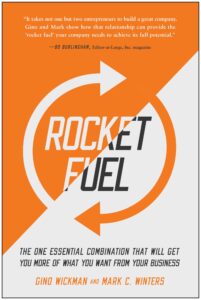
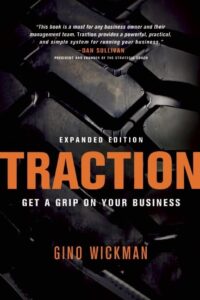
And so, that continued for the better part of 10 years, until, I forget exactly what it was, approximately 2017, 2018, I came across the book "Rocket Fuel" by Gino Wickman. So, some folks out there these days will probably know the Gino Wickman name. He's the guy who wrote "Traction" and the whole EOS, Entrepreneurial Operating System which we use at XYPN and AdvicePay and Kitces and FP Pathfinder. I'm a very big EOS fan, so if anyone wants to nerd out on EOS, just come up to me at a conference and start talking about EOS things and I'll be fired up. But in addition to the whole EOS system, Gino had written this second book that I find still isn't as well known called "Rocket Fuel." And the thesis behind "Rocket Fuel" is if you look at a lot of the incredible businesses that are out there today, including the ones that had the super-visionary founders that did the amazing things like Walt Disney, most of the businesses that have amazing visionary founders that created great success weren't just built by the visionary.
Visionaries are actually often very, very bad at running businesses. They're good at visioning the future, not necessarily good at operationalizing it. And most of the great visionaries out there had a second person alongside them, usually not nearly so visible, who actually runs the business, turns the vision into reality, and makes it happen. So, Walt Disney had his brother Roy. Roy is the reason that we have Disney today. Walt almost bankrupted the company three different times because he was a terrible, terrible business manager, because he just had all the visions of all the things and reality and business constraints weren't really things he wanted to bother with. Roy figured out how to commercialize it all and make it actually economically sustainable and viable as a business.
And you find this when you start looking around. Bill Gates had Ballmer. Steve Jobs had Wozniak. And the thesis of "Rocket Fuel", the literal metaphor is that rocket fuel is made up of two compounds that when separate are completely inert, and when mixed together, turn into rocket fuel that propels the rocket forward with great speed. And so, in following that metaphor, what Wickman set forth was, businesses don't get just created by visionaries who see a future, they get created by these duos of a visionary and what they call an integrator, who is the one who actually operationalizes this and runs and manages the business and makes the thing happen, because visionaries usually aren't great at actually running the business and managing the people.
And this was a light bulb overhead, eureka moments for me of something to the effect of, "Oh, I can actually build things and I don't have to be the one who manages all the people and runs the business. I just need to find someone who actually likes that and is good at that, and let them do that." And so, I sat down very quickly then and said, "Okay. Well, there's all these things I would really like to do with Kitces.com to really advance advisor education." If you go back to 2018, I'm writing blog articles, I'm doing a handful of webinars that I can do myself, and we're offering some CE for it, and that's it. There's no broad webinar offering as we have today. There's no practice management summits. There's no CE intensives. We didn't offer very many types of CE. Just there were all these things that we couldn't do because I got really, really good at leveraging my personal time, but there is some limit of just how much revenue you can generate with your time when you're really, really productive before you just hit an absolute wall where the business cannot grow further unless you start adding people, and I had refused to add people because then I've got to manage them.
And having this revelation, all of a sudden I was like, "Well, I've got all sorts of ideas of what this business could look like." And so, I sat down and drew it out on a whiteboard, and it was 27 people in the org chart to do all the things that I would want to do, and we had 3 at the time, two and a half. We had three people on the team at the time, including me doing this. I said, "Oh my gosh, this is what it would look like if I was not so stuck on the fact that I don't want to manage people. I just need to find my integrator person." And so, I went and found that person and said, "So, here's the deal. I've got this crazy vision for the business. It's 10 times the size it currently is. It's going to take 27 people and they'd all report to you. How do you feel about that?" And she said, "That sounds awesome," because she actually likes doing that. I don't. And off we went.
And that's been the really rapid growth of the Kitces.com platform over the past eight years, and now ironically that vision really did play out. There are 26 people on the team, 27 by the time this goes live because we got a job offer out to someone who's accepted but hasn't started yet. And it basically fell in place pretty much how it was in my head. I can go pull out the original... Business never really plays out exactly the way you're imagining in your head when you're smaller and trying to grow it. But it actually is surprisingly close to what I'd scribbled out on that whiteboard years ago that we have now lived into of doing all the things that got unlocked once I got past the, "Oh, I don't actually have to be the one that manages all the people."
I don't mind a lot of the other leadership mantle of make the hard decisions and set the direction for the business and bear all the consequences when things go bad and dealing with all the things. It was just the literal day-to-day management of people that I have a great appreciation is important. It's just it's not energy giving for me. It's energy draining for me, and I couldn't imagine doing that every day and week indefinitely. And so, getting the rocket fuel permission of, A, you don't have to be the one who does that. B, it's even normal that if you're the one who has a lot of the visions, you're often not the one who likes doing the manage people thing as well, was very freeing and truly transformative to start growing what we're doing.
How Tracking Key Engagement Metrics Makes It Easier To 'Let Go' Of Personally Creating Content (Or Serving Particular Clients) [45:54]
Adam: I think this is interesting jumping point for a couple of different themes. I think maybe we'll get into the idea of what it looked like to expand the offerings, to expand the team, lessons learned in hiring. But going back to the idea of your personal time management and doing what you do best, one of the changes that's occurred on our platform on Kitces.com over the last several years is that while your name used to appear on just about every single or what used to be every single article that went out, that's no longer the case. And I can see a lot of advisor listeners are probably nodding their head in the sense that maybe they're a firm founder and they're considering, "Well, do I pass my clients off to a more junior or next gen advisor?" And that's a very big move to make. And I'd imagine it was probably similar for you from putting this content that was coming out of your head onto the computer screen, to handing that off to others.
Michael: Yeah. It's been a very interesting evolution getting comfortable with that. As you note, Adam, yeah, I basically wrote every article or at least 95% of the articles for 10-plus years. We occasionally had guest posts. I didn't write 100.0% of it, but I probably wrote a solid 95% of it, which was just, I don't even know how many hundreds of articles. If I tried to add them up, it's probably close to 1,000 that I wrote. And then eventually, it's a version of that same time constraint and highest and best use constraint, which is, yes, I was writing all the content, but if I'm writing all the content, there's a bunch of other things to grow the business, build the team, create new offerings, build new growth and business partnerships that I couldn't do if almost all of my time was spent cranking out the content.
And so, in a very similar manner to what happens in the advisor context, and in fact, I'd lived a version of this because my original job at the RIA was to train all the advisors in the firm in a standardized...we were early in, "We're going to be an ensemble, and it's a we and not an I on the business." I had the task back in the 2000s to build the standard planning process that all advisors would be trained in, and to figure out how to define that. And so, I got this strange opportunity to pull that knowledge and skill set back out. Although frankly, much love to the people who went through my training back then. I'm better at it now. I was not the best at it then, but it was good enough. We grew very well. We had good outcomes. But realized I had to get to a point of saying, "Okay, if we're going to grow this beyond me, then I have to figure out whatever my style is of what we do and how we serve the people that we serve," which I lived as an advisor when I was training other advisors to do it our way of financial planning, and then started living on our content platform of how do other people create content and our way of doing content.
It was very much a mirrored process, and essentially what it comes down to is, look, for any of us that have done a thing really well and had business success with it, whether it's getting and serving clients or the content that we were doing in the later years, you have a way of doing things that works. There's a way you greet clients, a way that you explain that market drawdown chart, or the way you walk clients through the Monte Carlo process, the sequence that you take them through the financial plan, that question that you love to ask at the end of the retirement module to kind of cue them up before you talk about the estate stuff. We've got all these tips, tricks, tools of the trade, just processes that often we do naturally and intuitively, because a lot of us just got there because we were good at the task and we did it a whole bunch of times over and over again and got our reps in until we fell into our groove of what we do and how we serve.
And the transition becomes, how do you take all that stuff and get it out of your head and put it down on a piece of paper and call them standards of the firm, standards of the firm and/or process of how we serve? And so, when I was doing that in the advisory context, it was, here's what we cover in meeting number one, here's what we cover in meeting number two. Here are the printouts from MoneyGuide that we use to explain this part of the meeting and that part of the meeting. Here's a little bit of a sample script of how we talk through that. I don't want to overly constrain someone, they all got their own style, but here's the touch points that you need to cover. Or when we do firm-wide things and we send out firm-wide communications, your clients can be really confused if you're not using the language that the firm uses and the structure that the firm has set.
And then that allowed us to get really efficient in the process and teach it on a repeatable basis. And I went through that and did basically the same thing in our Kitces.com content context. What I ended up with is now, as you have lived, Adam, as a team member, what we call our QNR standards: Quality, Nerdy, Relevant. How does Kitces content show up different than others? We try to maintain a high level of quality of the knowledge and capability of the person that's teaching it and how effectively they teach whatever it is, whether it's a speaker at an event or someone writing it out. We're nerdy. We go deeper. As anyone knows who's clicked on one of our articles or listens to this podcast, we don't do anything short and brief. I know attention spans out there are brief, but every now and then you want to really actually get into the details, and at least you know if you were looking for details and you click on a Kitces article, you're going to get them.
Adam: No question.
Michael: No question. We know we are going to show up in a nerdy manner and that's become part of our brand. And we try then really hard to focus on relevance. At the end of the day, what problems are advisors dealing with? Because if you know you're going to click on that article or download that podcast and it's going to be that fricking long, I'm only getting into that if it's something that is really a painful problem in my business. If it's a serious high-stakes issue, I will totally click on a long article and read through it because the stakes are high enough that I really need to get an answer, and actually at that point, I feel good reading a long article because it'll probably get into enough detail to actually help me solve my problem. My big problems are not solved by 500-word platitudes, they require depth.
But if we don't want to shrivel our business into nothing, we have to actually find common problems that a lot of advisors experience because otherwise, they're just not going to come because not enough people have the problem, and they're not going to want to read a giant long-form article for a thing that is not really a problem for them. So, if you follow EOS, this is a version of our three uniques as expressed through standards in our content. But internally, what that means is everything has a everything has to go through a QNR filter. And so, over time, we've figured out how do we train what QNR is? What does quality mean? It's a little bit different in the context of an article versus at a webinar versus a live event, but the theme is consistent. Ditto for nerdy and relevant.
And then we built metrics to be able to track it. And this I'll emphasize, for anyone who's having trouble figuring out, how do I let go of the thing? Content in our context clients and planning delivery in my prior role and what most folks who are listening to this are going through, the key to doing this and getting comfortable is building a feedback system where the people who get it can tell you whether your team is doing a good job. So, in the advisory context, it's having a client feedback survey where clients can tell you, do you feel you're being served well? Do you feel your advisor is attentive and responsive? Do you feel your advisor gives good advice? Do you feel your advisor is effectively on top of all your tax planning issues, if tax planning is your unique thing and you want to measure that.
Whatever it is, whatever those standards are that you're trying to teach, the missing part of the loop that I find very few firms actually do, is you need some kind of a feedback system, so that at the end of the day, you can look at your annual survey or your quarterly feedback forms or whatever it is that you do. We live a content business where we'll send an article out on a Wednesday, and by a week from now, I can tell you how well it did because content doesn't have a long life cycle. People showed up because it was relevant or it didn't and they scored it well or they didn't. But you build the scoring mechanisms in place. And I just found as an owner, as a leader, it becomes much, much easier to let go because at the end of the day, in essence, I'm defining how we keep score, and then the people we serve are telling us whether we're doing a good job in that scoring system.
And so, whether it's depth of client service and quality of advice in a firm context, it's QNR for our Kitces.com content. the whole team knows in our world, a webinar runs and the survey is there at the very end of the webinar, and I'm going to be asking by the next morning, "So, how'd we do? What was our score? What was our score on the webinar? How'd we do?" Because I'm eager and excited to know, are we still doing good work that's landing with people? Because I can't review every article and every webinar. I couldn't be in every client meeting as I was training the other advisors. But what I could do is have a feedback system in place that at the end of the day tells me, did I train successfully and they're now doing the thing to the standards of the firm because I'm literally asking the clients and they're saying yes, or they're not.
And if they're not, I don't have to be nervous or worried about whether it's being done the way it's supposed to be done. Clients will just literally tell me if the score is good, then I say yay and I celebrate with them and they may get raises and promotions and such. And if I get the score back and it's bad, then I know I need to intervene. I need to do more training or more feedback or something else, or in the worst case scenario, part ways if someone can't deliver. But I find a lot of firms do, either they can't articulate what the standards are, the person knows all the things but has never tried to get it out of their head and write it down to say, "Good financial planning means this," and you fill out a couple of items. "Good service to clients means this," and you fill out a couple of items.
And whatever the important ones are to you, I usually find quality of advice and quality of service a big one for all of us, or for almost all of us. Write out what those standards are, come up with the metrics to figure out how to score, whether it's being done well, and create a feedback system where your clients can let you know if that's happening. And once we built those pieces, the rest of the letting go, oh my gosh, as almost any founder that's built a business that's got their name in it, all the anxiety of, "Oh my gosh, my name is still at the top. I hope they're actually doing it at the quality that they're supposed to because I just literally don't have the time to supervise every person's work in every context in all the scenarios that it happens with clients or content or whatever it is."
All that anxiety largely melts away because either the scores come back and they're good and you just have affirmations going well, or the scores come back and they're not good, at least you know immediately what to do to fix it.
Adam: And I was going to say, specifically looking at scores, I know one we use often at Kitces here is the NPS or the net promoter score, which is a perhaps a nice all-around one, but perhaps a nice one for the advisor listeners to consider for their own surveys because it really signals not only the client satisfaction, but how likely are they to recommend the advisor to a friend with referrals often being the lifeblood of new clients for firms. So, that might be one to consider there.
Michael: Yeah. There's even a couple of good firms out there now that have been building around this. I'll give folks shout-outs, Nexa Insights just built a whole piece of software to automate sending surveys out to your clients. I think it integrates with most of the financial planning software. They've built all the questions, so you don't actually have to come up with the good questions. They have all the questions. You can modify their questions, but they have all the questions, they have all the analytics. I believe NPS is actually one of the anchor ones for them, and they can just queue the whole thing up. When you come up with whatever your standards are, you can add a couple of questions to capture whether their questions are doing it well.
Julie Littlechild from Absolute Engagement has another version of this. They call it their Engagement Engine. Their theme is it's not even enough to just ask clients whether they would promote to their friends and family, because a lot of people say they're going to do that, but then they don't actually send any referrals. Her research has found they don't have to just like you, they have to really be engaged with the firm and the process. And when they're engaged, their referral numbers go through the roof. And so, she's got a whole client feedback survey process that doesn't just get clients saying things like, "How likely would you be to refer us to your family, friends, and colleagues?" They then ask some follow-up questions about how engaged clients are with their advisors in various parts of the advice process. Again, just so you can figure out who's really delivering well and who might have some gaps. Particularly now that we get all the cool AI-driven note-takers as well.
So, Jump and Zocks and those folks are now also starting to build some scoring metrics as it were. That feels harsh to say, but tracking mechanisms so that you can find out things, okay, which of your advisors when they go into a client meeting who's freaking out about investments, finishes the meeting with clients feeling better? And who goes into a meeting with clients freaking out about investments where at the end of the meeting they're still usually freaking out? Because those are all client sentiment indicators and how positive or negative words they use as they're going through the meeting. The note-takers can actually track that and figure it out. So, when you put some kind of metrics in place, you have to figure out, what are you going to score? How are you going to score it? And what's the actual process to get a score? Is it a feedback survey or a post-meeting thing or whatever it is?
When you can check off those boxes and create very literally a feedback loop, it gets a lot easier to transition this stuff, because again, what you'll find pretty quickly is either you taught it and transitioned it well and it's working, or it's not working well. And if it's not working well, you'll know immediately and you can just iterate and improve until you get it to the point where it is working.
Adam: Yeah. And I would note, Michael's mentioned a lot of different resources and books in the conversation. We'll have all of those on the show notes for the episode. So, if you go to Kitces.com/500, we'll have all of these things there so you don't have to stop your car or your dog walk or wherever you're listening to.
Michael: Oh, yes. Yes. Be safe. Be safe.
Lessons Learned From Hiring At Kitces.com [1:01:19]
Adam: So, I was going to mention, you talked about hiring, and I know that's a big issue for a lot of advisory firms. So, as Kitces.com has grown significantly to 20-plus added people over the last several years, talk a little bit about your approach, your lessons learned, the ups and downs of the hiring process and what's worked for the company.
Michael: Yeah. So, one of the hardest things that I went through in the early growth phases…so for almost all of us that have run a solo business where we got really good at leveraging ourselves, and then you hire someone so you can do more, the single greatest fear is you hire someone to do more and expand your capacity, and then they leave. And then everything boomerangs back to you because now you have all the new things you took on since you hired them, plus all the things you let go of that come back to you when they leave. And it gets crushing very quickly, to the point that a lot of advisors I know don't even want to hire someone out of fear of, if I do that and I expand and they leave, I'll literally be worse off than if I just never hired someone in the first place.
And I had long had this fear as well, but again, I'm growthy, impact driven enough that it doesn't quite hold me back. So, I've still got to be stubborn enough to keep trying to grow. And so, I went down that path and I hired one of those people who expanded my capacity. I'm being a tiny bit vague deliberately because I still know that person. They're still out there, and nothing negative to them, but I'm trying to leave them appropriately anonymous. I went through that growth cycle, and then they ended up leaving, in no small part because as noted earlier, I am not a great manager of people, and they reported directly to me, and that was probably not a good decision.
They were great. They're still great. This was entirely on me for doing a bad job of managing them in the environment. And I dealt with the version of, oh my gosh, I hired the person, I grew further, and they left, and it all boomeranged back to me. And I immediately went into a fairly depressive spiral of, "See? This is why I shouldn't have grown. What was I thinking? I'm never doing this again. I've learned my lesson." And I had a business coach then and still, Stephanie Bogan. And so, I think it was actually just a coincidence, but I had a coaching call with Steph, I think the day after the person gave me notice that they were leaving. And so, this was obviously front and center for the coaching call. "Oh my gosh, what am I going to do? They're leaving. I'm going to be crushed by all this stuff. I cannot imagine how I'm going to do all the things that are coming back at me. We're screwed. Give up now." All the doom speak was running.
And Steph being the amazing coach that she is, just paused and said, "Let me turn this around and ask the question another way. What would have to happen that you look back on this moment and say it was the best turning point ever for the business? What would have to happen that it'll turn out that this was the best turning point ever for the business?" And I thought about it for a moment. I was like, "Well, the best turning point for the business would be if we make a hiring process so this never happens again, because this was awful. The best turning point would be this, this was the moment we made a great hiring process so that I would never again be devastated if someone left. And so, she said, "Well, then why don't you go do that?" And I said, "Okay," because I like anyone who gives me a challenge to do something that they said I couldn't do or I thought I couldn't do. And so, we did.
And we figured out how to actually build a good hiring process that we can be confident with. And it took some time, and by time I mean literally years and probably 10-plus hires maybe that we went through with some turnover of doing it and getting a great person, then doing it and getting a person that we thought was going to be great but turned out to be not so great, and then going back and saying, "Well, what the heck did we miss?" Because we thought they were going to be a good person, but clearly that wasn't right. "Okay, we got to make the process better. Okay, well, we'll add a question to ask about this, or we'll add an assessment to do that, or what if we tried something this way." If you do it enough times, eventually you learn and figure out what do we need to do differently so this is not a problem in the future.
And we really built that hiring process to the point where today, I know that if something happens and we have a turnover, seven weeks from now, I'm going to have a new person with the job offer accepted, ready to start. Because we like to track things and I know my hiring process takes an average of almost exactly 49 days, 7 weeks, from the day we list it until the day we send the offer letter to do all the list it and get the resumes and do the screenings and do the multiple rounds of interviews, and we do a work sample and all the different things that we do. But I know with remarkably consistent variance, because we've got a very clear, established standardized process now, if we need to hire a position or heaven forbid someone leaves, fortunately, we have fairly low turnover, but people wind on their journeys in various ways. It happens even in great businesses. I know that when someone leaves, I'm going to have an offer out to someone new in 7 weeks and they're going to be good because we've built a good process and we find good people that fit our team, that fit our culture, that fit our values.
We know they fit our values because we put our values right on the about page of the website, and people who are really interested in us and a good fit, they go and look at the website to figure out really who we are and what business it is that they're applying to. And we can tell the ones who are serious because they've read the values and they're into it, and they express it, and they say it in the interview process, especially because we've got a few fun ones. The blog is the "Nerd's Eye View." We have embraced that we're nerds. One of our core values is "Get your nerd on," which is our version of continuous learning. And so, every now and then, I'm sitting in on a job interview and they're doing the job interview and behind them on the shelves are their Star Wars Legos and their Pokémon. I'm like, "Oh, one of us. This is probably going to go well." Another one of our core values is "No A-holes." Not trying to be crass, but just we couldn't find any other way to say it that just we're trying to create a positive work environment.
And when we're going through the interview process, we will get people who most commonly say something and acknowledge that particular core value, because it's a little out there with the wording and the language that we chose. But it's a little bit deliberate because the people who know and care, who are a fit for our team and culture, notice and care. And now they self-select themselves into wanting to be a part of the team.
And we go from my challenge in the past, which is painfully searching for people who could join the team, and into a world where a lot of the people who are a really good fit for us, they find their way to us now. We still list the job in LinkedIn and the various places, but the strong candidates that we get are usually very eager by the early application process. They're reaching out and saying, "I came across your firm in your ad and it looked a little bit interesting, and I started looking at your website and I got more interested, and I saw your values and they spoke to me, and I'm really looking forward to my screening call." I'm like, "Cool. I think you get it. This is going to go well."
The Interview Questions Michael Asks To Assess Culture Fit [1:09:15]
Michael: The strength around getting clear on your values and culture, these become some of our biggest triggers that we use to figure out who's a good fit or not, who should be part of the team or not, to the point that we've got a question or two in our interview process…it shows up in the second-round interviews, because that's when we ask a lot of questions, trying to understand values and culture fit. We've got a question or two about all the things that represent our core values to try to sus out who's really aligned or not. Even down to things like...it's a fun statement to say things like, "Get your nerd on." But I might ask an interview question of whether they've ever pursued any designations or professional development in whatever their chosen field is. Because people who are into continuous learning and growth and development tend to do that wherever they are. It doesn't matter what the particular department is.
If I'm concerned about integrity, I might ask things…"Tell me about a time when you had an ethically gray situation crop up in a work environment and how you handled it. Please don't include anyone's name. I'm not trying to get anyone in actual legal trouble here. But tell me about a situation where that happened," and I want to hear how they navigate it. One of the indirect effects of our "no bad people" core value is look, if you're in a work environment and someone's doing a thing that's frustrating you and getting on your nerves. So, oversimplifying a little, there's one of two reasons this happens. The first is they're a mean, nasty troll, and they're literally doing it on purpose to get a rise out of you. And unfortunately, we've all been in environments where there are trolls who do this to get a rise out of someone.
If they're not say, a bad person, though, then presumably if they're doing something to get on your nerves and frustrate you, it's because they don't actually realize that what they're doing is frustrating you. They're just, "Oh my gosh, I'm so sorry. I didn't realize that that thing I was doing was really aggravating you or getting on your nerves." And for most of us that are fairly team-oriented, "Oh my gosh, if I'm actually doing something that is driving one of my teammates nuts, please just tell me and I'll stop. I'm not doing it on purpose. I just literally didn't know that the thing I do apparently really aggravates you. So, give me the feedback and I will do my best to adjust my behavior because I like working with my teammates." Which means if we're in a positive and work environment, feedback should be a safe thing to do. That's really the point of it. If it's a troll, feedback is not fun, they just troll you further. But if you're in an environment without the trolls, feedback should be a reasonably safe thing to do. Not everyone loves it in the moment. It's still a little bit hard for some of us, but that should go well and be a positive thing.
So, then we might ask questions in the interview process like, "Tell me about a time where you had to give tough feedback to a coworker and how that went." If they're a manager, "Tell me about the hardest team member you ever had to manage and what happened." Because now I'm looking for, are you someone who can give and/or receive feedback? "Tell me if I called your last boss and asked them what you need to improve upon the most, what would I hear from them?" Does this person have any self-awareness about the fact that, look, we've all got areas we can improve upon? If you have never received feedback on it or you don't have any self-awareness for it, that tends not to go well in an environment that encourages feedback.
So, we created interview questions to tie to the things that are important values for us, for our organization. Some things like integrity, tend to be fairly universal, at least in advisory firms. Others might be much more specific to your firm and environment. But we've got really intentional about trying to find people who fit our culture, our values, our style, because especially when we're an organization that's super into get your nerd on and learning and continuous development, I can teach almost all the knowledgey stuff. Granted, if you want to be a financial planning writer for us, you don't even have your CFP marks or any education. It's going to be many years to go through that journey, but I can teach the knowledge things. I can't teach you to bring integrity if you don't naturally have it. I can only do so much to teach you feedback if you fundamentally don't like giving or receiving feedback. If you're just totally happy and cool where your life is and have no interest in improving, I can't really spark that for you. It's cool. There are other jobs in there…just clock in, do your thing, make your money, clock out, have a great life. It's totally cool, but we're a really growthy, continuous learning environment, so if you don't want to change anything about your current life to grow and improve, it's probably not going to be a good fit in our environment.
And so, we just try to ask questions to suss that out and clarify that, and then we get people on the team who are aligned to our values and interests. And ideally, we're trying to hire people who have experience in the thing, whatever the thing is. But if not, we can train that. But if you want that alignment, that's not specific to the advisors versus the ops team, or in our world, the content creators versus the developers. It transcends all of those roles and I would argue, it really has to, because if it doesn't, you start getting mismatches in the firm, and who can be successful and who can move forward in the firm. Because whatever those values are, at the end of the day, those tend to be the things that you recognize and reward in the firm. And so, if you're hiring some people or whole departments that don't espouse those values, you're going to eventually get a lot of frustration because they're not going to do the work in the same style as everyone else, and then they're going to get really frustrated when they keep getting passed over. And they will, because they're not doing things in alignment with the values that the firm actually recognizes and rewards.
Actively Managing The Growth Rate Of The Business [1:15:46]
Adam: Well, now speaking of growth, at Kitces, it's been growth not only in personnel, but also in the offerings and programs that we've had. I'd imagine a lot of firms out there might be thinking of maybe we try to serve a new client segment, try to have a new service offering and debating...
Michael: Roll out, operations. Yeah.
Adam: Yeah. What has that experience been like, adding things like the IAR CE Day, and some of the new things that have come to our platform in the last few years?
Michael: Growth's a funny thing, particularly when you are vision-oriented as I am, as I think a lot of advisor, particularly advisor founders, are. You know what I mean? Put in the simplest way, we as visionaries can come up with new business ideas and offerings a whole lot faster than everybody else in the business besides us can actually internalize that, operate on it, execute on it, and not have their bandwidth stretched too thin. Jokingly, it's a lot easier to come up with the idea than it is actually to do the thing. As business owners and founders, particularly if we're trying to grow the business, often the whole idea is, well, I come up with the thing and then I hire team members to do the thing, and then I come up with more things and I hire team members to do more things. And I will say that I have had...I will own, I've had challenges over the years where I still underestimated as the business grows, just how much it takes for the business to really absorb and systematize a new offering or a new thing, and either created a lot of business stress in the business, maybe even triggered a little bit of turnover sometimes, or caused other problems, because in essence, I tried to push too much down the pipe at once, as it were.
So, we've added a lot of things over the... as I said, I had this three-person team with a vision of 10X-ing the business, not because I wanted to do the whole 10X thing, just I had ideas in my head of what I wanted to do. I sat down with a whiteboard and drew it out, and it turned out it was almost exactly ten times as many people as we had at the time. And so, as we went to start launching those... I'm trying to remember the sequence. I think first it was expanding our webinar cadence, because we were doing three or four a year, and we went to full-on monthly webinars. Then we expanded CE [Continuing Education] offerings to include CPA and American College and College for Financial Planning designations in addition to CFP. And then eventually, IAR CE as well. Then we started doing our practice management summits. Then we started doing our CE intensives first, like ethics and compliance for IAR CE Day, and then the tax intensive that we do now as well. And it created this really awkward lumpiness in the business that candidly was really, really stressful at points for whole years.
So, I'm trying to remember exact growth paths and timing. So, we started down this road of, I want to make it bigger and do all the things, in 2018, heading into 2019. And that was when we started hiring, expanding team, expanding the webinars, starting to do a little bit more stuff to get ready for this growth and all these additional educational offerings that I wanted to do. Then 2020 hit and COVID hit. And so, at the time, I forget the exact numbers, but me going out and speaking was probably still a third of the revenue of the business. And that basically got zeroed for the year in two weeks, second and third week of March, when basically the world shut down. And a handful of organizations tried to convert to webinars, but as a speaker, you do not get paid nearly as much for a webinar as you do for an in-person event. Most of the in-person events just shut down. And so, in two weeks, maybe 25% to 30% of my revenue for the year vanished.
The good news from the flip side was, because we were in the CE business, when events vanished for everybody else as well, it meant all of a sudden, advisors were looking for CE online because all of the conferences got shut down. And so, the speaking revenue vanished overnight, but our member section basically doubled in a year. I think we grew more member section revenue in 2020 than we had in the preceding decade cumulatively. And then that carried through because in 2021 we launched our summits, which were also very successful, and we launched the first version of our courses with our, how to review a tax return course for newer advisors. And the business basically doubled again. And so, in the span from 2019 to 2021, the business almost 4X'd in size, which was ludicrously stressful and unpleasant. We were just continuously in hiring mode.
For anyone who's actually been through a really rapid growth phase that, I sort of joke, you get to the point where you've got this big team and nobody knows how anything works because there's only two types of team members in a fast-growth organization: people that don't know how anything works around here because they're too new, and people who don't know how anything works around here because we don't do it that way anymore, because we grew so fast that the system or the process broke. So, no one knows how to do anything. We're in constant hiring and reactive mode, just trying to keep our head above water and not drown. And so, it was like, "Yay, growth, but oh my gosh, this feels really unpleasant in practice." So much so that I made the decision coming out of 2021 to basically say, "Okay, as an owner that doesn't want to blow up my own business, I need to shut all the ideas down." And we took a complete hiatus on any new programs or offerings that year. And so, the business grew by 70% one year, I think, and 100%-plus the second year. And then in 2023, I cranked it down and we grew at 3%.
I put the brakes on growth as proactively as I can because it felt like everything was on fire because we had just gone through such a rapid growth phase. And to me, it was very much a lesson of, for all the discussion that's always out there about control your growth and manage your growth, which I'd never really fully appreciated. Just like, "Growth is good and revenue's going up and this is great." To me, I really lived how unpleasant it is to grow too much and too fast. And it really drove into me trying to put our growth into a much more narrow, controlled channel, which I still effectively live with today, which is, I very intentionally try to keep our growth at 15% to 25% a year. And if it slows a little bit one year, I'll put a little more dollars into marketing growth, and if it's faster than that, I'll actually try to slow it down a little. And it's really just a version of the good old rule of 72, divide the growth rate into 72, and you get how many years it takes to double.
At 15% growth rates, you basically double in five years. At 25% growth rates, you double in three years. And even for being growth-minded as I am, doubling in three to five years is a very healthy pace. If you're hiring younger people who want to grow and move up, the cool thing about doubling every three to five years is by the time they're three to five years in their career and say, "I want to move up," it's like, "Well, great news. We have a new role. We have a new position. We have an opportunity to do a new thing. You can build that thing now. We have enough capacity to support it." Growth creates opportunity for people to move up. If you grow much below 15%, you start losing your good people because they hang around for three or four years and they're like, "Yeah, it's going to take another seven years to get a promotion around here, and forget it. I'm out of here." And when you're growing much faster than 25% at least for me, it starts to feel hair on fire. If you get to 35%, again, rule of 72, if you get to 35%, 40% growth, you're doubling every two years. And if you're doubling every two years, you really have to hire double the people in about every 18 months just to stay ahead of the growth curve.
And so, if you just think about that for a moment, if at any point half your organization has been hired in the past 18 months, you are back in the realm where no one has tenure, no one knows how anything works around here. The average employee has been there for a year or a year and a half or less. And it's not because you're managing it badly or doing things wrong, it's just because literally half the company got hired in the past 18 months, so your average tenure is going to be under a year and a half. And those are just really hard environments, I find, to manage in because so much of the team is new and still learning their jobs and the culture and the systems, and the managers are trying to get everything up to speed. And by the time they do, everything changes because it's been 18 months and the company's doubled again. So, it gave me a very concrete appreciation for controlling and managing growth, that you need a certain level to create opportunities and hold onto your team, but there's a growth level above that where it just starts to create a whole different wave of stresses in the business that, at least to me, just weren't worth it. I'd rather get there a little more tortoise style in a slow, plodding, and safe journey manner where people have good outcomes than to push the pedal to metal and speed as hard as I can. Because as someone had pointed out to me once, it's like driving a car at excessive speeds. The faster you grow, the faster you get there, but the faster you're moving, the bigger the accidents if something goes wrong. You don't have a lot of terrible accidents when you're driving slow. You have some really bad ones when you're driving fast.
What's Next For Michael And The Kitces Platform [1:25:46]
Adam: So, as you're looking to growth in the future, what does that look like? What's on the horizon both for the Kitces platform and some of your other ventures that you're involved in?
Michael: Oh my gosh, always things. As noted, I tried to take the growth rate down, as it were, after our 4X in two years experience that wasn't so pleasant. Now we've been back on a much steadier, 25% growth path. So, about doubling in the past three years. And so, it's given us capacity to start doing some cool new stuff again after we didn't really have room to invent new things for a while. So, our education team is working on a new program that we're calling Level Up, which is essentially going to be client case studies. So, if you imagine for anyone that maybe did this when they were new or a senior advisor training people, you go through a client planning scenario and then, at least ideally, if you have time, you sit down afterwards and you debrief the case. What did we learn? What were the neat planning opportunities? It's just a really good way to cement learning and create experience for younger, newer advisors, except a lot of senior advisors do not have the time to do this, or they're not so inclined to do it.
And so, we're trying to create a centralized offering on the Kitces platform where you can get continuous case study reviews for your young people. So, it'll be like an hour and a half, every other week live program, come in with a Kitces instructor, and we will walk through some fairly messy, complex client case scenario, because let's face it, all the neat planning stuff comes from the complex ones. We'll walk through a complex client scenario and really look at, well, what planning opportunities are here? How would you explain this to the client? What roadblocks might come up? Let's actually role-play for a moment, how would we talk through this? How would you explain it to a client? And trying to build that out so that firms that don't have time to train their advisors and advisors who want more reps. I like talking a lot about building the reps, building the repetitions for learning, can get some reps in with us, including and especially if they don't have a lot of client opportunities of their own.
So, our Level Up program will go into a pilot phase in Q3 here, probably very close to when this podcast goes live. Obviously, Adam, you now are running a second podcast for us, yourself, "Financial Advisor Technician." We call this "FAS" because it's "Financial Advisor Success." That's FAT for "Financial Advisor Technician." Advisor success here, we talk practice management. Advisor technician, we talk all the nerdy technical stuff. All the things that we cover in Wednesday CE articles on "Nerds Eye View," but now in audio format. For all the years that said, "I like the Kitces stuff, but I just can't sit down and read articles that long," and have been begging us for years to make something shorter. I'm like, "Well, can't do something shorter because it violates our QNR standards, but I can at least give it to you in audio format."
So, just for all those folks listening, if you're presumably into podcasts because you're listening to this, look up "Financial Advisor Technician" as the new podcast that we're offering. Those are probably the biggest, at least immediate things on the Kitces.com platform. My new outside that, aside from XYPN, and AdvicePay, and fpPathfinder, and New Planner Recruiting, keep doing things, is we launched a new business called Advisor Economics. Just whole other things. The five businesses weren't enough, so I had to add a sixth. So, Advisor Economics, just literally advisoreconomics.com, just doing practice management benchmarking. I'm a nerd for all things practice management, research, and data. I've been through many of the benchmarking studies. I supported prior firm as we went through them as well.
The benchmarking process for years has just been some version of they send you a spreadsheet, you have to go through your QuickBooks, you have to figure out how to adapt all your numbers into their spreadsheet format, do the thing. It takes a couple of hours, and then you get back a benchmarking report with a couple of different columns of firms of different sizes, and you find the column that's most attuned to you and you get your benchmarking feedback. It's been a good system. I've followed the studies for 20-plus years. I've participated in many of them. I love benchmarking studies. But this is the modern technology era. I'm like, "Why do we have people manually pull their QuickBooks data and start translating it into a spreadsheet format for a data-gathering process when we can just integrate directly to your QuickBooks, ingest the data, clean it and normalize it using software, and then just show you how your business is doing compared to firms like yours?"
And at that point, data is much easier to create comparable sets. We don't just have to say, "Here's small firms, big firms, large firms." The more firms that are in it, the more finely we can slice it. So, "Here's what it's like for other firms that are ensemble style focused on retirees working in the South in a lower cost of living area outside of metropolitan area." And just the more advisors we have that participate, the more finely tuned we can make those benchmarks in a hyper-customized manner. And so, we're just essentially trying to replace the past generation of benchmarking with actual software that does this automated. So, you just have to spend a couple of minutes answering a couple of questions, and five to ten minutes later, you have all of your benchmarking numbers compared to other firms like yours.
So, we've just launched, I guess technically I would say we're in beta, so it's available for a slightly discounted price of $29 a month to go through the onboarding process. It takes a couple of minutes and just find out what your numbers look like, and is your comp higher than other firms like yours? Is your tech spend lower than other firms like yours? How do you score on some productivity metrics? And we'll build and add lots of things. I have a zillion benchmarking capabilities in my head of what we're going to add as we build over time. But like a lot of our businesses over the years, I like to go build the things that I feel like no one else is doing very well or with software. Again, no disrespect to the folks out there that do benchmarking today, some of whom are good friends. But this has just felt like an area for a long time that is still very manual and spreadsheet-driven, and I think we can solve this with technology and make it lower cost and better experience and much better data and feedback for advisors to make better business decisions. So, that's the newest new thing.
Adam: I was going to say, I'm sure in the coming years there'll be more newer new things, right?
Michael: Yes. I'm not done. At this point, I have to continue to find great team members or great business partners who want to go and build another thing. I do not lack for ideas in my head of more things to build and business opportunities. I'm just constantly searching for people we could build with.
How Michael Views Advisor Success After 500 Podcast Episodes [1:32:19]
Adam: Great. So, as we come to the end of our conversation, longtime listeners will know that your final question to our guests is always what success means to you. Now, I think you've talked about both today and in previous episodes, reach and impact are very important to you. But I'm just curious, after 500 different conversations of asking this question on the podcast, has that changed your view on what success means either to you or what success means as a financial advisor?
Michael: It's an interesting question. Truly, everyone's got their own definition of success. There are things I do find that are striking for at least how they rhyme from one person to the next. I do find overwhelmingly for us as advisors, a couple of themes come up. Some version of service to others and making lives better for others almost always comes up. Just to me, financial planning is a service profession at its core. We're here to serve others. We love setting goals and achieving goals and helping everybody else set and achieve their goals as well. It feels good. It feels good when you're goal-oriented, as most of us are as planners. So, there's almost always some expression of service to others. For some, that crops up solely in the domain of serving clients, and for others, there's a two-pronged version. It's serving clients, and it's serving and growing and creating opportunities for their team. And I find the larger a business gets, the more that tends to become a theme. And I think I very much have felt that in the context of growing businesses over the past ten to 15 years as well.
There was a point where I just I wanted to get myself to a certain level of business and financial success so I could achieve my goals, or I want to make sure the kids can go to college and my wife and I someday can retire and enjoy the lifestyle that we would like to enjoy. But when growth gets past those goals, then I find it really does shift to creating more opportunities for your team, for the people that are around you, and I have very much felt that. I think it's why I've gotten so much more attuned on things like growth rates, and what is a healthy growth rate for the business and not too high or too low, but just right, Goldilocks style, because, I guess, there's a small self-interest for the business. If we can't create effective growth paths for our team, we can't retain great people, and that's not good for the business.
But I also just feel more of a drive to literally create more opportunities and growth paths for the team, and be able to even look at people who have been on the team and were with us for a period of time, then moved on to other stages of their careers, and be able to look and say, "Oh, I remember when they were much earlier and how much growth they have with us," and look at how they're continuing to grow now. And while I hope all of our team will stay with us forever because we're trying to create a cool environment, with growth to do that, I do recognize some will move on. And whether they stay with us or not, it's pretty cool to see how they've grown and evolved, and that even for some of them, I've been able to help them find the next job or opportunity past us.
So, I find there's often a theme around service to others and clients. There's often a theme around supporting team and growth. There's often a theme around supporting our family. To be a good spouse, to be a good parent, to be a good family member, which has long been a driver for me as well. Some have heard the story of what ultimately shifted me to start really growing the Kitces.com platform bigger, aside from I had a crazy vision in my head of all the things that I could do. It was when my middle child... I have a standard routine when I'm traveling for speaking. I have a particular bag that I always travel with. I bring it down the stairs, I put it by the front door, I go get my final stuff to get ready to go out, and then I take it out the door and get in the car and drive to the airport.
And this was back in 2017, maybe early 2018, and so she was four years old. And I'm walking down the stairs with the bag to do yet another speaking trip. Back then I was doing a lot of travel. I was probably 70-plus conferences, 100 nights a year out on the road. And I walk down the stairs with the bag, and she just starts crying because she saw the bag and she knew it meant Daddy was going away. And I just had this very clearly still memorable moment of, "Well, today is the day I'm going to start changing that path." And I still do some of the speaking because it drives the reach and impact part for me, but I know that was just a particular moment of, "Okay, the work and the family part are not in the right balance right now, and I need to rejigger that and fix that." And so, for many guests, family for me has been and continues to be a big driver as well.
And I think the last I would probably highlight that I see as themes beyond service to others, support the team around us, and an element of family, is there's almost always some version of freedom that comes up. Freedom, flexibility, ability to do the things we like and enjoy, the opportunity to put the time towards the things that we want to be doing that are meaningful for us, whether that ties to our spirituality or just literally the things that we enjoy doing, or our ability to put the time into some of the other buckets that I mentioned earlier. That theme around having freedom and flexibility, I find often shows up around success. I think it's why we get so many clients who want some version of financial independence. Maybe not the RE part of FIRE [Financial Independence, Retire Early], but the FI part of FIRE.
I certainly feel wired that way as well. I can't really actually envision retirement. I like the things that I do. I don't know what I would do with myself if I wasn't doing them. I'm not built to hang out at home. I'm not even good at vacations on the beach because I don't know what to do with myself. But getting to the point where I have a lot of flexibility and freedom to do the things I really want to do that are energizing for me, which happens to be related to the reach and impact stuff in the industry. But being able to choose to do the things that I want to do and draw energy from and not need to do the rest because we've grown the business and I've been able to financially move to the point that I can do that is certainly a driver for me, and I think is for a lot of advisors.
So, I'd probably say those are the big four themes I tend to find. Strikingly, it's basically never about the business and the income and the money unto itself. It's the business, the impact to the extent I can serve clients better. It's the business, the extent that I can create more opportunities for team. And it's the financial outcomes to the extent it gives me freedom to do what I want to do and to be a more engaged spouse and parent with my family. It is striking to me that no one really says the business number things. Our industry has lots of top-growing firms and fastest-growing firms and likes to throw out a lot of numbers, but when we really get down to definitions of success, it's fascinating to me how quickly that fades in the background. It's a means, but it's not the ends.
Adam: Yeah. Really great insights there. Well, Michael, thank you so much for joining us today and turning the microphone around to let folks hear your story. And again, congratulations on 500 episodes. Maybe another 500 left in the tank?
Michael: I still got fire to go. I'm still enjoying it. Absolutely.
Adam: Terrific. Well, thank you to everyone for listening, and thanks again, Michael, for joining us here on the "Financial Advisor Success" Podcast.
Michael: Thank you, Adam.
Want to dig deeper into the Financial Advisor Success podcast? Check out our retrospective with lessons learned from the first 500 episodes!