
Executive Summary
Helping clients become more financially successful is a multi-faceted process, but much of it ultimately comes down to implementation. The challenge is that for clients (and advisors themselves!), "implementation" is more than 'just' point-and-go, where a direction is determined, then everyone executes perfectly. Instead, motivating clients towards action requires multiple steps of goal-setting, then dissecting why those goals are those goals, adjusting accordingly, then creating clear steps… and even then, the client may not act. Yet for some clients, is the feeling of progress enough?
In this 193rd episode of Kitces & Carl, Michael Kitces and client communication expert Carl Richards discuss the difference between feeling productive, being perceived as productive, and actually being productive – and the place that each of the three states plays in motivation. Whether a client (or advisor) is focused on productivity, creativity, fitness, or financial success, it is easier to feel that they are being creative than it is to actually go forth and create (let alone publish something for public consumption). Self-help books and the like proliferate in part because they provide helpful frameworks and thought leadership… and in part because they can create a sense of process without requiring sustained effort.
Similarly, clients may enjoy the feeling of being financially responsible – they have an advisor and a financial plan! – yet may not implement the goals they appear to agree with. Some of this, undoubtedly, is due to the fact that many of the actions associated with financial planning are tedious at best – even if the advisor tries to make them clear and pleasant, and even if the client likes the financial advisor. Some of this may be because the client gets 'enough' from feeling responsible. And some inaction may come due to an unspoken unwillingness to act due to 'something else'. Advisors may be able to diagnose and address some of these tactics by using scaling questions ("On a scale of 1–10, how ready are you to implement this? If you're a 6, what would it take for you to reach a 7?") and other communication strategies.
Ultimately, the key point is that effective financial advice is as much about client behavior as it is about actions and solutions. Sometimes the most valuable contribution an advisor can make is helping clients feel understood, supported, and capable of making progress, even if that progress initially appears small. By recognizing that the desire to feel successful often precedes the willingness to become successful, advisors can approach advice adherence with greater patience and compassion. In doing so, they create an environment where clients can gradually build confidence, readiness, and momentum… allowing meaningful financial change to emerge over time!
Authors:


***Editor's Note: Can't get enough of Kitces & Carl? Neither can we, which is why we've released it as a podcast as well! Check it out on all the usual podcast platforms, including Apple Podcasts (iTunes), Spotify, and YouTube Music.
Show Notes
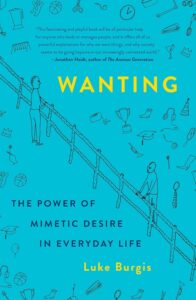
 "Wanting: The Power of Mimetic Desire in Every Day Life" by Luke Burgis
- "Think and Grow Rich" by Napolean Hill
- "Big Hairy Audacious Goal" (Jim Collins)
- "The Science of Scaling: Grow Your Business Bigger and Faster Than You Think Possible" by Benjamin Hardy
- "Three Ways To Get Paid" by Jason Zweig
- "Getting Things Done: The Art of Stress-Free Productivity" by David Allen
- "Introducing 50 Fires" (Chip and Joanna Gaines)
- Kitces & Carl Ep 127: Creating Value Through Presence (And The 50 Fires Podcast)
- "Helping Clients Get Unstuck And Follow Through By Understanding The Six Stages Of Change" by Meghaan Lurtz
Kitces & Carl Transcript
Michael: Well, greetings, Carl.
Carl: Hello, Michael. How are you?
Michael: I'm doing well. I'm enjoying the spring season. The season is turning. We're May here, June, by the time everybody is listening to this. Almost summer, depending on where you are.
Carl: Yeah, so good. I was out on a hike the other morning and thought, "I love being in the mountains." I remembered, oh, it's 55 degrees and not snowing. I love snow, but this time of year is so great.
Michael: I was going to say, is there a problem being in Utah when it's not snowing?
Carl: Well, that's a little secret we don't want anybody to know. People often come to ski, and they come for one summer, and that's when they move here. You come for one summer, and that's the hook. It's terrible. Don't come during the summer.
Michael: Okay, okay. Understood.
Carl: For sure. Yeah. What's happening?
Feeling Productive Vs Real Productivity [00:58]
Michael: Well, what would you like to delve into today?
Carl: You know, there's... Yeah, funny you should ask.
Michael: And this random Zoom room, we found ourselves in together to do this recording.
Carl: That's right. There's this phenomenon that I've been trying to get my arms around for a long time. I ran across the quote a couple of months ago and I wish I could attribute it. It was on some essay about AI tools, as I recall. It was almost like a throwaway line in the essay that is the only thing I can remember from the essay now, which is, here's the quote. "The market..." Well, let me start by saying this.
My first thinking around this started a long time ago when somebody said to me, and this was, I think, Luke Burgis in his book, Wanting. We had him on as a guest at the Society of Advice talking about that book. I think that's where I first heard someone say, "We're often far more interested. We, as humans, are often far more interested in being seen as something than actually being the thing." You could put in a lot of words here. One of my favorites is, we're often more interested in being seen as creative than actually being creative. Actually, being creative is really scary and hard work.
Michael: I was going to say, that's just a big... Being seen as creative is cool and hip, at least in some circles. Actually, being creative is just a giant ball of failure risk while everybody judges your creative quality. That seems awful unless you're possessed by the muse or something.
Carl: That's exactly right. You could use contrarian, being seen as contrarian. Being seen as productive, actually being seen as somebody who dead lifts and actually being somebody who deadlifts. You could play around with lots of words in there. I started thinking about that. I think that must have been three or four years ago. I read this line that the market for feeling... And we're just going to use what the line said, productive. I think you could swap this out, create it. The market for feeling productive is orders of magnitude larger than the market for being productive.
Now we got... Assume that's true. And I think it'd be fun for us to talk about, is that true? How have we seen it show up? But now we've got three layers to this game. Feeling... Stick with productive for a little bit. Feeling productive to our earlier statement. Being seen as productive. Then actually being productive. And so, I've been thinking a lot about... Definitely for myself. My work is mainly an adventure journal, not a self-help book.
And so, I'm almost always viewing these through, how does it apply to me? But then I've been seeing this set of lenses as shaded everything I'm doing with consulting and coaching clients. And then I'm seeing it from an advisor's eyes towards their clients. So, the question becomes, what are the implications of this idea for ourselves and for our work with clients? And what are some of the... How does it actually apply? Where does it show up? Implications, applications are very interesting in this idea. So I'll just pause there. That's a lot to throw at you. But what sort of surface is I say that? The market for feeling productive is orders of magnitude larger than the market for being productive.
Michael: My gut response actually goes back to your other comparable category earlier with creative, like putting creative in the word instead of productive. It's easier to try to be seen as creative than to actually take all the risks and challenges of being a creative laden with people judging your work and potential for failure, and all the stuff that goes with that. It feels like very much a mirror when you put in the word productive, feeling productive.
I guess now maybe you'll have to parse it further. Feeling and being seen as productive seems like the new hip thing or has been. It's busyness. The more busy you are, the more productive you are. I work 60 hours a week. I work 70 hours a week. I work 82 hours a week because I wake up at 5:15 a.m. and I've done more by 7:15 a.m. than most humans do in their life. We have all these articles out there of peak productivity that are usually things that people do hours before I ever wake up.
Carl: Don't lose your thought because the books, the second brain, the apps, the tools, there's a whole bunch of the market for tools to feel or be seen as is pretty high. Instagram is a great place to be seen as productive.
Michael: Versus, well, actually really being productive is hard work. Systematically pushing yourself into the things that you can do that will actually advance your career or move the needle or do whatever it takes to really, really, "Do the things that grow and accelerate you forward," they're hard things. They're really hard things. I feel like some of that is just the industry's traditional, right? If the business was easy, everyone will be doing it.
I mean, there was a version of this back in the cold calling days, starting out in the insurance row, but the hard workers who are real success are the ones who are willing to do what no one else is willing to do. That's why you should be willing to do another 170 dials today before you leave. It was built around that same principle.
To me, it just crops up over a little place. Napoleon Hill's Think and Grow Rich is all about figuring out in your head the few things that will move you forward for your single-minded focus goal towards the big idea that you have that you want to drive towards. Jim Collins' "Big Hairy Audacious Goal" is a version of that.
Now Ben Hardy's Science of Scaling book also has a version of that. They're all like, how do you get focused on the few things that really, really matter and put all of your energy into those? Because that's what really moves the needle on your career outcomes, your business outcomes, or your personal financial goals and objectives, whatever they are.
To me, what almost all of those books come back to is this is a thing that almost no one does because it's actually really, because it's really fricking hard. Be busy to seem productive, pretty straightforward. Do the actual really hard things that feel strange and risky to create focus and move the needle, that's scary stuff and most of us don't actually want to do it.
Carl: Okay, so let's just again, just... Feeling something, being seen as something and actually being the thing and we can stick with productive. But just to be clear to everybody, you could really... I've played around with all sorts of words in here. My sense is that this is true. At least my experience has been. And I think this applies to advisors and their clients equally because it turns out whether we're talking about advisors or clients, we're just talking about a human trait.
The market for, the demand for, right? The willingness for people, the number of people, another way of saying this, the number of people who will pay you for the opportunity for them, they will pay for the opportunity to feel productive, feel like they're making successful changes with their money or even being seen as doing that.
There's a lot more people that will pay for that than the people... You know what's interesting about this, Michael, is there's this great... Jason Zweig, I can't remember who told him this. It won't take long for... We've got the best, it's not fact-checker, but resource finder in the world on this podcast. [She] does such a good job. Who does it?
Michael: Are you making a reference to me or you mean our team?
Carl: The team that does the checking on this podcast.
Michael: For our team, Sydney Squires.
Carl: That's right.
Michael: Yeah, so good. Hunts down and makes sure all the things get cited and referenced and linked down to properly.
Carl: Okay, so I'm going to just in case we want to edit. So what's interesting is Jason Zweig said something super interesting, and I'm sure Sydney will be able to track down the exact attribution. But here's the quote.
Michael: It'll be linked in show notes.
Carl: Here's the quote. There are three ways to approach this thing of giving advice. You can sell to people, you can write to people, you can tell the truth to people who want to be told the truth and you'll make a living. You can tell the truth... Sorry. Here we go. You can tell the truth to people who want to be told the truth and you'll make a living. You can lie to people who want to be lied to and you'll make a fortune. You can tell the truth to people who want to be lied to and you'll go broke.
And I think there's some interplay between these whole examples of like, okay, if you try... If part of what somebody wants is just to feel a little bit more productive, feel a little bit more organized around their money, feel a little bit better about the decisions they're making. Sometimes I used to get really frustrated with that. I was like, what are you... In fact, I had a friend who actually asked me that. He's like, "What are you, a circus clown just up there juggling for people? This is just theater? You just want to make people feel something?"
And I sometimes would get really frustrated with that. "No, I only want people who actually do the thing." But it turns out these things are really hard to get... Where does the line between feeling something, being seen as something and being something change? And is it our jobs as advisors necessarily to always make sure that people are doing the thing or does them feeling a little bit productive, maybe even being seen as productive with their friends lead to a greater likelihood that they'll actually do the thing? Those are the kind of questions that bounce around in my head about this. This is the kind of thing I spend two hours a day up in the mountains thinking about.
Is It Bad To Pursue Only The "Feeling" Of Productivity? [12:48]
Michael: I hadn't even thought about this from the client context. So, then the implication is, are you trying to give advice as to all of your clients want to be more financially successful when, in truth, some of them just want to feel more financially successful or be seen as trying to be more financially successful but aren't actually ready to do the changes it takes? I mean, here again, another version of it's easier to feel like you're doing something or be seen than to actually do the thing, the being state is the hard one here.
Carl: Exactly. That's exactly right. Let's get back to that client thing because that's a really, really interesting question, is that what we're doing here? Because remember, feeling and being seen as...the interesting thing about feeling and being seen as, number one and number two, versus actually being the thing is you get almost all the benefit.
As you pointed out, feeling creative, being seen as creative, that's actually kind of fun. It's cool. You can get almost, big asterisk by almost, almost all the benefit by doing number one and number two without any of the risk because the moment you go be creative in the world, you got a giant pile of very intimate risk.
And so that's why I think the market for these things, why I think this is actually true is we can feel like I'm really good at time management by just reading David Allen's Getting Things Done book. I can feel that way. I could maybe even buy a little booklet or something, a bullet journal and I could let my family see it. I would be even be seen that way. But actually, doing it, David Allen's process every day, are you kidding me? Turns out if I try that, there's a chance I'll fail one day.
Actually, there's a high...you will, for sure, miss a day here and there and you're going to have to deal with that. So, it's super interesting why this statement is probably true. And then how does it apply? How do we protect ourselves from feeling or being seen as, as a place to hide versus doing the work, and then how do we work with this with clients?
Michael: I come to it a little bit from maybe the opposite end.
Carl: Shocker.
Michael: Well, so, look, my head first went to a version of what you just said, right? If you're productivity-obsessed, then the people who feel productive and try to be seen as productive but aren't actually being productive are hiding, right? We have all sorts of labels for it now. You're playing office, as Matthew Jarvis puts it. You're allowing yourself to be distracted. You're doing the work that doesn't really move the needle, have the impact as though it's wrong, right?
I think the word you use, it's hiding behavior, right? Sort of the implication is, you're not doing the thing you're supposed to, so we're going to slightly slap you on the wrist for that hiding behavior and then try to encourage you back the other direction. And I guess part of what strikes me, I just... When the norm is not doing the thing and the weird strange exception are the few people that do the thing, maybe not doing the thing actually really is normal.
And the hard thing is hard, right? What if you're not hiding because you haven't taken the giant productivity leap where you change all your systems and blow everything up? What if you're a normal human being and a few weird freaks manage to do whatever the... The other thing is where you do all the things in David Allen's book every day, 365 days a year, successfully. Okay, kudos to you. Apparently, you're wired differently than I am.
Carl: I think that's exactly right. I think that's the reason that quote holds up to scrutiny. The market for it is orders of magnitude larger because it's actually normal. It's probably a bit normal for us to hide. It's probably a bit normal for us to just want to feel a certain way, maybe even be seen as a certain way. It shields us. I was thinking about this. I just got some notes here that...sometimes I call this productivity theater.
Productivity theater is the avoidance of creative vulnerability, but it often shows up disguised as discipline. And so I think with clients... Here's an interesting story. This has been a very, very long-term thread I've been thinking about. My friend, Jeremy, was the one that said to me... Because I was telling him about speaking engagements. I was like, yeah, I go do these speaking engagements.
I said I really enjoy them. The feedback I get is that they're impactful. And he said, "Do you think anybody actually changes because of that?" And I was like, "I don't know, but probably very few because it's just... I know, for me, I've attended a lot of really impactful keynotes or workshops and I've implemented very little of what...but it still had an impact in my life." And I was telling this and he's like...he got kind of straight up with me. He was the one that said, "What are you, a circus clown? Just up there juggling on stage, entertaining people?" So that's Jeremy on one spectrum. Then I had this experience.
Michael: Well, if most of us want to feel and be seen, going to a Carl Richards session counts, and that feels good. So, thank you, Carl.
Carl: Yeah, well, that's very nice of you, and I hope that's true. But I was feeling a lot of angst because of the way Jeremy came after me for it. As part of the 50 Fires project, I went to Magnolia to meet with Chip and Joanna Gaines. And if you've been to Magnolia, to Waco, to the silos, it's this whole thing. I had no idea that this place existed. I didn't even know what really was going on.
Michael: What is it? Just for people who aren't familiar.
Carl: Yeah, they basically took over a huge piece of the town of Waco and built this giant compound where they've got their production office, their office. They've got a big place to have concerts. It's like a little park. They're built in the old grain silos, right? They've got these...it's called the silos. A really beautiful coffee shop. Chip's got a store where they sell the Yeti coolers and the...
And then there's also this store where they sell. And this is my point. I went there and there's people everywhere. I was just like, "What?" I felt like I had walked in, you know what I mean? My wife knew about it and I had friends that knew about it. I just had never... So I go there. I'm like, "What's going on?" I go in the coffee shop and it's...
And then I went over to the big store. So they have a big store. It's got all of maybe like the... And a lot of kitchen stuff. And I saw the cookbooks and kitchen setup and how to set a table and how to entertain. And I saw people buying dishes. And I literally sat there for a few minutes over in the corner and just watched people buying things. And I thought, "I bet almost everyone who goes here who buys something is going to go home..." It could be one of Joanna's favorite candles. They're going to put this candle someplace that they're going to occasionally light that candle. There are people here who are going to set a table and have a dinner in a slightly different way for their family because they had this experience. Big or small, they're going to do something slightly different because they've had this experience.
Are Chip and Joanna circus clowns? You're like, they're on TV. It's the definition of entertainment. So that was like the other anchor of this thought, was Jeremy saying, "What are you, circus clown?" And then the experience at Magnolia thinking, "Wait, if somebody just goes home and welcomes their family to dinner slightly different because of the experience, that's massive change." And maybe it's small change at a...sometimes I think about this as like an inch-deep but a million miles wide. Or sometimes our work is an inch-wide and a million miles deep.
And I think it's interesting to think about that, that maybe getting somebody to feel something, maybe that's actually the highest calling an advisor could have. And then if they feel that thing frequently, maybe they'll go home and make a subtle little change. And maybe that'll lead to more subtle little changes. As in, we all know everything that we do are just subtle little changes compounded over time. So, I've learned to not say "either/or", but realize that they're "yes/and"s. Tell me what you think about that.
How The One-To-One Client/Advisor Relationships Can Change The Dynamic (Or Pressures?) Of Implementation [22:45]
Michael: Again, I can see the pairing. Well, it's an interesting juxtaposition, right? In a world like the games who are entertaining one to many, right, there's some phenomenon of, you know, if I entertain a thousand and one of them makes a meaningful change, then I had an impact. I did something, I accomplished something. I mean, look, you can't change all the people's minds all the time. If we put something out in the world and a few people got meaningfully impacted, it's really hard to get people to change. So that's a really powerful, meaningful thing. What a wonderful success.
And then there's this crazy thing we do called financial planning, where we sit down with every single client, one darn client at a time. And we don't get judged in the realm of, well, I did financial planning sessions for 100 of my clients, like three of them implemented my recommendations. Isn't that great? The bar is really high. We're supposed to get every client to implement our recommendations.
Every single one is supposed to not just feel or be seen as, but actually be the change that we're recommending. I don't know, it strikes me, by this model and framework, the bar feels very high in the work that we're supposed to do with clients when most of us are still good old-fashioned humans and this stuff's actually ridiculously hard for us to make change and do these things ourselves.
Carl: And look, I love that. Yeah. And I want to be clear, this, to me, the interesting thing about these kinds of discussions is not that there's an answer. It's just an interesting framework. And it's an interesting question, but I like the idea, though, of, if you start... Does this change the way you see advice-adherence problems? If you start to finally, "Oh, maybe that's why," you'll see in an ideal client profile, I want ideal clients who take my advice and implement it.
Michael: Yeah. I know a lot of advisors that have literally written that in. Part of ideal client definition is takes my advice and implements it.
Carl: Of course.
Michael: Because it's frustrating to see them not.
Carl: Yeah. And the number of conversations that I've had with... This has actually really been helpful for me. I feel like if anybody wants to send me a bill for the therapy, please send it. It's interesting because when they don't implement it, you wonder what they're paying for. You wonder if you're providing any value. And I wonder if there's an edge there where you can be like, "Yeah, I'm actually am providing a little value." They feel a little bit better about themselves. They're making some progress. Maybe the measurement of the progress is a little bit lower. Because if it's true that most... It turns out what we're asking people to do is hard.
It's easier to read another book about how to make investment decisions. It's easier to watch another hour of the financial pornography network on TV than it is to actually decide that you're going to spend a little bit less or you're going to prioritize a goal or you're going to have a hard conversation with a family member because it's part of your financial plan. We're asking people to do hard things.
So, I think that's interesting. Does that mean we should take on a bunch of people who don't actually ever do anything? No, that would be a really frustrating business. But I think it's helpful to understand the reason that's on your ideal client profile is probably because this is hard for humans. Most humans are more interested in just feeling it.
Gauging Client Interest In "Actually" Implementing [26:33]
Michael: I think it's an interesting question to raise. Why do I have that subset of clients who keep paying me the fee and then basically don't implement any of the things that I recommend? To me, there is some interesting essence here of because maybe their goal wasn't the being level, it was the being seen as or feeling level further downstream. And maybe that's all they wanted right now, and maybe I'm scratching that successfully for them.
As I reflect back on versions of this, there are certainly a few clients I can think of over the years where being seen as trying to get our finances in order with my spouse was more important than actually getting my finances in order. They weren't there to fix their stuff. They were there to show their spouse they were trying. A version of being "seen as".
Carl: Yeah, the Jeremy spectrum of this would be like, "What are you, a joke? Come on." And just the Magnolia spectrum of this, if we're going to label them those, would be like, hey, maybe that's enough. For right now, for this particular moment, for this particular person, maybe the best thing you can do is just be like, bro, you're doing great. You're doing great. Keep it up.
You know what I mean? And the other thing to keep in mind is it's not like all clients in every single area of their financial lives are one or the other. Right? There could be goals and there could be other things. Gosh, I've just been postponing that. I don't really want to do that right now. So that's super interesting to me.
Michael: Which I guess gets back to some things that Dr. Meghaan Lurtz and others have put out there that comes over from the psychology and therapy realm. There's often a question to the effect of, is this something you actually want to take action on, that you're ready to take action on?
Carl: I love that.
Michael: And sometimes clients say no, like, "I appreciate the advice. I'm taking it all in. I'm not actually ready to do anything with it. But I'm taking it in and maybe you're moving the needle for me a little bit. But the mere facts that you said here's what I recommend does not mean today's the day I was actually ready to act on that advice."
Carl: Yeah, that's a great question. Do you hear her using sometimes, on a scale of one to ten, how likely are you to act? Is that another place where this shows up?
Michael: Yeah, yeah. Scaling questions like that I think also work here. All this with the recognition that being the creative, being productive, being the actual financially confident and successful person that maybe I have not been as a client up to this point in my life, these are things that are so hard that a lot of us take action never or infrequently and takes a lot of buildup to get to the point where we're ready to take the action that makes a big change in our lives because change is really hard. And so maybe it's okay and normal that not all clients are there yet. And the fact that they reached out and asked us for advice and engaged us is not actually a concrete indicator that they're ready yet.
Carl: Yeah. All I really want to say amen. This is super. It's super interesting to me because it could just be... Yeah, that feels to me like part of the craft of advice, is recognizing the difference between, oh, are we here to... What can I do to be most helpful here? Right? You just want to be heard on this frustration. I actually want to change this frustration. You said you were like a five, what would have to happen in order for you to be a seven in terms of taking action? Or why wasn't it a three? I just think this job is so awesome. And I think understanding this job being the financial advisor job, because it just gives... All we're talking about here is like, who else gets to get into that level of almost like spiritual practice with someone in terms of getting you closer to the person you say you want to be?
And I think what you've really demonstrated for me today is that there's a level of empathy there with just like, hey, this is hard. Turns out it's you know what? The reason you feel that way is because that's normal. That's how a normal human feels. Right? Welcome to the club. What do you want to do about it? What do you want to do about it? Super interesting. Thanks, Michael.
Michael: Awesome. Thank you, Carl.
Carl: Cheers.





Leave a Reply