

Executive Summary
Enjoy the current installment of "Weekend Reading For Financial Planners" – this week's edition kicks off with the news that a U.S. District Court has formally put an end to the Biden-era Retirement Security Rule (aka "Fiduciary Rule 2.0") after the Trump administration's Department of Labor elected not to defend the rule against lawsuits led by groups representing product distribution industry. The end of the Retirement Security Rule represents a win for these groups and echoes their previous win in 2018 when the Obama administration's original fiduciary rule was struck down in court. Which raises the question of whether the DoL and fiduciary advocates might rethink their efforts to apply a uniform fiduciary standard to advisors and salespeople, and instead consider an alternative approach that focuses on separating advisors and salespeople by simply limiting the ability of salespeople to hold themselves out as advisors and ensuring that people who say they are advisors really are, so consumers are clear about the distinction between the two and can make their own decisions?
Also in industry news this week:
- A report from fee-for-service payment processor AdvicePay finds that subscription charges remain dominant amongst advisors using its service, with average fees charged climbing over the past year
- Client retention is advisory firms' top marketing objective this year, according to a recent survey, as firms look to both hold on to current clients and encourage them to make more referrals
From there, we have several articles on retirement planning:
- An analysis of a range of retirement income strategies identifies those that lead to the most consistent annual income throughout an individual's retirement
- How the way income is generated from a portfolio in retirement can be influenced by the composition of a retiree's spending (and the other sources of income available to them)
- How the timing of different income sources (e.g., Social Security benefits) can call for different approaches to evaluating risk and generating income during different stages of retirement
We also have a number of articles on investment planning:
- An analysis of historical oil price trends and stock market returns indicates that higher oil prices don't necessarily lead to weaker stock market returns going forward
- A look at previous oil shocks suggests that the length and size of oil price shocks are key factors determining whether a subsequent stock market downturn might occur
- How higher oil prices can flow through to the broader economy (and the factors that help determine whether elevated oil prices might tip the economy into recession)
We wrap up with three final articles, all about entrepreneurship:
- New business applications were up 37% in January, suggesting that some workers are taking matters into their own hands amidst speculation about future AI-related job losses
- How an influx of private equity capital is reshaping the skilled trades industry for business owners, employees, and consumers
- Why avoiding the pitfalls of "entrepreneurial seizure" is important for employees who decide they want to start their own business (but might not recognize how running a business is different than working for one)
Enjoy the 'light' reading!

Court Vacates Biden-Era Fiduciary Rule In Win For Product Distribution Industry
(Tracey Longo | Financial Advisor)
The Biden-Era Department of Labor (DoL) last year released the final version of its latest effort to lift standards for retirement-related advice, dubbed the "Retirement Security Rule" (aka the Fiduciary Rule 2.0), which was set to begin taking effect in late September and (again) attempted to reset the line of what constitutes a relationship of trust and confidence between advisors and their clients regarding retirement investments versus a purely sales-based product transaction, and when a higher (fiduciary) standard should apply to recommendations being provided to retirement plan participants. As with the prior Department of Labor fiduciary rule back in 2016, the administration's particular focus was on those not already subject to an RIA's fiduciary obligation to clients (i.e., brokers and especially insurance/annuity agents that solicit 401(k) or IRA rollovers to purchase their products).
At the same time (and not unexpectedly, given the product distribution industry's successful challenge to a previous iteration of the fiduciary rule), the Retirement Security Rule quickly came under legal fire, with groups arguing that it violates the U.S. Congress' intent in passing ERISA and that the DoL overstepped its authority in seeking to adopt a fiduciary obligation for their representatives and agents who (by the firms' own admission) are not advisors and are purely operating in a sales capacity. Later in the year, two Federal district courts effectively halted the rule from taking effect, with two cases applying to the halt consolidated in the U.S. Court of Appeals for the 5th Circuit. While the Biden administration had defended the rule, the change in administration meant that the Trump DoL would have to decide whether to continue to do so.
After requesting multiple extensions throughout 2025, the Trump administration's DoL in November filed a motion to dismiss its appeal, effectively signaling the end of the line for the Retirement Security Rule (as if the DoL was no longer going to defend the rule against court challenges, the judge would inevitably rule in favor of the product manufacturers seeking to vacate the rule). Sure enough, the final end of the rule was subsequently sealed last week, with a U.S. District Court issuing a final judgment vacating the rule and related prohibited transaction exemptions. Trade groups representing the product distribution industry cheered the decision, which has echoes of the fall of an Obama-era "Fiduciary Rule", which was eventually vacated in 2018 following opposition from many of the same groups on the same grounds that their agents and representatives are not advisors but salespeople (for whom a fiduciary obligation is not an appropriate standard).
Nonetheless, according to its regulatory flexibility agenda the DoL said it plans to issue a new related rule this year, which could include rules to address fiduciary advice regarding rollovers. Notably, given the similar experience of the Obama-era "Fiduciary Rule" (which was eventually resurrected and adopted in a more permissive form during the first Trump administration [e.g., allowing broker-dealers to receive commission compensation for giving clients advice involving plans governed by ERISA, as long as the broker-dealer otherwise acts in the client's best interest when giving that advice]), it's possible that DoL's new proposal could be more favorable to the product sales industry than the Retirement Security Rule, effectively seeking to finalize a rule that would proactively reduce current ERISA fiduciary protections (such that if they become the law of the land during the current administration, it will be difficult for future administrations to unwind, just as the Biden and Obama administrations struggled to lift the ERISA fiduciary standard from its current state).
In the end, the ongoing dynamics highlight the very real challenges that remain as ERISA, which was first rolled out more than 50 years ago when salespeople and advisors were very distinct categories, has struggled to keep pace with industry evolution that has blurred the lines between the two groups. Yet with the DoL's repeated failures to extend the fiduciary obligation to salespeople that work for insurance/annuity and investment product manufacturers over the span of the past decade, the question arises now whether the DoL and fiduciary advocates should rethink their efforts to apply a uniform fiduciary standard to advisors and salespeople, and instead consider an alternative approach that focuses on separating advisors and salespeople by simply limiting the ability of salespeople to hold themselves out as advisors and ensuring that people who say they are advisors really are, so consumers are clear about the distinction between the two and can make their own decisions?
AdvicePay Report Finds Most Advisors Are Increasing (Not Decreasing) Fees, With More Larger Firms Adopting Fee-For-Service Model
(Diana Britton | Wealth Management)
For financial advisors looking to have clients pay fees for their advice (as opposed to being paid indirectly by commissions on products they sell to implement the advice), there is no shortage of options to choose from. According to Kitces Research on Advisor Productivity, the Assets Under Management (AUM) model remains the most common amongst respondents, with 92% incorporating AUM fees in some way (accounting for anywhere from 15%-99% of a firm's revenue) and 86% using it as their primary method of charging clients. However, fee-for-service models (e.g., subscription, project-based, or hourly charges) are commonly used as well (sometimes bundled with AUM fees), with 42% of respondents using hourly or project-based fees and 37% offering subscription-based services to at least some clients.
Data from fee-for-service payment platform AdvicePay's 2026 Fee-For-Service Industry Trend Report, highlights the growing use of fee-for-service offerings, recording 525,000 such transactions in 2025 and reaching $1 billion in lifetime financial planning fees and 15,000 paid users on its platform. Advisors using the platform are primarily using it for subscription or retainer-style planning fee transactions, with 86% of invoices in 2025 reflecting recurring subscriptions (up slightly from the previous two years). In turn, those models also appear to have greater pricing power, with the average quarterly subscription fee up 9.4% year-over-year to $1,074 and the average monthly subscription fee now sitting at $291 (or $3,492/year, which is remarkably close to the minimum fee that AUM advisors typically generate from their AUM minimums as well, signaling a commonality of fee minimums to service financial planning clients profitably regardless of fee model!).
While observers might assume that the fee-for-service model is primarily the purview of relatively smaller RIAs serving relatively younger clients (who might have the income, but not the assets, to be able to pay a firm's fee), the report found that 11 of the top 15 broker-dealers use the platform as well, as fee-for-service financial planning expands more mainstream. Also, the report confirms separate Kitces Research findings that many firms are incorporating both AUM and fee-for-service charges into their fee models, with more than half of AdvicePay users receiving less than 50% of their revenue from fee-for-service engagements that is being generated alongside their AUM fees for a subset of younger clients for whom the AUM model may not fit (though some firms appear to be 'all in' on the fee-for-service model, with this revenue representing more than 75% of revenue for approximately 38% of firms on the platform).
In sum, the fee-for-service model appears to be gaining momentum (while still very substantially trailing behind AUM in terms of adoption and total assets managed) as more firms appear to recognize how it can provide a recurring revenue stream, open the door to serve different types of clients who might not be a good fit for the AUM model, and link the ongoing work they perform for their clients to the fees they receive (and while firms using this model appear to have pricing power, communicating fee increases can be more challenging under this model [compared to the 'automatic' fee increases that come with market appreciation under the AUM model], making a client-centric, value-based approach to doing so more valuable!).
Disclosure: Michael Kitces is a co-founder of AdvicePay.
Advisors Focusing On Client Retention, Branding To Boost Referrals: Survey
(Rob Burgess | FinancialPlanning)
While there are many potential marketing tactics for financial advisors to consider, client referrals often serve as the bedrock of new-client growth for financial advisory firms (which makes sense given the highly personal nature of the advisor-client relationship and the [hopefully] high level of service provided by a particular firm). While winning client referrals might not require the same level of hard-dollar outlays that certain other marketing tactics (e.g., paid advertising) might, they can still require an investment of time to ensure clients know how to make referrals and are armed with the information that can lead a contact to reach out to the advisor.
According to FinancialPlanning's March Financial Advisor Confidence Outlook survey, 62% of respondents said client referrals are their top source of new clients, well ahead of second-place centers of influence at 22%. In addition, the survey found that client retention was respondents' top marketing objective this year at 69%. Amidst this backdrop, many firms also appear to be investing in branding (which can take many forms, from content creation to increasing visibility with ideal target prospects), with 27% of advisory saying they spend at least four hours a week on branding their businesses and another 37% spending between one and three hours per week on this task (which could also make it easier for current clients to explain the firm's value proposition to others).
Altogether, it appears that client referrals remain dominant as firms' chief source of new clients (reflecting similar results from Kitces Research on Advisor Marketing). Which suggests that taking time to nurture client relationships (including through a consistent client experience that can burnish the firm's brand) can serve a dual benefit of both preventing client attrition (and the cost of attracting and onboarding a new client) and also increase the chances that clients will make referrals to friends and family!
The Best Retirement Income Strategies For Consistent Spending
(Amy Arnott | Morningstar)
Individuals with investment portfolios available to support their spending in retirement have many strategies available for tapping into their portfolio assets without exhausting the portfolio (or ensuring that a certain amount is leftover for legacy interests) over a retirement period of uncertain length. While some individuals might be willing to accept more variable income (in return for higher initial withdrawal rates), others might prefer to have more consistent income over their retirement years (even if it means a lower initial withdrawal rate).
For those who fall into the latter group, Morningstar researchers assessed several retirement income strategies (testing 1,000 hypothetical return patterns for a portfolio made up of 40% stocks and 60% bonds over a 30-year period), identifying four strategies that led to the most consistent income. The strategies with the least annual volatility were a "base case" of withdrawing 3.9% of their portfolio in the first year and then adjusting that amount to inflation (similar to the well-known "4% Rule") and a strategy that included a 5% first-year withdrawal rate with future inflation-adjusted withdrawals reduced by 2% throughout retirement (e.g., if inflation was 3% in a given year, the next year's withdrawal would only be 1% larger).
Other strategies that offered relatively consistent spending included forgoing inflation adjustments in the years after a retiree's portfolio declined in value (which allowed for a 4.3% initial withdrawal rate), and a probability-based "guardrails" approach that used a 5.1% initial withdrawal rate (with this amount adjusted for inflation annually), with a 10% spending reduction for the year if the portfolio's probability of success under a Monte Carlo simulation dropped to 75% (with a 10% spending increase for the year if the probability of success reached 95%, capped at 120% of initial spending, adjusted for inflation).
In addition to different levels of spending consistency, each of these strategies comes with additional tradeoffs retirees might consider. For instance, while the "base case", reduced annual withdrawal, and foregone inflation adjustment strategies ended up with higher median ending portfolio values after 30 years, they resulted in less lifetime spending than the probability-based guardrails approach (suggesting the former strategies might be preferable for those prioritizing leaving a larger legacy interest, while the latter strategy might be preferred by those looking to maximize their own spending [perhaps including lifetime giving] in retirement).
Ultimately, the key point is that because there are several available retirement income strategies that can offer sustainable withdrawals (at least based on modeling), financial advisors can play a valuable role in both helping clients select a strategy that best fits their unique preferences (e.g., for consistency versus income maximization) and execute it throughout what could be a multi-decade retirement.
Retiree Spending Flexibility And Optimal Portfolio Risk Levels
(David Blanchett and Jeremy Stempien | Investments & Wealth Monitor)
Media discourse around retirement sometimes refers to an individual's 'number', or the total asset they need to amass to retire comfortably. However (as financial advisors will recognize), many other factors can go into a retirement income plan (e.g., risk tolerance and spending flexibility), which can shape the investment and withdrawal strategies that are chosen.
Another element that plays an important role in retirement spending is the composition of an individual's planned spending in retirement, including how much spending could be classified as a "need" and how much would be considered a "want" (as this can demonstrate the amount of spending flexibility a retiree might have). This knowledge can be particularly powerful when combined with the amount of a retiree's available 'guaranteed' sources of income (e.g., Social Security and defined-benefit pension benefits), as it's possible that this guaranteed income might cover a significant percentage (if not all, in some cases) of an individual's 'needs' spending.
With this in mind, the "needs percentage" (i.e., the percentage of total lifestyle spending represented by "needs") for an individual retiree could influence how their portfolio assets are invested. For example, the authors find (assuming a moderate income volatility preference and moderate risk tolerance), that for an individual with a 40% "needs percentage" (perhaps the result of having significant portion of their needs covered by guaranteed income sources) would benefit from a declining equity 'glide path', starting at over 60% equities at age 60 (reflecting their ability to sustain portfolio losses) and declining to just over 20% at age 85. On the other hand, an individual with a 100% "needs percentage" (meaning all of their needs must be covered by portfolio income) could be best suited with a gently rising equity glide path, starting from a base of just over 40% equities at age 60 (reflecting the impetus to be more conservative where sequence of return risk would be most harmful while also attempting to grow the portfolio over time to cover the "needs" spending throughout retirement).
In sum, looking at an individual's projected retirement spending not as a monolith, but rather as less-elastic "needs" and more elastic "wants" (in addition to accounting for sources of guaranteed income) can give a financial advisor valuable information when crafting a retirement income strategy (which can be further enhanced by knowledge of a client's risk tolerance and income volatility preferences) and ultimately lead to a plan that allows the client to sustainably meet their spending "needs" while also enjoying the "wants" that can make retirement even more enjoyable!
The Retirement Distribution "Hatchet": Using Risk-Based Guardrails To Project Sustainable Cash Flows
(Derek Tharp and Justin Fitzpatrick | Nerd's Eye View)
One classic technique for crafting a sustainable retirement income strategy is the use of withdrawal rates; based on asset allocation and historical return data, advisors can calculate a safe annual portfolio withdrawal rate that retirees can use to guide their spending throughout their retirement. However, this approach does not account for the investment returns the clients actually experience in their retirement; for example, the safe withdrawal rate could increase over time if the client experiences strong investment returns in their first few years of retirement.
To solve this problem, advisors can use withdrawal-rate guardrails, which are guidelines to increase or decrease spending when portfolio withdrawal rates reach certain levels. For example, if an initial 4% withdrawal rate calls for $5,000 in monthly spending, the spending amount could be adjusted higher if it reaches 2% of the portfolio value or lower if it hits 6%. Yet, withdrawal-rate guardrails can be flawed because the relatively steady withdrawal rate patterns used do not necessarily align with how retirees actually pull distributions from a portfolio in retirement.
In reality, what is more commonly seen is a "retirement distribution hatchet" in which the initial retirement distribution rates from a portfolio are highest early in retirement, then significantly decline when deferred Social Security is claimed (as late as age 70), and falling further yet because of the tendency for retirees' spending to decline in real dollars as they move through retirement. A dynamic portfolio withdrawal strategy should also consider other sources of income in retirement (e.g., pensions, rental properties, part-time jobs, house downsizing, and inheritances) that can impact the size of needed portfolio withdrawals to cover spending requirements.
To compensate for this issue, advisors could consider using holistic risk-based guardrails, which reflect current longevity expectations, expected future cash flows, expected future (real) income changes, and other factors. Probability of success via traditional Monte Carlo analysis can serve as the risk metric to guide the implementation of risk-based guardrails. There is a risk of causing anxiety for clients if the risk is presented in terms of the success or failure of their plan as a whole, but advisors can instead use the language of income risk, which may be less stress-inducing. For example, an advisor could explain that if risk increases (e.g., if investment returns are weak), downward adjustments to spending will be needed; alternatively, if risk declines (e.g., because the client has reached an advanced age with a strong portfolio) spending can be safely increased.
Ultimately, the key point is that a risk-based guardrails model could give clients a more accurate picture of how much they can sustainably spend than can models based on static withdrawal rates or withdrawal-rate guardrails, in part by taking into account the timing of different sources of income in retirement (and, therefore, the varying amount of portfolio withdrawals required). Which could provide clients with the spending benefits of the guardrails approach (e.g., a higher starting withdrawal rate than static withdrawal rates) and even greater confidence that they will be able to meet their spending needs throughout retirement.
How Do Higher Oil Prices Impact Stock Market Returns?
(Ben Carlson | A Wealth Of Common Sense)
One of the biggest news stories in recent weeks has been the military strikes on Iran and the subsequent fallout, which has led to a spike in oil prices (from about $65 per barrel in late February to a peak of more than $115 earlier this month). A natural question for many clients following this news is how higher oil prices might impact their portfolios.
Looking at oil price movements over the past 40 years, the S&P 500 (perhaps counterintuitively) tends to perform better in years when oil prices are up (an average 13.1% return with 84% of years experiencing positive returns) than when oil prices are down (an average 11.3% return and an 81% win rate). This is perhaps due to some oil price increases being associated with higher economic growth (which can feed into stronger earnings expectations and stock prices). Nonetheless, there were several years in this period where oil prices rose and stocks fell (most recently 2022), raising the specter that elevated oil prices could be associated with higher inflation (perhaps if the higher prices of oil and other key inputs lead to upward pressure on prices for finished goods). Also, a short-term spike in oil prices doesn't necessarily presage poor returns for stocks either, as periods since 1990 where oil prices rose at least 5% two days in a row saw higher forward returns for the S&P 500 (on average) on 1-, 3-, 6-, and 12-month timeframes (though there were notable exceptions, including the spike experienced in September 2008 and, more recently, March 2022).
Altogether, data from the past few decades suggest that higher oil prices don't necessarily lead to deterioration of stock market performance. Which could lend credence to many advisors' entreaties to clients to "stay the course" during turbulent geopolitical periods (while also recognizing that the 'price of admission' of getting the benefits of equity appreciation is the ever-present potential for an economic downturn that could lead to a correction or bear market).
A Brief History Of Energy Crises (And What They Meant For The Stock Market)
(Harry Mamaysky | QuantStreet Capital)
While seasoned investors are likely used to the ups and downs of the oil market, sudden price spikes can draw attention to this commodity. Today, with oil prices up about 70% since the start of 2026, some investors might be curious about how such sudden jolts have affected stock prices in historical instances.
Perhaps the most painful oil price increase occurred over the course of the 1970s, with the Arab oil embargo sending prices from $3.56 per barrel to around $10 per barrel between 1973 and 1974, with the aftershock of the Iranian revolution in 1979 sending prices to a peak of $39.50 per barrel in 1980 (a cumulative increase of more than 1,000%!). Notably, stock returns were down slightly in this period (declining by a total of 8.4% between January 1973 and February 1982), which, combined with an 89.5% cumulative increase in the consumer price index during the same timeframe, made for an incredibly painful era for investors (particularly those who might have retired on the eve of this period).
Notably, other oil price spikes resulting from geopolitical events in the Middle East had varying results for stocks. For instance, oil rose by more than 60% twice in the period surrounding the First Gulf War in the early 1990s; the first spike coincided with an increase in the S&P 500 of more than 26% while the index fell amidst the second jump.
In the end, while a sudden jolt in oil prices can be coincident with a drop in stock prices (particularly, if history is a guide, if the oil shock is based on prolonged geopolitical events), this doesn't have to be the case. Which suggests, given the uncertainty over where the current geopolitical environment is heading, that many investors might focus on what they can control (e.g., maintaining an asset allocation appropriate for their circumstances).
How Higher Oil Prices Impact The Broader Economy (And Could Lead To A Recession)
(Anthony Chan | The People's Economist)
When consumers see news headlines about the current price of oil the first thing that likely comes to mind is how it will affect gasoline prices (which are hard to miss driving down any street with a gas station!). While gas can be an important line item on many families' (and business') budgets, the price of oil can have broader economic effects.
Over time, oil price shocks tend to be more impactful on the economy when they are sizeable, sudden, and long-lasting. Large, sudden shocks leave consumers and businesses with little time to prepare and an extended period of elevated oil prices can lead to reduced consumer discretionary spending (as more money is spent on gas and potentially increased prices on other goods with oil-based inputs or that are exposed to transportation costs that can increase with higher oil prices) and business investment (particularly if higher oil prices lead to tightened monetary policy amidst broader inflation concerns). Historically, economic recessions since World War II have typically been preceded by a sharp rise in oil prices (though oil prices alone aren't sufficient to predict a recession).
While the current spike in oil prices has been sudden, it remains to be seen whether oil prices will move higher (e.g., well beyond $100 per barrel) and/or whether the elevated prices will be sustained. For instance, futures market participants (at least at the moment) appear to be skeptical about oil prices experiencing significantly higher prices for the long run. Nevertheless, with the geopolitical background of the current oil price rise still playing out, future movements in prices in the futures markets could signal shifting expectations for a longer-term event.
Ultimately, the key point is that there isn't a particular price of oil that might tip the economy into recession; rather, continued upward movement in oil prices (particularly if accompanied with expectations for a longer-duration situation), alongside other economic signals (e.g., decreased consumer spending, tighter financial conditions) increase the chances of a broader economic downturn (though a reversal of prices is always on the table as well, which could make this a shorter-lived economic event).
Starting Your Own Business Is All The Rage Again
(Callum Borchers | The Wall Street Journal)
Much has been written about the (still speculative) potential for Artificial Intelligence (AI) to disrupt the job market (including potential layoffs for workers across a variety of industries). Which appears to be leading some individuals to take matters into their own hands and start their own businesses.
According to the Census Bureau, there were more than 500,000 new-business applications in January, up 36.8% from last year. Perhaps more anecdotally, on LinkedIn, 69% more users list themselves as founders than a year ago. Notably, AI isn't necessarily just a threat to jobs, but rather appears to be empowering some of these new businesses, as various app-building tools have made it easier (and cheaper) for budding entrepreneurs to bring their ideas to (digital) life (though some might be wary that AI tools could make it easier for imitators to copy their creations). Other entrepreneurs are leaning in to the physical world, starting businesses that might be harder for AI to copy (though might require greater investment in terms of rent and staffing).
In sum, it appears that a wave of entrepreneurship may be starting again (following the significant increase in new business formation amidst pandemic-related economic changes earlier in the decade). Which suggests that certain financial advisory clients might be catching this bug, putting advisors in a position to provide guidance on how they can financially prepare for this transition (including determining how much of a financial 'runway' they have and ensuring both members of client couples are on board with this decision!).
How Private Equity Dollars Are Transforming Skilled-Trade Small Businesses
(Te-Ping Chen | The Wall Street Journal)
Skilled trades (e.g., plumbing and HVAC maintenance) can offer interested workers the opportunity to practice a craft that can have steady demand and offer the opportunity to start one's own business if they so desire. And while there are still many small trades businesses, the infusion of private equity capital into this space has changed the dynamics for business owners, employees, and consumers alike.
Like other businesses (including financial planning firms), skilled-trades businesses often have steady cash flows, which can be attractive to private equity firms. At the same time, they might have relatively inefficient back offices and face managerial and staffing challenges, which offer private equity firms the opportunity to inject their resources and expertise to run a more efficient business (done in part by 'rolling up' multiple smaller businesses into a larger operation).
For owners of these trades businesses, offers from private equity firms can be a welcome source of liquidity (and perhaps reduced stress from running the business), whether they intend to fully exit the business or remain onboard (though some firms that remain independent can find it harder to thrive amidst competition from now-larger firms). Employees of these firms can potentially benefit from greater financial resources within their company (and possibly higher pay in certain circumstances), though some have raised concerns about additional pressure from their new owners to generate more revenue (e.g., recommending the replacement of a system rather than repair). Consumers might benefit from faster service times (thanks to expanded fleets at the larger firms), though they might miss the more personal service of a smaller firm and could experience increasing prices from highly returns-conscious private equity owners.
Amidst this backdrop, private equity interest in skilled-trades businesses could create opportunities for financial advisors to offer additional value for current clients in this demographic (e.g., helping them evaluate the implications of different buyout offers) as well as to serve former business owners who have newfound wealth after a sale (and who might not be as used to managing an investment portfolio given that much of their wealth might have been tied up in the business).
Avoiding The Pitfalls Of An "Entrepreneurial Seizure"
(Tricia Huebner | Inside E-Myth)
While there are some company founders who take an idea from scratch and turn it into a business, many business owners start out as employees themselves in their industry, perhaps moving up into management before deciding to go out on their own. What many in this latter group find, though, is that running a business requires much more than performing the technical work they're accustomed to.
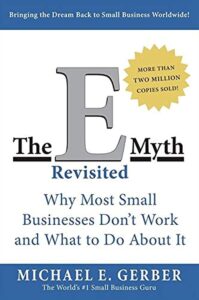 In the book "The E-Myth Revisited", author Michael E. Gerber outlines this "E-Myth", where "technicians" assume that by starting their own business they can seamlessly work at their craft in exactly the way they want to. Gerber calls the moment when a technician makes the decision to leave their current company (perhaps spurred on by a management decision that puts them over the edge) an "entrepreneurial seizure". Unfortunately, some individuals going through this process hold what Gerber calls the "fatal assumption" that if they understand their technical work that they understand how a business performing that technical work operates. Which can lead to overwhelm as they encounter the many requirements of running a business. Instead, Gerber suggests that aspiring business owners embrace an entrepreneurial mindset, replacing personal effort with systems and staff that produce consistent, predictable results (i.e., working on the business, not just in it).
In the end, while those who have become skilled a particular craft (from pie baking to financial advice) have the potential to become successful business owners, this transition is by no means guaranteed and can benefit from expanding their field of vision from the production of the good or service itself to building a business (including the processes and staffing within it) that will be able to attract customers and grow sustainably over time!
We hope you enjoyed the reading! Please leave a comment below to share your thoughts, or send an email to [email protected] to suggest any articles you think would be a good fit for a future column!
In the meantime, if you're interested in more news and information regarding advisor technology, we'd highly recommend checking out Craig Iskowitz's "WealthTech Today" blog.





Leave a Reply