Executive Summary
Advisors entered 2026 facing a familiar but challenging dynamic: a surge in headline-driven uncertainty prompting clients to question whether they should take action with their portfolios. A combination of geopolitical conflict, rising oil prices, evolving tariff policy, persistent inflation, and questions around artificial intelligence has contributed to the first meaningful market pullback following a strong 2025. While these developments can heighten investor anxiety, the more pressing challenge for advisors is helping clients distinguish between short-term noise and long-term fundamentals, avoiding reactive decisions that could undermine financial plans.
In this article, James Liu, CEO of Clearnomics, explores how advisors can address client market concerns in a reassuring, data-driven way, helping clients maintain perspective and recognize that the underlying economic and market backdrop remains more resilient than headlines may suggest.
Corporate earnings are growing at an above-average pace, bond yields are meaningfully positive after years of near-zero rates, and diversification is proving effective as leadership broadens beyond large-cap U.S. equities. Even the current decline remains well within historical norms, with pullbacks of similar or greater magnitude occurring regularly without derailing long-term returns. At the same time, geopolitical shocks – while consequential in the near term, especially through energy markets – have historically been temporary drivers of volatility rather than lasting determinants of portfolio outcomes. Oil price spikes, for instance, can contribute to inflation and complicate central bank policy, but are often moderated over time as supply adjusts and demand responds.
At the same time, there are legitimate risks. Inflation remains above target across multiple measures, and rising energy costs may limit the Federal Reserve's ability to ease policy. This creates a more complex environment for both equities and fixed income, particularly as bond markets adjust to a higher-for-longer rate backdrop. Meanwhile, the labor market is showing signs of cooling beneath the surface, with a growing divergence between higher- and lower-income households. Credit conditions are also tightening even as yields remain attractive. Structural shifts – including the ongoing AI investment cycle and evolving global trade policy – further complicate the outlook by introducing both opportunity and disruption across sectors, while elevated valuations in parts of the market leave less room for error.
In this environment, portfolio construction and risk management take precedence over prediction. Diversification across sectors, asset classes, and geographies remains valuable as leadership rotates and different segments respond differently to inflation, interest rates, and global events. Similarly, equity investors are increasingly reliant on earnings growth rather than expanding valuations, reinforcing the importance of focusing on fundamentals and maintaining broad exposure rather than concentrating in a narrow set of themes such as mega-cap technology or early-stage AI beneficiaries.
Ultimately, the central lesson is that while the sources of uncertainty evolve, the principles of successful investing remain consistent. Periods of volatility and discomfort are not anomalies to be avoided, but inherent features of markets that reward discipline and long-term thinking. Advisors play a critical role in helping clients understand that well-constructed portfolios are designed not to avoid every downturn, but to endure them and participate in subsequent recoveries. By reinforcing perspective, emphasizing diversification, and maintaining alignment with long-term goals, advisors can help clients navigate uncertainty with greater confidence while demonstrating the long-term value of financial planning.

The first quarter of 2026 delivered several developments that have reshaped the market and economic outlook. Key changes include the surge in oil prices driven by geopolitical disruption, a Supreme Court ruling that rewrites the tariff story, fresh uncertainty about the direction of Federal Reserve policy, and an AI investment cycle that continues to drive industry disruption. Through all of this, markets have experienced a modest pullback, which has the potential to raise client concerns.
For advisors, charts paired with clear talking points can support client conversations in periods like these. The charts below can be customized with an advisor's own branding using a free version of the insights platform, Clearnomics Community. All 10 charts are also downloadable here in a full PDF.
Today's environment can leave some clients feeling that action is necessary. Concerned investors may have an urge to shift to cash or reduce portfolio risk. History suggests, however, that periods of greatest uncertainty are often when the power of investment and financial planning truly shines.
After all, the fact that staying invested is difficult is exactly why it is rewarded. By the time uncertainty hits markets and the economy, the hard work of planning has already been done. The goal of navigating a complex environment is not to eliminate every risk, but to ensure that portfolios are built to weather a range of outcomes and remain positioned for recoveries.
What makes the current situation unique is that the underlying fundamentals have not deteriorated as dramatically as the headlines might suggest. Corporate earnings are still growing at a double-digit annual rate, well above the historical average. The labor market, while softening in payroll data, remains relatively healthy when considering demographics. Bond yields continue to offer meaningful income compared to the past two decades. And across asset classes, diversification has been doing its job, with energy, commodities, and international equities providing balance when U.S. large-cap stocks have struggled.
At the same time, there are genuine issues that deserve thoughtful attention. Inflation is stubbornly above the Federal Reserve's 2% target, and the supply-side shocks in energy could complicate this further. Valuations remain elevated, especially across sectors that have outperformed in recent years. The AI investment cycle continues to advance with the potential for widespread disruption across sectors. And the U.S. dollar, fiscal deficits, and geopolitical tensions each carry implications that extend across asset classes and geographies.
Providing guidance is not about predicting what happens next, but helping clients understand what is actually happening, maintain perspective, and stay focused on the financial goals that matter most. Understanding the key themes shaping markets and portfolios heading into the second quarter of 2026can help advisors support client conversations with greater context and perspective.
1. Markets Hit Their First Pullback Of 2026
After a remarkable run in 2025, which included 39 record closing highs for the S&P 500, investors entered 2026 with confidence. However, geopolitical conflict, concerns over inflation, and a spike in oil prices have weighed on investor sentiment. Understanding the nature of this pullback – and how it compares to other historical drawdowns – can help investors maintain perspective and avoid rash decisions.
For long-term investors, it is important to remember that pullbacks are a normal and recurring feature of the stock market. Since 1980, the S&P 500 has experienced an average intra-year maximum drawdown of around 15%, yet markets have closed in positive territory in more than two-thirds of years.
Last year's tariff-related volatility is the perfect example to share with clients. The S&P 500 nearly fell to bear market levels with an intra-year decline of 19%. Markets then rebounded quickly and unexpectedly when a pause was announced on reciprocal tariffs. Major indices then went on to hit new record highs within months.
This year's decline, while due to different factors such as geopolitics and AI, remains well within the range of what investors should expect on a regular basis. Volatility, measured by the VIX, has reached its highest level since last April, but is still within normal bounds.
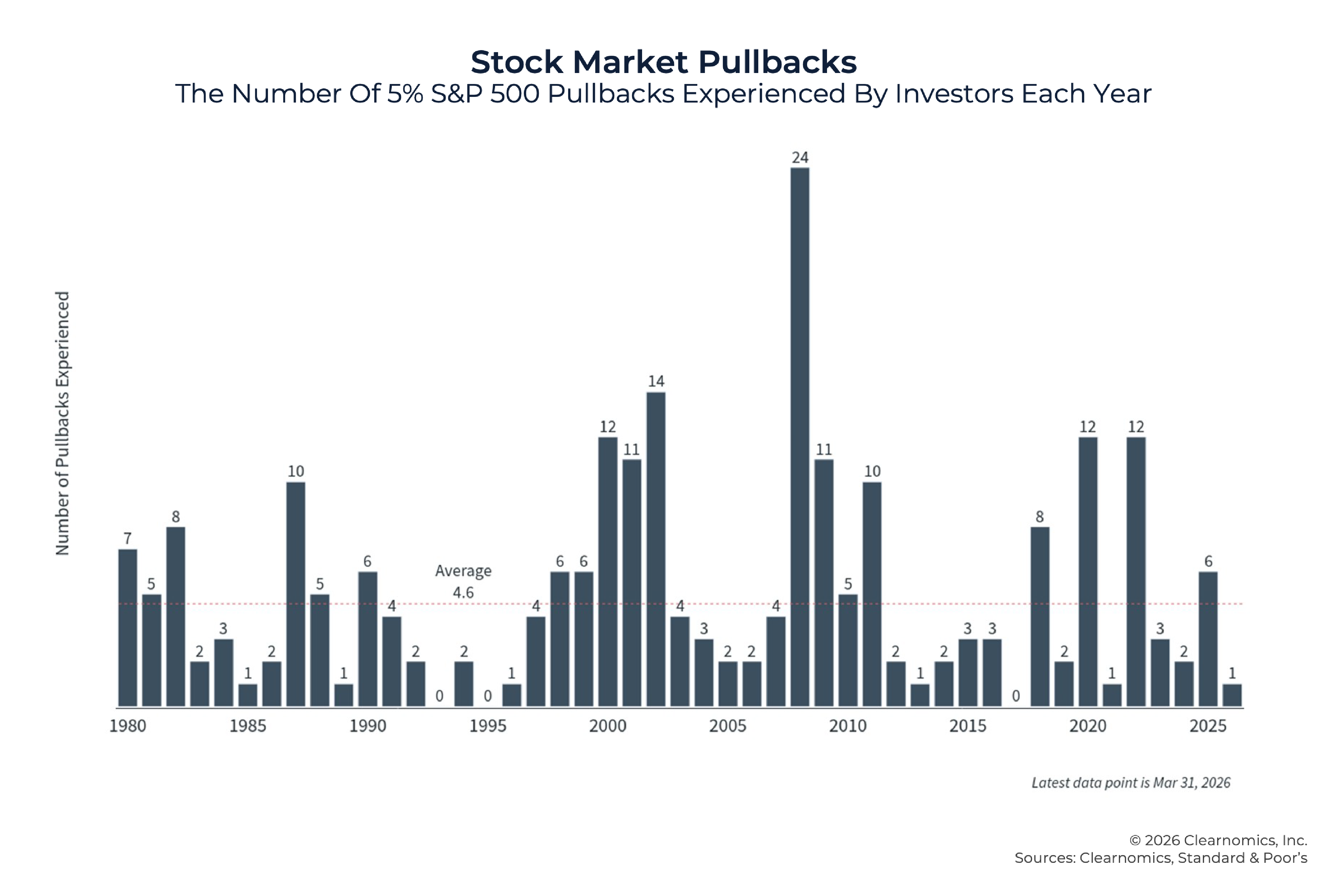
Looking at more granular developments, there are further considerations:
- The largest pullbacks are happening at opposite ends of the stock market. Mega-cap tech companies, such as those in the Magnificent 7, are underperforming at the same time as small caps have hit correction territory, with the Russell 2000 briefly falling more than 10% from its peak.
- The drawdown is not affecting all sectors. In fact, 6 of the 11 sectors are still up for the year. More defensive sectors have done well in this environment, with consumer staples and utilities holding up year-to-date.
- A spike in energy stocks is helping to offset the pullback. Driven in part by the surge in oil prices, the energy sector has been the top-performing sector in 2026 year-to-date, gaining around 40%.
For investors, the key takeaway is that pullbacks, even ones that feel unsettling, are a normal part of the market cycle. Investors should always be prepared for short-term market swings, especially when there is headline risk. This could continue as we approach the midterm election and fiscal concerns reemerge. Rather than reacting to these headlines, investors are best served by maintaining a well-constructed portfolio aligned with their long-term financial goals.
2. Geopolitical Risk Is A Recurring But Temporary Driver Of Markets
Geopolitical events are challenging because they carry real human consequences, yet they rarely affect markets in the long run. Wars, political changes, and regional conflicts can create short-term instability, but their impact on portfolios often fades as situations stabilize. Without diminishing the human toll of these events, this pattern has held true for markets in recent years, as seen during Russia's invasion of Ukraine, the attacks on Israel in 2023, and more.
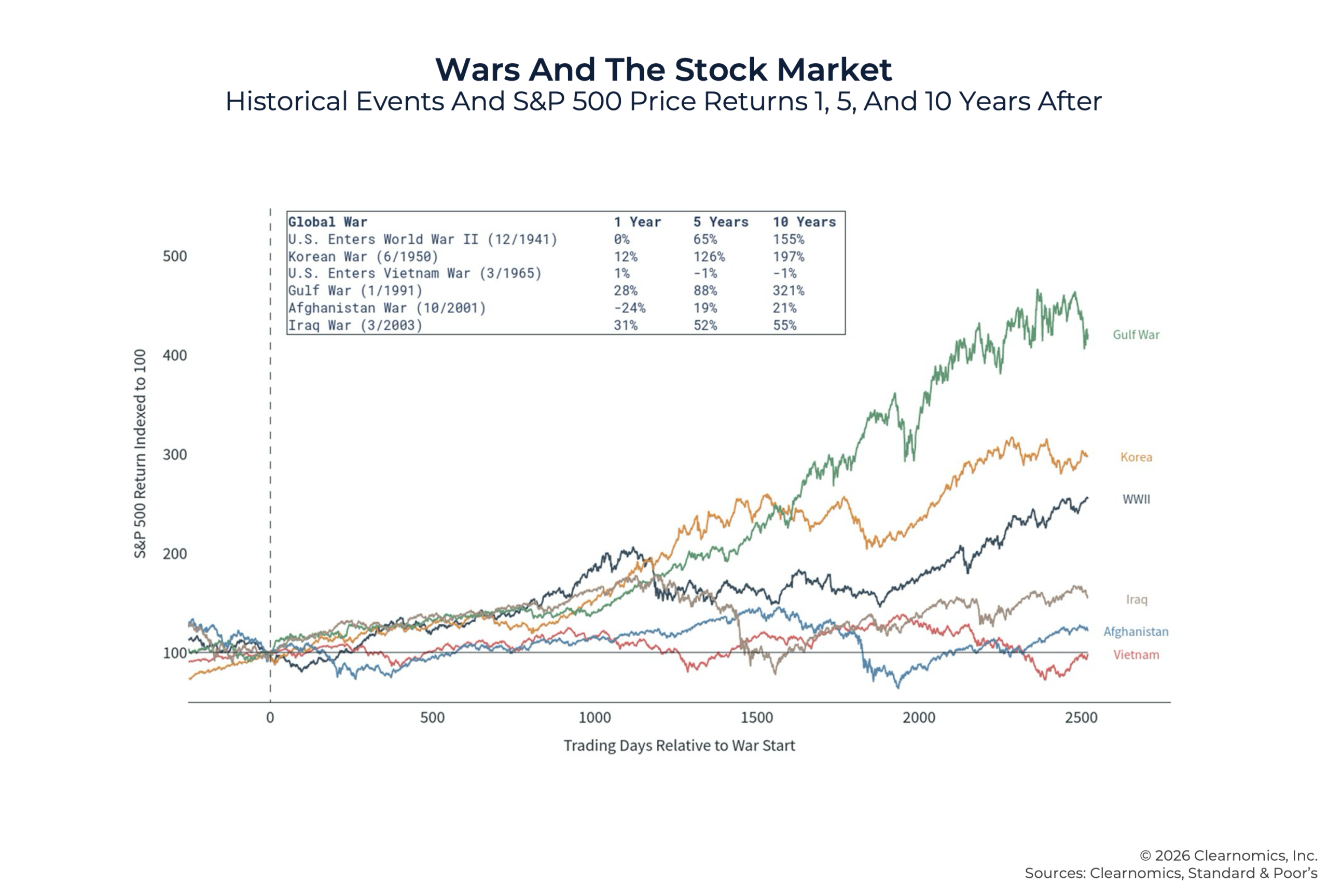
Today's situation is not identical to those of the past, but the broader context can help investors maintain some confidence in the long-term path of the market. Oil is often the transmission mechanism between Middle East conflicts and the global economy, so the key questions are how energy markets, inflation expectations, and global growth may be affected.
For investors, one of the key aspects of the current conflict is the Strait of Hormuz, through which roughly 20% of global oil flows. Blockage of the Strait, along with damage to oil and gas infrastructure, has already caused a supply shock, which raises concerns about inflation. Economists often refer to this as cost-push inflation, which can be temporary, compared to the demand shocks of the past few decades. The oil futures curve, for instance, is currently ‘backwardated', meaning investors expect prices to fall over time. Still, the longer the supply disruption lasts, the more this risk intensifies, leaving the Federal Reserve with a difficult choice between fighting rising prices and supporting a weakening labor market.
Geopolitical risks of this nature are notoriously difficult to predict. There are many unknowns with binary outcomes, including when the war may end and how severe future strikes may be. Still, history shows that investors who make dramatic portfolio adjustments in response to such events often do so at the wrong moment, missing the post-shock recovery that follows. Even the rapid inflation due to the war in Ukraine in 2022 eventually faded.
The reality is that many investor portfolios are already equipped to navigate challenges like these, since they are balanced across sectors and geographies, with sufficient exposure to assets that can benefit from rising energy prices. What matters most is not predicting how long current disruptions will last, but ensuring that portfolios are built to weather a range of outcomes.
3. Oil Prices Surge On Supply Disruptions
The impact of rising oil prices can trickle through all parts of the economy, affecting the cost of goods and services, inflation expectations, and the decisions of central banks around the world. The key question for investors is whether the current spike represents a temporary risk that will fade, or the beginning of a more sustained supply shock that will reshape the inflation outlook. As discussed above, history would suggest it's the former.
Here are some of the current facts to keep in mind:
- Brent crude, the primary global benchmark, has held above $110 per barrel in recent weeks. WTI crude, the U.S. benchmark, rose to $98 per barrel and has only recently risen above $100, in part because the U.S. is now the world's largest oil and gas producer. Oil markets were also affected during the U.S. military operation in Venezuela earlier this year.
- Historically, when oil prices jumped above $100, such as in 2022, it had a direct impact on inflation measures such as the Consumer Price Index. This created tighter financial conditions for households as gasoline prices and the cost of many other goods rose.
- Policy responses can cushion but not fully offset supply shocks. In fact, tightening interest rates to control inflation also slows economic activity, leading to a difficult choice for central banks.
- There have been mitigating factors. The International Energy Agency announced a record release of 400 million barrels of emergency reserves to help stabilize markets. However, history suggests strategic reserves have a limited capacity to offset a prolonged supply disruption. The Trump administration has also eased rules around oil production, shipping, and buying from countries such as Russia.
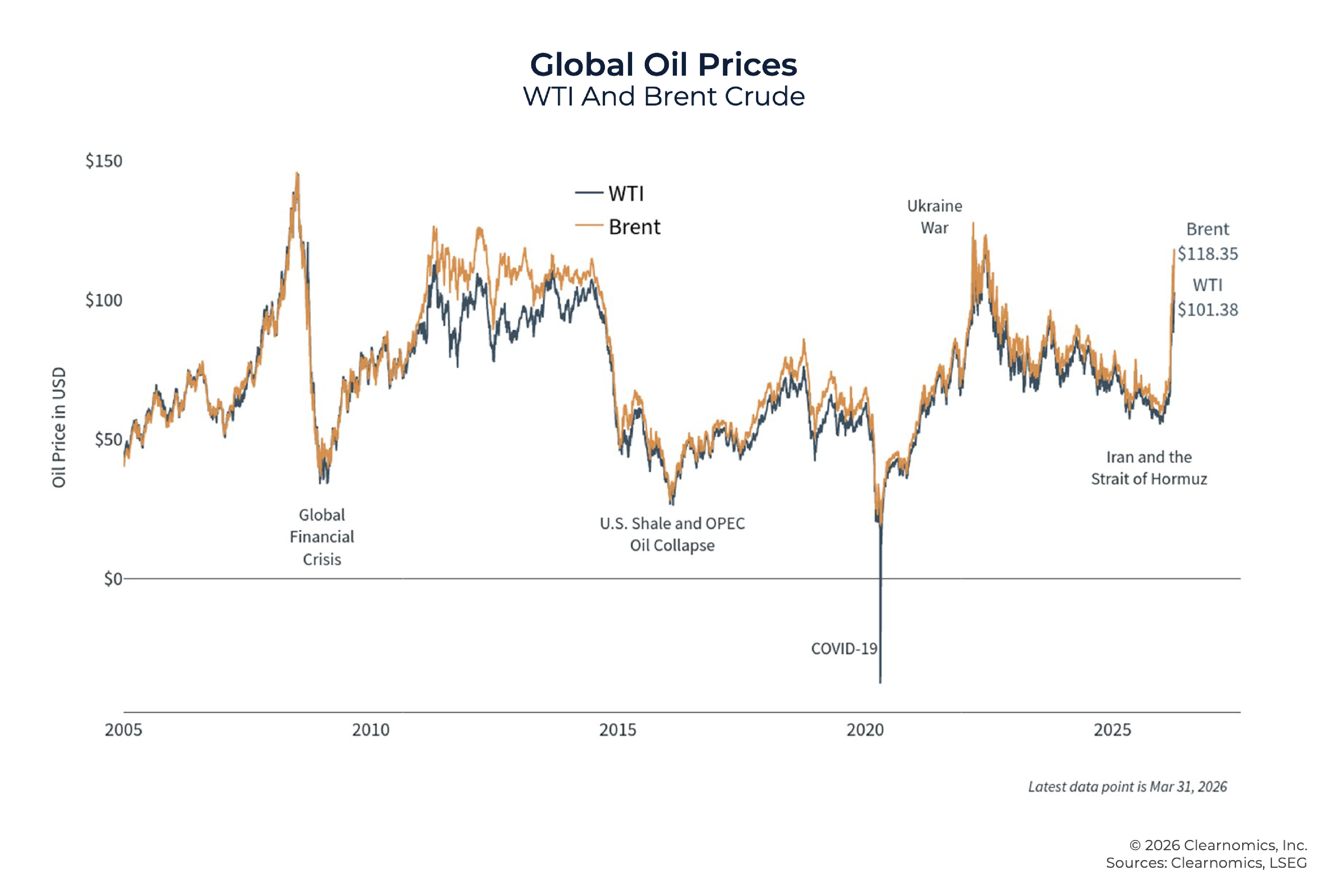
For investors, the implications of rising oil prices extend well beyond the energy sector itself. Sustained higher oil prices can increase the pace of inflation, which can shift expectations for Federal Reserve policy, and place upward pressure on longer-term bond yields. This creates a more challenging environment for both fixed income and equities, particularly if inflation proves more persistent than expected.
In an inflationary environment, bonds and stocks often move together, as we saw in 2022 following the pandemic, since both asset classes can be negatively impacted by rapidly rising prices. At the same time, the energy sector has historically helped offset the effect of energy supply shocks, since higher oil prices tend to support the earnings of energy producers. Energy has been the top-performing sector of the market year to date, just as it was in 2021 and 2022, reinforcing why broad sector diversification across a portfolio can help cushion the impact of unexpected macroeconomic developments like the one unfolding today.
4. Inflation And The Fed: A Challenging Balancing Act
For much of the past few years, the story of inflation has been one of steady improvement. Prices, which surged to multi-decade highs in 2022, gradually moderated, and investors entered 2026 with reasonable confidence that the Federal Reserve would continue cutting rates as inflation moved closer to its 2% target. This was especially true with a new Fed Chair set to take office in May. That narrative has since become more complicated and, in fact, there is now a higher probability of rate hikes.
Here are the current inflation numbers across key measures:
- Headline CPI stands at 2.4% year-over-year, with Core CPI at 2.5%. The Fed's preferred measure, the Personal Consumption Expenditures (PCE) index, shows headline PCE at 2.8% and core PCE at 3.1%. These are all meaningfully above the 2% target.
- Wholesale inflation has added to concerns, with the Producer Price Index rising 3.4% year-over-year, suggesting that pipeline price pressures have not fully dissipated and could continue to feed through to consumer prices over time.
- Federal Reserve officials now project headline inflation to finish the year at 2.7%, higher than prior forecasts, while consumer inflation expectations from the New York Fed Survey remain elevated at 3.0% on a one-year-ahead basis.
- Rising oil prices create new inflation concerns, specifically for the headline numbers. Energy is not only a direct cost for consumers but also an indirect one since it affects the transportation and manufacturing of all consumer goods.
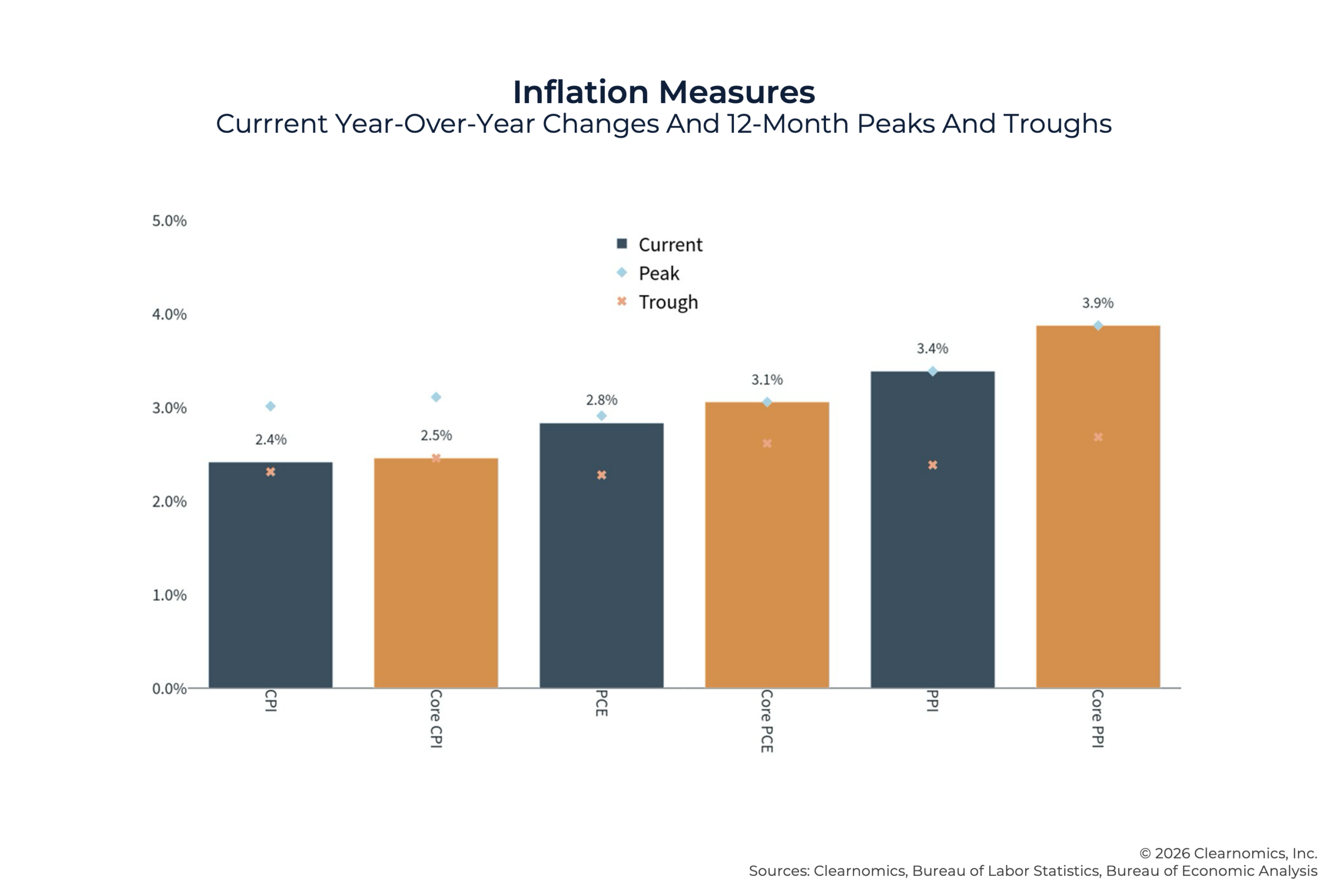
Given the risk of inflation, the Fed left its policy rate unchanged at 3.50% to 3.75% after its two meetings this year. This comes despite ongoing concerns about the job market weakness. Most central banks around the world have also halted their rate-cutting cycle, including the Bank of England and the European Central Bank. Some have even increased rates, such as Japan and Australia.
With 10-year Treasury yields above 4%, bond markets are pricing in a more prolonged period of elevated rates than many investors anticipated at the start of the year. A slower pace of rate cuts means that the tailwind of lower borrowing costs provided to equities and fixed income could be more modest.
At the same time, bonds continue to offer attractive yields by historical standards, reinforcing their value as a source of income and portfolio stability. Rather than reacting to each inflation report or Fed statement, maintaining a diversified portfolio that can perform across different rate environments remains the most reliable path forward.
5. The Labor Market And The K-Shaped Economy
The U.S. economy continues to grow despite inflation, geopolitical risks, and job market weakness. Headlines about consumer resilience and a stable unemployment rate tell only part of the story. The fuller picture reveals an economy that is increasingly bifurcated, with higher-income households continuing to spend while lower- and middle-income consumers face pressure from elevated prices, higher borrowing costs, and slowing income growth.
This dynamic, often described as a ‘K-shaped' economy of ‘haves and have-nots', captures how different groups can experience very different economic realities at the same time. The idea reflects how different parts of the economy can move in opposite directions (like the diverging arms of the letter 'K'), as higher-income households benefit from asset gains and continued spending while lower- and middle-income consumers face growing pressure from higher costs and a slowing labor market. Here are some key facts on the current state of the labor market and consumers:
- The unemployment rate has risen modestly to 4.4% as measured by U3, the official rate reported in headlines. The U6 unemployment rate, which includes discouraged workers, has remained low as well. Payroll growth has also struggled, with February 2026 showing a decline of 92,000 jobs. Annual payroll data was also revised downward by 862,000 jobs for 2025, the largest such revision since the 2009 financial crisis. This means the economy added only 181,000 jobs for the full year.
- As recently as 2022, job openings far outnumbered unemployed workers, reflecting an exceptionally tight labor market. That relationship has now reversed, with the number of unemployed individuals exceeding available job openings, signaling reduced labor demand.
- International migration has also seen historic declines, falling from a peak of roughly 2.7 million in 2024 to about 1.3 million in 2025 according to the Census Bureau, with further declines expected. Additionally, an aging population and lower labor force participation mean there are simply fewer people entering the workforce. In other words, both the supply and demand sides of the labor market are cooling, which has helped keep the unemployment rate from rising.
- Consumer spending has remained healthy in aggregate, driven largely by service-sector activity. At the same time, the Federal Reserve Bank of New York reports that borrowing costs are rising and delinquencies are increasing, with the stress concentrated in lower-income areas.
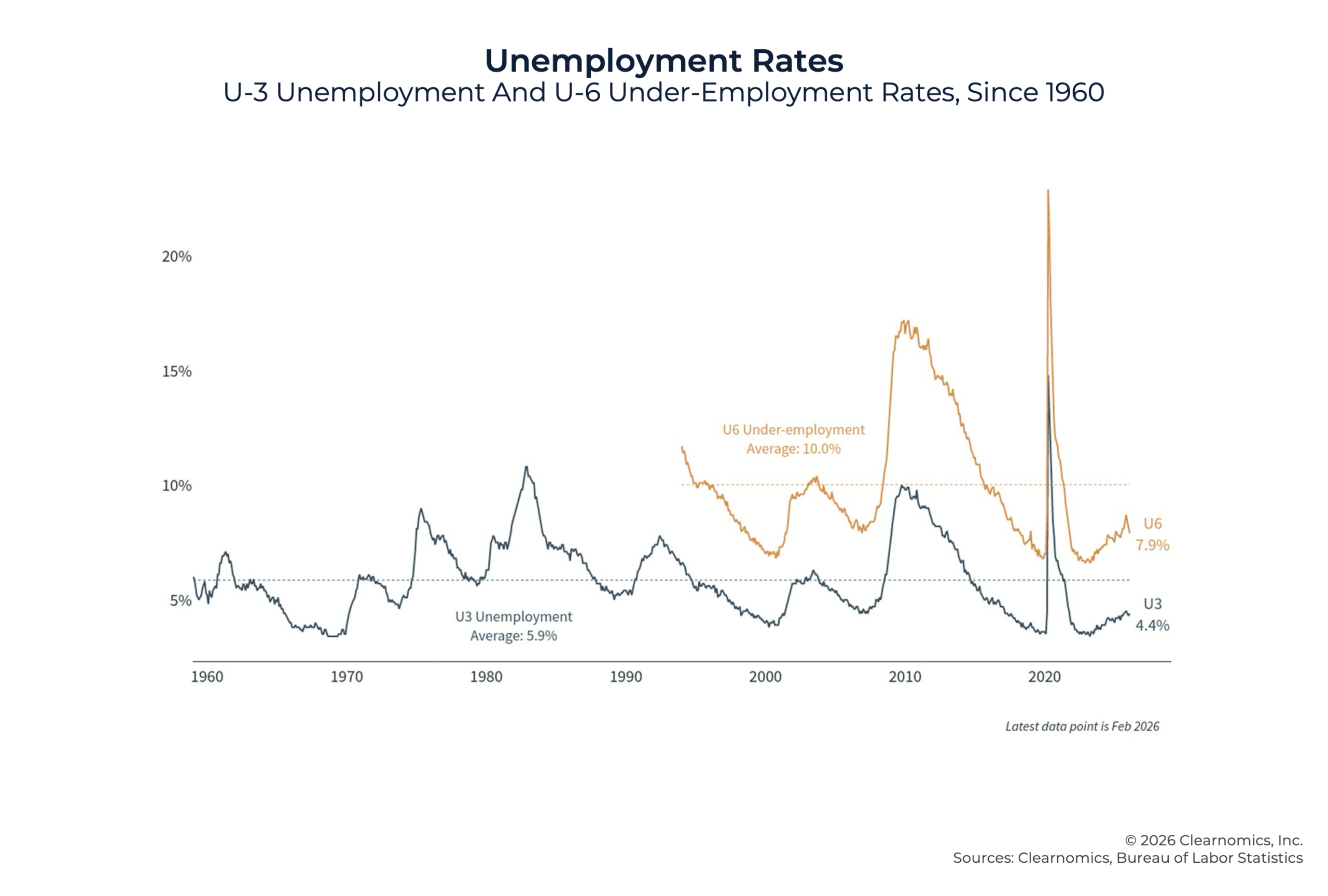
Investors tend to watch the labor market closely because it is tangible in a way that many other economic indicators are not. Specifically, jobs directly affect household income, consumer confidence, and spending decisions. Consumer spending makes up more than two-thirds of the U.S. GDP, so what happens in the labor market eventually flows through to the broader economy.
For long-term investors, it is important to look beyond headline economic figures and maintain a diversified portfolio that is not overly dependent on any single economic scenario. Maintaining discipline, staying diversified across asset classes, and focusing on long-term financial goals – rather than any one data point – remain the most reliable path forward.
6. AI Is Challenging Existing Business Models
For the past several years, artificial intelligence has been the dominant force shaping the stock market. However, the market is now asking a harder question – one that separates the next phase of this cycle from the last. Specifically, which companies are actually monetizing AI, and which are simply spending on it?
This reflects a broader pattern that has played out with every major technological revolution. History shows that transformative technologies tend to move through three distinct phases. First comes the infrastructure build-out, when capital floods into the companies laying the foundation. Next comes integration, where businesses begin adopting the technology. Finally, and most importantly for the broader economy, come the productivity gains that generate lasting economic value. The railroad boom of the 1860s, the electrification of American industry in the early 20th century, and the internet revolution of the 1990s all followed this arc.
To understand where things stand today, consider the following:
- Hyperscalers and semiconductor firms continue to commit extraordinary sums to AI infrastructure, totaling hundreds of billions per year. These investments have supported strong earnings growth in data centers and cloud infrastructure, but investors are increasingly focused on when and how those investments will translate into sustainable returns.
- Valuations for mega-cap technology stocks remain above market averages, with the S&P 500 forward price-to-earnings ratio at approximately 20.0x and the Information Technology sector trading at a premium to that, with a forward price-to-earnings ratio of approximately 21.1x.
- At the same time, dispersion within tech-related sectors has widened. The so-called ‘SaaS-pocalypse' earlier this year, for instance, occurred when investors questioned whether new AI developments could disrupt existing software business models. This is an ongoing debate, and whether or not these fears prove justified, they have already contributed to a reassessment of technology valuations.
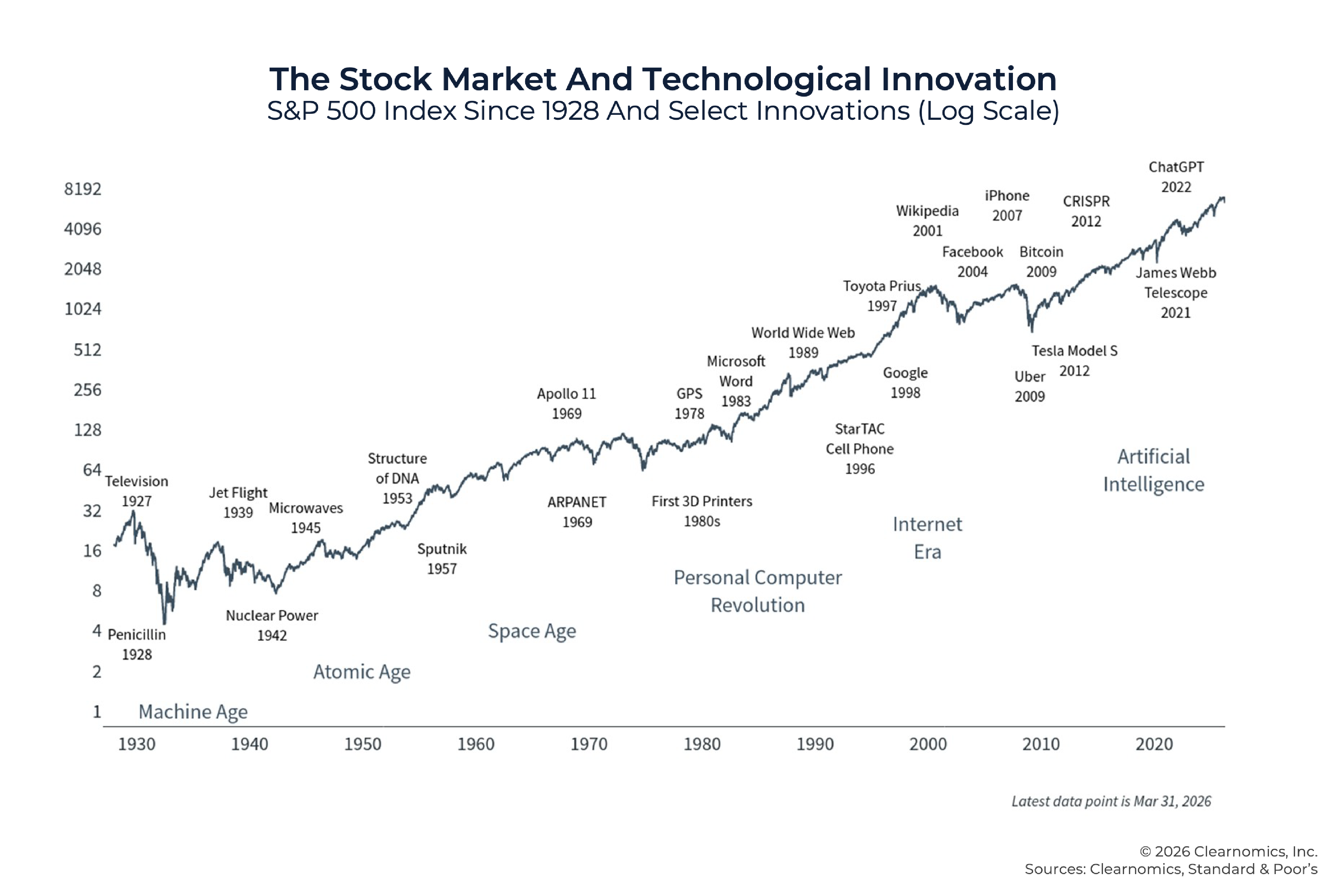
A newer and more pointed dimension to the AI conversation is the possibility of technology displacing knowledge workers. Regardless of whether the most dramatic projections prove accurate, the prospect of widespread automation-driven job losses in sectors ranging from legal services to financial analysis has the potential to reshape both consumer sentiment and labor market dynamics.
For investors and their portfolios, the key lesson from prior technological cycles is that the companies and sectors that benefit most from a transformative technology are not always the ones that dominated the initial infrastructure phase. Railroads built the arteries of 19th-century commerce, but it was the manufacturers, retailers, and agricultural producers that used those railroads who generated much of the long-run economic value. This reinforces the importance of maintaining broad diversification rather than concentrating in any single stock or theme.
7. The Tariff Story Has Changed But Hasn't Gone Away
One of the most consequential policy stories of the first quarter of 2026 was the Supreme Court tariff ruling. For investors, understanding what has actually changed and what has stayed the same is essential for maintaining perspective.
The tariff situation changed significantly at the start of the year:
- On January 20, 2026, the Supreme Court ruled 6–3 that the broad tariffs imposed under the International Emergency Economic Powers Act (IEEPA) were unlawful, with the Penn Wharton Budget Model, a nonpartisan research group that analyzes the economic impacts of public policy, estimating that more than $175 billion in tariff collections were put at risk by the ruling.
- Rather than stepping back from tariff policy, the administration responded the same day by imposing a temporary 10% global import duty for 150 days under a different legal authority, Section 122 of the Trade Act of 1974, which permits short-term tariffs to address severe balance-of-payments deficits, with implementation beginning February 24, 2026. Within days, this rate was raised to 15%, the maximum permitted under Section 122.
- To rebuild tariff pressure beyond the 150-day window, the administration opened new Section 301 trade investigations in March 2026, signaling that tariff policy has changed in form rather than disappeared.
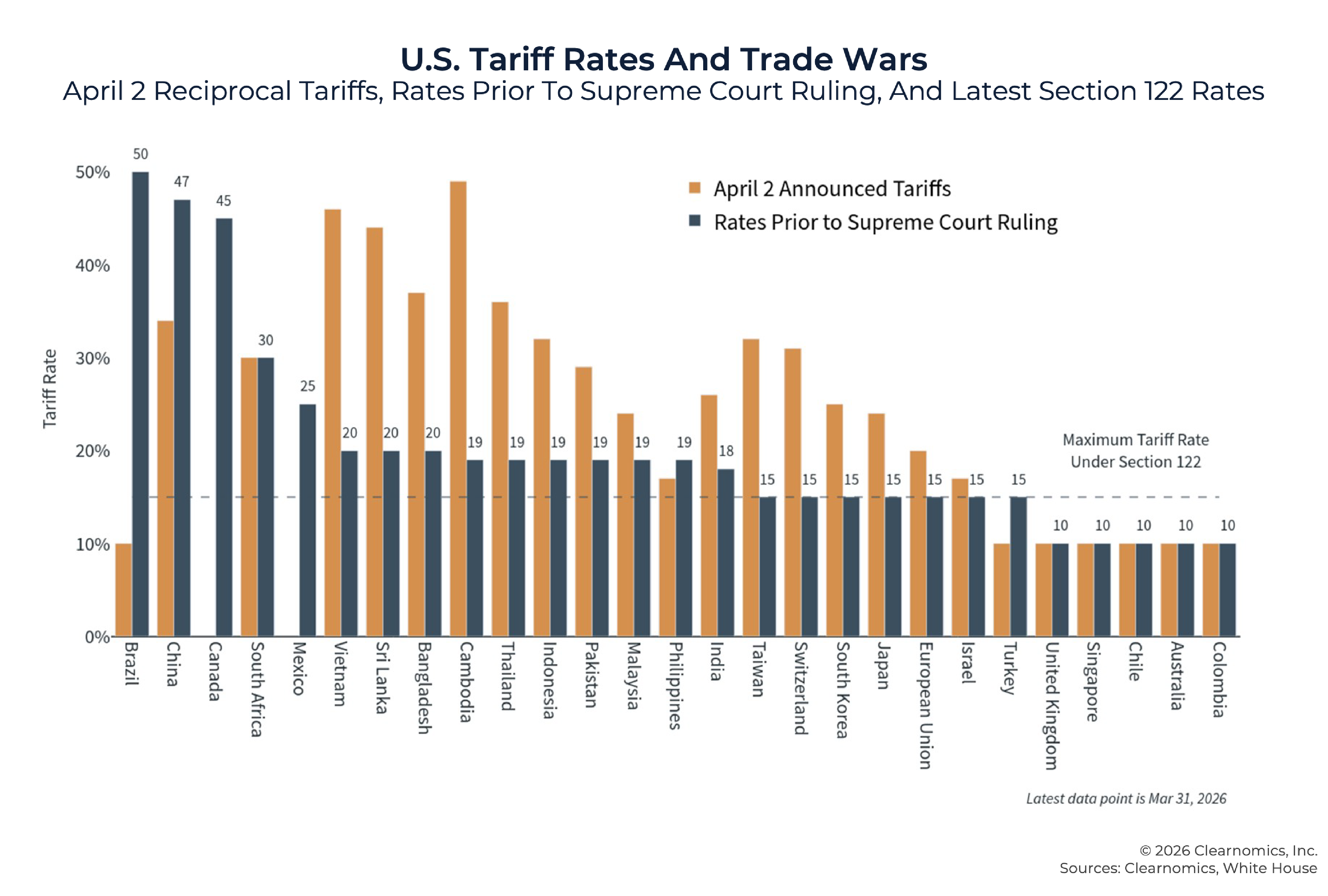
Tariffs can impact the economy in many ways, affecting prices, business costs, consumer spending, and investor confidence. That said, history demonstrates that markets tend to adapt to shifting trade environments over time, with companies across many industries responding by near-shoring production to regional partners or building domestic facilities to reduce their exposure to tariff risk. Trying to predict the precise effect of tariffs on the economy and markets is not only difficult, but counterproductive.
The dollar also plays a central role in how tariffs affect the economy, and understanding its movements can help investors interpret broader market developments. The U.S. Dollar Index (DXY) currently stands at around 100, having declined from 2025 levels, though it remains near some of its strongest levels over the past twenty years. Interestingly, recent tariffs have not strengthened the dollar as some had expected. Instead, the dollar weakened amid trade and economic uncertainty, which boosted returns on international investments when converted back to U.S. dollars.
For investors, the central takeaway is that while the legal basis for tariffs has changed, the broader policy direction remains intact. The key is recognizing that tariff policy continues to be an active variable for the economy, one that influences inflation even as its exact form continues to evolve. The practical consequence is that tariff-driven cost pressures remain part of the investing landscape, but they should not drive portfolio decisions.
8. Fixed Income And Private Credit
Until just a few years ago, low interest rates made fixed income a challenging part of a portfolio. Bonds offered little income, and investors had to reach for yield in riskier corners of the market just to generate meaningful returns. That environment changed in 2022 as higher yields restored fixed income to its traditional role as an income-generating anchor of a balanced portfolio.
The challenge is that higher yields and attractive income can sometimes mask underlying risks that are not immediately visible. This is especially true today, as credit markets have grown more complex, dispersion between higher- and lower-quality borrowers has widened, and a rapidly expanding private credit market has grown alongside traditional public bond markets. Signs of strain are emerging as liquidity conditions tighten, along with scrutiny around valuations and transparency.
When yields are elevated but spreads are tight, the market may not be adequately compensating investors for the credit and liquidity risks they are taking on. Understanding this distinction is essential for building portfolios that generate income without taking on hidden vulnerabilities.
Here are the key facts shaping the fixed income landscape today:
- The 10-year U.S. Treasury yield remains above 4.3%, reflecting persistent inflation uncertainty and ongoing fiscal pressures, while investment-grade corporate bond yields are hovering near multi-year highs of roughly 5%, offering meaningfully improved income compared to just a few years ago.
- Despite rising uncertainty, high-yield spreads remain relatively tight. With high-yield debt offering a spread of just 3% above Treasuries, investors are still demanding relatively little additional compensation for default risk, even as refinancing pressures build and a significant wave of corporate debt matures over the next two to three years at higher interest rates.
- Private credit markets have continued to expand rapidly, but the first quarter of 2026 brought renewed scrutiny. Recent high-profile redemption limits at well-known investment institutions serve as a reminder that illiquidity risk in this space is real and not always fully priced in or fully appreciated by everyday investors.
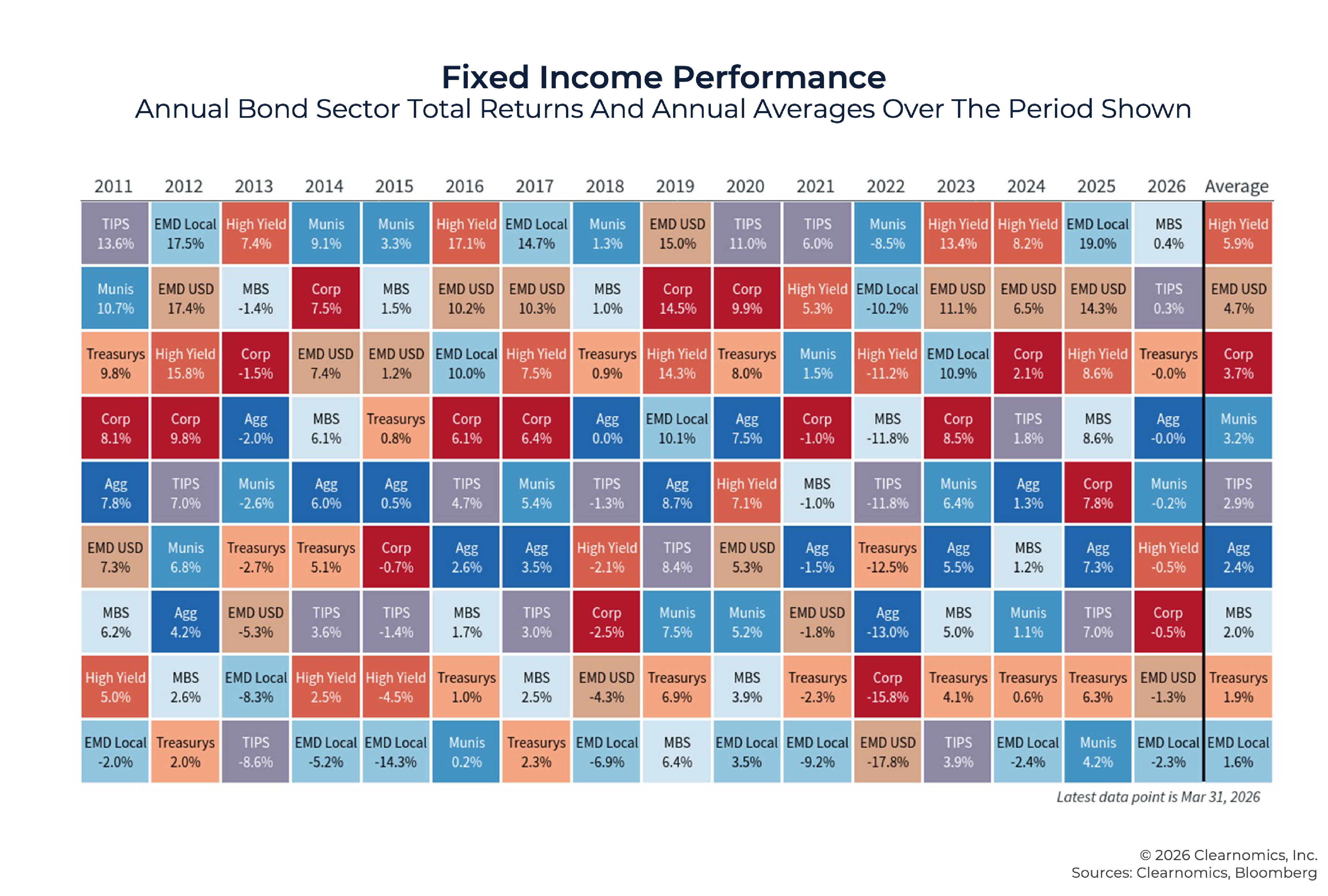
For investors, the fixed income environment today continues to present opportunities, but it also requires care. Bond yields remain attractive by historical standards, and traditional fixed income sectors continue to serve their essential portfolio role of providing income and stability. However, growing concerns about credit quality and the illiquidity of private credit mean that investors need to exercise additional caution.
Advisors can help clients understand that chasing higher yields in lower-quality or less liquid parts of the market introduces risks that may not be apparent until conditions tighten. Maintaining a diversified fixed income allocation, grounded in high-quality bonds while being thoughtful about credit exposure, remains the most reliable path to balance income generation with portfolio resilience.
9. Earnings Growth And Valuation
For much of the past several years, rising stock prices were driven by a combination of earnings growth and expanding valuations, meaning investors were willing to pay more for each dollar of future profits. However, valuation multiples have largely stopped expanding, despite continued earnings growth supporting investors.
The current earnings and valuation picture confirms this reality:
- S&P 500 earnings growth is 14.3% on a trailing one-year basis, well above the historical average of 7.7%. Technology and AI-related sectors continue to lead, though other parts of the market also have strong earnings growth.
- The S&P 500 forward price-to-earnings ratio stands at approximately 20.0x, meaningfully above the long-term historical average of roughly 15.9x, suggesting that investors are still paying a premium for future earnings.
- Other asset classes have more attractive valuations, with international markets and small caps both offering a valuation discount. For example, developed markets have a forward P/E of 15.5x, and emerging markets stand out at just 12.2x. In the U.S., small caps have a forward P/E of 15.2x, well below the broader S&P 500 of 20.0x.
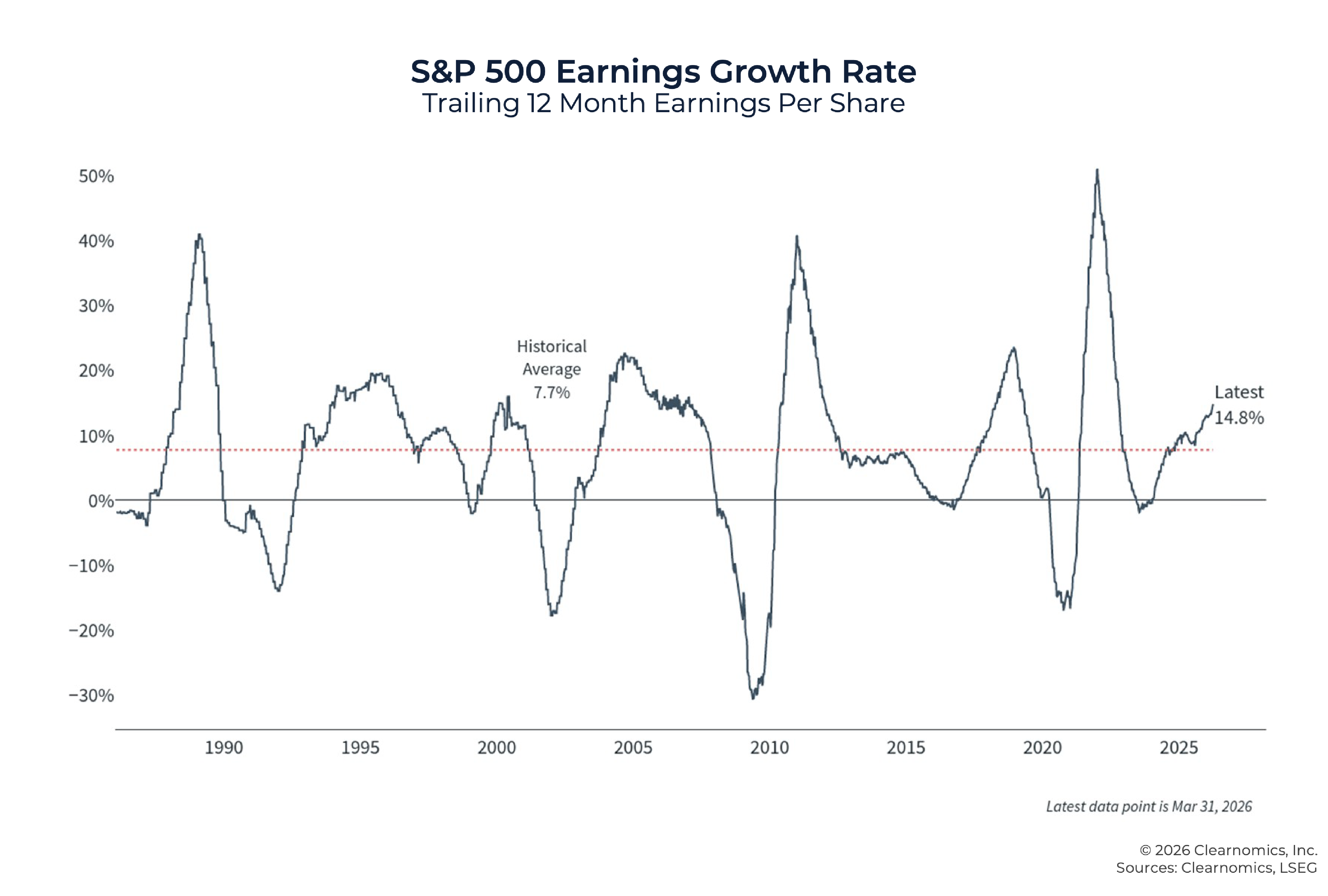
In an environment where valuations are stretched and no longer expanding, earnings become the primary engine of market returns. Markets are also paying closer attention to the quality of earnings, the sustainability of profit margins, and the guidance companies offer about the future. A strong headline earnings number that is driven by one-time items or accompanied by cautious forward guidance can disappoint investors, even if it beats analyst estimates. This higher sensitivity to earnings quality reflects a market that is grounded in fundamentals rather than optimism alone.
For investors, this environment carries an important implication. When valuations are elevated and no longer expanding, there is less room for error. Companies that miss expectations or offer cautious guidance can be punished more severely, while those that deliver can still be rewarded.
This reinforces why maintaining a long-term perspective matters – earnings grow over time as the economy expands, and staying invested through periods of uncertainty is how investors capture that growth.
10. Staying Invested Amid Uncertainty
One of the most important lessons from decades of market history is also one of the most difficult to act on: staying invested through periods of uncertainty is often the most powerful driver of long-term returns. Market recoveries tend to be swift and concentrated, meaning that investors who exit during periods of stress frequently miss the strongest days of a rebound.
As the accompanying chart illustrates, missing just a handful of the market's best-performing days over a long period can dramatically reduce cumulative returns. An investor who remained fully invested in the S&P 500 over the past 25 years would have fared far better than one who stepped out of the market even briefly during moments of peak uncertainty.
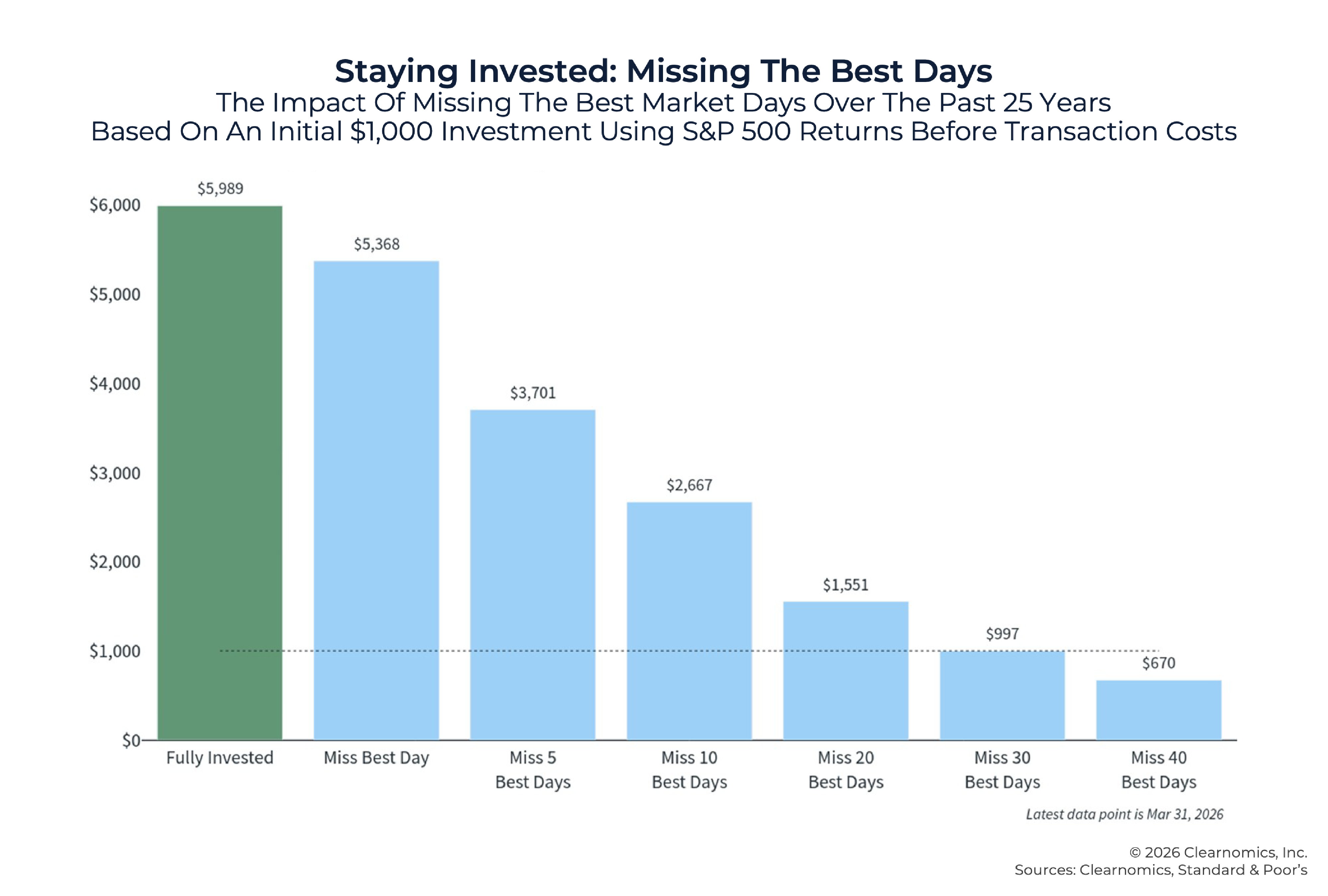
To help put the current environment in perspective, here are four key facts about why staying invested matters:
- The VIX recently spiked to around 30, its highest level since Liberation Day, before retreating. Historically, these are periods when the market is most attractive. Investors who remained patient through similar jumps in volatility in the past were often rewarded.
- Despite the S&P 500 experiencing its first 5% pullback of the year, markets have remained fairly resilient. This reflects the fact that markets are forward-looking and often price in recoveries well before the headlines improve.
- Long-term equity returns are closely tied to fundamentals rather than short-term events. While headlines often drive near-term volatility, equity performance over time is driven by earnings growth and economic expansion.
- The broadening of market returns is significant for diversified investors. After several years where only a small number of large U.S. technology companies drove the majority of market gains, the shift toward international stocks, small caps, and cyclical sectors suggests that investors are finding opportunities across a wider range of assets.
This is precisely why staying invested has historically proven to be the most effective approach for long-term investors. Some may be tempted to time the market, but the difficulty lies not only in knowing when to exit but also in knowing when to re-enter. This is not to suggest that pullbacks are trivial or that markets always recover quickly. During periods like these, maintaining perspective is essential, particularly when negative news dominates the headlines.
A well-constructed portfolio is not designed to avoid every storm, but to weather them and remain positioned for the recovery that follows. When one segment of a portfolio faces headwinds, another may offer balance. Over time, this approach has enabled investors to participate in growth while managing risk, which is ultimately what achieving long-term financial objectives demands.
The most important lesson from the start of 2026 is one that history has reinforced many times before: sources of uncertainty can change, but the principles of sound investing do not. Advisors and clients who focus on what they can control are best positioned to achieve their financial goals over time.
The current environment, with its mix of geopolitical tension, shifting trade policy, evolving Fed leadership, and AI-driven market concentration, is genuinely complex. However, markets have navigated world wars, recessions, inflationary shocks, political transitions, and technological revolutions, yet they have still rewarded those who stayed invested and maintained appropriate diversification far more reliably than those who tried to time every turn.
The bottom line? Markets will continue to test investor resolve, as they always have. Whether the conversation centers on oil prices, inflation, credit markets, or the sustainability of AI-driven valuations, the answer is the same: a well-constructed portfolio aligned with long-term financial goals remains the most reliable path forward.
Advisors who would like to use these visuals can download a PDF copy here. The charts can also be customized with firm branding through the free Clearnomics Community insights platform.