Executive Summary
An advisor's initial years present a valuable opportunity to learn the planning process and slowly progress in the firm. Yet Kitces Research on What Actually Contributes To Advisor Wellbeing has consistently found that associate advisors lag behind other advisory firm roles in overall wellbeing.. Compared to peers in more senior positions, associate advisors report lower levels of autonomy, compensation, cultural fit, and manageable working hours – all core elements linked to job satisfaction and wellbeing. And while some of these challenges are expected early in a career, the gap doesn't disappear with experience. Even associate advisors with several years in the role often find themselves in a professional limbo: ready to take on more responsibility, but without a clear pathway to do so, which can lead to dissatisfaction and, ultimately, attrition.
The core challenge stems from the absence of clearly articulated, structured career development plans within many firms. Associate advisors often reach a 'competency ceiling', where they are capable of handling more complex work but remain in support roles with limited client ownership or strategic responsibilities. This lack of clarity can create a negative feedback loop: advisors aren't promoted because they lack certain experiences, yet they're not given the chance to gain those experiences in the first place. For firms, this presents a costly risk. Advisors who've spent years learning a firm's systems, values, and client base represent significant institutional knowledge – and without forward momentum, they may look elsewhere for growth.
In this article, Senior Financial Planning Nerd Sydney Squires details how managers can develop scalable career development plans that clearly articulate expectations in a measured and balanced way. A useful framework begins with identifying six core domains of senior advisor capability: technical planning, client communication and relationship management, business development, process and tech management, team training, and strategic firm involvement. Advisors need not excel in all six domains; instead, firms can guide them toward high performance in three or four areas that align with both individual skills and firm needs. Early-career advisors often begin with a preference for either client-facing or back-end technical tracks, with options opening up later for management or strategic leadership – a flexible approach that fits especially well within smaller firms, where roles are rarely siloed.
Effective growth plans also differentiate between two major development tracks: technical/task-based independence and strategic firm contributions. Both can be measured using clear progression stages, ranging from observation and supported execution through synchronous work, to full ownership, subject matter expertise, or initiative development. Defining these stages gives managers a shared language to evaluate and mentor talent, while helping advisors see the tangible steps between their current role and future possibilities. Education and experience requirements – such as earning designations or leading strategic initiatives – can be layered into these plans alongside clearly communicated levels of firm support, increasing follow-through and alignment .
Ultimately, growth plans are most effective when they are transparent, dynamic, and revisited regularly. Sharing them broadly and discussing them during ongoing check-ins or annual reviews helps turn growth plans into living documents that foster engagement and accountability. And when done well, structured yet flexible career development plans act as both a recruitment and retention tool – helping advisors understand long-term opportunities and giving firms a more scalable, intentional way to develop talent, benefiting both advisors and firms over the long term!

The associate advisor role is often framed as an exciting step into the profession – a chance to learn the work, meet and serve clients, join a team, and find a supportive mentor. But, in practice, the day-to-day experience can be less straightforward and more demanding. Kitces Research on What Actually Contributes To Advisor Wellbeing has shown for years, across multiple studies, that associate advisors tend to report lower levels of wellbeing than any other role in the firm. According to the most recent results, advisors averaged 6.7 on a 10-point scale, compared with 7.4 for senior advisors.
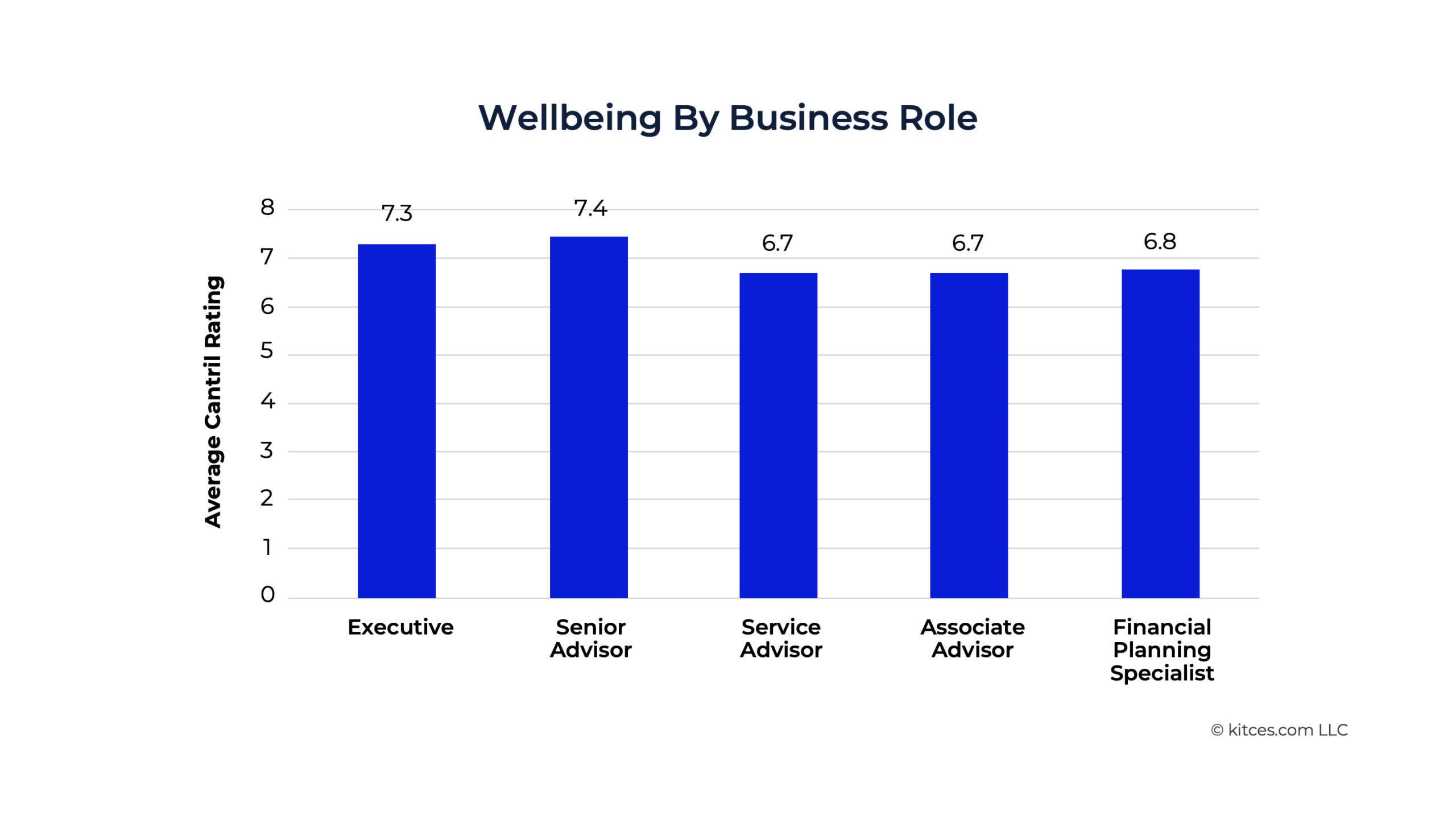
Why do associate advisors lag in wellbeing? It's helpful to start by considering the factors that do tend to support wellbeing:
- Autonomy: Control over schedule, minimizing administrative work, and feeling effective at one's job;
- Compensation: Higher earnings boosted wellbeing in general, but so did variable earnings;
- Hours Worked: Working a reasonable number of hours (averaging no more than 40 hours a week for full-time employees); and
- The Right Workplace: Fit with the firm's culture and overall mission, access to technology that supports their needs.
Simply put, associate advisors' roles tend to lack in these four factors: they earn less, work more hours, handle more administrative work, and are less likely to feel like a fit at their workplace.
About Kitces Research
 The Wellbeing Study is one of four original scientific studies – on advisor wellbeing, advisor technology, advisor productivity, and firm marketing – conducted by Kitces Research and shared with Kitces.com readers on a rotating schedule every two years. The most recent Kitces Research study is our look at The Technology That Independent Financial Advisors Actually Use and Like.
On one hand, some of these pain points are unavoidable. A brand new associate advisor is going to be paid less than their more experienced counterparts and won't feel as effective at their job when they first start out. For those new advisors, a great onboarding plan and structured training schedule can go a long way toward increasing wellbeing. Ultimately, the only way to feel effective at one's job is to practice the requisite skills – a lot. As time goes on, the associate gains repetitions with client work, earns promotions to reflect their new skill set, and gains more autonomy over their time.
However, Kitces Research on Advisor Wellbeing finds that the reality is often more complicated. Associate Advisors with at least five years of experience report higher levels of wellbeing than their peers entering the industry (growing from 5.7 to 6.7)… but they still lag behind other roles.

Why The 'Forever' Associate Advisor Is Less Satisfied
The reason why experienced associate advisors, even with several years in the role, still tend to report lower levels of wellbeing than those in other roles isn't due to a lack of confidence or competence – it's that they've hit a competency ceiling. The experienced associate feels ready to move upward and take on more client management and/or technical planning responsibilities – but they remain at the associate level. Very few aspire to be 'forever' associate advisors; even if they enjoy the work, many ultimately aspire for roles with more autonomy, greater compensation, and a chance to develop their own specialties.
This matters to the firm on many levels. People who are satisfied and highly engaged with in their work tend to have higher productivity and stay at their job longer, according to Gallup research on workplace satisfaction. And those who are dissatisfied are much more likely to leave their role. Turnover is incredibly stressful for team members and incredibly expensive for firms as they restart the work of hiring, delegating, and onboarding. And if an associate advisor has stayed in their role for multiple years, as is reflected in the Kitces Wellbeing Research, there is presumably a mutual fit between the advisor, the firm, and its mission. All that the associate is looking for is an opportunity to move upward – and without upward momentum within the firm, the advisor is likely to begin looking elsewhere.
Yet there are many reasons an advisory firm may not promote the associate advisor. The associate may still need to develop certain skills in order to be promoted – they may still be lacking, for example, in owning client relationships. Yet, at the same time, the associate may not be receiving opportunities to own these relationships, creating a negative cycle where lack of opportunity begets lack of opportunity. Alternatively, the associate advisor may not realize that they need to develop certain skills to move upward, because the standard has not been explained to them – or the firm may have a hard time measuring or articulating why the advisor hasn't got 'it' yet.
In many cases, the answer to solving this comes down to outlining a clear career path, customized to match the firm's own development plans.
The Six Domains Of Advisory Career Development
Advisor career paths can be challenging to define and articulate; being able to deliver great financial advice is often just the beginning of what makes a great financial advisor, and many of the skills that matter most can be harder to describe. For example, any advisor will attest that owning client relationships is more than 'just' being able to do the technical work. Typically, gaining seniority in any business revolves around being able to make nuanced, complex decisions – which can be surprisingly challenging difficult to write out, let alone measure.
Yet it's important for these expectations to be spelled out and measured, rather than simply waiting until the associate advisor 'gets it' – because the associate advisor needs to understand what to pursue to move upward, and the manager needs to understand what they're watching for. One way to do that is to outline the central skills that define senior advisors.
As a starting point, senior advisor skills can be broken down into six primary domains that address the following questions:
- Technical planning: Can the advisor manage the planning part of the financial planning process with accuracy, thoroughness, and speed?
- Client communication and relationship management: Can the advisor surface and discuss nuanced planning issues with clients? Are they able to manage client relationships independently?
- Business development and prospecting: Can the advisor develop and nurture business development relationships, such as Center-Of-Influence (COI) relationships?
- Process building and technology management: Can the advisor build and iteratively improve processes? Can they identify and integrate the technology solutions needed to enable firm procedures?
- Team management and training: Can the advisor teach new hires about firm processes, standards, in procedures, and enable them to perform to team standard? Can they cultivate productive relationships with other members of the firm?
- Firm culture and long-term business strategy: Is the advisor someone who represents the firm well? Can they evaluate long-term business strategies and create a roadmap to implement them?
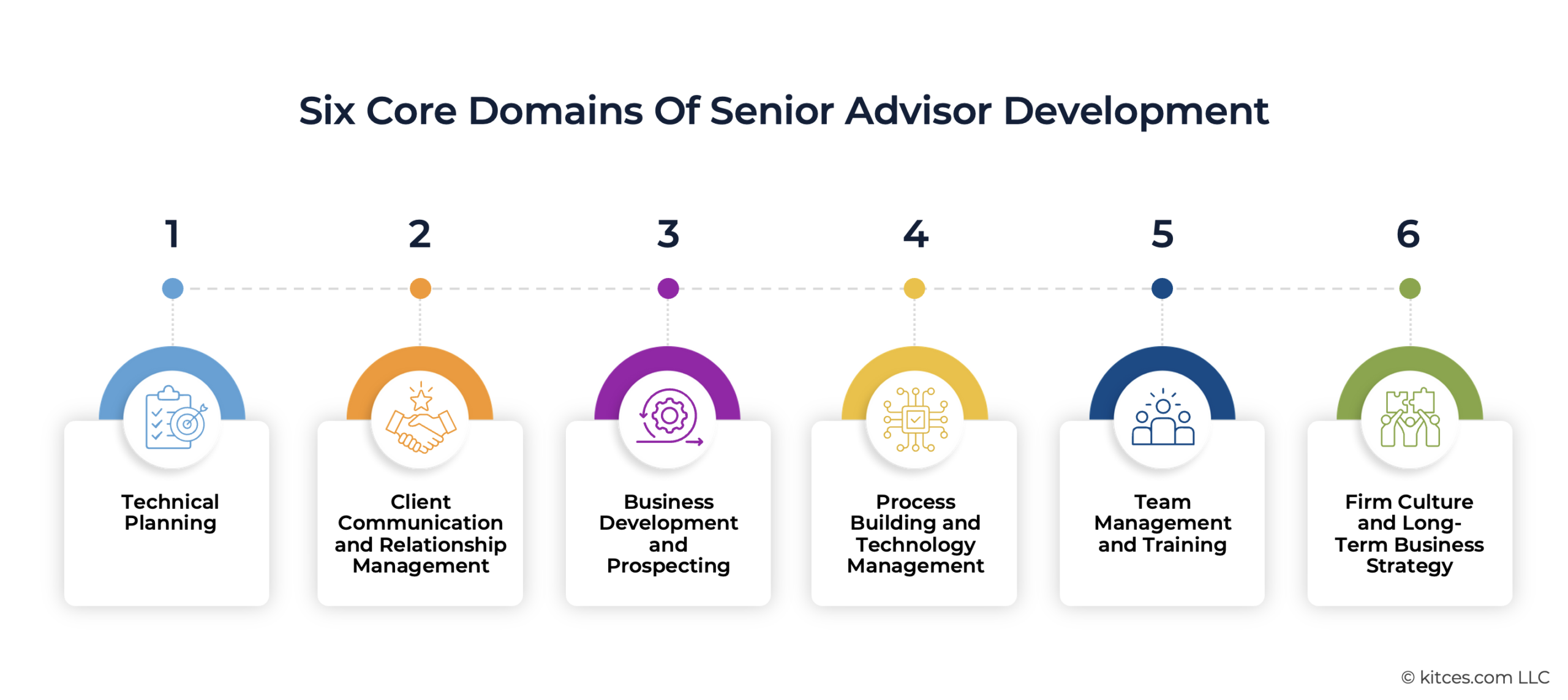
Career development isn't about mastering all six of these skills. Instead, it's more reasonable to expect a high aptitude in three or four. Even if an advisor performs all six of these objectives at a high level, they probably won't have the time – especially as the firm grows. Fortunately, firm growth also allows roles to become increasingly specialized.
It may be surprising that only half of these elements – technical planning, team management and training, and client communication and relationship management – directly involve financial planning. While they're crucial skills, it would be a mistake to conflate being able to follow or improve processes and procedures with being able to teach them – let alone manage or lead a planning team. Being a great team contributor does not guarantee that the person will be a great manager or business leader (and conversely, many of the best advisory firm leaders are now doing relatively little financial planning because their time is spent on business strategy, management, or business development tasks).
The first crossroads for an associate advisor's professional growth typically revolves around whether they want to own client relationships or whether they'd prefer to focus on more technical, back-end-only planning. From there, a common secondary question is if the advisor has an interest in management, which can create further diversions within the advisor's career track.
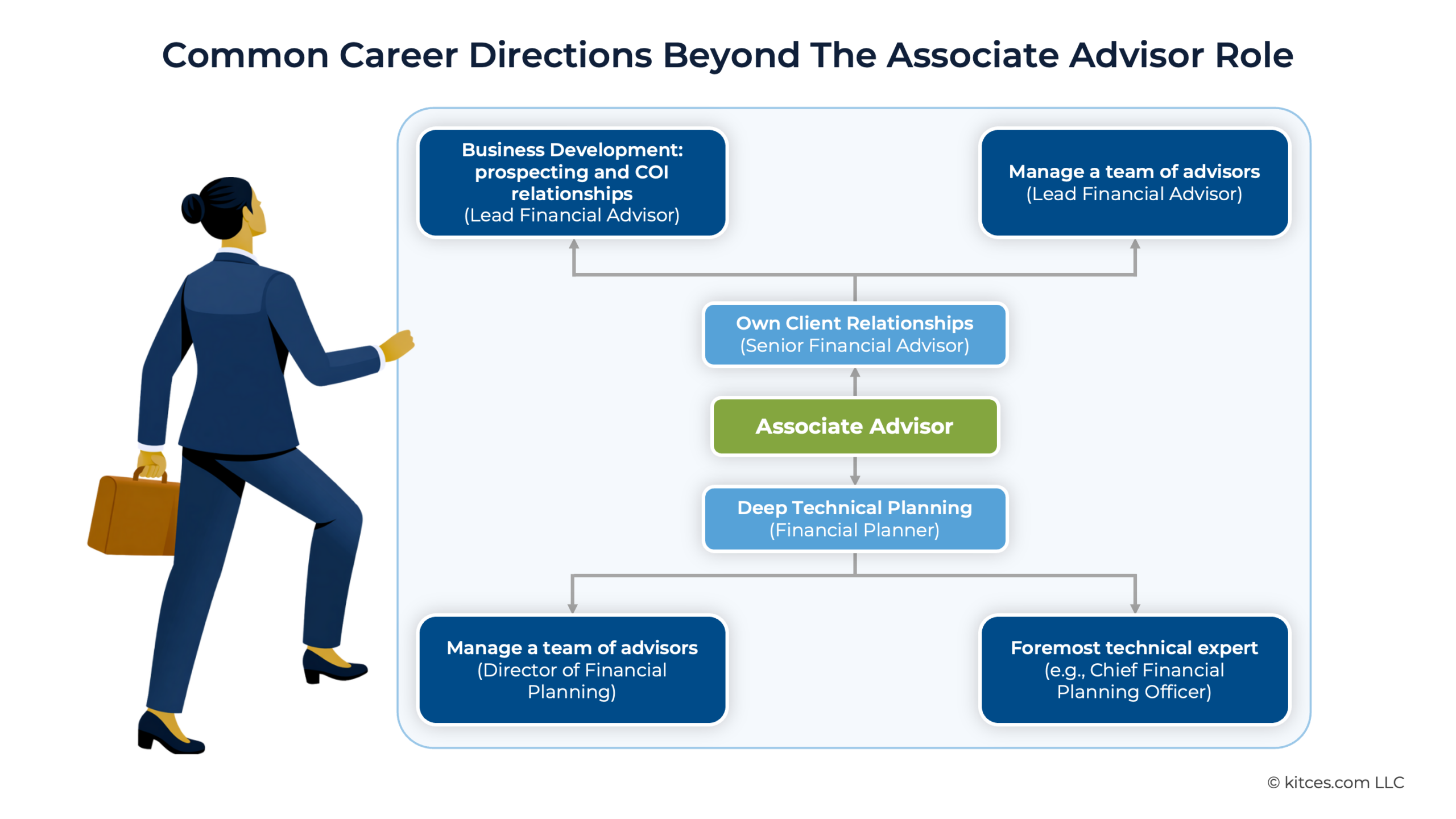
Particularly at small firms, it's unlikely for roles to be segmented as much as the graphic above suggests – employees often wear a multitude of hats. And as associate advisors determine what they really want, they may sample different roles – but this framework at least highlights some of the directions available to them.
How Advisory Firms Can Create Scalable Growth Plans For Their Advisors
For new advisors, the sheer number of career paths available to them can feel overwhelming. And firm leaders often experience the same challenge from the other side – trying to sort out which roles their advisors might grow into and how to communicate the long-term possibilities available to them within the firm.
Typically, these options take shape through growth plans: a measurable way to document an individual advisor's accumulation of experience and skills. A growth plan acts as a shared guidepost for both the associate advisor and their manager: the associate advisor gains clarity on which skills will matter most to the firm, and the manager knows where to focus their time, energy, and mentorship.
When firms begin writing growth plans, it's helpful to start by looking ahead to what the firm will need in the future. This can feel uncertain initially – business plans can change significantly over time – but even a general, high-level roadmap can create direction. Firms can create an outline by documenting how the following questions can be addressed:
- Which skill sets are currently missing from firm leadership, and which will be needed as the firm grows?
- What type of employee support does the firm want to invest more resources into?
- What changes does the firm want to make to the client experience?
- How large does the advisory firm ultimately aspire to grow?
- Does the firm aim to enable employee equity or ownership at any point?
It may also be helpful to identify the areas where the firm doesn't plan to expand. For example, if the firm's core clientele does not require such in-depth planning that full-time 'planning only' advisors would be necessary, that direction can be ruled out. This process of elimination – understanding where the firm won't go – can be just as enlightening as planning out desired growth.
Independence And Domain Mastery
Ideally, a growth plan outlines several options advisors can grow into, depending on what the firm offers and the advisor's ability to do the work to the firm's standard. As mentioned earlier, the focus is usually on 'just' three or so different domains – asking for mastery in everything isn't realistic, especially for associate advisors determining where they want to grow next.
There are two primary ways to think about advisor development. The first centers on the advisor's ability to do the work to the firm's standard. Measuring this often comes down to tracking the advisor's progression from simply observing to working independently, as a significant part of onboarding centers on training an advisor to the point where they can complete core tasks on their own. Once they reach this point, that same work can be assigned at increasing levels of complexity. For example, there's a meaningful difference between the annual planning work required for average clients and the most complex clients.
In a growth plan, this progression can be measured as follows:
- Synchronous Observation — The manager works, and the associate observes.
- Synchronous Work – The associate works while the manager observes.
- Asynchronous Work, Synchronous Debrief – The associate works independently, and the manager reviews their work and discusses it with them afterward.
- Asynchronous Work, Asynchronous Debrief – The associate works independently, and the manager reviews their work with only minimal feedback via comments or revisions.
- Asynchronous Complex Work – The manager is able to send the vast majority of work to the advisor to be completed asynchronously.
- Subject Matter Expert – The advisor becomes the 'keeper' of this process, working to the firm's standard at a high enough level that they can review other advisors' work.
The second measure of advisor development is more difficult to quantify: understanding and contributing to the firm's strategic initiatives. Strategic knowledge tends to start the same way as task-oriented knowledge: through shadowing. From there, the advisor may begin to own small pieces of the process, such as presenting just one component of an annual review meeting rather than immediately taking on the full client relationship. Strategic work can also involve project planning, team management, evaluating the firm's tech stack, compliance-related work, or any other responsibilities that keep the firm running.
This progression may be articulated as the following:
- Synchronous Observation, Synchronous Debrief – The associate observes strategic initiatives being built and learns why they are structured a certain way.
- Asynchronous Work, Synchronous Debrief – The associate takes the first swing at building strategic components, with review and discussion from the manager.
- Partial Ownership – The associate owns one component of a strategic initiative.
- Standard Ownership – The associate is able to run and adapt the firm's systems to fit standard initiatives.
- Complex Ownership – The associate manages initiatives with multiple constraints, such as budgets, freelancer management, or cross-departmental collaboration.
- Initiative Developer – The advisor creates new initiatives, processes, and standards at the firm's expected level.
Differentiating between strategic and more task-oriented work requirements is crucial for advisor development. Some advisors may ultimately prefer being a 'doer' – working from a checklist to make decisions within an established system. Others may be drawn to the strategic side of the business, but simply need a structured way to begin accumulating experience.
This type of measurement helps assess an advisor's current level of skill and what will be required in future roles.
Education, Experience, And Other Requirements
In advisor development, it's normal for firms to require some additional education or experience. For example, requiring an advisor to hold the CFP marks before 'owning' client relationships. Firms may also require niche-specific education, such as a divorce-centered firm requiring advisors to have or pursue a Certified Divorce Financial Analyst designation before taking on more client-facing work.
Other firms may opt for less conventional experiential requirements, such as attending a relevant in-industry conference on a regular basis.
Regardless of the requirement, it's worth considering how much support the advisory firm can provide, either in terms of money or time. The more support the firm can offer, the more likely it is that the advisor will begin and complete those requirements. With no support at all, advisors may be less likely to undertake the training required to progress.
At the same time, it can be expensive for the firm to completely cover these programs entirely – both financially and in terms of working hours. If the education is particularly costly or time-intensive, the firm may opt to reimburse upon passing or require that an employee stay with the firm for a certain period after completing the program.
If completing an educational or experiential milestone is required to be eligible for a certain position, that requirement can be noted directly within the growth plan itself. It can also be helpful to explicitly note the firm's level of support so advisors can plan accordingly.
Share The Growth Plan And Revisit Often
Once these growth paths are developed, they are only useful as retention and development tools if employees and advisors are aware of them. Growth plans should be shared within the firm regularly. On an individual level, managers can talk one-on-one with advisors about how their development aligns with the available paths. It may also be helpful for advisors to score themselves in advance in each of the categories – how would they rate their independence and strategic initiative today?
In these conversations, the manager and advisor can compare the growth plan with the advisor's current role and review where the advisor is developing well and where there is still room for improvement. This discussion often fits naturally into an annual review, though these conversations often become more frequent as an advisor grows closer to 'leveling up'.
Below is a template which can be used as a guiding post in these conversations. To keep the review focused and relevant, firms can adjust the template by adding more detail to the domains an advisor genuinely wants to pursue, while omitting the domains that aren't likely to create meaningful growth opportunities within the firm.

Click to download growth plan template
When using this template, it can be helpful for both the advisor and the manager to score mastery separately and asynchronously before meeting to discuss the results. This approach can create a natural springboard for a growth conversation framed as a mutual brainstorming session, where the advisor's strengths can be considered alongside the firm's opportunities. In practice, this may lead to adjustments on both sides: the firm may shift certain responsibilities to support the advisor's growth, and the advisor may refocus their time and energy accordingly. At a basic level, the growth plan affirms that the firm has considered the advisor's long-term fit. And when there is tension between an associate's ambition and the firm's vision, these plans help surface those conversations earlier – giving all parties more options.

Nerd Note:
As an added bonus, a clear-cut growth path is not only a great retention tool, it's also an effective recruitment tool for many of the same reasons. If an associate advisor job description is explicit that the role will develop into, for example, a planning specialist role with no client-facing work required, the candidates most aligned with that growth path are more likely to apply – and everyone is more likely to be satisfied with the long-term outcome!
Advisory career development plans can be a powerful tool, especially for associate advisors who are looking for direction in their careers. When a career growth plan is created, articulated, and followed, it can act as both a retention tool and a compass for advisors. The best career growth plans are specific enough to provide a clear sense of direction, yet flexible enough to accommodate the advisor's interests and ambitions where there is mutual benefit – ultimately allowing the advisor and firm to grow together!