Executive Summary
A crucial part of marketing is, put simply, doing more of what works and less of what doesn't work. But how can advisors know what is effective? Many advisors look to their prospect calls for the answers: who shows up, and what do they ask about? This is a helpful starting point, but it may provide an incomplete picture – e.g., advisors may determine that since prospective clients don't ask about the advisor's CFP designation in a prospecting call, clients don't care about it. In reality, how people gather information and make decisions is more complex than that.
In this article, Senior Financial Planning Nerd Sydney Squires details how prospects actually evaluate financial planners, what information they seek, and how advisors can evaluate the effectiveness of the marketing strategies that they employ (in a way that allows visibility into 'more' prospective clients).
As a starting point, when narrowing down potential advisors, clients often have two sets of criteria. First, clients determine which traits an advisor must have and look to find all advisors who have those traits, such as a CFP designation (or similar demonstrations of expertise). Second, clients set criteria – such as location or pricing – that eliminate otherwise-viable firms as they seek to find the 'best' advisor (for them). A client's criteria will be personal – some clients may crave in-person interactions with an advisory firm, whereas others will prioritize the flexibility of remote meetings.
What various studies suggest is important, however, is that prospects are able to quickly and easily find this information. A recent marketing report indicated that even if a prospective client receives a referral from a friend, if they cannot find the information they need to assess potential fit on the advisor's website, the overwhelming majority will simply move on to another firm that does provide what they're looking for.
The good news for advisors is that most prospective clients are seeking relatively basic information, such as the advisory firm's fees (and minimums), demonstrations of the advisor's expertise (including reviews and testimonials), the nature of the advisor's investment strategies, and an overview of the discovery process. These components can be covered over the course of a few pages on a firm's website; the challenge to advisors is to ensure that this information is given in a clear, prospect-friendly manner. Advisors may consider adding some basic analytics to their website as well, which would allow them to better understand who is visiting the site, how long they're spending, and which pages they visit.
Once advisors have added this crucial information, they can then have a fuller view of the prospect's journey – as well as some added visibility into potential clients who don't reach out. Ultimately, the end goal is not to convert everyone who visits the website into a client, but rather, to ensure that prospects are receiving the right information to make informed decisions. From there, advisors can keep refining their marketing strategies to curate an experience that both attracts right-fit clients and speaks to their questions and issues – ultimately increasing the number of great, informed prospects the advisor meets!

Resisting Survivorship Bias When Evaluating Marketing Strategies
"I've never had a prospect show up and say, 'I chose you because you're a CFP professional.'" is a not uncommon sentiment in marketing for financial planners. While this may be true, it also may be glossing over a crucial component of how people actually make decisions.
For most financial advisors, the clearest information they have about what their prospects want comes from the meeting(s) they hold while the prospect is nearing their final decision. After going through enough of these conversations, advisors can start to get a sense of the most common questions that prospects tend to raise about the advisor and their firm – whether that's information on the advisor's planning process, their investment management philosophy, or their expertise in specific planning domains. Advisors can then use that information to refine their marketing and value proposition over time, and tailor their website and social media messaging to address the questions and concerns that they hear prospects frequently voicing.
Yet only focusing on the questions of prospective clients who are willing to get on a prospecting call – and on what they explicitly ask about in those calls – can introduce and exacerbate survivorship bias, which is a statistical error that comes from concentrating on only entities that have passed a selection process, while ignoring those that did not, when drawing conclusions about the entire group.
Perhaps the most well-known example of this comes from World War II. Statistician Abraham Wald studied the damage incurred by war planes that had returned from combat missions. To simplify a long story, he suggested that rather than reinforce the most-damaged areas of the returning planes, the military should instead reinforce the undamaged areas, reasoning that the planes that had been hit in these areas were unlikely to have survived to return to base. The data only accounted for the planes that had survived the journey.

While marketing for financial planning firms does not have the same stakes, there is a valuable lesson that nonetheless applies: by only focusing on the prospects that are visible and the questions that they ask in an initial call, advisors risk discounting the information that prospects saw that led them to that point. They also miss the potential good-fit clients who never scheduled a meeting at all.
Another way to articulate this: when prospects are trying to determine who to hire as a financial planner, they are looking for information to make two decisions. First, prospects determine which criteria are crucial 'table stakes' for an advisor – also known as "divergent" criteria – and begin to gather viable candidates. For example, a prospect may seek out advisors with some readily identifiable evidence of expertise, such as a CFP certification or a similar designation. From there, the client then makes "convergent" decisions, further refining their list of possible advisors. They may look for traits ranging from a specific fee schedule, to location, to the website content that reflects the prospect's own circumstances. Prospects may repeat this cycle multiple times, revising and adjusting their divergent and convergent criteria as they learn more about the advisory space. Ultimately, once that prospect does start to hold meetings with advisors to narrow in on a final decision, they're not likely to focus on whether or not the advisor holds the CFP certification… because they had already filtered for CFP certificant advisors at an earlier stage.
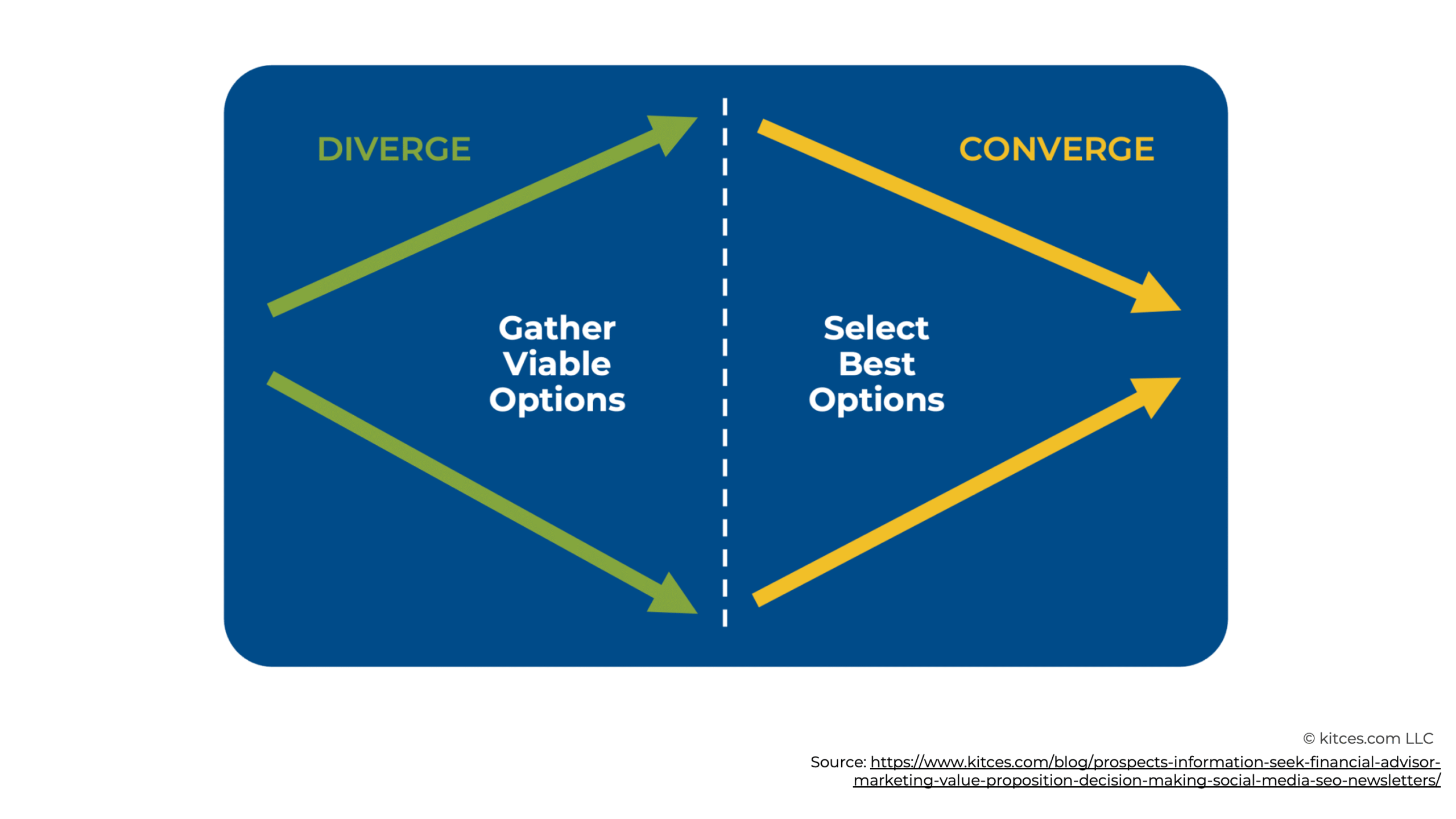
This type of decision-making process is normal – it is the backbone of how many choices are made. And in striving to understand this process, advisors aren't necessarily trying to prevent all prospects from making a "convergent" (disqualifying) decision and not engaging with their firm. After all, advisors are trying to attract as many good-fit prospects as possible. A fully booked call calendar isn't worth much if all the prospects are a bad fit.
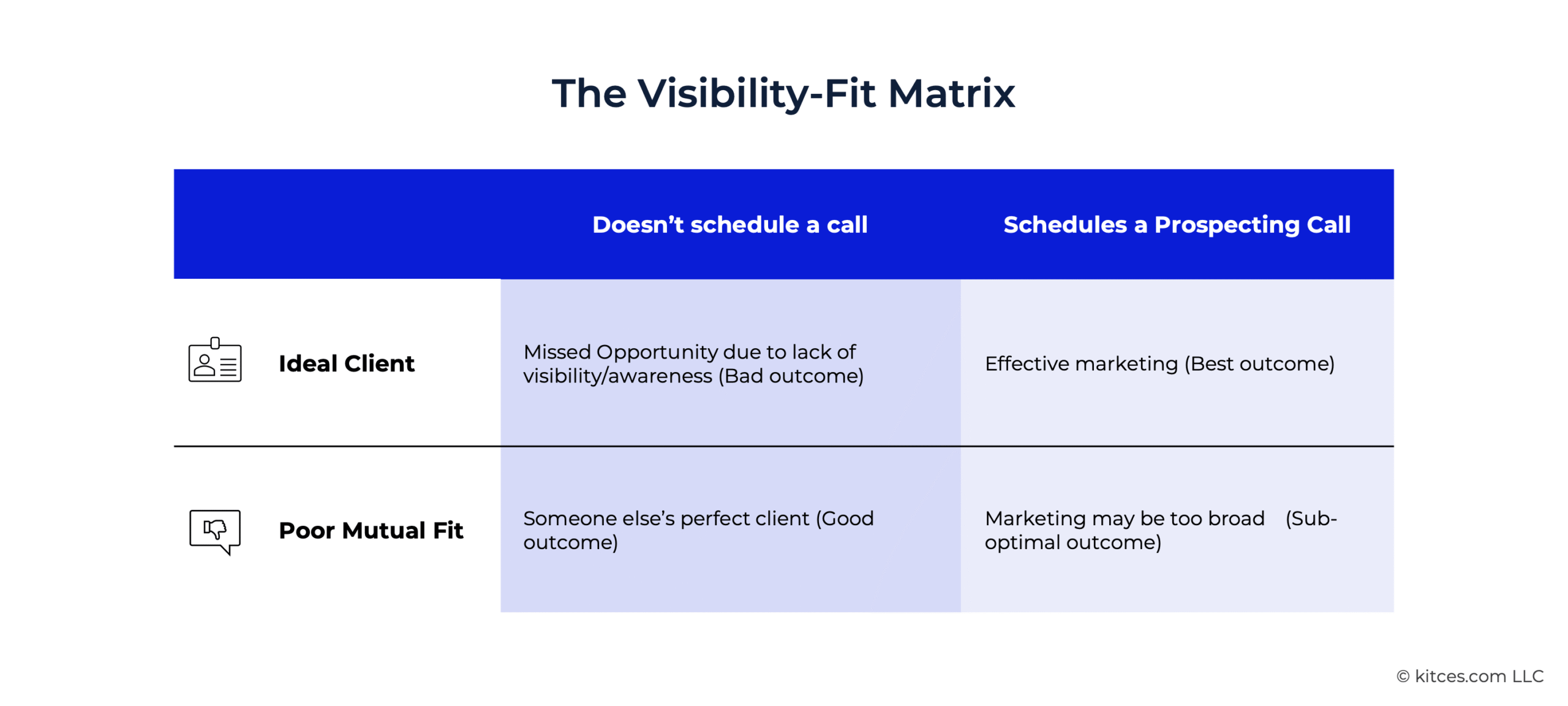
Put another way, as many advisors know, the challenge of attracting and retaining good-fit clients begins long before the discovery call. Many advisors are familiar with marketing funnels, which chart the basic client marketing journey in three parts: first, awareness; second, trust-building; and third, decision-making. In this traditional funnel framework, an initial call with a prospect is represented in the third step of that funnel, the final moment before a prospect decides to become a client (or not). But in reality, the prospective client is doing their own filtering throughout the entire process – and so it's important to know what those prospects are filtering for (particularly in the stages where the advisor doesn't get to ask them directly!).
Why Marketing Intentionality Impacts Tactical Success
Prospects' need for enough public-facing information about the firm to make a decision is reflected in the latest Kitces Research on How Advisors Actually Market Their Services, which finds that marketing intentionality is one of the keys to marketing success. Success, in this context, is measured in two ways – first, by the number of prospects that become clients of the firm, and second, by how much that prospect-to-client conversion costs. In Kitces Marketing Research, this is measured via the revenue acquisition cost (RAC), or the amount a practice must spend to generate each additional dollar of new client revenue. (Crucially, Kitces Research's measurement of acquisition costs includes both 'hard costs' of the firm's marketing expenditures, as well as the 'soft costs' of the team's time.)
In the Kitces Research study, the "intentionality" of a marketing strategy refers to more than executing and iterating upon a well-defined plan. It also requires having a clear target market, tracking the firm's progress and marketing costs, and having at least one team member who is accountable for marketing success. Kitces Research found that this type of intentionality initially increased marketing RAC in the firm's establishing years, due to the cost of the time spent strategizing. As the firm grows, however, RACs ultimately decrease, because the firm is continually improving and optimizing this strategy!
Marketing intentionality spans the entire funnel: It informs the top-of-funnel discovery-focused tactics (like referrals, search/answer engine optimization, or live events), as well as middle-of-funnel tactics (like email lists and, in particular, websites) that build trust, and bottom-of-the-funnel tactics like providing an easy way for prospects to schedule discovery calls.
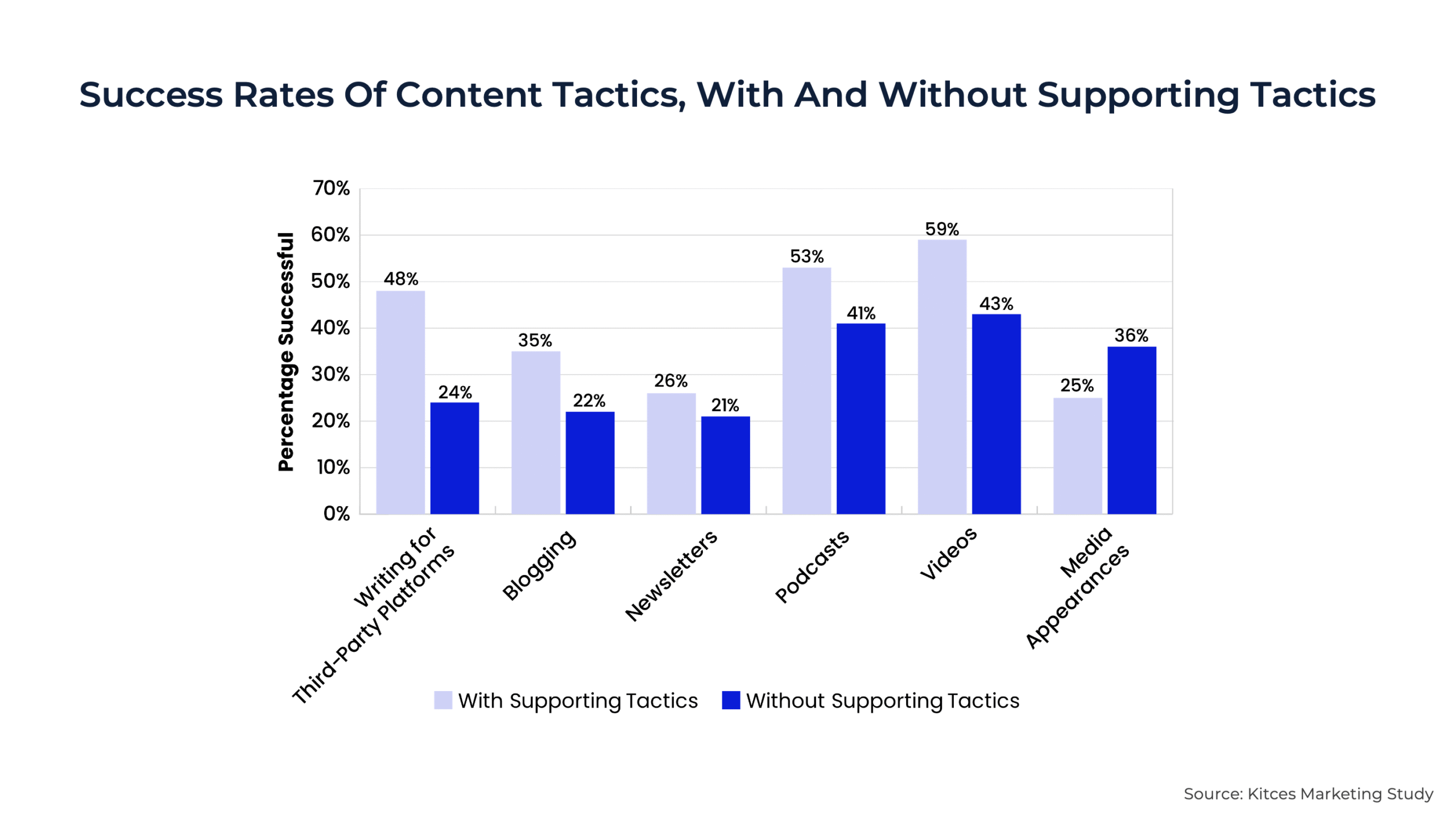
Marketing intentionality can boost the results of individual tactics, because it requires the advisor to strategize how these tactics will work together in tandem, and it typically results in greater effectiveness rates for these tactics. For example, virtually every content-related tactic received a boost from being a part of a greater tactical whole.
And while referrals remain the gold standard for efficient growth in advisory firms, research suggests that referrals are not enough on their own, as is supported by a multitude of marketing surveys that focus on client reports on how they found and selected their financial advisor. What these surveys (including Wealthtender's 2026 guide on "How Americans Will Choose Financial Advisors in 2026 and Beyond", Morningstar's survey on "Why Do People Hire Financial Advisors?", and The Ensemble Practice's "How Investors Choose 2025: Understanding How Consumers Select a Financial Advisor") highlight is just how complex the decision to hire an advisor is; clients are searching for a blend of aptitude, personality, and signals of trust, and many of them use an advisor's website as a significant input of this decision-making process. B2BSalesMagic (a company focused on helping business owners create more referral growth) highlighted one specific component of this in their recent survey which focused on how clients in Colorado not only searched for and engaged financial advisors, but also what stopped them from reaching out. What stands out is that even among referred prospects, 44% of them would move on if they couldn't find the information they wanted. Another 45% would rely on AI, friends, or another website to fill in informational gaps. Only 11% of respondents indicated they'd call the advisor if they couldn't find the information they wanted.
In short, if prospects can't find at least basic information to determine mutual fit, then they may not schedule an initial call in the first place – so the onus is on the advisor to make this information easily available on their website to give the prospect a clear preliminary sense of the advisor's value proposition.
The aggregate information taken from these surveys suggests that, at a minimum, prospects are seeking the following information (regardless of how they found the advisor in the first place):
- Firm fees (including minimum fees or asset levels);
- Demonstration of the advisor's expertise (e.g., a blog or reviews/testimonials from existing clients);
- Investment philosophies/strategies employed by the firm; and
- Key aspects of the client experience (e.g., the planning process or client service calendar).
The Firm's Fees (And Fee Minimums)
According to the B2BSalesMagic survey, the cost of the advisory services was the first- or second-most important element for all prospect types, and 2026 Kitces Research on Advisor Marketing found that displaying fee schedules on advisor websites is associated with both the largest decline in the acquisition cost per client, and increased referral-driven growth (since referred prospects can quickly affirm whether they can afford the advisory firm's fees).
Most people searching for an advisor only want to go into a prospecting call if they are reasonably sure that they are a good fit, so including some sort of fee/asset minimum is crucial. This has the added benefit of conveying the structure through which advice is priced – whether via AUM, a flat fee, or some combination of the two – which can further help prospects determine mutual fit.
Some advisors fear that prospects may be put off by the price of an advisor's time. B2B's research suggests that some prospects (especially Searchers) do indeed experience some level of 'sticker shock' and opt not to hire an advisor due to the cost. This fear is a part of the reason why some advisors opt not to share fees in the first place – they hope that they can explain the value of their advice (and the price of their expertise) in a synchronous call. Yet as more advisors list their fees online, that means that increasingly, if the prospect can't find the information, they'll likely move on regardless.
The good news is that while clients need to be able to find these fees easily, they don't have to be listed in isolation. In fact, the other items on this list help to provide context around these fee prices. From a website experience perspective, many advisors combine both their process (and what is unique) and their pricing on the same page.
One example of this is in CoPlanning Financial's page for ongoing planning, which begins with explaining what ongoing financial planning is, what to expect, and then the overall fee profile. (The page also has the option to jump directly to the fees at the top of the page, which spares prospects the 'requirement' to scroll, while also providing context if required.)

Demonstrations Of Expertise
Focusing On A Niche
This element combines a few aspects of the various client sentiment surveys. First, for example, in the B2B survey, many prospects moved on from a firm's website because they sounded like everyone else; second, many prospects seek out testimonials.
Demonstrations of an advisor's authority and experience can be spread throughout the website, but it's hard to beat an 'About' page, case studies, and/or an active blog. At a minimum, prospective clients should ideally be able to quickly find the advisor's years of experience, designation(s), and background. But what clients most often care about is why the advisor can help them now and solve their unique problem.
To answer this question, many prospects are now proactively seeking testimonials. While this has historically been challenging for many advisors to integrate compliantly (and was effectively prohibited for many years prior to the release of the SEC's updated Marketing Rule in 2021), the solicitation and integration of testimonials may be worth the effort. At a minimum, advisors can create (compliant) case studies that demonstrate exactly whom they solve problems for.
One example of this was highlighted by Ryan Townsley, founder of Town Capital, in a blog post on the Nerd's Eye View a few years ago in which he described "throwing subtlety out the window". In his website redesign, he reworked the graphics and text to entirely reflect his niche.

Kitces Research on Advisor Marketing emphasizes this: focusing on a niche is one of the most effective ways to drive both referrals and other organic clients, because it both forces the advisor to narrow their scope and provides a clear signal to prospects about who is (and isn't) a good fit. While landing page content is crucial, this is where blogging or similar types of content creation can be effective as a way for the advisor to prove the breadth and depth of their expertise. It also gives the advisor room to address specific (and timely) client scenarios – in short, when done well, it can give clients a fuller understanding of who will be best served by this firm.

Nerd Note:
While AI is still a developing marketing aid, for the time being, advisors may want to be cautious of relying on it too heavily during the copywriting/content creation process. AI is great at generating and highlighting content that is 'likely' to be on a website – but as these surveys indicate, many clients are looking for what makes the advisor different. In a world where copy is abundant and easily created, demonstrations of voice and humanity have become increasingly important. AI-generated content may in fact turn prospective clients 'off' from the advisor – the opposite of the intended effect!
Conversely, consistent, unique advisor-created content can help immensely with being visible to AI search engines
Reviews And Online Listings
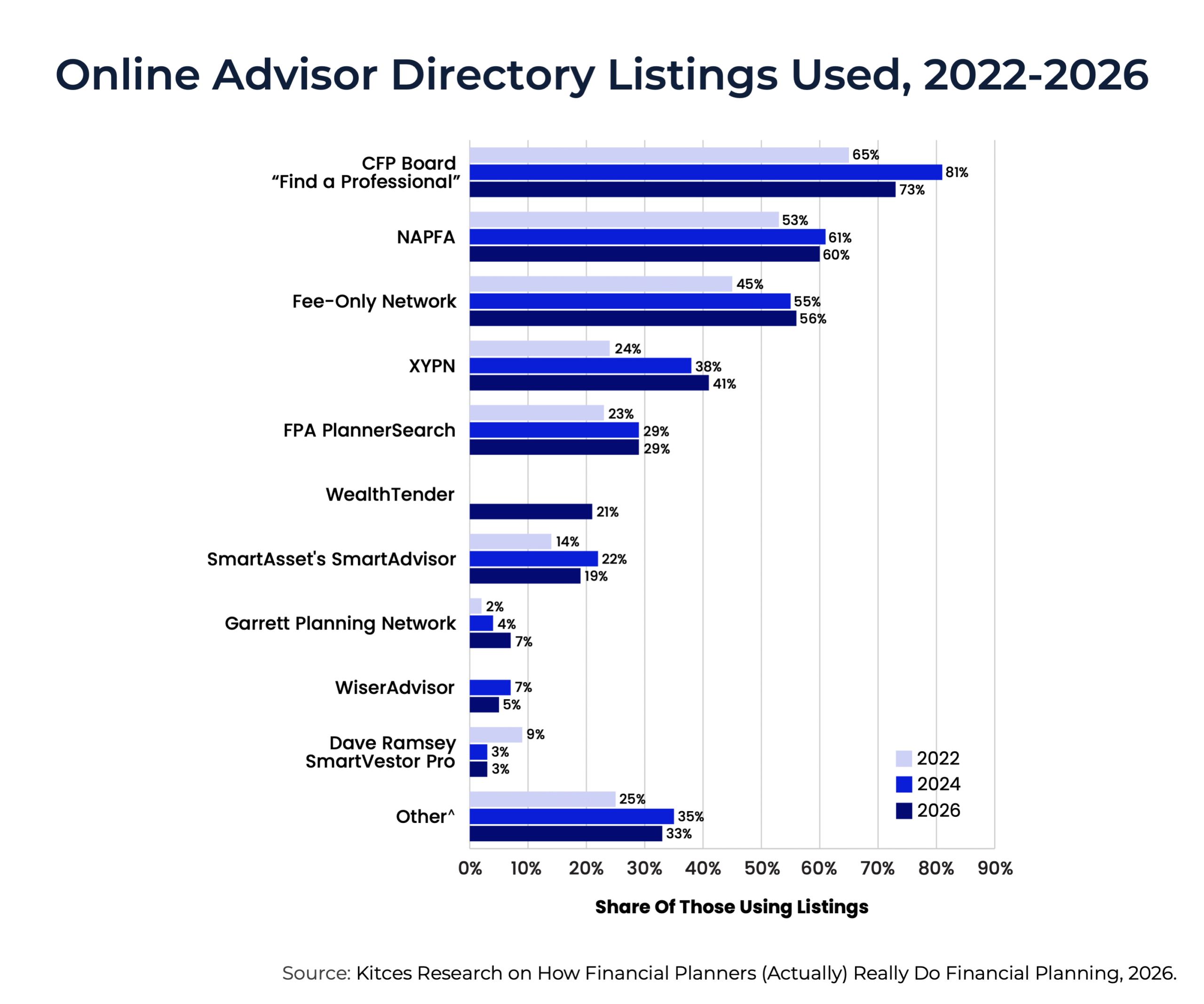
In the quest to verify an advisory firm's trustworthiness, many clients look beyond the firm's own reporting. In Kitces Research, the majority of high-growth firms use some sort of online directory platform, such as CFP Board's "Find A Professional", NAPFA, and Garrett Fee-Only Network. 33% of advisory firms took this a step further by hosting reviews directly on their site. And many clients seek out reviews from current clients from general websites such as Google Reviews and Yelp to more specialized sites such as Wealthtender, IndyFin, Advisor.com, and other entrants in the space.
Reviews are a powerful tool – a demonstration of social proof that other people have worked with and enjoyed this advisor. Research from Wealthtender has indicated that more than 80% of clients surveyed wanted to read reviews before contacting an advisor.
Case Studies
In the event that compliance requirements for reviews are too complex for the advisor or client to reasonably follow, case studies can be a powerful substitute to help a client envision who is a good fit for the advisor and what they can expect. In order to help prospective clients understand who the firm serves, case studies often need to make the following explicit:
- Who is this client?
- What is their problem?
- How did working with the firm help solve this problem?
- What was the result?
Naturally, it's best to match the situation described in case studies to the client type that the advisor wants to work with, which can include details of a client's familial, professional, or psychological circumstances. For example, a firm that focuses on Gen X professionals with equity compensation in the Bay Area is going to tell a different story than the retiree-focused firm in the same location. As a starting point, advisors may consider – who is their ideal client, and what problems does the client urgently need to solve at first?
Case studies don't have to be especially long – five to ten sentences are probably more than enough. The important thing is inviting the (ideal) client to see themselves in the problem… and the solution that the firm provides.
Investment Strategies
How to describe a firm's investment philosophy in a way that is friendly to both prospects and compliance officers could probably be an article of its own, but notably, clients seem to seek a delicate balance when it comes to investing. Many clients want to understand how the advisor approaches portfolio construction and management, and what their portfolio would 'look like' under the advisor's purview. This often ranges from asset types available, to how certain funds are curated – and who is managing/examining those funds on an ongoing basis.
Relatedly, clients are also conscious of price (i.e., fee load). According to American College's 2022 "Trust in Financial Services" survey, over half (58%) of clients consider the fees associated with an advisor's products or services to be crucial information. They also want to know how they are able to access the products and services, as well as what guarantees, if any, the firm offers. At the same time, clients "prefer financial products/services that are easy to understand and use".
In other words, many clients are trying to do research about the different products and strategies being used by the advisor… but advisors are walking a careful line between specificity of information, discussing (but often not promising) results, and using accessible, clear language. At a minimum, advisors may consider emphasizing the "job being done" by the investment strategies – that is to say, focus on the emotional or functional result. In practice, this could mean discussing strategies inherent to the investment process, such as regular portfolio rebalancing, tax-loss harvesting, strategic asset location, access to private investments, and so on.
What The Prospect Can Expect
When it comes to the early planning process, prospects (especially those who have never worked with an advisor before) may not know what to expect. Discussing finances and financial needs with a stranger – even a qualified one – often feels vulnerable and unpleasant. Additionally, some prospects that have had prior experience within financial services may be seeking (or avoiding) certain aspects of the client or prospective client experience.
Anything that helps prospects envision the client experience can be a powerful way to help the discovery process feel less abstract. This need not be overly complex – take this example from Bayview Financial Planning, where the initial planning process is outlined in four simple steps:
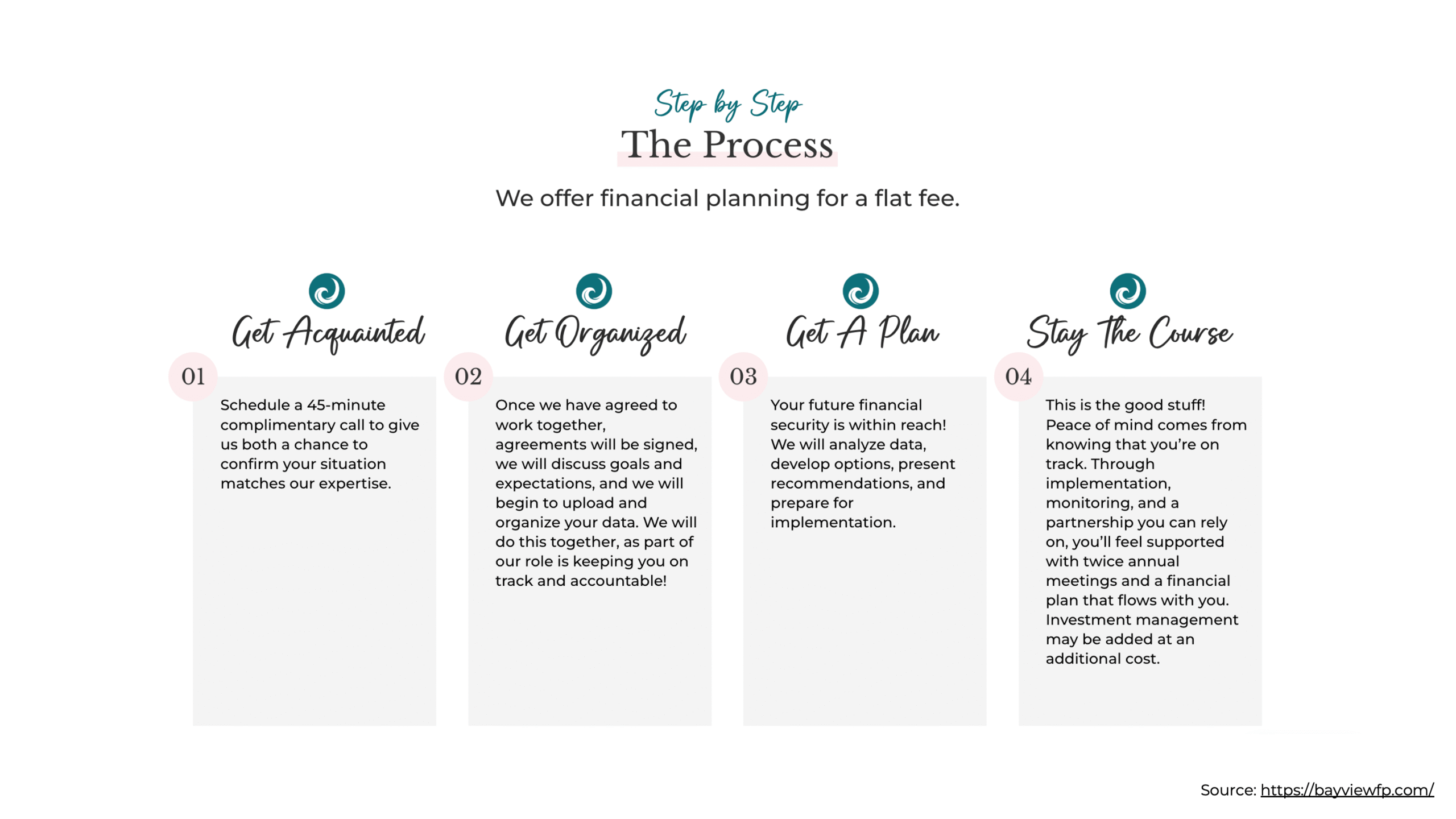
It may be helpful to emphasize, as Bayview does above, what is complimentary (and what the client can expect to pay for), when the prospect can expect initial analysis to be completed, and when a decision is expected to be made. And to take this a step further, it can be helpful to send along a high-level agenda in advance of the initial discovery meeting to help the prospect better understand what to expect. This is especially important if the meeting is expected to occur in a physical office, where something as simple as instructions on where to park can make a big difference to a nervous prospect.
Bringing It All together
These elements can provide a holistic image of the advisor's approach and personality and, ideally, complement each other: For example, if the fees are grounded in the advisor's expertise and experience, then they may not be surprising to the prospect in the context of how that expertise shows up on the advisor's website. And without this critical information readily available, prospects are more likely to move on without ever making contact with the advisor. In fact, B2BSalesMagic's study confirmed that while prospects may review many advisors' websites during their initial search, many of them ultimately only speak with one or two advisors when it comes to the final phase of their decision-making.
The good news is that providing this information doesn't have to be an immense amount of work, and just by making it available publicly, firms can be more attractive to prospective clients. To ensure that the firm's descriptions of their fees and services are clear, advisors may even find it worthwhile to ask a friend or other trusted (non-advisor) contact to review their website and provide feedback on it, since the advisor may have too much context to evaluate their own copy effectively through a prospect's eyes. The real question is whether non-practitioners with minimal context can easily understand the firm's website and grasp the advisor's value proposition!
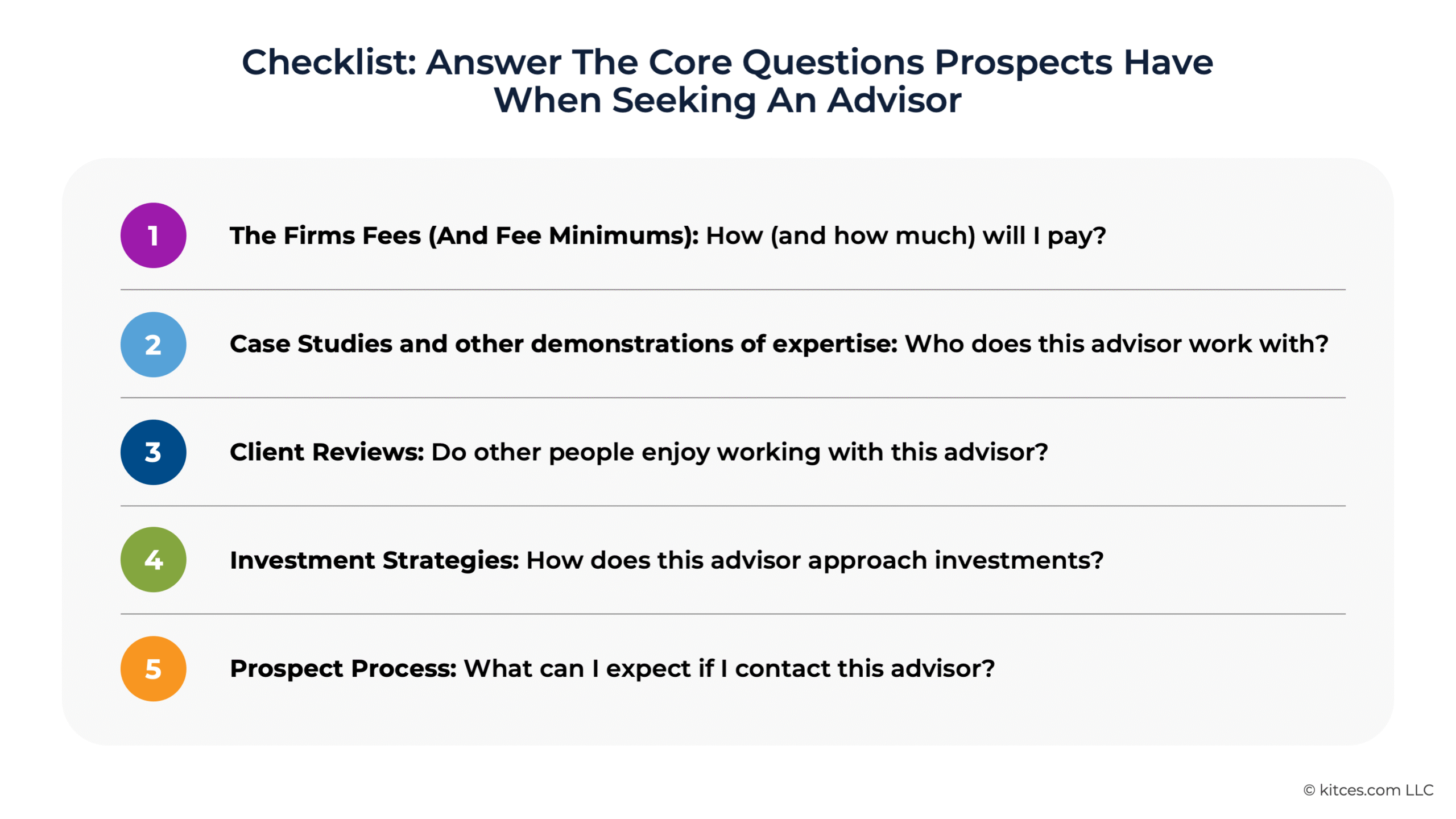
Also of note, what doesn't matter: most respondents didn't list the technological prowess of an advisor's website as a necessity. To be clear, there is a minimum level of good, modern design that is likely advisable for most firms – but extra (and often expensive!) features like video content or customized chatbots may not be worth the effort, especially at first. It is more important to communicate the fundamentals of an advisor's service offering well than to worry about adding extraneous information which may ultimately overload the prospect.
Original Content Boosts Visibility Of Advisors' Website To AI And Other Search Tools
The good news is that as the advisory firm refines its website content, they can not only help clients find more information about the advisor – this information also helps clients find advisors in the long run. Giving specific information about a firm's location and specialty can help search and answer engines know where to send a client who is asking ChatGPT for guidance. To simplify a complex process, in the past, people searching for guidance would type a sentence or phrases into their search bar (such as "financial advisor student loans help Louisville Kentucky"), and the search engine would look for web pages that had the correlating keywords. Now, most people have prolonged back-and-forth conversations with their answer engines, such as Google AI, Claude, or ChatGPT, and ask longer, more personalized questions. These complex queries are a part of why case studies or blog posts are increasingly important: if a prospective client is asking specific questions, websites that provide specific answers are more likely to gain visibility in the long-term.
Notably, answer engines can draw from a variety of mediums, from video to long-form to social media content, so advisors can mix-and-match according to their own content preferences (and budgets). In general, content that explains a specific situation and provides a step-by-step process for thinking through trade-offs is more likely to be visible.
Creating 'Intermediate Steps' For Clients That Aren't Ready To Act
Many clients spend a prolonged amount of time thinking about hiring an advisor before they are actually ready to move forward. They may be reluctant to move forward due to the time and expense until an external life event finally causes them to reach out. To that end, it can be helpful to create 'intermediate steps' that allow the prospect to better familiarize themselves with the advisor (and also allow the prospect to remain visible to the advisor) without requiring that the prospect schedule a call, such as offering a free newsletter, a YouTube channel, or maintaining a social media page.
These pages can be helpful because they allow clients to take 'a' step forward (e.g., signing up for a newsletter) and feel as though they've accomplished something… even if they aren't ready to fully engage with an advisor yet!
Building Basic Data Analysis
Returning to the principle at the start of the article: advisors who only know who schedules a prospecting call are missing essential information about who engages with their site and how they engage with their site. Google Analytics or a similar program can help advisors capture a larger understanding of how people move on the site (and some advisors may opt to hire a consultant to assist with either the initial setup or the ongoing analytics).
At a minimum, it's important to be able to view:
- How people are reaching the site: If advisors have a newsletter, are publishing a blog, use social media, or are publishing their content on third-party platforms, it can be helpful to view if any of that is resulting in action. Again, scheduling a prospecting meeting is further "down the funnel" than viewing a website, so it can be helpful to see if 20 people viewed the website through social media, but no one signed up for the newsletter or reached out to schedule a call.
- What pages people most commonly visit, and how long they stay on the said page: How many people click on the "About" page? What about the "Process" page? How long do they spend on each page?
- What search queries, if any, are being used to reach the site: If the advisor has built the website to emphasize different keywords or reach a certain segment of the population, are those keywords being recognized by search engines?
- How many viewers leave after only viewing a single page: This is called "bounce rate", and it can be a good measure of if the "right people" are reaching the website. The bounce rate will never be 0%, but as the advisory firm creates more specialized content over time, the challenge is to decrease the bounce rate?
Similarly, asking clients how they first found the advisor, such as via referral, website search, or another resource such as advisory listings, can provide valuable information to the advisor. These data points work together in the aggregate to help advisors understand which efforts are making a difference, especially for their great-fit prospects. Over time, advisors can refine their tactics and marketing strategies, emphasizing the tactics that result in web visitors who are more likely to act. Advisors who gradually aim to increase website views and prospect action over time, and can use data to decide where to focus, will find their efforts rewarded in the long-term.
Ultimately, the key point is that most clients aren't looking for flashy technology or sophisticated web design. Rather, they are looking for information about what to expect from the advisory firm and the client experience. Much of this information can readily be provided – and with some refining over time, advisors can strengthen their value propositions to prospects that can become great future clients!