Executive Summary
Financial advisors often struggle with a frustrating reality: clients routinely delay important planning decisions even when the benefits seem obvious. Estate planning is a particularly common example, as many clients acknowledge the need to update documents, establish trusts, or clarify legacy intentions… yet fail to take action. This raises an uncomfortable question for advisors: if logic and technical explanations are not enough to motivate clients (or prospective clients), is it appropriate to use more emotionally charged conversations – including discussions that invoke fear of adverse outcomes – to create the urgency needed to move clients forward?
In this 194th episode of Kitces & Carl, Michael Kitces and client communication expert Carl Richards discuss the effectiveness of a storytelling approach and its ability to transform an abstract planning concept into a tangible emotional concern. For example, is it more effective to explain the mechanics and use of a QTIP trust, or to explain the worst-case scenario of an estate plan without one? Supporters would argue that the technique helps clients recognize risks they may genuinely care about but had never considered, while critics may question whether such conversations cross the line into fear-based selling by intentionally provoking anxiety to drive action.
Underlying the discussion is the broader challenge of creating urgency. Human beings are naturally prone to inertia, especially when dealing with complex financial decisions whose consequences may not materialize for years or even decades. Financial planning conversations often focus on logical explanations, technical benefits, and detailed analysis. Yet advisors frequently observe that clients who understand a recommendation – and its importance – still fail to implement it. The tension, then, is whether advisors ought to simply accept client inaction as a reflection of preferences, or whether part of their role is to help clients overcome behavioral obstacles that prevent them from acting on goals. In those circumstances, emotional engagement can be a powerful catalyst for action, but it raises important questions about the methods advisors choose to employ. Is emotive storytelling manipulative, or simply persuasive if it is in the best interest of the client?
Ultimately, the key point is that selling and advising are not entirely separate activities. The challenge is not whether to encourage action, but how to do so in a manner that aligns with the advisor’s professional values and the client’s best interests. While fear and urgency may sometimes produce results, many advisors may find greater comfort in approaches rooted in client values, aspirations, and desired outcomes rather than potential catastrophes. The broader lesson is that helping clients make meaningful progress often requires more than technical expertise alone; it requires the ability to connect planning recommendations to what clients care about most, inspiring action while preserving trust, authenticity, and respect for the client’s autonomy.
Authors:


***Editor's Note: Can't get enough of Kitces & Carl? Neither can we, which is why we've released it as a podcast as well! Check it out on all the usual podcast platforms, including Apple Podcasts (iTunes), Spotify, and YouTube Music.
Show Notes
 Closing (More Affluent) Clients In The First Meeting With An “Approach Talk” Method To Create Urgency: #FASuccess Ep 483 With Erin Botsford
- Challenges In Engaging The Disengaged Spouse Of A Client Couple: Kitces & Carl 191
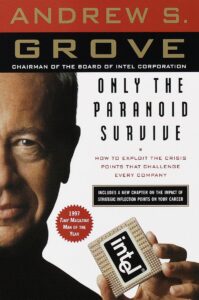
- "Only the Paranoid Survive: How to Exploit the Crisis Points That Challenge Every Company" by Andrew Grove
- "The One-Page Financial Plan: A Simple Way to Be Smart About Your Money" by Carl Richards
- "Influence: The Psychology of Persuasion" by Robert Cialdini
- "Values-Based Financial Planning: The Art of Creating and Inspiring Financial Strategy" by Bill Bachrach
- "The Four Conversations: A New Model for Selling Expertise" by Blair Enns
- Motivating Clients Of All Ages And Life Stages To Stop Delaying Estate Planning, by David Haughton
Kitces & Carl Transcript
Michael: Well, good afternoon, Carl.
Carl: Greetings, Michael Kitces. How are you?
Michael: I'm doing well. I'm doing well. I'm excited to get into today's episode, though, because dare I say, it might be a little bit edgy. We're going to get into a tough topic, and I'm really genuinely curious what your thoughts and view and position is going to be on this.
Carl: Now, I'm semi-excited and semi-nervous, which means that something good might happen.
Using Fear As A Sales Technique To Spur Financial Planning Prospects To Action [00:42]
Michael: Okay. That may not have been the best way to set it up to draw you into a conversation. Here's the situation context. Obviously, we do this Kitces & Carl Podcast. As many folks know, I have a second podcast I do called Financial Advisor Success, where we invite out advisors that have been doing this over the many years to talk about...
Carl: The other podcast.
Michael: The other podcast, which otherwise shall not be named. And it's advisors that come out and basically tell the story and journey of how they built their advisory firms and the things they did that made them successful. And so, we had a guest out just a couple of months ago earlier this year named Erin Botsford. The episode was 483. So, if you actually want to go look it up, it's kitces.com/483 for the episode.
And if I could kind of sum it up in a word or two, the essence of it was that Erin was kind of trained in the methods around if you want clients to take action, you need to create urgency. And urgency is driven by emotions, often fear. And so, a lot of the sort of tactics and approaches that she used were built around...this is offered like how do you get clients much more emotionally engaged around issues? And so, for lack of a better context, I'll just give an example here that draws literally what I'm going to say in a moment is basically quotes from the transcript of the episode that we did. But I feel like I need to give a tiny bit of context first.
Erin's approach, bringing the couple, she was a woman who...Erin is a woman advisor. She likes to focus on engaging the female of the couple. She had a lot of discussion about how she does that to try to engage, let's say, the wife of a traditional couple. And she takes a big financial planning focus and a big estate planning focus. So, yay, financial planning first focus for engaging clients. Awesome.
So, she has a particular conversation that is, for all the nerds in the room, QTIP trust planning. So, for those who don't remember, qualified terminable interest property trust. This is the one where you create a trust for your surviving spouse. You put the dollars into the trust, but the spouse has limited access to the principal of the trust. The spouse only gets the income from the trust and may only get the principal under certain terms. And we structure it this way so that you can still get the marital deduction when you leave it there so you don't have an estate tax bill at first death. But because the surviving spouse has limited access to the principal, you as the first spouse to die can direct where the money goes.
And so, this is the classic, if I'm [in] a second marriage and I want to make sure my money goes to my kids, but I don't want to impoverish my second marriage surviving spouse in the meantime, I put the money into a QTIP trust. They get the money while they're alive to use the income for their bills. But then when they pass away, the money goes back to my kids. That's the technical definition of QTIP trust.
So, this is how Erin would set up the conversation. She'll say, so, Mr. and Mrs. Smith, you've told me, when you pass away, you want your assets to be distributed to your children, but let's say this. So, Mrs. Smith, let's say...let's pretend you die first. Is there a provision in your estate planning documents where if your husband gets remarried, he has to sign a prenuptial agreement with his next spouse, or he loses access to your half of the money? Does that exist in your estate planning documents? So, pause for response from clients. Pretty much everyone says either no, or I don't understand what this means. So, Erin will continue on. So, let me give you an example. Let's say this is with my husband, speaking on behalf of Erin. Say, with my husband, she's in Texas. So, I die. My husband, Bob, now in his 80s, starts dating a 20-year-old Dallas Cowboy cheerleader. And I, Erin, am concerned that...
Carl: Wait, wait, wait, wait, wait, wait. This is an actual quote?
Michael: Yes.
Carl: Okay. Keep going.
Michael: So, my husband Bob starts dating a 20-year-old Dallas Cowboy cheerleader. So, my son...mine now is Erin speaking. So, my son Kevin knows that there's a provision in my estate planning documents that if Bob is so delusional that he goes and marries the gold digger, that he has to sign a prenuptial agreement or he loses access to my half of the money, because I want to make sure that my half of the money goes to you, my son, Kevin, and my three grandsons, your boys. Mr. and Mrs. Smith, does this exist in your documents? And so, inevitably, basically, every client says, no, but I want that. I want that provision. I don't want my money to go to my husband's future gold digger. I want to make sure it goes to my kids.
Carl: Oh. Yeah. Yep.
Michael: And now, they are very motivated to engage and update their estate planning documents and become a client and eventually do all the things that Erin does. And so, Erin was a billion-dollar advisory firm, I think under LPL for most of her years. Built her practice successfully for 20-plus years, sold it and exited a few years ago, now does training back to the industry.
And so, to me just... The whole discussion was fascinating. There were some folks, I think, were just aptly concerned. Erin had a particular approach of talking to just simply the wife of a traditional couple, right or wrong. She worked a lot with baby boomer clients. Baby boomer clients tend to follow traditional couples’ dynamics. And she would try to engage wives in particular around this, getting back ironically to our whole episode a few weeks ago about engaging the less engaged spouse. Erin was very good at engaging the less engaged spouse on nerdy estate planning topics like QTIP trusts, because she had, shall we say, a very colorful way of putting it forth and making it real, and getting people engaged.
And so, the feedback from the advisor community, I thought, was fascinating to this. So, some were really upset about sort of the gender dynamics of how this conversation was set up with clients, prospects technically at that point. Some were concerned about the whole framework of fear-based selling, what it is. At least we're not fear-based selling a product. We're using fear and emotions, that's why I don't want to have happen to my money to open up estate planning that she doesn't even sell. Erin is not a lawyer. She's not getting paid a drafting fee. This was how to engage clients into the full financial and estate planning process to ultimately work with them as ongoing wealth management clients.
But there's an aspect of this that just...I'll call it fear-based selling that some folks were really bothered about. Others said, well, now, at least you've got an understanding of what you're up against. When you go and sell all...when you go and explain all the nerdy benefits of a QTIP trust and your client's eyes glaze over, this is what other people are saying to clients. So, good at least for some perspective. And then a few folks...or not even...more than a few said, yeah, she actually gets her clients to take action and everybody else is just talking, talking to clients while they don't take action. How many others out there consistently get their clients to adopt estate planning document updates and QTIP trusts? I'm going to venture saying not very many and a way smaller hit rate than what Erin is doing with her clients.
And so, to me, there's... I'm now taking quite a bit of time to sort of set up this discussion and theme, but I'm really curious for your thoughts and reactions around this...I guess just this whole framework and approach to engaging clients towards action.
When Does Creating Urgency Actually Work? [09:35]
Carl: Is this the point at which you want me to reply?
Michael: Mm-hmm.
Carl: Yeah. There's a lot there to think about. Just because something works for someone, doesn't mean it's something that I'm interested in doing. There's a second layer to this, whether it's negatively reinforcing stereotypes that we'd rather move on from. I think that's... To be honest, I'm not trying to be careful here. I'm trying to be honest. It's beyond the scope of my... I've increasingly been very, very careful. When someone's been really successful at something, who am I? But the fear-based stuff and the...specifically, we could certainly talk about it.
I think that falls under the heading for me of just...I have no doubt that that stuff works. And we see it all over the place and urgency and... Andy Grove, the CEO of Intel, wrote that great book, Only the Paranoid Survive. Is Andy right about that? Who am I to say he'd be wrong? It's just not the way I would choose to live. And that probably comes at a cost. I haven't built a billion-dollar RIA firm. I have no interest in that. And even if I had an interest, I'm not even sure I could.
But I think... I was taught something in this vein. I remember being...and it was largely around making the problem so complex. So, it wasn't... I don't remember it being framed... and I'm trying to be careful here with my memory. I don't ever recall it being framed as fear. I recall it being framed as complex and...which you could probably see my response to that in terms of my work. But the idea was... and, man, I got warned about this so many times. I got warned like, “Carl, you're making this too simple”. In fact, when The One-Page Financial Plan came out, a lot of financial planners were mad at me because I was making it too simple. And the framing was...I think this came out of the words of some...of a trainer at a sales thing in my first year or two at one of the firms that provided great sales training. It was like, it's kind of like you want to dig a pit, throw the client into it, and then look down and say, I'm the only one with a rope.
Michael: Yes.
Carl: Right? And the pit...
Michael: That's literally one of the analogies I was taught as well.
Carl: Yeah.
Michael: I learned it as a ladder, not a rope.
Carl: Yeah. And the pit in...where I was taught about it, the pit was complexity. It's going to be very complex. It's really hard for you to manage. Did you understand how many moving parts? So, it wasn't fear. It was complexity. And then, of course, I do remember some sales training around urgency. Of course, urgency is the classic one. Right? And I can pause there if you want to, but I'll just finish this one thought. My thought on it is it may not be nearly as effective. What I'm about to say may not be nearly as effective.
There's a reason everybody teaches about urgency. There's a reason that you get those pop-up windows. There's a reason that you get spam text messages. Because they must work, right? Or else they wouldn't be happening anymore. But I would rather...even if I'm going to use urgency, I'd rather use urgency towards helping somebody reach their goals, be the kind of person...positive urgency. There's a thing you really want to get done. How can I help you get that thing done? And again, that means I may not be as successful, but it's who I want to be. It's how I want to walk in the world. It's the kind of energy I want in the world. And that does not make anybody else's way wrong. It just means it's a different focus. So, that's kind of my initial response.
Carl: Where would it be helpful to...where would you like to go from here?
Michael: I...
Carl: Should we talk...should we just...Michael, for hell's sake, should we just talk about the gender stuff?
Michael: Sure.
Carl: What do we think about that? What do we think about the use of term gold digger and the use of term Dallas Cowboys cheerleader? Again, not to pick on anybody specifically, because there's plenty of...those are regional things. We could pick plenty of regional things, but what do we...are we reinforcing unhealthy stereotypes for the sake of sales? Is that an okay thing for us to discuss here?
Michael: So, look. As you noted, I guess sort of the particulars of stereotypes, the particulars of those dynamics will...at the least, very regionally. Right? Dallas Cowboys have some particular dynamics around this that make it salient if you're in the Dallas market.
Carl: It's a particularly loaded idea that resonates really strongly.
Michael: Honestly, I really do struggle with this because, look, the fear... I'm going to try to use the generalized terms. The fear that my spouse will remarry and my children might be disinherited someday, that's real. That's real. You don't have to...
Carl: Sorry. Let's pause real quick. That's real for who? It's not real for me. It's real for who? Are you saying, for most people that would be real? Because that...
Michael: Most people. Many clients have certainly had...over the years, didn't introduce the conversation nearly this colorfully. But would it be a...
Carl: That's a reasonable plan...
Michael: Would it be a concern if your spouse remarried and disinherited your children?
Carl: Sorry. Was that a question?
Michael: Rhetorical question to a client, not...
Carl: Oh, okay. Right. And just to get my answer out of the way, my answer to that question would absolutely 100% be, I love and trust my spouse. And it's not my job to determine what she would do in... after I'm gone. Now, that doesn't make that the right answer. Do you know what I mean? And look at... One thing you did say earlier that I think was really impactful is this advisor has done this really successfully. And I really, really, really resonate with actually getting people to take action versus just talking, talking, talking. That's really important. I don't know where it fits in, but that's really important.
Michael: Yeah. Even this question... I can think of clients over the years that had varying levels of stringent terms over making sure that money went certain places after death. I can remember particular clients where it wasn't even just that he was concerned about...that if his spouse...it was actually the gentleman in this case. He wasn't only concerned that his spouse might remarry and wanted to make sure that money went to his children, but he also had a very unusual last name as an immigrant. He was very attached to the name. It had become a point of contention with his son who wanted to change the name to something simpler to pronounce and spell in English. And so, he not only had terms in his estate documents to make sure that the money went to his son if his wife remarried, but then if his son changed the family name, he was disinherited, too.
Differentiating Between The Planner And Client’s Values [18:31]
Carl: Right. Can I pause you for a second? Because I think this is really important. Let me get this principle out and just see because I don't know if it's right or wrong. But what I felt earlier in that description was keep...and that example you just gave is a great example. As a financial planner, it is my job. I can decide if I don't agree with the values enough that I don't want to be involved in the planning. I can decide that. But largely, it's my job to help a client implement what they value.
And so, if somebody comes to me with that set of values, this is really important to me. I don't see anything wrong with that at all. I can now help you implement that. What I felt a little earlier was...I felt personally like I could be in a meeting where I'd be like, yeah, yeah, actually. Yeah. Yeah. I'm suddenly taking on for the sake of fear-based selling, I'm suddenly taking on a value that I'd probably go home a couple of days later and go, wait, that wasn't what was important to me. Does that make sense?
Michael: So, look, it does. I certainly get the concern of, “Wait a moment. Are you pushing a value onto me that I didn't actually value?” Again, on the flip side, she wasn't saying this up to sell a life insurance policy where as long as you don't regret it in the first three to five days, you're past the decision period and you're stuck with it forever. She's implementing estate plans that she doesn't even implement - [it goes] to the lawyer up the street. Aside from the fact that she's engaging clients into planning an estate planning to eventually have them become wealth management clients, there's not even a personal quick turn sale here, which is part of why I find the example particularly interesting in this regard. In the truest sense, I guess to me, it's trying to drive towards create urgency and move action in estate planning, one of the areas that most of us have a lot of trouble getting clients to take action on for all the various reasons that people drag their feet on it.
I certainly hear you on keep our values off the client's plan and let the clients decide what's valuable to them. But what if the client just...here's this whole thing from Erin says, that's...in your situation, you know what? That's not really a concern for me. My spouse will make good important decisions. Erin's like, cool. And she moves on to the next thing, because I think she has a long list of these. So, she's got other things to try out if that one didn't happen to create some urgency for you.
But, look, in that vein, we're having these conversations with clients to understand their goals and priorities, and what's important to them, and what do they want to take action on. So, is this just a different, more colorful way of getting that really quickly? Do you actually care about this or not, or at least for a subset of clients that she's serving that apparently are in the market where these are not offensive conversations? Because I'm presuming if she was pissing off clients left and right, she wouldn't be using this tactic anymore and she wouldn't have grown the business. So, for better or worse, she's getting in front of clients who seem to resonate to the issue.
Carl: Yeah. I love that. And I also want to make it really clear, because this is a specific example that Erin used with you on your other podcast.
Michael: That which shall not be named. Yes.
Carl: We're being very pointed here. I want to make it clear that I appreciate the opportunity to engage in a way where we can investigate slightly different views of things without it being personal in any way, because I don't feel that way at all. I think it's very fascinating. I had this conversation with somebody recently, and I can't remember exactly where they were. I think they were in...they were in a very different place than I live. And we were having a conversation about something, and he said to me, that doesn't resonate at all. I haven't had a conversation like that in ten years. And it was very...it was a really interesting reminder of regional differences, natural differences, even client-based differences.
And so, I would be hesitant to judge anybody because... And as you pointed out, it worked. Here's the only...the principle I'm curious about is...and I think this gets us back to using urgency or fear. You can ask a question, as you put it. It would be just much less colorful and much less boring. Is this thing...would it be a concern for you or either of you upon your passing that your spouse would be remarried? We don't have to use any of this other language, which we...and then we're back to boring, boring, talk, talk, talk. But...
Michael: To me, that's kind of the essence of the question. I guess it crops up to me. I can do the neutral...
Carl: It's much less loaded. It's less value-based.
Michael: If either one of you, regardless of gender, were to pass away and go through a marriage, how concerned would you be that whichever spouse's future spouse might get the money instead of the children that you have.
Carl: You diagram that on the board.
Michael: Yeah. Diagram that on the board. This is called a QTIP trust. This is how we solve it.
Carl: Yeah. And nobody does anything because that was really boring.
Michael: That's kind of my concern. So, if Erin's version is much more colorful, but... This is at least grace I'm giving the conversation. I'm going to assume that the clients that she typically works with find this a normal conversation and a normal setup in their context by age or gender dynamics or couples dynamics or a region being in the Dallas area. So, Dallas Cowboys cheerleaders examples are contextually appropriate. I'm assuming, if this was set up with a subset of clients who don't resonate with that family structure and those conversations, she wouldn't have clients that she wouldn't be having the conversation.
Carl: Yeah. This may be a different conversation in Portland or Los Angeles. You know what I mean? Different examples in San Francisco or different examples... And I think that's a really important piece of it. But what are you...sorry, you were on your way to a point.
Michael: Look. I don't really have answers for it. I struggle with an acknowledgement I'll own for myself that I've had the much more neutral versions of these conversations, and it's really fricking hard to get clients to take action. And I can own and reflect that some version of the conversation that looks more along the lines of how Erin sets this up...wouldn't be my particular examples. But the way that Erin sets this up creates a motivation to act in an urgency. I hate the labels for it. It's a more emotional engagement that drives people to action than a logical engagement to appeal to the benefits of QTIP trusts that I can attest from number...some number of years of experience is not the most motivating conversation for a lot of clients. So, I don't know what to do with that.
Carl: Yeah. Is it possible? We can separate this all back down to just talking about fear and urgency for a minute. But I'm actually quite curious about the specific example of if a client's not...if you describe something to somebody, the functional benefits of something without using any laden language that is intentionally designed to elicit an emotional response and they don't find it interesting or valuable, is it possible that they just don't find it interesting or valuable? Right? Is that possible?
Michael: Yeah. Is it possible they just didn't find it that interesting, or is it possible that I made it too boring to be engaging or I couldn't relate it into terms and context? I couldn't translate it into terms in a context that would be more relatable.
Carl: Yeah. I love that. I think this is a fun conversation because it's such a specific stark example that's generated a response.
The Necessity Of (Successful) Sales To Grow An Advisory Firm Vs 'Suboptimal' Decisions [27:40]
Carl: Let's just get back to something like selling. Successful selling, what does that mean? And what does it mean in our industry? And how do we...?
Michael: So, look. On the one hand, I think a lot of us in the advisor world, that's a bad word. Selling has some inherent...it's manipulative and all the bad things that come after that, that baseline assumption. I carried a version of that for a long time as well. Erin actually used the words at one point. Her label was disturbing tracks. Are you trying to disturb the client out of their existing status quo?
Carl: Does it provoke, disturb?
Michael: Yes. It resonated for me because that was literally the training I had.
Carl: Is that like sales training?
Michael: Yeah. I was sales. I came up on the life insurance side and...
Carl: And they use that.
Michael: Particularly back in the '90s, early 2000s, yeah. Fear-based selling, fear of death, fear of destitution. Fear-based selling was a thing. And, yes, the whole point was...we were trained in disturbing tracks, various different conversation threads you could open up with the prospect to disturb them out of their status quo inaction that did...or status quo inertia that most of us have as humans to try to drive them towards action. Now, that version was to buy our variable universal life insurance policy or a fantastic disability policy for physicians with a great own-occ definition if that was my prospect.
Again, to me, the interesting thing is Erin's context is different because there's not an insurance product at the end of this. It's engaging clients on the financial planning and estate planning end of things. But it was... So, on the one hand, lots of...I guess I'll call them skeevy sales tracks that I got trained in, which was part of why I left that side of the business, at least at that time and what they were training. And they were unquestionably effective at getting people out of their status quo inertia and creating urgency to take action. Unfortunately, it was action on things I didn't necessarily want to sell.
Carl: Yeah. Does that mean we're just pulling...as you just used the term skeevy. We're pulling skeevy sales tactics into the profession just...and saying it's okay just because it works?
Michael: The mindset shift, at least, that hit me later in my career, the phrase that I had read...I forget where it was. I think it was Robert Cialdini's work at some point when he talks about sort of selling and the techniques of selling. It's manipulation when you do it in your interests. It's persuasion when you do it in their interests.
Carl: Yeah.
Michael: It's the same technique. Because then he goes on and talks about all the tools and techniques of persuasion, which are also... He wrote the book on how to persuade, and it's also a book on how to do manipulative selling. Because it's literally the same tactics. I joke. Whether you use the force for good or evil, the force is just the force. You choose whether to use it for good or evil. There's an aspect here that, look, I got trained in a version of this literally to sell variable universal life insurance and disability insurance. Erin is teaching a version of it to get people to actually update their estate documents and create QTIP trusts where appropriate.
Carl: And based on her experience and success, under the assumption we're making, which I think is a reasonable assumption, using it to get them to update their estate in service of a goal of theirs.
Michael: Yeah.
Carl: Yeah. I'm just going to make this statement. I have no doubt that it works, and I'm not interested in it. And this is one of those situations I find myself in often where I'm like, what I'm about to say is wrong and it's terrible business advice, but it might save someone's soul. I don't care if it... Because I love the idea of what if I was just less effective, but I walked through the world with... What came to mind was fear-based selling. I don't know if Bill Bachrach launched values-based selling in response to fear-based selling. But if he did...
Michael: Oh, I actually don't know. He launched values-based selling in the fear-based selling era.
Carl: Yeah. I know. Exactly. That's what I was thinking through. And I was like, man, it's such a nice shift to maybe I'm going to love-based selling. Maybe I'm going to focus on your values and helping you reach them. And it's going to be a positive thing. Even if that doesn't work, I would choose to do that over the other. But you're right. Underneath them, set the exact same tactics.
Michael: I guess this is the last question I'd have. Do you feel a desire to try to help clients have more urgency to take action? Because to me, that's kind of the essence here. Is it the tactics, or is it just the idea of I don't want to or think I should have to create urgency, either the client's ready to act and then I'm going to help them do their thing or they're not and it's cool. But my ideal client profile are people who have the financial net worth all to pay me and are willing to take my advice when I give it. And then I don't have to deal with this problem because I just only work with people who are ready to take my advice when I deliver it to them.
Carl: Yeah.
Michael: Is there validity to create urgency, or is that part of the...I guess validity is a harsh word. Is there comfort to create urgency or is that part of the ickiness unto itself for you?
Carl: I'm not one of these people that see... I love selling. It's one of my favorite things. I just don't...I just love it in a way that makes that... I love doing it. I just have to be very careful about doing it in a way that doesn't generate inauthentic behavior that I feel bad about. And so, finding that line, obviously... And to me, it's really clear. When I'm helping you get clear about what you really want out of the world and then trying to slowly remove obstacles that stand in your way, which by the way, I think you're the one who can remove those. I can just ask you good questions about it. And I can say things like, well, I had this experience with a friend who we'll just call Amy, who had this really important goal and said, in the next three years, I want to do this. And on further inspection we were like, what's wrong with three weeks? And she was like, nothing. And she actually did it in three hours, the thing that she had been thinking three years.
But it wasn't a question of you'll feel bad about yourself or some other opportunity will come along that you'll miss. It was simply just a questioning of the assumption. But, yeah. I think it'd be foolhardy to think that the things we're asking clients to do are far...and we are far more prone to putting them off than doing them, even to the degree of just even saving. We know the problem with delayed gratification. We know all those problems.
And so, yeah, we've got to be at least honest that we're working against...if left to our own behavior, we're probably working against human nature in trying to get somebody... The future-self problem is a very, very big problem. I guess it's just a question of what techniques am I comfortable with? And I'm trying to be careful here. I mean this. I have learned enough about the use of examples and language and regional changes and differences to realize, the last thing I want to do is tell somebody else that their way of doing it is bad. I'm simply saying that way doesn't work particularly well for me. And those examples wouldn't work well where I live. But other than that, I'm like, that's really...
The fact that this generated this conversation is really interesting to me because, man, again, it turns out this probably isn't a problem we can solve. It's probably just attention we're going to have to manage. And there's going to be...well, he's going to have individual lines. But I want to be clear. I love selling. I'd like to be better at selling. Blair Enns is my favorite go-to person around selling because it just helps me get more clear around understanding I'm helping...I'm trying to help you reach your self-defined goals, and I'm trying to be careful about not imposing using language or techniques or tools. I'm trying not to impose my goals or my view of the world on you.
Michael: All right. Thank you for the conversation, Carl.
Carl: That was fun, Michael. Thank you.
Michael: This will be an interesting thread.
Carl: Yeah. Cheers.
Michael: Thank you.