Executive Summary
In recent years, advisory firms have faced a persistent slowdown in organic growth, with average RIA growth rates declining from 9% in 2017 to closer to 3% today. At the same time, merger and acquisition (M&A) activity has surged to record highs, as firms increasingly look to inorganic growth in order to scale. While common explanations for this shift include the desire to expand service offerings, attract more profitable clients, or solve succession challenges, a less visible – but arguably more fundamental – driver is the difficulty of scaling marketing itself. As firms grow, the very marketing tactics that fueled their early success often become increasingly expensive and less efficient, to the point that pursuing organic growth may no longer be financially compelling relative to M&A.
In this article, Kitces Director of Research Mark Tenenbaum and Senior Financial Planning Nerd Sydney Squires discuss why a firm's organic growth slows as the firm matures – and how firms can resist and even reverse this effect.
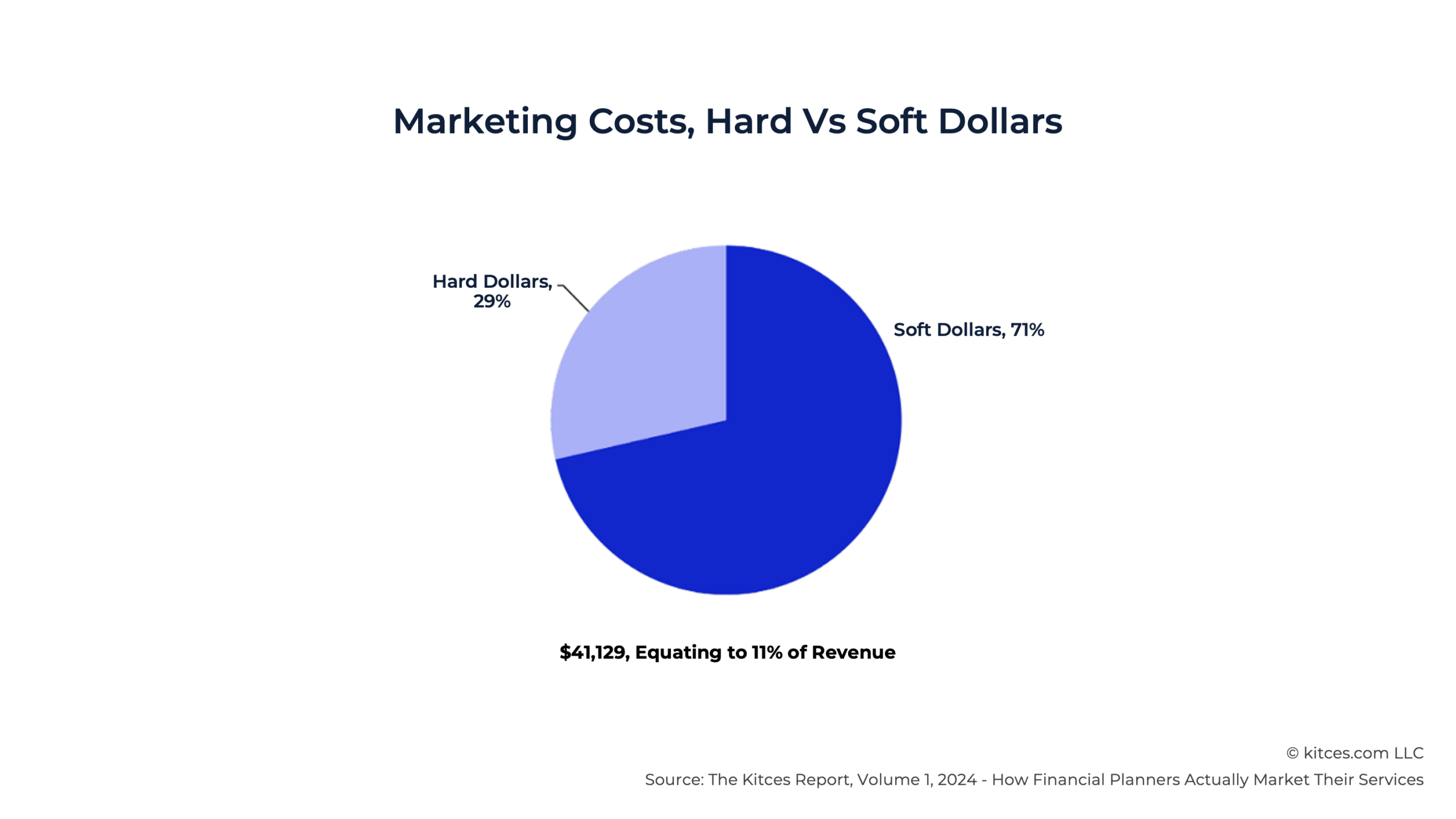
As a starting point, marketing costs must be weighed holistically, considering not just 'hard' dollars spent on tools, events, or advertising, but also the 'soft' cost of advisor time. Kitces Research shows that while the typical growth-oriented firm spends about 3.2% of revenue on hard marketing expenses, roughly 71% of total marketing costs actually stem from advisor and staff time. For a newer firm with limited revenue but excess capacity, the advisor's time is relatively inexpensive, so they tend to favor marketing tactics that require time rather than money.
However, as marketing efforts take effect, the firm grows, advisor income rises, and capacity fills. As a result, the cost of each hour spent on marketing increases dramatically, driving a powerful anti-scaling effect. While the hard costs of marketing generally decline as firms grow, soft costs tied to advisor time eventually climb to nearly 8% of revenue for firms at $5 million or more, causing total marketing costs to rise as a share of revenue.
This phenomenon can be described as a "marketing capacity crossroads". Firms then face a strategic choice to maintain firm growth. They can either accept slower organic growth and supplement with acquisitions, or fundamentally redesign their marketing approach to rely less on advisor time and more on scalable hard-cost investments or delegated team members. Larger firms where advisor time comprises less than half of marketing costs achieve materially lower revenue acquisition costs than peers who remain heavily time-dependent!
Yet navigating this crossroads requires a deliberate shift. Advisors must examine which parts of their marketing truly require their unique expertise and which can be eliminated, automated, or delegated. Even high-touch strategies like events or content can often be partially delegated to team members who handle the operational and strategic groundwork, leaving the advisor focused only on the elements that genuinely demand their presence. In some cases, firms may need to invest in entirely new marketing channels – such as SEO, paid advertising, or outsourced marketing expertise – that may complement current marketing efforts, but are ultimately less constrained by advisor bandwidth.
Ultimately, the firms that sustain strong organic growth at scale are not those that simply work harder at the same tactics, but those that reengineer their marketing to decouple growth from the rising cost and scarcity of advisor time. By recognizing and proactively addressing the marketing capacity crossroads, advisory firms can ensure that their marketing strategy evolves alongside their firm!
Authors:


In recent years, industry media have focused considerable attention on the declining organic growth rates of advisory firms. In 2017, RIAs had an average organic growth rate of 9%; today, that figure is closer to 3%.
These persistent challenges with organic growth help explain the rise of inorganic growth through mergers and acquisitions (M&A). Nearly every year, reports indicate that RIA M&A activity has reached yet another record high, a trend that appears poised to continue in 2026.
Some common explanations for why larger RIAs in particular are increasingly opting for inorganic growth include the desire to scale more quickly to expand service offering and attract more profitable clients (who, according to our data, are more likely to work with larger firms), and providing a solution for aging advisors or advisors without a succession plan in place.
While there is truth to these (and other) explanations for the growing appeal of inorganic growth, an often-overlooked factor is the difficulty of scaling marketing costs to sustain organic growth rates as firms expand – often to the point that actively pursuing organic growth is no longer financially worthwhile.
Specifically, many new firm owners assume their marketing costs will naturally scale alongside their firms (e.g., because many expenses are 'fixed', firms iterate and optimize their processes and funnels, etc.), leading marketing expenditures to decline (or at least not increase!) as a share of revenue.
Instead, firms are often surprised to discover that the very marketing strategies that got them to where they are – the strategies that attracted the initial clients who made the firm profitable and enabled it to expand its team and services – suddenly stop scaling alongside them. In fact, some marketing strategies not only fail to scale but actually anti-scale as firms grow, increasing in cost as a share of revenue – an outcome that can be explained by simple arithmetic.
Why Marketing Costs Struggle To Scale Along With Firms
The Importance of Considering Both Hard And Soft Marketing Costs
When most advisors think of marketing costs, they think of the hard dollars spent on marketing goods or services (e.g., the $6,000 per year for an AI-assisted prospecting tool, $450 per year to be listed in various directories, $2,000 per year to host a seminar at their office, or the cost of a small "thank you" gift for clients who refer their friends). According to Kitces Research on How Financial Planners Actually Market Their Services, in 2023, such expenditures accounted for 3.2% of revenue (nearly $12,000) for the typical advisory firm actively seeking further growth.
About Kitces Research
This article uses data from the 2024 Kitces Research Study on Advisor Marketing. Our research efforts are made possible by advisors like you participating in our surveys. We are currently surveying advisors for the 2026 edition of this report and would love for you to participate! Click this link to start the survey.
However, such expenditures alone do not account for the time advisors (and their staff) require to carry these marketing efforts through to completion. Leads generated from cold digital outreach (such as the growing number of AI-assisted prospecting tools) must be reviewed, pre-generated emails may need to be edited, and successful seminars require many hours of preparation, among other demands. Including the cost of advisor time is essential, as advisors' time is inherently finite: every hour dedicated to marketing is an hour that cannot be dedicated to something else.
We can estimate the value of advisors' time by multiplying the share of their time spent on marketing by their annual take-home income. If an advisor spends 25% of their time on marketing and business development and earns $200,000 per year, we can think of the value of that time as $50,000 – even if it supports marketing efforts that involve only $20,000 in hard costs.
Therefore, it is easy to see why these 'soft' marketing costs associated with advisor and staff time quickly add up. In fact, in 2023, our data indicates that soft marketing costs accounted for 71% of advisors' total marketing expenditures, dwarfing the 29% attributable to hard costs!
Why The Cost Of Advisor Time Makes Marketing Hard To Scale
Beyond offering a more accurate picture of the true cost of marketing, thinking about marketing expenses as a function of both hard and soft costs is important for understanding why firms struggle to scale their marketing as they grow.
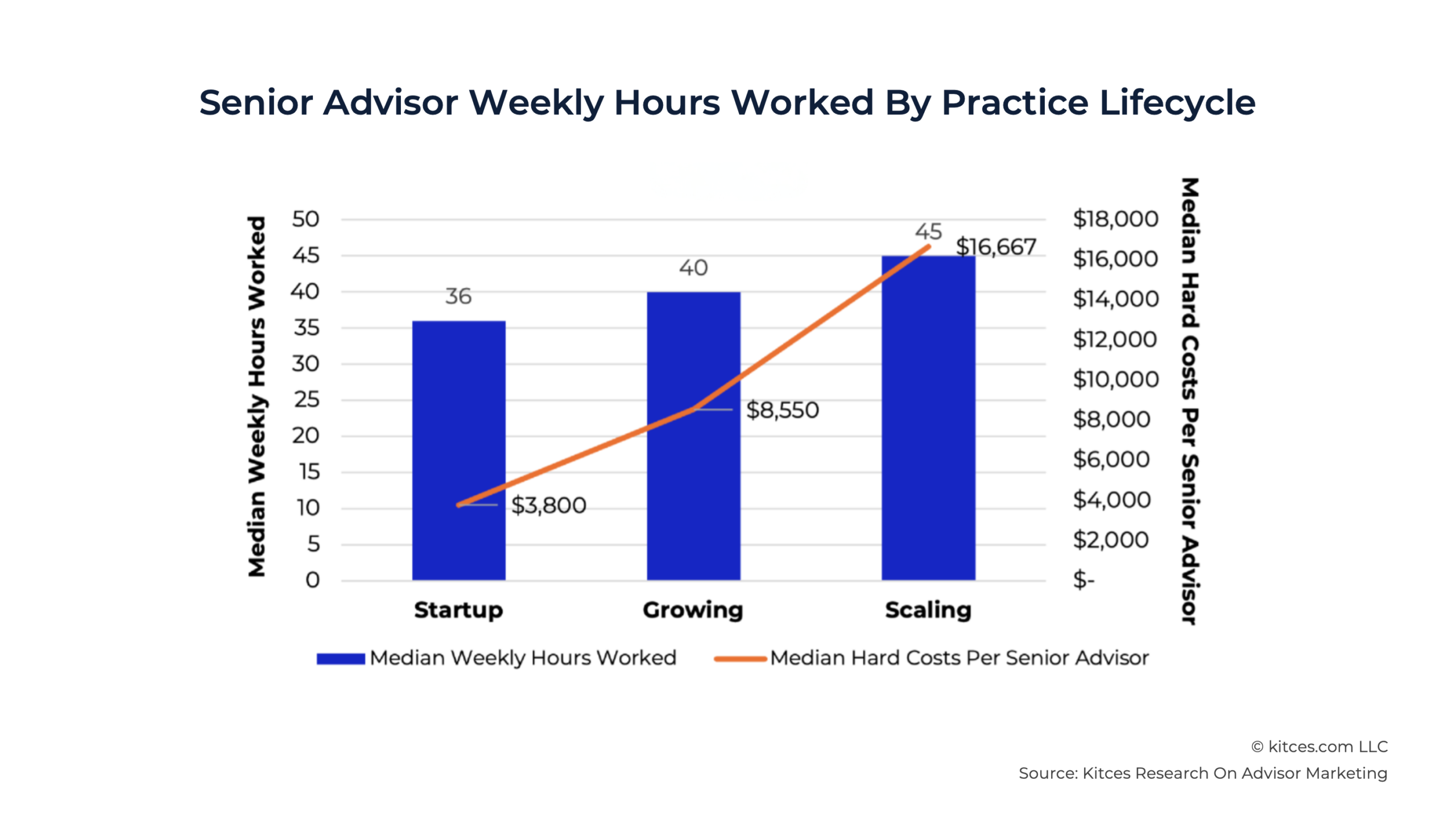
Marketing is arguably most important for new advisory firms that have not yet acquired enough clients to fill their existing staff capacity (which, in many cases, is just a single solo advisor). These new firms, by definition, have fewer hard dollars available for marketing because their revenue is low. This is reflected in the fact that the typical firm in the startup stage spends just $3,800 per Senior Advisor per year in hard marketing costs. What these firms do have, however, is plenty of time, given their smaller client bases (our data finds that the typical Senior Advisor at a startup is not even filling a 40-hour workweek). Time that, from a glass-half-full perspective, is not yet worth very much!
Given new advisors' excess time, they are free to spend it on tasks that require it, including cold prospecting strategies like 'door knocking' and on scripting, filming, editing, and publishing YouTube videos, then iterating and refining the strategy over time to steadily improve success.
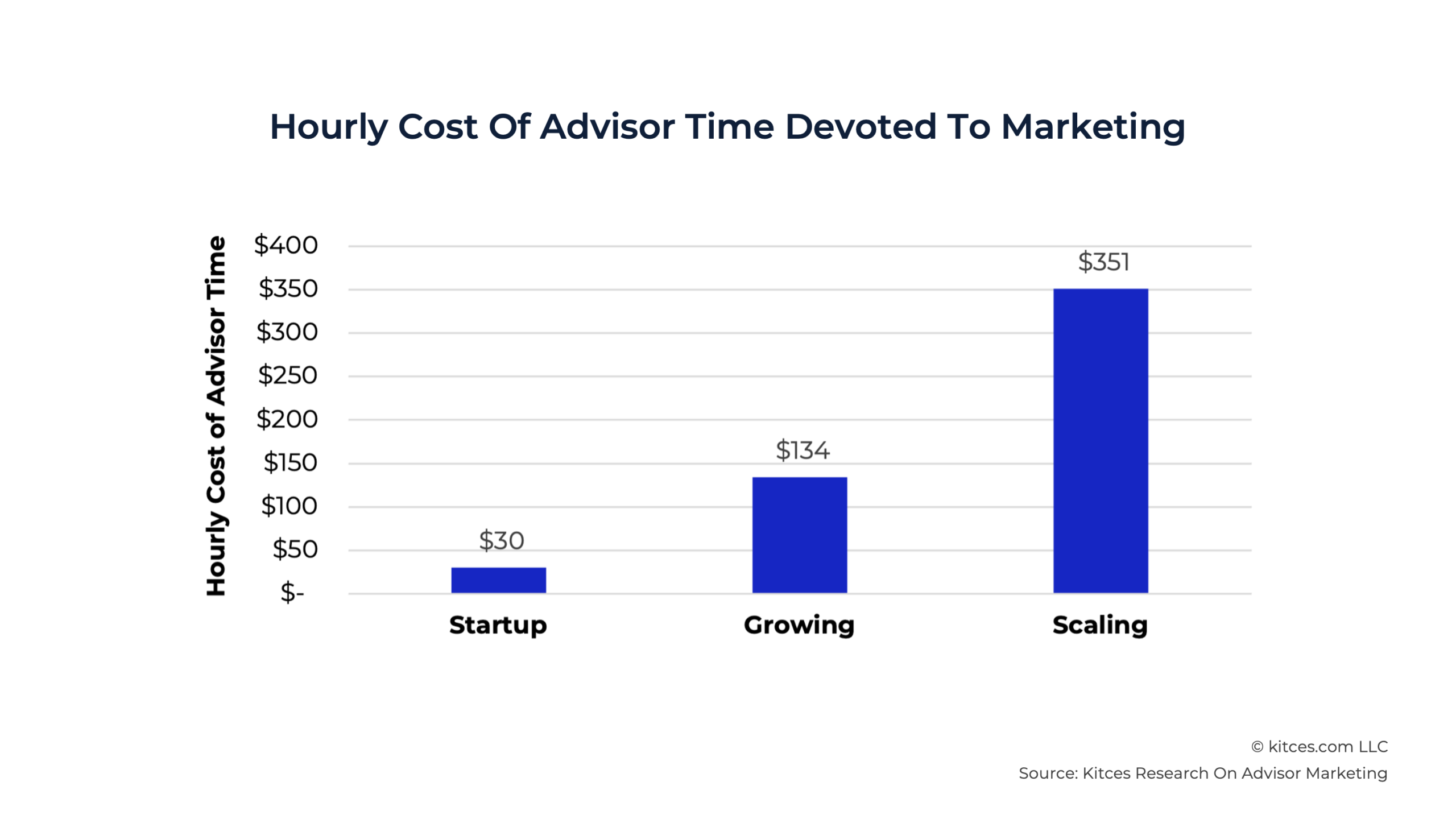
However, as firms successfully bring in more clients and advisors can draw higher income from the practice, their time becomes more valuable. Indeed, as shown in the graphic below, among advisors working at startups, each hour dedicated to marketing carries a soft dollar cost of 'just' $30, compared to $134 for those in the 'growing' stage (firms that have accumulated enough clients to be profitable but can still take on more clients within existing capacity) and $351 for 'scaling' firms (those that are either increasing capacity to take on more clients or focused on moving upmarket at their existing capacity).
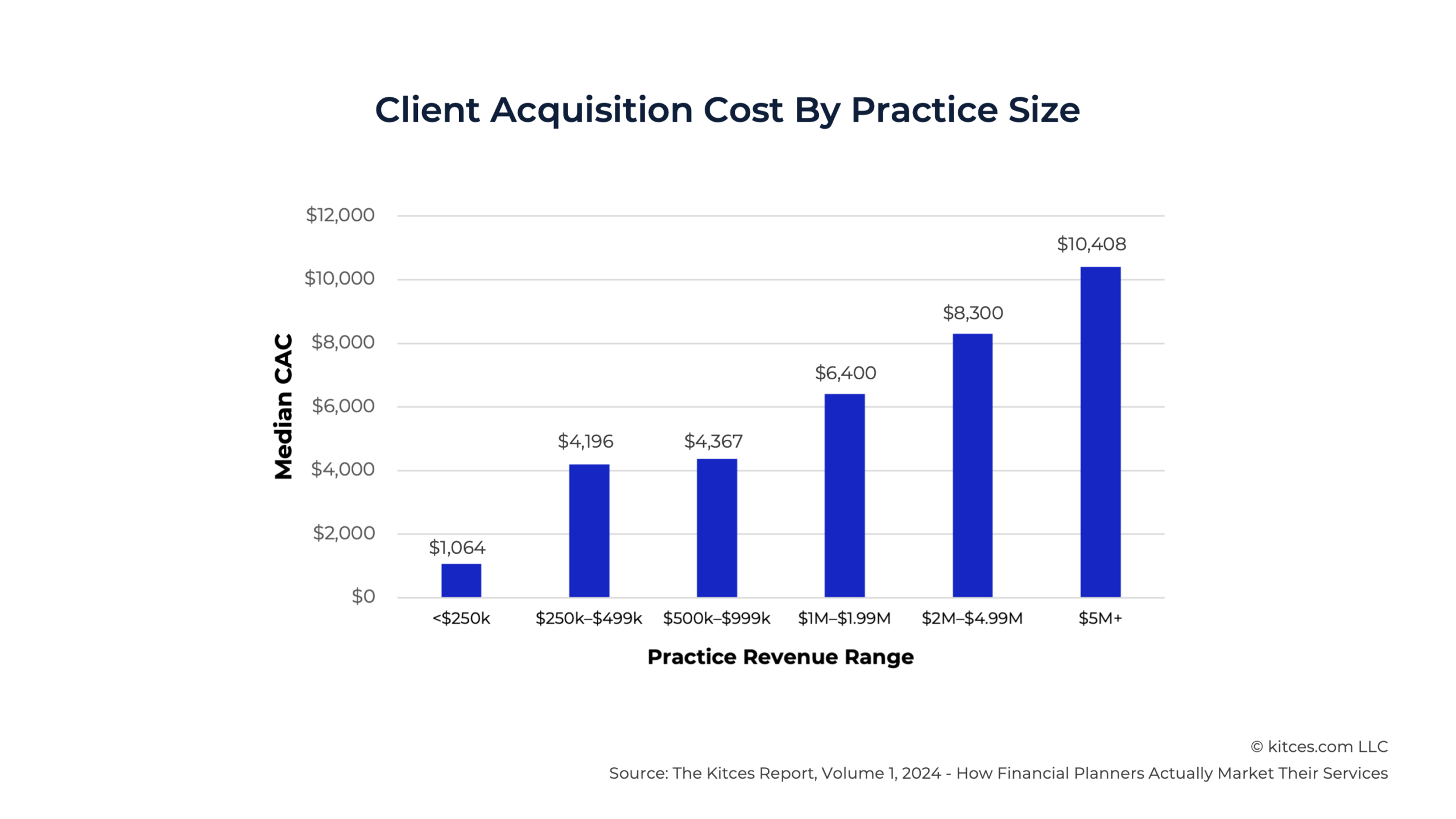
 Given that (as shown earlier) more than 70% of marketing expenditures consist of the soft costs of advisor time, marketing costs increase as advisor time increases in value. This can be seen in the graphic below, which shows client acquisition costs (CAC) – including both hard and soft marketing costs – by firm size (as advisors tend to earn more as firms grow). CAC rises sharply from $1,064 for firms with less than $250,000 in revenue to a whopping $10,408 for firms with more than $5 million in revenue!
 Of course, at least in theory, these higher CACs could 'keep up' with (or ideally decline relative to) the overall size of the firm, as measured by annual revenue, indicating that firms are successfully scaling their marketing expenditures as they grow. For firms heavily reliant on the value of advisors' time, however, the opposite occurs.
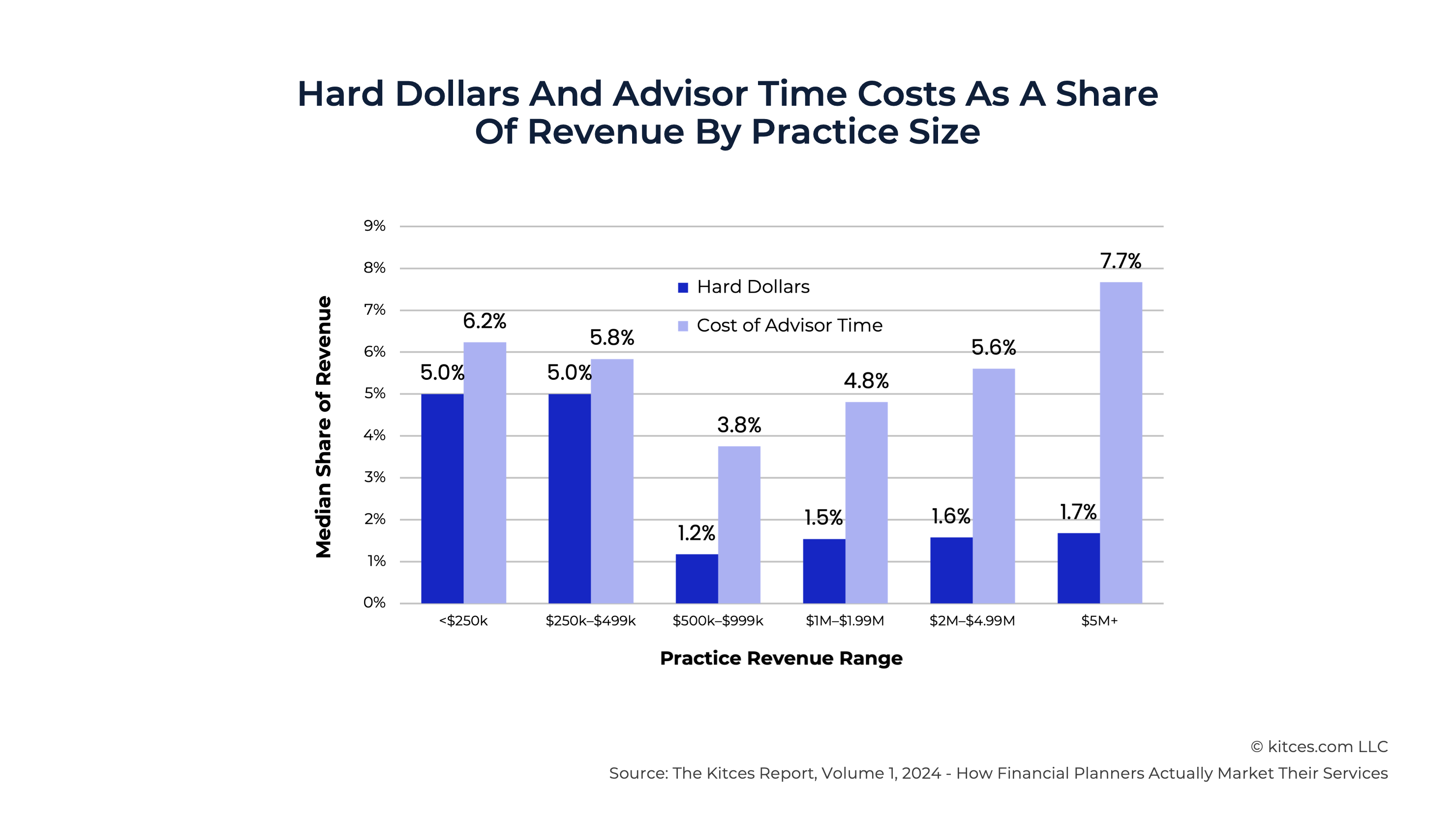
The graphic below shows changes in hard and soft marketing costs as a percentage of revenue as firms grow in size. Hard costs fall below 2% of annual revenue once firms exceed $500,000 in annual revenue, suggesting these expenses scale efficiently as firms expand.
Soft costs, however, tell a different story. Advisor time devoted to marketing is highest among the smallest firms because client loads are typically below capacity, leaving advisors with more time to dedicate to marketing efforts. As capacity fills, advisors spend less time on marketing, reducing total time-related costs until firms reach roughly $500,000 to $1 million in revenue. Beyond that point, however, the increasing value of advisor time becomes apparent: marketing costs steadily rise to as much as 7.7% of revenue for firms generating $5 million or more in annual revenue. In other words, when marketing strategies rely heavily on increasingly expensive advisor time, costs can actually anti-scale – rising as a share of revenue.
 Perhaps the purest metric of a firm's return on marketing investment is its revenue acquisition cost (RAC): how much it must spend to generate each dollar of new client revenue in the following year. The concept of measuring the cost of additional revenue is familiar to those following the wave of M&A activity in the industry, where advisory firms are often acquired for 2–3x annual revenue. Beyond conveying the return on marketing investments, RAC also enables comparison of the relative appeal of pursuing organic growth (through hard and soft marketing expenses) versus inorganic growth via M&A. Once the RAC of marketing expenditures falls within the 2–3x of revenue range, inorganic growth becomes a financially viable alternative to organic growth; when RAC exceeds 3x, inorganic growth may be preferable.
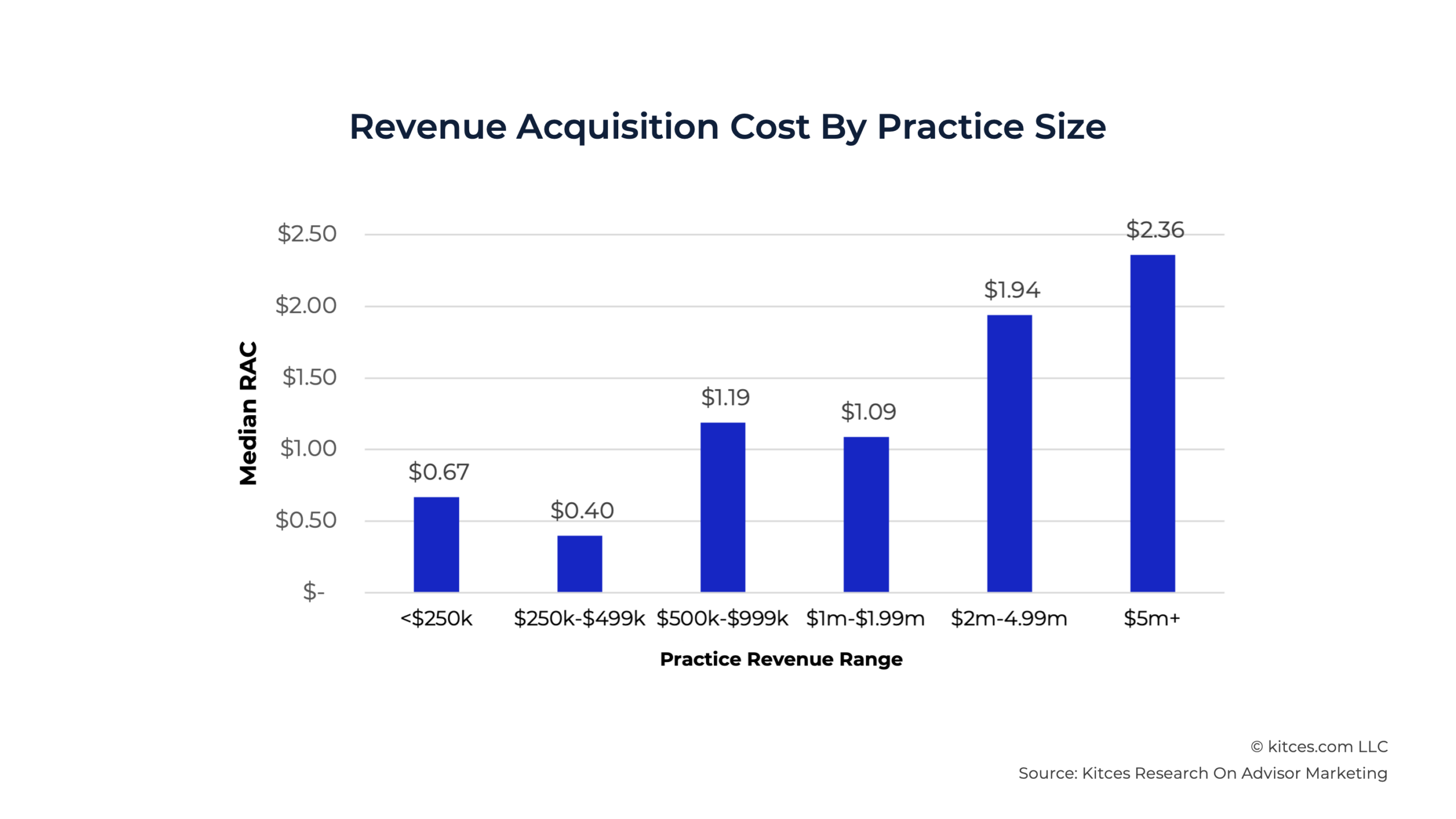
The graphic below displays RAC by firm size. While the relationship is not perfectly linear, median RAC generally rises as firm size increases: firms generating less than $250,000 spend $0.67 for every dollar of new client revenue; this rises to $1.94 for firms generating $2M–$4.9M and $2.36 for firms generating $5M or more annually. Although sample size limitations do not permit further segmentation of larger firms, the logic of the underlying math – incorporating the rising cost of advisor time – suggests that RAC continues to increase beyond this point.
Overall, the data suggest that, as marketing strategies to drive organic growth become less cost-effective relative to M&A at a certain size (around $5M in annual revenue, according to our 2024 Marketing Study), they eventually perform worse. When viewed in light of the growing size of the typical RIA, this helps explain why organic growth challenges and M&A have increased over time.
The Finite Nature of Advisor Time
Beyond the growing cost of advisor time, another somewhat obvious reason reliance on advisor time creates scaling challenges is its scarcity. As firms grow, advisors remain constrained by the same fixed number of hours in a day and days in a week, placing an inherent limit on their ability to drive growth through their own time. Moreover, as firms approach capacity, serving existing clients places increasing demands on how that time is allocated. As a result, it becomes difficult for advisors to devote the number of hours required to sustain a given organic growth rate.
The Marketing Capacity Crossroads
As we've shown, when viewing marketing expenses as a function of both hard costs on marketing goods and services and the soft costs of advisors' (and their team's) time, we see that, as firms grow in size, so too does reliance on increasingly expensive (and inherently finite!) advisor time, which in turns drives up marketing expenses. Advisor time costs rise to nearly 8% of revenue for firms generating $5M or more in annual revenue, resulting in CACs of over $10,000 when hard and soft costs are considered. And crucially, the cost of organically acquiring this additional revenue through marketing rises to (and eventually surpasses) that of simply acquiring that revenue inorganically via M&A. In other words, relying on the time-intensive tactics many advisors used to grow their firms in the first place becomes so costly that it is no longer worth pursuing organic growth!
One key implication is that firms whose marketing expenses are less reliant on the cost of advisor time (either because they rely on hard expenditures or because they have delegated marketing work to others whose time is less expensive) should be able to scale their marketing costs more effectively as they grow. Our data suggests this is the case. Among advisory firms generating $2M or more in revenue, those for whom advisor time costs make up more than half of their marketing expenses have an RAC of 2.1 – within the 2–3x revenue range typical when acquiring new revenue inorganically. Among similarly sized firms where advisor time costs make up less than half their marketing expenses, RAC falls to 1.49, indicating that investing in marketing to drive organic growth may be more cost-effective.
We have published numerous articles on how solo firms face a "capacity crossroads", in which solo advisors accumulate clients to a point at which obligations to their existing clients fill up their current capacity, when they must decide whether to stay solo and limit future growth or make their first hire to expand capacity for further growth.
The findings presented in this article indicate that firms face a similar crossroads in their marketing strategies. Namely, advisory firms can pursue organic growth with tactics that heavily involve the advisors' time (and when they are brand new, 'must' rely on them because they don't have the money to pay for marketing goods and services) until their time both begins to be filled with existing service obligations and gets more expensive as their income rises, raising RAC to a point where M&A is a viable or preferable alternative – a point which our data suggested was $5M+ in annual revenue in 2023. After this point, they face a crossroads regarding whether to accept lower organic growth goals (either because you've accepted overall growth goals or because you're supplementing organic growth with inorganic growth) or switch to marketing tactics that require less of the advisors' time to more efficiently scale.
Strategies For Navigating The Marketing Capacity Crossroads
The marketing capacity crossroads marks a profound moment for advisory firm founders: the demands on an advisor's time have also increased as the advisor splits time between team management and working with more clients – back when the advisor 'just' had their time as a resource, using a lot of time to market was not just necessary, it was preferred! As discussed above, as the firm matures, the literal cost of an hour of the advisor's time increases. This is important because as the firm grows, so too does an advisor's compensation, which creates a literal higher cost on the advisor's time. Put another way, spending three times as much on an ad campaign is 'just' a matter of turning up the dial; spending three times as much time on marketing is much more challenging to orchestrate in an advisor's busy schedule!
Shifting Marketing From Soft To Hard Costs
In order to navigate the capacity crossroads well, first examine where marketing resources are 'spent': that is, shifting the marketing strategy to rely less on 'soft costs' (the advisor's time) and more on hard costs (the firm's money). The catch? As is shown in the graphic below, many of the tactics that attract high-revenue clients also require a higher amount of the advisor's time. Content creation-related tactics, like blogging, videos, or articles, are obvious candidates here: the clients yielded from these efforts are typically good fits, but they are also expensive by the time the clients have joined.
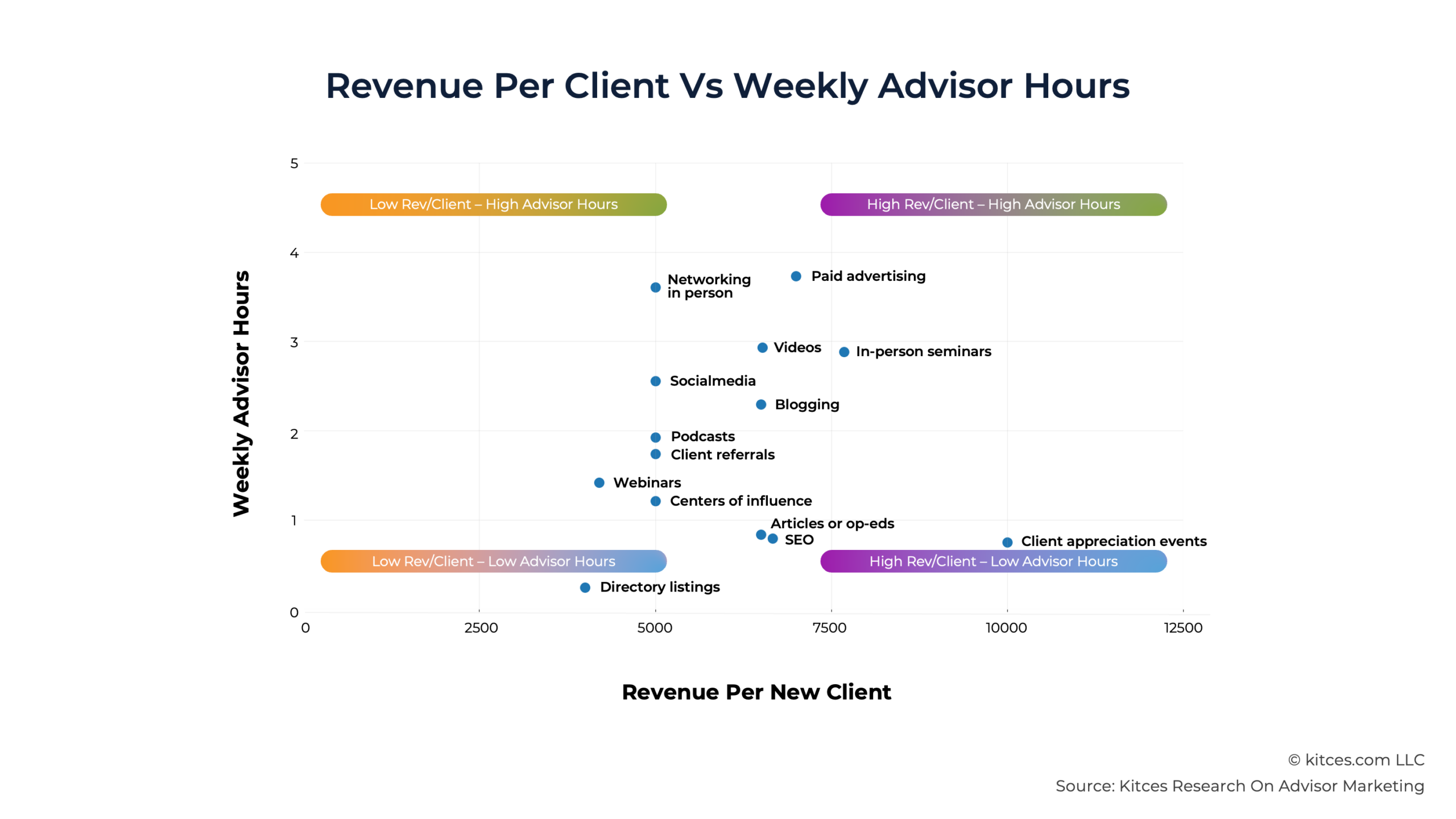
As shown above, almost all effective marketing requires some amount of the advisor's time and attention (if there were something that required no time and brought clients in, everyone would be doing it). Notably, client appreciation events, articles/op-eds, and SEO standout through this lens as being tactics that both bring in a high revenue per client… and don't require substantive amounts of the advisor's time.
Regardless, reducing marketing spend is primarily about the advisor's (individual) time and energy, since they are likely the member of the firm with the highest compensation. Reducing these costs involves a blend of eliminating redundant parts of the process, automating repetitive steps, and delegating everything except tasks that require the advisor's unique time and attention.
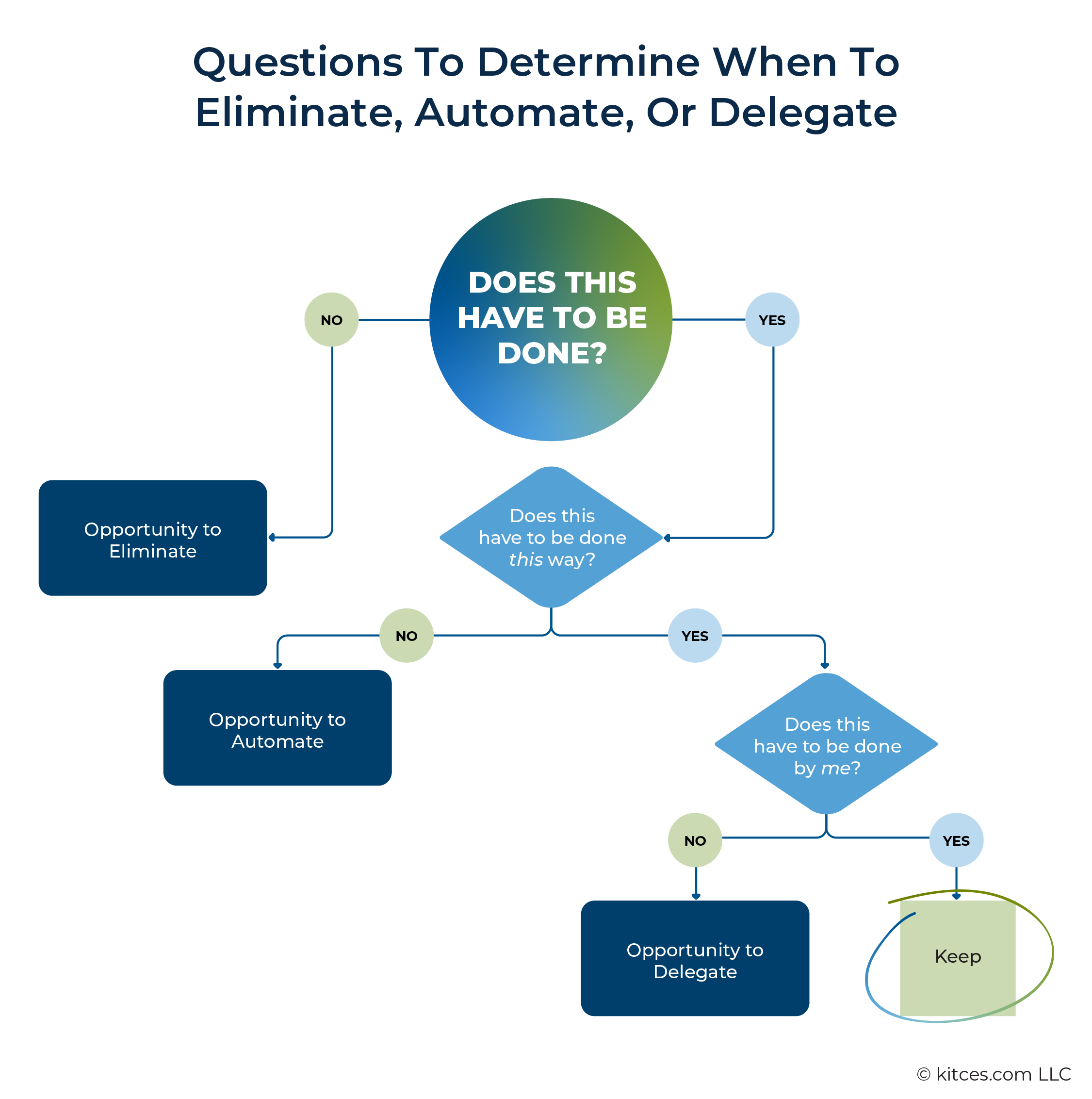
Each of these components works in tandem to alleviate the strain of the capacity crossroads!
Delegating A Marketing Strategy (While Preserving Tactics)
Transitioning a marketing strategy to operate more independently from the advisor's time and focus can feel intimidating. Thankfully, this change can – and likely must – be gradual as the firm reallocates its financial and human resources accordingly.

Nerd Note:
Advisors may also consider checking the 'friction' related to each step in their prospecting process. Each step required from a prospect – take a questionnaire, fill out a form, call the advisor directly –is also likely to prevent someone from joining as a client. When the firm has little capacity for new talent, they may want more friction in the process to attract fewer, 'vetted' clients. When the firm has capacity for more clients, they may want to reexamine and remove parts of the prospecting 'pre-screening' to make it more palatable to prospects.
As a starting point, it's worth evaluating how dramatic a change is needed. While full delegation is helpful, it may not be realistic for some tactics, such as event- and content-centric ones. In such an event, the challenge is to delegate almost everything – for example, webinar and event-focused marketing tactics still ultimately require the advisor's presence… but how much of the work before and after the event can be handled by somebody else?
This type of delegation can be challenging, especially if the advisor is used to doing it all themselves. Delegating well is about more than 'just' articulating the steps; it's also about explaining the high-level targets and purpose in a way that the team member can make nuanced judgements on behalf of the firm.
If delegating in general is a struggle, a simple exercise can help clarify what to delegate. List out the steps on a piece of paper, and create two columns. In the first column, mark which tasks the advisor is currently responsible for. In the second column, mark which ones the advisor is currently handling. To take this exercise a step further, ask someone to review the process and try to justify to them why the advisor must be included in each step. This can quickly highlight which parts of the process to delegate.
Some parts of the process will be easier to delegate than others by sheer virtue of the complexity of the tasks. Uploading the event information into the website, for example, is simpler to delegate than choosing who the event's guests will be. If none of the process has been delegated, starting with the easier, more tactile tasks will still help; however, the best results come from delegating aspects of the strategic work.
Articulating Strategic Initiatives (So Advisors Can Actually Delegate Them)
Articulating the intricacies of strategic work is not straightforward, especially when an advisor is codifying their processes or decisions for the first time. This often leads to "I know it when I see it" syndrome: "I don't know how to describe it to you, but I know it when I see it". This makes successful task delegation extremely unlikely.
Training and delegation offer opportunities to eliminate, automate, and otherwise improve parts of the process. The advisor has been running their marketing themselves, and they will likely know that there are areas of weakness to be improved upon in this process. If there are any easy process improvements to make before delegating… it can be easier to present the team member with the new process or standard as the one to follow. But don't try to make every component perfect before delegating it. New team members or contractors will approach technology and process differently, which is not inherently a bad thing as long as the quality and output of the marketing tactics are consistent. In fact, it may be helpful for the advisor to simply identify areas for improvement and then observe how the team member addresses them.
To get started, it may be helpful to start with articulating the extreme ends of outcomes. First, take a moment and brainstorm what the very 'best' that this marketing tactic can be. What are the ideal outcomes, and how would the team member know that they were achieved? Are there past marketing campaigns or tactics to use as a starting point of what sort of 'feeling' is being created through this campaign?
From there, discuss the "80% goal" – basically, what does it take for this marketing initiative to work most of the time? There are unusual events (for example, if a firm offers educational webinars, they may have a separate process to discuss relevant tax legislation), but what will cover most circumstances? Define the extenuating circumstances beyond the 80% goal, which will naturally require more of the advisor's time and attention.
Finally, discuss what the 'worst' version of this tactic is. What is furthest from the firm's goals? For example, a firm that uses a blog as its marketing may set a 'no clickbait' rule, then define what that 'actually' looks like. (If this discussion is held live, this can be a lighthearted discussion – odds are, the team member has a decent idea of what these rules are!)
At first, the advisor may not see an immediate return on this delegation, since they will need to review and discuss these marketing efforts. But with focused time and attention, they may be surprised by just how much they can delegate!
Building A New Marketing Plan Entirely To Escape The Capacity Crossroads
While delegating some of the firm's marketing processes can be helpful, sometimes, the firm reaches an inflection point where they need to invest in something entirely new… but they may not know what direction to go.
Choosing a new marketing strategy is about more than just the budget (though that is also important). When choosing a new tactic, one key consideration is how much time the firm has before it needs a client from this tactic. If prospects need to be sourced quickly, paid search ads or directory listings may be a more effective starting point. But if the firm has a year or so before it needs results from new initiatives, it may have time to build longer-term tactics, such as optimizing its website for search engine results or building a social media following.
An alternative lens can run in parallel with the firm's current efforts. For example, if the firm already has a robust blog, a natural step is to hire an expert in artificial engine optimization (AEO) to yield more from the firm's existing efforts. This can also make delegation easier: the marketing expert has an existing body of work to iterate on, reference, and repurpose.
Regardless, this is where the firm can reap the benefits of its growth: if an advisory firm wants to add a new tactic, start with something that doesn't involve the advisor. For example, an outsourced marketing provider can likely deliver more effective work at a lower total cost. Additionally, these marketing service providers will not require minimal cross-training – what's instead needed is an explanation of the firm's current goals and branding.
One note of caution when starting a new marketing plan: many marketing providers offer an abundance of capabilities and services. Resist the urge to try everything. Start with just one new idea and a clear set of criteria for success. The same questions apply to new marketing tactics as to delegated ones: What does success look like, and how will the team know when success has been achieved?
Ultimately, the key point is that many advisory firms will likely require a blend of delegation and the creation of new, more independent marketing tactics. Advisors may be surprised by just how much time they can create by closely examining their current processes – and how positive the results can be of building something new!