Executive Summary
 Welcome everyone! Welcome to the 497th episode of the Financial Advisor Success Podcast!
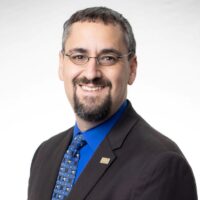
My guest on today's podcast is Shane Morrow. Shane is the CEO of IronBridge Wealth Counsel, a hybrid advisory firm based in Austin, Texas, that oversees $3.3 billion in assets under management for 2,600 client households.
What's unique about Shane, though, is how he has transitioned from being a solo advisor to being part of a siloed partnership and now leading an enterprise ensemble, all without taking on outside capital.
In this episode, we talk in-depth about how Shane decided that he wanted to be part of an advisory enterprise (despite the complex logistics involved) based on the greater camaraderie and mission focus it can provide compared to a more siloed business, how Shane and his partners developed a financial formula to determine ownership stakes (and how equity ownership has opened up to additional employees over time), and how Shane found that non-financial considerations (including the transition to shared decision making) were sometimes just as challenging as the financial implications of combining multiple practices.
We also talk about how Shane's firm operates with seven centralized departments (including for advisory, investments, and operations, among other areas) to ensure a high level of client service and create efficiencies for advisors and other staff members, how Shane works alongside a chief of staff who both oversees several departments and specializes in execution across the firm, and how Shane's firm established a "Department of Colleagues" charged with maintaining culture and continuity across what has become a national enterprise.
And be certain to listen to the end, where Shane shares the importance of the paraplanner role in his firm (not only for the support they provide to lead advisors but also for the opportunity to develop into lead advisors themselves), how Shane has promoted both professional and financial opportunities for next-gen employees by creating a mandatory age at which partners must liquidate their equity holdings in the firm, and how Shane has found that establishing and working towards a defined mission statement has both helped the firm remain focused on its overarching goals and has brought a greater sense of purpose for his own career.
So, whether you're interested in learning about the unique financial formulas Shane and his partners implemented to blend distinct asset books and reallocate equity ownership, the strategic utilization of an operational pod framework, or an accelerated career pathing program for paraplanners managed by specialized directors, then we hope you enjoy this episode of the Financial Advisor Success podcast, with Shane Morrow.
Podcast Player:




Resources Featured In This Episode:
Full Transcript:
Michael: Welcome, Shane Morrow, to the "Financial Advisor Success" podcast.
Shane: Michael, it's an honor, and I appreciate the opportunity to join you.
Michael: I'm really excited to have you with us today to get to talk about what I just think of as the very real-world challenges that crop up when we start trying to build ensemble firms with multiple advisors that didn't necessarily start out that way. Most of us, historically, you start out as a solo advisor, either entirely on your own, or maybe affiliated in a broker-dealer corporate platform. We hang our proverbial shingle and just go try to get clients one at a time. At some point, we grow a little bigger, start taking on a little bit of staff and other overhead and office space and software, and a lot of partnerships start cropping up.
But I find, usually, for that partner phase, we're not really partners building a shared vision of a shared business. We have two names on the door, but we're basically running two silos. I have my clients, you have your clients, and our partnership is basically just a cost-sharing arrangement to split the overhead expenses that anybody can separate from at any time, or just do whatever they want on their side of the business. And only a few really choose to become what Philip Palaveev had first dubbed, an ensemble firm, where it's not my clients and your clients. They're our clients of the firm. We share in the ownership of the firm and the profits of the firm and create a shared vision of what we will build the firm together to be.
Which in truth, I find not all advisors even want to do because you can actually make a great living as a silo or a solo practice. And so, these days, you can build a business you could sell with all the M&A activity. But for those who do, it often turns out to be harder than expected when you get into the nitty-gritty details of, how do you actually blend the client bases when the revenue wasn't the same, and blend the ownership and the tech and the systems and the process and actually make a shared vision when we all come from different places with different backgrounds. And so, Shane, I know you have lived this journey over the past decade-plus of solo to silo to growing ensemble, with now, like, billions of dollars of AUM. I'm excited to talk about what it really takes to make that ensemble transition happen.
Shane: Yeah, I'm excited to share our story, both all the ups and the downs and the slips and falls and picking yourself up along the way because, I think to your point, it is a journey, it is iterative, and it's usually not a straight line. I think to your point of Phil Palaveev, Phil, he's a consultant of ours. And one analogy we've internalized is, the ensemble and our mission statement is like a mountain in the distance, and our journey is this long winding hike up the mountain. And you can see the mission in the distance and you've got to look up every once in a while to make sure you're going in the right direction. But the path is, sometimes you got to hack through things and you got to deal with unexpected rock slides or whatever the analogy takes you. But to think it's a straight line is probably fooling yourself for sure.
Michael: I think to kick us off, I'd love to start by just understanding the advisory firm as it exists today so we have some context for what it is now, and then we can talk about what was the journey of getting here and the trials and tribulations of bringing people together.
What IronBridge Wealth Counsel Looks Like Today [05:57]
Shane: Sure. So, IronBridge today, if you were to come in to our annual meeting, you would see a multi-member, ensemble, national advisory firm. You have 62 people across 16 states with small little hubs of six to eight people in a few different locations. But we're relatively geographically agnostic. We have 25 advisors of the 62 of us. The rest are staff and professional management of the firm. We have 12 equity partners. Six of them are practicing advisors and six are actually non-advisors. All of them, employees, or practicing advisors of the firm.
Michael: And then tell us about the client side, I guess, like, clients assets, if that's how you measure.
Shane: Sure. Yeah, the traditional, just shy of $3.3 billion as of month end with just over 2,600 households that we serve.
Michael: Okay. And then can I ask, where's revenue for the organization as a whole?
Shane: Revenue is projected as a whole for this year, if you annualize the first quarter, just shy of $20 million.
Michael: Okay, okay. So, that's helpful for context here. So, just kind of to processes I take in stats…so, you've got a really good amount of staff support and leverage, 25 advisors, 37, if I'm mathing that right, support and management behind the scenes. And it sounds like some fairly senior positions in the staff end. You highlight a professional management, half a dozen equity partners who are not advisors, which I don't see as commonly in firms. So, tell us a little bit about the support staff structure. Like, I know what the advisor world looks like. What's the other 37 of team and management and the rest?
Shane: Sure. And I think that's one of the areas I'm extremely proud of, of how we've built this and scaled the business with professionals. So, if you look at us from an org chart standpoint, we formally have seven departments. Some of them are lighter than others in terms of head count. And the way we've currently broken it out is advisory department, planning department, investment department, client service, operations, colleagues/HR, and finance.
Michael: Okay. So, I want to understand each of these. So, advisory, I'm assuming that's my actual client-facing advisors. So, what's planning? Is planning, like, the internal financial planning support function?
Shane: Yes, yes. So, we've built an internal planning support with a director of planning and hiring paraplanners. We're kind of in this hybrid where formally service...so, paraplanners grow into servicing advisors that grow into lead advisors. And currently, the firm lead advisor and paraplanner still fall under the planning department. Long-term, I could see those areas probably merging to a certain degree or the planning just being just a technical manufacturing in support of financial planning. But it is an internal separate department for us.
Michael: And so, does that mean separate leadership between who manages the paraplanners and the training and the production side versus the advisors doing advice delivery?
Shane: Yes, yes. We have different heads currently. And some of that's been the iterative nature of how we've built this, but currently, they are two separate individuals.
Michael: So, I'm intrigued to know how the planning support works. I mean, I see a lot of different models and firms from, you know, the advisors have their associates, but the central department helps train them so the advisor can be an advisor and doesn't have to train. Others, like, the advisor is assigned an associate or a paraplanner, but they don't live on the advisor's team, they live in the central department. Some it's fully centralized and you just, like, send in a ticket for, "I need to plan on this client. Here's the info." And whoever's turn it is gets that plan. So, how does your central planning department work?
Shane: Sure. And as I'm sure we'll go into a lot of the answers, it's been iterative.
Michael: Usually it is for us.
Shane: Right. So, one of the things, I think we do a pretty good job of is taking feedback and quickly iterating to get to the right answer, fail fast or whatever the cliche tech term is. So, initially, we started with a centralized service and planning team, to your point of send a ticket in, a person that's available can tackle it. We found that lacked the continuity of really getting to understand the advisor, how they work, like, the comfort and flow of it. And so, we quickly iterated and migrated to more of a pod structure. If you look at the kind of a diamond model, a variation of the diamond model where the advisors have a pod, which would include a paraplanner. It would also include a client service person. So, you have that pod that is consistent for that advisor. And then as new advisors join or new paraplanners join, then we look at the assignment of those pods and reshuffle if we need to based on revenue coverage or capacity issues.
Michael: And is a pod typically literally those three seats, like, advisor, paraplanner, client service person, and it's a three person unit?
Shane: Typically, now the investment department will plug in when needed, but if you're looking at it from a point, the majority of our relationships start with planning. So, that's usually where the initial pod is focused. And then the investment team will pop in as needed.
Michael: And so, as a paraplanner, like, when I'm in a pod, I mean, I am assigned to that advisor and those clients.
Shane: Yeah, to the advisor, yes.
Michael: Like, I'm dedicated, aligned to that person that that was the continuity solve, over advisor gets, you know, paraplanner one for the first plan and paraplanner two for the second.
Shane: Correct. And I'm sure you've talked to enough advisors to know if you talk to one advisor, you've talked to one advisor. And personalities and the way that people like things presented or just the interaction and, you know, the data ingestion, all those things, if we can get that running and efficient, not just from a workflow standpoint, but just from a personality standpoint and get to know each other, we find that it creates more, obviously, professional satisfaction, and it actually makes things long-term run better. So, we want to put more time into building relationships internally, which means that that continuity of working with a similar person makes sense.
Michael: So, are these all one-to-one ratios? Like, does every advisor have a paraplanner or is there some, like, crossover support, one paraplanner supports two or three advisors at a time because they only have so many new client plans.
Shane: Exactly. Typically, one paraplanner, depending on the number of plans the advisor's doing, is typically two to four advisors as part of that system.
Michael: So, does the paraplanner actually get involved in any of the client side…discovery meeting, communication, like, delivery of plan, or are they solely, like, an internal, just like, do the planning software stuff so that the advisor can take it out and deliver it to the client?
Shane: So, it's typically the evolution where they would evolve. When someone joins us, especially we've hired a lot of people at a school or without a lot of industry experience to develop them internally, they would start in the paraplanning role, which would not be client-facing. As they evolve and develop a proficiency in just the repetition of doing the planning, we always want someone to be, if they're going to be in the meeting, to have a purpose and a reason to be in there other than just observing or taking notes. So, we want them to be able to present part of the plan if they're going to be in that meeting, which would mean they're promoted or kind of move up the chain to, we would call that more of a service advisor capacity where they're actually in client meetings, doing some follow up directly with clients, and really serving in conjunction with a lead advisor to be client-facing in that capacity.
Michael: So, if I'm going down that road as a paraplanner, because I'm trying to visualize, do I end up going deeper and deeper with the particular advisor on their, like, team and pod, or is the idea eventually, like, when I do that enough, I just become an advisor and I get my own clients, and then there's a paraplanner supporting me?
Shane: That's our internal goal, which has initially caused a little, sometimes, friction or education, where my goal is to be constantly having to hire paraplanners. That is the ideal where these individuals come in, they excel, they progress, they have career tracks, and progression so they know that there is a, the next step on their career pathing. And so, while we'll create new relationships to build with advisors and the paraplanners, I look at that as strategically a very good thing, meaning that these people are progressing and forming, you know, the next service advisor, the next lead advisor, the next practicing partner in our progression.
Michael: So, that does mean there's, I guess, an asterisk for an advisor. There will be a paraplanner assigned to you on a pod, but that person is going to rotate off your pod in X years, because if it's actually going well, they're going to move up and out. Or they're going to move up and out to their own team, and then we'll have another pair of planner that gets trained to come in and support you on your pod.
Shane: Yes. That is hopefully the exciting part internally, to see that progression or colleagues and see them grow.
Michael: Do you have a sense as to how long that takes? Like, how many years do you think it is for paraplanners before you can, like, put them at the top of their own pod?
Shane: I'll give you the proverbial, it depends, answer, but our goal is to accelerate it. The industry, what's the industry average, five to seven years, ten years?
Michael: Yeah, something like that. A lot of firms I see it's five to seven before they're handling, I'll call, core clients on their own, sometimes "small clients" maybe they'll get a little bit earlier. But, you know, when can you take your bread and butter, true, average, healthy, profitable client, hand it to that person, and just let them completely run with it with no feedback, supervision beyond normal compliance, five to seven years is what I think I still see most often for firms.
Shane: So, yeah, and that's kind of the data that I've compared us too is, my goal is to do it in three to five years. Our goal is to accelerate that development so that that person has the opportunity. Whether they step through the door or not is going to be dependent on the individual. But the goal is for them, in three to five years, to step into that, into that space.
Michael: So, then the other thing I'm wondering from this structure, so the paraplanner assigned to a pod, I guess, technically a few different pods of advisors, but they're still centrally managed. Like, they support the advisor, but they don't report to the advisor, they report to the director of planning.
Shane: Correct.
Michael: And the reason is just like, because the director of planning likes managing people and the advisors don't. Is it like that kind of dynamic?
Shane: So, we're big on specialization. We want advisors to be in front of clients and using their time as efficiently as possible for serving and developing new clients. And ultimately, what I found is managing people, it's a whole separate skill than providing advice to clients or developing new clients. And if we're going to have this accelerated path, we want as much specialization as possible. And there also creates a conflict in that if the advisor is also managing that person, there can be a potential conflict of how quickly that they want that person to move up and have to restart the clock.
Michael: The better I develop them, the faster I have to start on a new one, is not necessarily the best incentive for advisors developing talent internally.
Shane: Exactly. So, the reason why we...everyone can say you want to accelerate that process. For us, it's about putting the systems and the process in place, which means professional management in that area by a dedicated manager that is solely focused on helping them progress their career and develop great work, not forcing, but encouraging them to accelerate their CFP program. So, when they come in the door, three months, you knock out your traditional certification licenses, and then we encourage them to start the CFP program. And then anything else beyond that they want to tackle, whether it's a CPA, CIMA, fill in the blank, CFA, whatever it may be.
And then we do a lot of internal coaching, role play, softer skill development of developing them, not just on how to generate a plan, but more importantly, how to present it, how to present something empathetically, how to listen, how to follow up properly in emails, all those softer skills that are professional management that the industry, I find, isn't as strong at developing people. And usually, you would be in the corporate world where you get more of that training formally. And we're trying to incorporate that at IronBridge to accelerate the development. So, not only do you get the training, coaching, education, but we want reps, and more reps so that you can accelerate that development quickly.
Michael: And so, now, I can see more of the context of what's the benefit of dedicated director of planning. If we're getting down to, we're doing role plays with advisors, we're giving them feedback on how to deliver plans more empathetically, just this is often not the stuff that advisors are excited to do. Like, I want to serve my clients. I mean, you can come along and I'll explain to you how I serve my clients, and maybe give you some tips and guidance, but no knock to them. I don't know very many advisors who are excited to sit down and do role plays with paraplanners to help them develop their skills, but that's what a director of planning does.
Shane: Exactly. And she does it well. So, we're fortunate to have people that care about professional development of young people, which is the other part of it. You can put all the systems and processes, but the people actually have to care about the people that they manage.
Using A Centralized Investment Planning Team To Institutionalize The Firm's Investment Process [21:27]
Michael: So, now, take me through more of the departments. We've talked advisory and planning. I think the next you said was investments. So, centralized investment team, how did it...? Like, are you running models? How does that work?
Shane: Yep. So, I started my career at a TAMP and I sat on an investment committee at one point in my career. So, we've taken the approach of, we want to institutionalize our investment process, just like a third party manager would. We're open architecture, 60% to 70% of our revenue is advisor models that we manage much like a third party fund strategist. And then the other 20% or 30% to 40% are UMAs, SMAs, third party strategists, so that we want to look at this as a consultative approach. The advisors have a situation, they reach out to the investment team to talk through the opportunities. Depending on the situation, it may dictate tax overlay with UMA, direct indexing, advisor-managed model, where the investment team will be trading it for them. So, not only do they develop the models and the capital market assumptions and the marketing pieces and commentary to go along with it, but they also do the trading for firm clients. So, the advisors are truly kind of plugging into almost, we call it an insourced instead of outsourced OCIO, insourcing the investment option.
Michael: So, now, help me understand how you then handle when advisors are using SMA, UMA, third party tools. I mean, does the client pay the fee directly? Do you charge your advisory fee and pay the fee out of it? Do clients pay you for your work and pay the outside fee for their work? How do you carve up the revenue?
Shane: Yeah, so we leverage Envestnet platform, and it's built into the client fee. Whether we use our advisor managed models or SMA managers will typically reduce the advisory fee to factor in a third party is doing the actual security selection and rebalancing and things like that.
Michael: Because your SMA manager might only... I guess I'm trying to figure out the directions. So, your SMA manager might provide trade signals, but you're still executing all the trades centrally.
Shane: So, with Envestnet platform, if we're building a UMA, the investment team will build a model portfolio, but Envestnet's trading and managing it. So, we've tried to leverage scale with our partners to be able to efficiently manage $3 billion.
Michael: And so, Envestnet is ultimately the one doing the actual trading across outside models and yours, or just the outside stuff?
Shane: Just the outside models. For our models, we trade with their in-house team. We have a few CFAs on the team that do the trading.
Michael: And so, to the extent that advisors choose just third party solutions, you absorb the fee out of your revenue in the first place. And that's just, I guess, an incrementally lower margin business from the business end.
Shane: Typically.
Michael: I'm just trying to figure out how this flows. How does it flow through the P&L?
Shane: Yeah, typically, it will be slightly lower margin. However, it's typically for more complex, larger situations. So, margins may be a little bit thinner, but the dollar amounts make up for it.
Michael: Okay. Okay, makes sense to me. And then, again, what kinds of strategies are appealing for you to find in Envestnet, third party world as opposed to what you are already doing internally? Like, what actually checks the box of, "Yeah, I'm willing to pay their fee out of my fee to get this for my clients."
Shane: So, almost all of our clients have a financial planning fee when they come to us. So the plan often will dictate some of the implementation. Meaning, if there's complexity with tax transition, if there's concentrated stock positions, if there's client-driven preferences for certain types of stylistic investing, whether it's, you know, restrictions or biases or things that they favor. And the other part of it is depending on the account type. Meaning, large retirement plans, cash balance plans will typically outsource to third party managers to let them just systematically trade.
So, we have an overarching core investment philosophy, which starts with the markets are relatively efficient long term. To add value, you have to be very specialized and complimentary. And so, that philosophy is pervasive from our own models to the different types of third party managers that we may incorporate. And so, the difference of where we would use them or not is more client situational specific.
Michael: And so, that's the appeal of Envestnet because they've got a pretty wide shelf of specialized managers and solutions for, "I need to work out of a concentrated position. I've got a client who needs to navigate around an employer's stock they already have," situations like that.
Shane: Exactly. So, we can focus on the client side and not as much on operational plugging into different managers and solutions.
Client Service And Operations Teams [27:05]
Michael: So, then keep taking me down the org chart. I think you mentioned client service and operations, which some of us use interchangeably. These are different departments for you. So, which is which? Who does what here?
Shane: Sure. So, the way we delineate this is, client service is everything that is touching the client. New account paperwork, wires, transfers. Basically, everything that is the advisor-driven, client-specific interactions. So, most of our client service people are interacting with our clients as much as the advisors. Operations, we look at everything touching one of our strategic partners, whether it's our broker dealer, our third party technology stack, whether it's Envestnet or eMoney. And then other logistical, internal things, whether it's rep code structures, vendor management, all those areas where we look at, that would be more operations focused. That's not necessarily touching clients.
Michael: So, with rep code structures, so you're in a BD environment?
Shane: Yes, we have a hybrid and we do have a BD affiliation.
Michael: So, are you under their BD and their corporate RIA, or their BD, but your own outside RIA entity?
Shane: So, we have both. We have a hybrid. For investment management, we leverage their corporate BD for various reasons, economics, compliance, access, and scale, and pricing. I do have the outside RIA for financial planning purposes. So, we use AdvicePay as our software for financial planning.
Michael: Okay. So, why the outside financial planning entity? Or it's just because it's easier to not have to run it through their systems because they're not used to your model?
Shane: That was initially when we affiliated, and there was other things where if we needed to do a solicitation agreement or other things that were more nuanced that weren't as pervasive in the BD world, it allowed us some flexibility. And we did have an RIA that merged in initially that wasn't going to get Series 7-licensed and those things. So, it allowed us to do an acquisition that wouldn't have maybe gone as efficiently otherwise.
Michael: So, is that a long-term structure for you? I'm just wondering, is there a point where either the outside one rolls into the corporate one or the corporate one rolls into the outside one so you don't have to have two, or you feel good, like, the structure continues to sustain and scale for you?
Shane: I could definitely see a world where it merges into one. Not there yet, but I could see it. I mean, as I've said, and I'll probably say multiple times on this, our business model is iterative, so I could see a day where it's not as necessary, but as of today, we have that, and it serves, say, a tactical need.
Michael: Okay. And so, then, I guess, I'm wondering very practically, do you allocate expenses across them? Which entity does who work for, and who's got their IAR registration where? How do you actually navigate dual RIA entities?
Shane: Yeah, so IronBridge is a separate operating agreement and a separate multi-member LLC where all revenue is assigned, whether it's from the BD revenue or the investment advisory or commission or the, outside RIA, it's all assigned to the corporate operating account. So, it's owned collectively, whether it's revenue from the outside RIA or not, and it's owned by all 12 equity partners.
Michael: Oh, interesting. So, then ultimately all the revenue from all three sources, BD revenue, corporate RIA, outside RIA revenue, revenue from all three sources flows to one entity. Everyone is employed by that entity. So, that's your one consolidated P&L that has profits and ownership distributions and all the rest.
Shane: Exactly. Yep. So, we literally have three separate revenue line items.
Creating A "Department Of Colleagues" To Maintain Culture And Community In A National Firm [31:49]
Michael: So, then your next department was colleagues, HR.
Shane: Yes. So, our mission statement is to build a multi-generational, positive impact on our colleagues, clients, communities. So, recently, we've evolved the naming of our department from HR to Department of Colleagues. So, it incorporates everything from our healthcare to 401(k) management to corporate benefits, PTO time, different incentive structures we've built out, hiring, and really more so responsible for maintaining culture. So, how do we maintain connection and community across 16 different states with different offices and people doing different things. So, we say colleagues because it's really focused on, how do we maintain our connection and our commitment to each other, which is listed first in our mission statement.
Michael: And how many people does it take to cover all those functions?
Shane: So, right now, the HR department is a department of one and a half. The finance department is a department of one. The operations is the department of one and a half. Client service is the largest, which I believe, we have 13 people in our client service area. Investments is four.
Michael: Okay. And then what's planning? Because planning is another of your...
Shane: Planning, yeah, when you look at the lead advisors, there are five dedicated planning department folks.
Hiring A Chief Of Staff With Complementary Skills [33:30]
Michael: Okay. So, now, take me, I guess, one step higher in the org chart. How does this actually work from an org chart, like, leadership team perspective?
Shane: Yeah. So, we have a five-person board, which was currently the five original board members, and it's a three-year rotation. They set the strategic policy and direction. I'm on the board as well. I also serve as CEO, which is responsible for the execution of our business plan, the direction of the firm, and the strategic M&A activity and a whole host of other things with three of the department heads reporting directly to me, three reporting to our chief of staff. And we have a weekly directors meeting, and then a quarterly board meeting, where we formally go through. And we've adopted EOS, which has helped us just to try to streamline some of the classic language around rocks and activities and things of that nature.
Michael: So, the weekly directors meeting is, like, all seven, eight, nine of you, like, seven directors and you and your chief of staff?
Shane: Yep. So, what's going on? What's new? What are friction points? What are opportunities? What are challenges? And then more importantly, how are we working on progress to the different rocks that departments have that we update quarterly?
Michael: Okay. And so, tell us a little bit more about chief of staff role, because that's not a name or a label I hear as often.
Shane: Yeah. And it's a one we kind of created out of thin air. It goes back to many of the...almost all the people that are current directors of the departments have come from the corporate world or the professional management world, including our chief of staff. And it's usually because they wanted more flexibility, their lives individually have changed, or they wanted to join something and work towards building something collectively that they weren't as satisfied in the corporate structure.
So, our chief of staff started as, we'd worked together from day one, right out of the first firm we worked at at '22. We both worked together at the next firm in the corporate side for a few years together where she excelled. She left there because of family and started a family. And my objective early in starting IronBridge was get the right people on the bus. I don't really know exactly how this is going to evolve, but I know I want to have talented people around me that I trust. So, it started very iteratively where she was actually helping with some of the investment research and other things. And it's slowly progressed into really more of a chief of staff role. Acknowledging I have a lot of weaknesses and deficiencies and gaps, let's just say, and you want to compliment yourself with someone that can fill those, right? And has different strengths and different opportunities to contribute.
So, we created this chief of staff role to basically help us execute. So, I do really well at...you know, the analogy we use internally is, if you're doing a puzzle, some people love puzzles, I hate them, but I can see the cover of the puzzle box. I can see what the picture should be. And my frustration is trying to, like, slowly and iteratively put all these little pieces together in a methodical way. And I've tried to put people around me that actually like putting those little puzzle pieces together and she's one of them. So, it's helped me to execute very quickly on more of our strategic focus by making sure we get the details right and quickly iterate along the way.
Michael: So, then which departments do you have and which does she have? Because I'm going to guess that's reflective of your strengths and interests.
Shane: Yeah, she has client service, operations, and colleagues. I have financial planning, investments, and advisory, and technically, finance. So, it's a world I know, it's a world that she knows better. So, it's a way to delegate and quickly work together through things with different people strengths.
Michael: So, in your organization, I mean, this is a fairly deep senior management role. She's got big departments rolling up to her and responsibility for making sure they're actually running and executing well.
Shane: Yes, yes. So, we have MBAs, we have 20 CFPs, four CPAs, multiple MBAs, 3 CFAs. So, we want to not only be able to deliver great advice from a craftsmanship standpoint, but we also want to build a very value-added and craftsman firm that is running as a professional organization, and not necessarily an advisor wearing a lot of hats trying to fill roles they may not be specialists in.
IronBridge's Ownership Structure And How It Creates Equity Opportunities For Staff [38:37]
Michael: And so, who are the equity partners then? I guess I'm thinking all the way back to your comment about non-advisor equity partners. Is it many of the people in these director, leadership positions?
Shane: Exactly. So, the original five practicing partners were contributing their clients to form the original equity ownership. I'm proud to say our newest equity partner is 30 that became an equity partner in January. So, he's the sixth practicing equity partner. And the other six, when we did an acquisition, I opened up the cap table for them to contribute if they wanted to, assuming they had, at least, three years with us in some capacity. And all of them decided to put their capital behind and buy into the firm.
Michael: Okay. So, it was part of when you were doing an acquisition because dollars were changing hands anyways and the cap table was moving anyways, so that was their window to do a buy-in.
Shane: Correct, correct.
Michael: And so, how do you think about, I guess, like, buy-ins and opportunity? I mean, do you value internally? Do you value externally? Do you discount? How did you do it?
Shane: So, if you go back to that analogy about the mountain in the distance, the goal is to build a multi-generational, sustainable business. And to do that, as you know, the external multiples, while there's a lot of hair on them in terms of different provisions and contingencies, they're getting quite steep. So, we've always focused on building everything in our firm to execute on our mission statement. Everything from the operating agreement to how we look at equity valuation. And in that case, we do an internal discount of approximately 40%, 40% to 50% of what most likely would be the going external market valuation to allow iterative buy-in. And not only when we do acquisitions, but we're moving towards where I will also open up personally the cap table for my equity to iteratively be bought as people want to kind of buy-in, and more importantly, people that qualify want to buy-in.
Michael: So, lots of questions here. So, what determines if someone qualifies?
Shane: That has also evolved. So, we have some quantitative metrics because you have to. Otherwise, it's a personality test, and that's not helpful to anyone. And there's some qualitative ones. So, the quantitative ones are relatively straightforward. You need to be with us for at least three years. YOu have to see the culture. You have to feel the culture. If we're going to get professionally married, we want a dating period to make sure this is a mutual fit. Second, you have to be contributing to the firm in some meaningful way. Whether it's generating revenue as an advisor or leading a department or, significantly, taking on ownership from something that is tangibly moving the firm forward.
Qualitatively, we have internal values that we want people to live by. Intellectually curious, are you progressing your own career? Are you learning new things? Are you taking new educational initiatives on your own? Are you benevolent? Do you commit to giving back? And that's a big part of our culture, with 1% of all of our firm revenue being dictated or allocated to our corporate foundation. The benevolence part is not just a tagline, it's woven into the fabric of who we are. So, are you benevolent? Do you help your colleagues? Do you work through your community? Are you ethical? Which should be obvious, but it's one of those things. Are you focused on continuity? Are you training the person behind you? Are you focused on helping your colleagues progress and develop? And so, it's a quantitative and qualitative criteria.
My bias is to have broader equity exposure than not. So, I lead with the idea that it's easy to tell people to act like owners, but typically, unless they're actually an owner, it's a different psychological and economic calculation. So, if we are truly focused on a multi-generational, sustainable firm, having equity participation. And as we grow in scale as we've done quite quickly, unless you have some participation it can feel like it's just more work. So, if you've had that participation, you actually can see the economic benefit of the collective scaling.
Michael: So, is this a thing that iterated? Were there earlier qualifying metrics that changed to this? I'm just wondering, what was version 1.0?
Shane: Version 1.0 was just the advisors. And then we had to develop kind of version 2.0, what it meant for non-advisors. So, that it was acknowledging as we've grown, I would very much argue, and I think everyone would agree internally, that it's not just advisors that are contributing to our success. And so, there should be some mechanism if you're not directly tied to client revenue that we can quantify in some capacity that you qualify.
Michael: Is the advisor side a more concrete number? I mean, like, X dollars of revenue you manage or new clients you brought in kind of thing?
Shane: Yeah, it's typically half a million of revenue covered in three years.
Michael: So, $0.5 million that you're responsible for or that you, like, sourced?
Shane: Originally sourced, for a practicing advisor.
Michael: Okay. Over some time period or cumulative?
Shane: Yeah, for the people that have joined us, right, as we've grown and scaled, not all of it has been all organically developed from folks coming out of college. We've had advisors join us, and in that case, for them to merge in as a partner, it would be typically a threshold of half a million dollars of revenue that they've sourced and developed.
Michael: And how do these get financed? Do they have to go get bank financing? Do you seller finance? Does the firm finance?
Shane: So, currently, we've all internally financed it. We've bootstrapped it. We've not taken any outside financing. And the partners have, in essence, financed it through the balance sheet.
Michael: Okay. So, technically, they buy the shares from the business, and the business carries the loan. It's not a partner to partner sale.
Shane: Technically, you create new units so you get diluted. And so, that dilution is the idea that the firm is going to grow incrementally faster to justify your dilution.
Michael: And then the business carries a note back to them for paying the purchase for the buy-in of the units?
Shane: Correct. Yep.
Michael: Okay. Over, I'm just curious, like, seven years, ten years? How long do you have to finance it to make the math work?
Shane: So far we've done it over seven years.
Michael: Okay. And then, how do you figure out how much is available to purchase? Is it just purely you have to decide how much dilution you want to take, or are there percentages or dollars or, like, other thresholds you shoot for to try to figure out how much?
Shane: So, so far it's been through two acquisitions where we've opened up the cap table. So, we haven't had to, in essence, sell per se, in the current ownership. However, that's going to be part of the iteration. So, if we don't, I still want to open up the window, which I'm currently the largest equity owner, and I would be putting my equity probably up on the market. And we have to talk through with our consultants probably what that looks like to make sure we're mapping out thoughtfully.
And I'm very fortunate to have a wife who is a CFA that is responsible for modeling all this and the waterfalls and the succession and the earnouts. And the other unique thing about our structure is that equity partners, which is written in our operating agreement, by 65, if they're still with the firm, they will be selling equity. So, it provides almost self-liquidating mechanism, which creates an opportunity for people to buy in from the retiring advisor or the advisor selling their equity. But it also creates a lot of corporate financial modeling to make sure from an internal cash flow standpoint, we're being thoughtful and intentional with the stewardship of our corporate capital.
Michael: And is the intent of equity partners must sell by 65 specifically because you literally want to force a flow of ongoing new buy-in opportunities? That's the intention?
Shane: Yes, and it always struck me as there's a couple weird things in this industry. You see a lot of senior advisors that, you know, and this is true for every person probably, no one ever wants to feel like they lost their fastball. And so, how do you take away the human conflict of someone that may not be evolving or progressing or contributing in a significant way, but you don't want to make it personal. So, you codify it. And my father was a DEA agent. And in federal law enforcement or the military, at 57, there's a thing called mandatory retirement. So, it does a couple things. It helps that senior advisor kind of get intentional of thinking about this because most people don't. So, what does that look like for me after this stage? Which I think is a helpful kind of trigger emotionally and psychologically. And two, it gives the younger generation the signal that there's going to be a seat open on this bus, and if you earn it, it's yours to kind of buy into, so step up to the play.
Michael: Interesting. And the age 65 is you have to sell all your equity at that point?
Shane: Yes.
Michael: There's not a, like, I guess, a part or stagger it over time.
Shane: No. So, it's a five-year payout. You're selling your equity. And that's how it works. Large accounting firms do this. If you look at other industries, whether it's law or accounting, this business model is just called business. For a lot of financial advisors, as you mentioned, we've evolved from kind of a sales culture, siloed mindset to solely adopting more of an enterprise model. But the blueprint exists out there when you look at other industries.
The Financial Details Of Combining Siloed Practices Into An Advisory Enterprise [49:18]
Michael: So, now, going further on this theme, now, talk to us about the, I guess, we'll call them the founding five. I think you'd said originally, like, you were separate, more siloed practices. You wanted to come together into an ensemble. So, share with us that story. Like, how did it work? And then what started to change as you wanted to make it something more ensemble?
Shane: Sure. So, I'll give you the mountaintops, and feel free to dive into any of these areas. But I think it's helpful for the full context. Because the ensemble, there's a lot of trust that's needed, and there's a lot of emotional capital that's committed, and that takes time to build. And so, when I started right out of school in 2004, I started working at a third party, a TAMP, and our clients were a lot of the independent broker dealers. At the time, it was Lincoln, MetLife, some of the independent BDs, New York Life, etc. And that was before some of the Envestnets of the world or Orions really came online. And we were first mover with million dollar minimums and separately managed accounts and custom solutions and a very white glove service for some of the top financial advisors throughout the country. So, I was very fortunate at a very early stage of my career to be plunked right down in the center of these conversations and building relationships with some of these top advisors.
Then you fast forward, the decision to leave that firm, which was a tough one. And it was a personal journey of kind of discovery of hitting a wall and frustration with the industry and the current business model and looking for something that I was missing and something that left me feeling empty. The journey took a circular route, but I wound up landing in New York City and helping to roll out Envestnet to a broker dealer field force. So, I got to see kind of how the sausage was made. And had an opportunity then to move from New York to an institutional, fixed income firm, which was great and brought me to Austin.
But that bugging voice in the back of my head had that entrepreneurial bug in there. And my wife was very supportive. Basically, told me I'm never going to be happy unless I'm doing something on my own. And the business model from day one was to build a team-based structure. That's the world I grew up in. That's the world I knew from everything from a professional standpoint to a sports background.
I crave that camaraderie, the brotherhood, the sisterhood, the doing difficult things together. And so, when I left the fixed income firm and went to zero, I had a decision to make. Do you put out your own shingle and set up your own RIA? And you've done an excellent job helping people do that. And it's an awesome career path and direction. For me, that wasn't what I was looking for. I was looking for that connection and partnership and structure. So, I went back to some of those top clients and then I said, basically, "Let's build this." And it took one of them initially to say yes. And I was like, "Oh, man, I got to quit my job and go to zero and figure out how to build this." And so, that was the genesis of IronBridge and starting in 2016 with my first partner in Scottsdale. And everyone looked at us weird because I was in Austin and he was in Scottsdale at the time. And back then, pre-COVID...
Michael: Pre-COVID, you didn't do that, man. Like, you always had to move.
Shane: Right. It's like, "How does that work?" And I said, "Well, there's things called the internet and airplanes, so I think we'll be okay." And turns out we were. And that's how we started. The original genesis was for me looking for that connection, camaraderie. Former clients became partners. I helped build out the investment side of things. And I pulled in more people that believed in the similar mission. They may not have been able to communicate as well or effectively or whatever it may be, but they were seeking that specialization, that camaraderie, that connection, which led to the five founding partners that you mentioned, and us, basically, saying, "Hey, let's throw all our chips into the same pot. And it's going to be ugly and messy." And there's a lot of conversations. And I can tell anyone listening. It was very iterative of getting from, "Hey, let's do this" to a 62-person firm with 12 equity partners and multiple member LLC." But, yeah, that was a quick and dirty journey.
Michael: So, I guess, snapshot for me right before you pull the trigger to start bringing this together. What did the business look like at that point? I mean, I'm assuming, like, five partners, their own client revenue bases of various sizes, some internal expenses that are being split somehow. Just how did it work? What did it look like at that point?
Shane: Yeah, it was very much the classic shared expense business model with a shared DBA. So, legally, I owned and started the LLC, but for argument's sake, it wasn't worth anything because there were siloed ownerships of clients. And there was a shared marketing name and shared staffing at various degrees, but it was very much the siloed practices running as a DBA firm.
Michael: And how did you split the staffing and the costs?
Shane: So, the costs are, we run it more like a traditional partnership model, where the equity ownership is from direct expenses down to overhead, down to profit units. And the one thing I think we can all take pride in internally is that we've always looked at it as what's equitable and what's fair and what's best for the firm. So, if one of my partners has more of a volume business and needs a little bit more staff, that makes up for one of my other partners has more ultra-high net worth and fewer staff usage. So, we've been very... And I would attest this, and seeing other partnerships, I think this has been a resounding success that our ultimate collective agreement is to execute on the mission statement. If you may take a little bit more staffing need and I may take a little less or vice versa, those things come out in the wash if we execute our mission. And if the pie gets big enough where those things, they become inconsequential into the scheme of things long-term.
Michael: Well, I get that's where it went. Where was it before you brought everything together?
Shane: Yeah. So, you did a valuation of individual practices that went into creating an aggregate firm value, and the units got allocated based on those individual practice valuations.
Michael: So, we get five valuations, the numbers come over where they are. "I'm 23% of the aggregate valuation, so I get 23% of the shared entity. You're 16% of the shared valuation, so you get 16% of the entity."
Shane: That's exactly right. That's how we... I don't know if that's overly simplified or not, but that's how we did it.
Michael: So, how did you do the valuation? Do you have to go external to get them? Did you have an internal formula that everybody agreed to? just getting to these numbers sometimes is a mess.
Shane: Sure. Yeah, when we've done acquisitions, we've used an outside third party valuation company to keep arm's length. For the internal combination, we agreed upon an internal formula. I find that most valuations can be overly complicated. Our business isn't that complicated. There's revenue, there's overhead, there's profit structure, and we can agree upon how we want to allocate direct expenses. But beyond that, we're not doing accounting for Apple. And so, it's relatively straightforward, especially when you have a few CFAs and corporate finance people on staff, which helps build, at least, a consistent internal metric that we've used in the process.
Michael: So, when you did the initial combine, were you valuing as a multiple of revenue? Were you valuing as multiple of profits?
Shane: It was a multiple of profits.
Michael: Okay. So, everyone has to feel like they've got a good allocation of expenses to get to the profit number to do the deal so that then we can share our expenses going forward.
Shane: Right. So, partner A has X revenue, partner B has the same revenue, but partner A has twice amount of overhead expenses and it may not be equitable if you don't do it on a profit basis.
Michael: I guess that's why I was wondering, so how did you allocate the overhead expenses back then before everything came together? Because I know that some firms I see that do this literally allocate it by revenue. So, if two people have same revenue, they have the same expenses and the same profits, which it sounds like is not the setup you had because you were trying to be mindful of each partner's, like, allocation of actual overhead use.
Shane: So, at the time, we had some individual overhead expenses, and then some shared expenses, meaning if I decided to go fly to see my client in Georgia, that's the individual siloed expense, as opposed to our chief of staff, which helped manage some of the firm assets, which were shared expenses. So, we tried to normalize some of the individual advisor silo expenses to come up with some equitable amount of units per partner.
Michael: Because, I guess, the striking thing to me, I mean, assuming we all feel pretty good about our allocation of expenses to get to our profits number, we're all being valued at the same multiple of profits. So, I mean, you can argue the number is too low or too high. It doesn't actually matter if we all use the same multiple anyways. I'm like, if you get 22% of the firm and we double everyone's multiple, you still get 22% of the firm. It'd be 22% of the bigger number, but your percentages can change.
Shane: Correct. Right. And the difference on the multiple was just the revenue makeup that got different multiples depending on the revenue assigned to it.
Michael: Okay, okay. So, so you did have some distinction of, I guess, how much is fees and how much is commissions because you're in a hybrid environment.
Shane: Exactly.
Michael: Okay. And out of curiosity, did anyone transact dollars to adjust their shares? Like, "I'm only going to be 16%, but I want to be 20%. Can I buy into equalize?" Or everyone just got their pro-rata valued share, and that was the deal, and off we go.
Shane: That's how it was initially. Now, on the subsequent acquisitions, some partners have bought in, which we have changed that allocation, and some did not. So, it would normalize or adjust based on the subsequent buy-ins, but not initially.
Michael: And I guess for valuations and subsequent buy-ins, because you're doing them when an actual acquisition is occurring, valuations already have to be done for the acquisition in the first place. So, like, you've already pegged a value. You are doing the valuation anyways.
Shane: Yes. Yep, yep. And then if you buy in with more as a current partner, obviously, it'll change your number of units and change the equity makeup.
The Non-Financial Implications Of Bringing Advisors Together To Form An Advisory Enterprise [1:01:02]
Michael: So, now, I'm very curious. So, you know, I get the finance end. So, what were the non-finance issues that cropped up?
Shane: Humans are messy. Humans are humans. And as much as we want to make this about dollars and figures and clean economics, we're all humans and we all individually have our strengths and our insecurities and our biases. And coming from a world where the ensemble model was the only thing I've always thought about as a business versus, you know, couple of my partners, you know, they're early 60s, and all they've known is a siloed model. Or if you've grown up in a different environment, it's somewhat of a psychological and emotional shift to go from my clients to firm clients, my decisions to firm decisions, my outcomes to firm outcomes. And everything as simple as, how much am I going to make next year? I don't know. That's a tough one, initially, to get everyone's arms around. Obviously, with more data now and multiple years of this, you can do better pro formas. But initially, that's a tough one to answer the intangible of, as vulnerable as it is, is how much you're going to make. And you don't know.
Michael: Oh, right. Because for better words, I know my practice, I know what my clients look like. I know what growth hustle I'm going to put in. If it comes up short, at least, I live at real time and I know exactly how it's playing out. And that's not the case once you're a partner taking your unit percentage ownership of aggregate profits of a business where we make collective decisions.
Shane: Exactly. And that's you going from very linear to multivariable calculus. And because you may kill it, Michael, but if I somehow slip up that year, you may be driving revenue, but the firm may reduce profits. And that's a psychological hurdle that people have to get over and accepting that part of it. And I find people that played team sports or was in a theater troupe or other people that were used to relying on other people for their collective success, that is more natural of an understanding, but it is...
Michael: So, I guess the same thing, I do my best and leave it all in the field, but my contributions do not solely determine whether we win the game.
Shane: Exactly.
Michael: That's just how it works in team sports.
Shane: Correct. And that can be both, I think, very rewarding, and also, very challenging if people are not used to that or can internalize that and truly embrace that part. So, I think that's the emotional and psychological part is by far and away the hardest thing, I found, for people to wrap their brain around.
Michael: What else came up? I'm just thinking practically, "I don't know how much I'm going to make next year," feels very concrete of, oh, yeah, that's a real change. Where else did it crop up?
Shane: Business decisions. Especially as we've grown, the firm is run more and more by our departments and our professional management, not by advisors. That is also an evolution when people are used to a solo or silo structure to now, these are firm level decisions, not necessarily individual, authoritative decisions by the head of the pyramid, which is usually the advisor and the owner of the business. So, that is also a psychological change. And I think as you mentioned, the way people do planning, the way people want to market, the website, the color palettes, everything in those things are firm decisions. And you need to communicate a lot and socialize. And that is a big change, I think for advisors that are used to communicating with clients, but not as used to communicating with their colleagues and partners on a business level basis in a very iterative and regular fashion.
Michael: So, how did actual decision making structure work as you went down this path?
Shane: Again, that's iterative. And it's evolved where you go from silos. And you want to make sure people do have a say because they are giving up…and I think the acknowledgement that everyone, people are listening, and contemplating this or getting frustrated or hitting roadblocks is it's normal. This is people. And it's also, you need to have a lot of empathy, because anytime you change and the environment shifts, unless that's all you know, new things are tough. And a lot of advisors are successful in that siloed model. And so, there has to be a significant reason to change or evolve.
But you have to be running towards something, not away from something. And it can't just because of the economics. So, I think there needs to be a lot of empathy to understand that these things are iterative and they are going to be emotional and it is going to be tough and you do need to socialize. But initially, I kind of accept the role of CEO both unofficially and then officially, where a lot of decisions were being drawn up. I was socializing and getting informal or formal approval from the board, which I was a part of. And we've moved away more and more from, I should say, more hands-on at the board to more of a strategic board role, more classic board role on a strategic basis to approve things like annual budgets, M&A activity, significant hires, things like that, and out of more of the day-to-day business management, which has iteratively been taken on more and more by the department heads.
IronBridge's Growth Path From Silo To Enterprise [1:06:56]
Michael: And how long did it take for board folks to actually start getting comfortable with you running with more autonomy in the CEO seat?
Shane: I guess that's always a position of perspective. It depends on probably who you ask and what day. I would say, more formally, five years ago, four years ago.
Michael: How many years in was that from the deal?
Shane: So, 2016, started IronBridge as more of just 0, let's try to figure this out. Pull in partner. 2019 was really the culmination of the five partners saying, "Hey, let's make a go on this psychologically. Let's buy-in." You had COVID delay some things. So, I would say, 2016, 2019 was kind of the, "Hey, can I even survive in this business? And does this even have any legs?" 2019 was, "Hey, we have some momentum here. We have silo practices. We have few people under the marketing name. Let's make this bigger, and let's actually do this as a group." 2022 was a very seminal kind of evolution for us as we changed our broker dealers and it allowed us a lot more flexibility to actually run the ensemble from a legal and entity standpoint. And that's where we've really taken off, I would say, from 2022 on of going from, it was 19 people and just shy of, it was about $800 million or so. Nineteen people and $800 million in 2022 to 62 now and $3.3 billion. So, that last four years, we've really accelerated the evolution of the business.
Michael: How much of that is, like, acquisition, merger opportunities, and how much is, like, just good, old fashioned organic grinding?
Shane: Fifty/fifty. So, when we track it, it's about 50%, two acquisitions. One was a succession. One was a tuck in with a great advisor and his team that was hitting some growth barriers and kind of merged in. And the other half is just good, old fashioned grinding and organic growth.
IronBridge's Fee Model And How Revenue Has Shifted Over Time [1:09:03]
Michael: So, then I'm just curious. What's the actual business revenue model for you?
Shane: Yeah. So, 83-plus percent is advisory investment advisory fees. About 4% is standalone financial planning fees. A lot of it now is subscription-based model renewals. And then the remainder is non-advisory, whether it's 1031, annuity, insurance, kind of implementation of risk product.
Michael: Okay, okay. And, I guess, so what's growing, what's shrinking as the business is evolving?
Shane: AUM is, AUM has grown significantly. I mean, obviously, the market has been very good so that there's a bias based on the last three year data in the market.
Michael: Understood.
Shane: Our goal is to drive planning, standalone planning fees closer to five to 10% of the total firm revenue. And to make a much larger percent of those planning fees recurring monthly planning fee structure.
Michael: So, how does that work? I think it's just like, how do you price that? Is that in addition to AUM? Is that for clients who don't fit AUM? What's the fee? Like, how does that work for you?
Shane: Sure. So, most of our clients come to us first and foremost looking, or engage us for financial planning. So, there's very few firm clients on the private wealth side that engage us just for product. Well, there's very few that engage us just for product, and even fewer that engage us just for investments. So, most of our clients start with a financial plan, and we look at planning as a verb. So, it's iterative through their life, which drives more of the recurring planning fee model. And then our investment advisory fees are complementary or more so on the implementation side. If we're going to take over the investment assets, then we have separate AUM fee separate from the advisory fee...excuse me, separate from the planning fee.
Michael: So, where are you setting the planning fee at this point? I guess, like, upfront and ongoing.
Shane: It varies depending on the client niche, the advisor situation. Generally, you're going to see anywhere between $3,600 to $12,000 for an annual planning fee. One time planning fees can range higher if there's some significant business exit planning or estate planning. But it's generally in the ballpark from data that your firm puts out in terms of benchmarking data.
Michael: And the idea in your context, again, particularly in the ongoing advisory fees are for an investment implementation, planning is for planning. So, like, I could have a client that's paying $3,600 a year for planning fees for ongoing planning updates, and whatever their advisory fee is on the portfolio side for whatever assets we manage.
Shane: Exactly.
Michael: And do you do any kind of minimums offset? If you have X dollars in advisory, we waive the planning fee, or it just runs two feeds, two services.
Shane: We're constantly iterating with different ideas and as the industry evolves. We have done, on the high end side actually, cap fees. So, on the flip side, as ultra-high net worth gets larger and larger, the incremental work goes into investing or managing $10 million versus $20 million is, you know, $20 million is not twice amount of work. So, we've moved to looking at actually a capped fee model on certain clients, and on the other end, actually a minimum fee model, where it's actually flat on the initial end and the higher end, and the middle part is more AUM driven. So, we constantly play with different ideas. And the nice thing is with different client niches, there's very much a model that fits more with W-2, mid-career employees of a tech firm, versus a multi-generational planning situation for a plumbing business.
What's Surprised Shane The Most Building His Advisory Business [1:13:04]
Michael: So, as you reflect on this journey, what surprised you the most about building out and scaling up an advisory business?
Shane: I think the illusion of perfection, the illusion that you listen to podcasts like this, or you read what people post on LinkedIn, or the over probably glorification of some people's journeys, and you see the AUM out there, you see the cap table, whatever it may be, and you realize that a lot of firms are missing some of the foundational pieces. We've networked with a lot of larger RIA's, and I haven't found one firm that has it all figured out, and it's mostly reassuring that everyone's trying to figure it out, and it's messy for most people because people are messy. And this profession has very quickly evolved over the last 30 years, and I think everyone's trying to figure out the melding of this transition period that I feel like we're in from a profession standpoint.
On the flip side, and maybe this is my cynical, liberal arts background, questioning a lot of things or taking a contrarian approach, but there's a lot of wizards from the Wizard of Oz, where people protest to have all the answers, but when you peel back the onion, there's a lot more questions than probably answers that may be conveyed. And the other thing that surprised me the most, which looking back, I guess, it shouldn't have surprised me, but this is my journey from understanding more of the psychological and emotional side of, not just the people, but more importantly, myself, is how entranched the legacy mindset of many individuals are of how to build an advisory firm, and how difficult it is to change that legacy mindset. Whether we're fortunate or ignorant or thoughtful in this, I've always approached it of, I don't care what has been done, what is the best way to do it going forward?
We've been very fortunate to be involved and work with a number of great consultants from The Ensemble Practice to Herbers & Company, and I've always asked them, what's the best thing I should do? Forget what we've done, how would we do it going forward if we could build it from scratch? And I've always tried to break down the legacy mindset of what has happened or what's worked in the past, as I've seen in history and if you read business books, what got you here may not get you to the next stage. And find people that have done it or have built it. So, that's the thing that surprised me the most, is people's weird unwillingness just to say like, "What should I do now?" And then just do that thing.
Michael: Are there particular, I guess, like, legacy versions, legacy things you find the firm's still been stuck on or getting stuck on that you're trying to navigate?
Shane: Yeah.
Michael: Where is it cropping up for you, where it's the changes are changing?
Shane: So, everyone talks about succession. And the last time I looked, no one's gotten out of this world alive. And we all will exit this business at some point, whether it's voluntary or not. And so, if people truly care about their clients, the fact that people haven't built internal succession and be very intentional about this, has confused the heck out of me. And that legacy mindset of, "I'm just going to work and eventually things will get figured out somehow," feels very naive and frankly confusing. So, that's probably one of the biggest questions that I ask. And when you peel back the onion on it, you ask yourself the question, who's going to take care of your clients? Which is really then driving down to a deeper level of why there's not enough young people in this business.
Because economics 101 would tell you, if the demand for advice is rising and the number of supply of advisors is falling and going to fall even further, you should have people come into this business because there's a massive amount of opportunity. It feels like that gap's not there, and I think a lot of it has to do with the legacy mindset of how to build a firm, which is, go out there, call 100 people, cut your teeth the way I did, because that's how I built my practice. And the legacy mindset of how you've built your practice is not necessarily how it's going to evolve into a sustainable enterprise.
Michael: As opposed to the new version, which is, I don't need you to go out there and call a bunch of people. I'm going to acquire a retiring advisor's book and I just need you to be awesome for their clients.
Shane: Right. Just focus on being a great advisor, and ironically, not only will you take over for the retiring advisor, but I think craftsmanship and just doing great work will in essence be its own marketing initiative and its own referral source.
The Low Point On Shane's Journey [1:18:06]
Michael: So, what was the low point for you on this journey?
Shane: You know, there's a lot of them. And I've come with the wisdom of hindsight though to try to look at these as more so growth catalysts. And I think languaging matters because there are a lot of highs and lows in this business. And if you can reframe it as, "Man, this sucks, but it's going to make me better going forward. I don't know how, but I can turn this into a catalyst for growth." I think it helps to reframe that and helps to bounce back a lot quicker.
Michael: Is there a particular trough, moments where it got darkest?
Shane: I think there's two when I look back. First and foremost, when I started out of college, I was there for nine years. I wound up buying into the firm at 26 or 27. Took a loan out of the traditional way, thought that was my forever firm, and it never evolved. They had a lot of growth ceilings. Even though I was director of consulting at a $2 billion firm, I felt empty and lost and was about to leave the profession. I was actually going into be hired…I had a conditional offer of hire from the FBI because I couldn't find something that felt meaningful in the profession at the time. So, my father was in federal law enforcement, that's what I knew, and I was looking for a purpose. That point of almost leaving the profession and becoming an FBI special agent. If it wasn't for a government shutdown, I would have been a completely different career track.
Michael: Because you got hit by one of the government shutdowns that froze the hiring, so they couldn't start a class.
Shane: I was going to Quantico in November of 2012. I did my background, polygraph. FBI came into my office, interviewed head of HR management, finished my background, and I had a letter to go to Quantico in three months. And then literally a month later a government shutdown canceled that class indefinitely. That was probably the low moment of, "What the hell am I going to do?"
Michael: So, you're like, "I'm out of this profession. I'm going to a new one. I go to the new one, and that one gets shut down."
Shane: Right. My wife was not exactly happy about that decision. But it was, for me, a way for searching for meaning. And, I would say, that was probably the most significant low point of trying to figure out what the heck you want to do in life, where you feel lost and awash. But it forced me to be introspective and realize, at a very deep level, what really drove me to build the ensemble and focus on building this team, which all the metrics are, you know, I'm super proud of, immensely proud of, the team we've built and the economics behind it. But it was really for me personally to build camaraderie and connection that was missing in this business, and to help build a firm that I wish I had been a part of at 28.
Michael: So, then what was the other, the second moment?
Shane: Oh, the second one was, I actually had an original, initial partner who wound up leaving. And we had an initial agreement where we're splitting all revenue. And it was difficult and a growth moment because you realize, not everyone is seeking the same thing at the same time. And even though you may have similar interests, if your timelines don't align or the execution doesn't align, that partnerships are tough. And that was tough because we had a longer term professional relationship. And I took that a little bit personally, but I also realized in retrospect, it was better for both sides.
But business is still about people. People are still people. And that part is sometimes not always the...the logic isn't always there, but you have to in retrospect learn that if you're not aligned from a professional standpoint, and more importantly, also from a timing standpoint, it may not also always work out exactly how you see it play. But it was a catalyst for us to grow and accelerate and everything. So, I'm very thankful for them because I think we learn more in our suffering and our low points than we do in our successes. And most of the good things that come out of, I'm sure most people professionally or personally are triggered by something that's not fun.
Shane's Advice For His Younger Self And For Newer Advisors [1:22:49]
Michael: So, any other thing, like, pearls of wisdom of things you know now from experience that you wish you could tell you ten years ago as you were launching IronBridge?
Shane: The quote I've regurgitated, you're going to overestimate what you can do in a year, and you will underestimate what you can do in two years is one of them. So, you got to be patient. Business plans are great. Execution's a whole different animal. And this too shall pass, both good and bad. There's going to be ups and downs, and it will pass. Time evolves, and as long as you can pick yourself up and continue to learn from it, it will change and grow. But I think those two things of, it's probably going to take longer and the classic bamboo analogy or whatever you know truism you want to use, it is very much the case of, to build anything of substance will take time. And you have to embrace that and accept and fall in love with the process and not the outcome.
Michael: So, any advice you would give younger, like, newer advisors coming into the profession, like, getting started today?
Shane: Throw yourself fully into it. Don't look for the quick answer, the simple tip, the hack. Throw yourself fully into it. And especially if you don't have as many family or financial obligations, you will never have more time and more freedom than you do now. So, embrace the process so fully that you fall in love with it. The outcome will come. But if you can just embrace that, you're going to be a sponge for learning. Read every business book, both on the business and not. Listen to this podcast plus others to learn from people. And more importantly, reach out and connect with successful…or people you admire. I think that's an underutilized skill of networking that I found successful people, if you're truly genuine and earnest in wanting to learn, they're usually willing to share their time.
And talk to as many people as possible as you can. Because there is no one specific way. There's not one perfect answer. There's no one quick fix to develop a marketing funnel or whatever it may be. It's going to be trying thousands of different things and figuring out what works best for you. And more importantly, what you don't want to do. And I found in my 20s and even early 30s, a lot of it was finding things I didn't want to do at those firms or things I didn't want to replicate. So, go all in. I mean, that would be my over probably simplified advice. This is, make it, become a professional in this business by being an expert in the profession. Get your CFP, get your designations, do all the things you know you should because that's the quickest way I think you can accelerate your progress, is just by being a sponge and throwing yourself slowly into it.
And the other part is we often glamorize working with a client or bringing in a big AUM case or fill in the blank of what you see on the headlines or what, at least, feels good on the surface. But if you look at other industries, whether it's musicians or professional sports, the majority of their time, they're practicing, they're taking reps, they're in the gym, they're in rehearsal, they're doing those things at 90%-plus of the time. And that five to 10% of time they're actually on the field, in a concert, on stage, whatever may be. So, become a professional and embrace the process and practice, practice, practice, get reps, because that's the only way I found myself to quickly iterate and get better, is just outwork people.
What Success Means To Shane [1:27:00]
Michael: Love it. So, as we come to the end, this is a podcast about success, and just one of the themes that comes up is that word success means very different things to different people, can change for us as we go through seasons of life. So, you have built this wonderfully successful firm as you're crossing $3 billion of AUM and coming up on $20 million of revenue. And so, the business seems to be an amazing place. How do you define success personally for yourself at this point?
Shane: Yeah, at this point, which if you answered ten years ago, I probably would have a different answer, but as we stand today, for me personally, success is seeing the execution of our mission statement, which means, seeing the next generation build sustainability, take over the firm, flourish in ways that I probably can't even fathom, and be progressive with not being complacent, and building that internal development, collaboration, and camaraderie that was so important to me. And having that as kind of the core mission statement and modus operandi in terms of how we're continuing the legacy of IronBridge.
Personally, you know, separate from what I want to see from the business, but for me, I've tried to answer this not necessarily in terms of what I want, meaning success isn't in a certain AUM or a certain...it's more of a feeling of peace and contentment that you threw yourself into it and was the person in the arena. Whether it's successful or not, you were fighting the battles and deciding to do the hard thing that's not always the right thing because you believed in it and it was driving the mission forward. And if I can feel comfortable that we've done that, for me, that's personally success, which is really more so peace.
Michael: I love it. I love it. Well, thank you, Shane, for joining us on the "Financial Advisor Success" podcast.
Shane: Michael, this is an honor, and I very much appreciate the opportunity and all you do for the industry.
Michael: Thank you. Oh, my pleasure. Thank you.
Shane: Thank you.