Executive Summary
Welcome everyone! Welcome to the 513th episode of the Financial Advisor Success Podcast!
My guest on today's podcast is Neela Hummel. Neela is the CEO of Abacus Wealth Partners, an RIA based in Santa Monica, California, that oversees $3.4 billion in assets under management for 1,550 client households.
What's unique about Neela, though, is how she rose through the ranks of Abacus from starting as an unpaid intern to becoming CEO, giving her a valuable perspective on what it takes to build a successful career within the same firm.
In this episode, we talk in-depth about how Neela was initially attracted to the financial planning industry based on its ability to make a meaningful difference in clients' lives (even though she didn't have an academic background in financial planning), how Neela started gaining client-facing traction within her firm by offering value to more senior advisors (for example by managing technology and taking notes during client meetings), and how Neela built the confidence to take the lead on client relationships herself at a relatively young age (in part by being responsive to client needs and leaning into her technical expertise).
We also talk about how Neela made the jump to become a leader at the firm, first by learning how to juggle client and team management with the impetus to source new clients, how Neela later became the firm's chief of advisory services (and started to help the firm's leadership team professionalize the firm and its processes), and how Neela eventually became the co-CEO at the firm (finding that this two-person leadership structure was helpful in navigating major transitions for the firm and in her personal life).
And be certain to listen to the end, where Neela shares her views on equity ownership (and how Abacus is now entirely employee-owned), how Neela organizes her schedule to focus on being in high-impact meetings at set times during the week (allowing her to prioritize what's most important and meet both her professional and lifestyle goals), and how Neela has found that a sense of curiosity has supported her throughout her career and can be a key contributor to success for newer advisors.
So, whether you're interested in learning about navigating a successful career path within a single firm, what it takes to transition to leadership roles with increasing responsibility, or leading a firm that leans into its values, then we hope you enjoy this episode of the Financial Advisor Success podcast, with Neela Hummel.
Podcast Player:




Resources Featured In This Episode:
 Neela Hummel: LinkedIn
- Abacus Wealth Partners
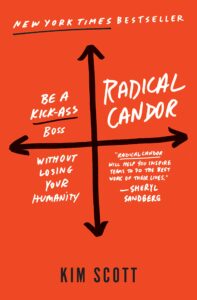
- "Radical Candor" by Kim Scott
- "The Psychology of Money" by Morgan Housel
- "Influence" by Robert B. Cialdini PhD
Full Transcript:
Michael: Welcome, Neela Hummel, to the "Financial Advisor Success" podcast.
Neela: Hi, Michael. Happy to be here.
Michael: I'm really psyched to have you joining us today and to get to talk about the journey of following career paths through an advisory firm, literally all the way from intern to CEO over the span of 15, 20-odd years. Because I find this whole phenomenon of having a career track at an advisory firm is a new thing. For most of our history as a profession, as an emerging profession within an industry, there were basically only two types of people in firms. Producers who brought in the revenue and admin who helped keep the producers in the field to bring more revenue. And there was nothing in between.
And so as an advisor, you either brought enough revenue to feed yourself, or you just didn't survive, and you moved on to something else. And if you did really well, maybe someday you expanded and built a team. And that has changed so much over the past 20 years, I think, very much driven by rise of AUM and now subscription models and just what you can do when you have recurring revenue. And you can size up the advisory firm with staff paid from ongoing revenue and then provide ongoing services to clients.
And the whole thing gets bigger. And now there's advisor career paths. So you don't bring in your own clients and operations teams and their career paths and investment teams and centralized planning teams and management career tracks and senior leadership. And the whole nature of building a career as an advisor, to me, is very much flipped upside down from get clients, and if you get enough to survive, you can grow a team someday to join an advisory firm team and climb the career track there as it grows.
And I know you have very much lived this path, Neela, literally starting from intern all the way to CEO of a multi-billion dollar RIA. And so I'm excited to get to talk to you about what this journey looks like that you have taken over nearly 20 years now, what you have learned along the way, and how we can carve our career paths within the advisory world.
Neela: Yeah, it's going to be a very interesting conversation. And it certainly wasn't laid out in the way that it might seem as we go through all the different phases.
What Abacus Wealth Partners Looks Like Today [04:40]
Michael: So I think as a starting point, tell us about the advisory firm as it exists today, just so we understand the context of where it is now. And then I want to throw the time machine back a decade or two and talk about what this journey has been in getting here.
Neela: Okay, so Abacus Wealth Partners, we are about $3.4 billion under management. We have 68 employees. Something unique about us is probably about 60% of our staff is fully remote. So we operate out of many different states, but we have strong office presence throughout the state of California, also in the Philadelphia area and a few other areas that are growing. We manage about 1,550 client households and are about 27 advisors, 4 associates, and a couple of paraplanners.
Michael: Okay. And can I ask where is revenue for the firm overall?
Neela: Yeah, we're on track to be around $26 million by the end of the year.
Michael: Okay. Okay. So helpful context for the firm overall, and then I've alluded earlier, but then your role, Neela, within the firm.
Neela: Michael, how much time do you have? Do we have seven hours?
Michael: Where are we now? We'll do...then we'll go back, but start with where we are now and what it looks like today.
Neela: Yeah, so LinkedIn actually helpfully reminded me that this is my 17th year here at Abacus, and I have held just about every job in the firm. So I'm currently CEO, been in this seat for the last five years. About three and a half of that was with a co-CEO, and the last year and a half has been me solo.
Before that, I was the chief of our advisory services. So I ran basically the entire advisory department. And before that, I was a relationship manager and ran a small team of advisors. And before that, I was an advisor. And before that, I was our very first associate advisor, before we called it an associate advisor. And before that, they didn't even pay me to be here. I just hung out. I was an unpaid intern trying to figure out.
Michael: You were an unpaid intern, excellent.
Neela: Unpaid intern.
Michael: Excellent.
Neela: Yeah.
Neela's Entry Into The Financial Planning Industry And Abacus [06:55]
Michael: Excellent. All right. So now take us back to early intern days, right? I guess it may be even one small step before that. Just what was your path into financial planning world in the first place? How did you land in this world?
Neela: I'd say, like so many people, it was totally accidental. I graduated with a degree in history and Spanish linguistics, which naturally foretold that I would be in finance, as you can imagine.
Michael: Clearly, clearly. Yes.
Neela: Clearly, because we really need to unpack the Mayan influence on the Spanish language in finance. But I was studying to be a lawyer. I graduated. I came from a really techie family. And so after college, I was actually working as a software engineer. I taught myself code and was toiling in a basement somewhere and studying for the LSATs. And then had a crisis of confidence when I realized I didn't know any happy lawyers and was like, "What am I doing?"
So I started doing a bunch of informational interviews to just understand what people's jobs were like. I literally made a spreadsheet. What do I like doing? What do I not want to do? And what do I not want to do involved toiling alone in a basement, and started interviewing people. And one of the people that I interviewed was the co-founder of Abacus.
And once I learned about it, I was like, "Wait a second, you can sit on the same side of the table as your client. You can learn all this from a financial standpoint, but you're really actually putting your clients first." And I'd had a really pretty traumatic upbringing when it came to money from the non-fee-only side. So learning about the fee-only fiduciary business, to me, was just this light bulb of, "Oh, my God, you can do well. You can help people in a way that you're also making good money, but you're all in alignment." And I was so intrigued. I was like, "Can I just come hang out and just see what it's like in this magical industry that you've described as the CFP and fee-only fiduciary world?"
Michael: So as you said, you wanted to go out for informational interviews to go down this path. I guess I'm just curious. How did you end up talking to a financial planner, a person who was the co-founder of Abacus? How did you find your interviewee people?
Neela: How did I find my target?
Michael: Yeah, and I guess, all of them. I'm assuming there were more than this. How did you come up with your list to get them to meet with you?
Neela: Yeah, I found this... And in my seat now, I have so many people reach out to ask for informational interviews, and people in general are so eager to do that. I was really surprised at how willing people were to just talk about their life experience, everything from teachers to lawyers to restaurant managers. I really just... I was like, "Tell me what your days are like. What do you worry about? What are the good days? What are the bad days?" And with Abacus, the co-founder is my brother-in-law. And I was like, "Okay, so if there's somebody, I think he's in finance, let me learn about finance." So that was the connection.
Michael: Very cool, and was it...that wide of a range, from restaurant managers to financial planners, you were covering the gamut?
Neela: Oh, yeah, because I grew up... My family also had a background in the restaurant business. And so I wanted to really understand what did I know about engineering, restaurants, service businesses, all of the above. So it was... I'm a huge data-gathering nerd in all things, and it was like, "Okay, how can I learn about all these different professions?" And so it was a very wide range.
Michael: Very cool. So you find out there's this financial planning world where you actually help people and can do good along the way, do good and do well, do well by doing good. So what comes next to try to get your foot in the door?
Neela: Yeah. So part of, I think, how the unpaid part happened is this all was in the middle of the great financial crisis, right? So no one's hiring in 2009.
Michael: So we're like '08, '09.
Neela: Exactly. And so yeah, late '08, early '09. I'm like, "Let me just learn. Let me use this opportunity." I was living at home. My expenses were really low. I was able to make it work until it got to a point where I was like, "Okay, I actually do need to have an income." And I pitched basically like, what if I did a lot of this backend planning work? I have a background in software engineering, maybe I can help the advisors, maybe I can help them get more efficient. And that turned into a job.
But because of my connection to the co-founder, they were like, "Well, we got to be really careful that this doesn't look nepotistic. So what we're going to do is we're going to give you a six-month trial. And if anyone at this firm," at the time I think there were nine people or something, "if anyone at this firm says that this isn't working, we're basically going to let you go, no questions asked." I was like, "Okay. Fine, paid job."
So I became essentially a paraplanner, and the first task I had was to vet all the financial planning software on the market. We were using gen one NaviPlan, where we were connecting to another server to...we had a separate computer that we used for it. And so I started just scanning all the software on the market and started doing demos and went from there.
Michael: Okay. So tell us more then of how this role shaped up. I guess what does the firm look like at this point? You said there are nine people. So help us size or have context for the firm.
Neela: Yeah, at that time, we were probably, I don't have the exact figures, probably a couple hundred million. We were really spread out across three offices, which, at the time, was very, very unique because we had had a co-founder who had started in Philadelphia, but then had moved to Sebastopol in Napa County. And then we had the other co-founder who was based in Los Angeles. So we were nine people, but we were spread out across three offices, which was pretty odd.
Michael: So Philly, Sebastopol, and down in LA.
Neela: Correct.
Michael: Well, everybody is trying to run things from the servers in their server closet.
Neela: Exactly. And we had just the early stages of professionalization. I think there were two CSAs. We had a trader, a couple of advisors, and an operations generalist essentially. And yeah, so I think it was about nine of us.
Michael: And then you came in to help them start doing some of the back-office planning support stuff because they're growing. There's a lot of clients to serve now.
Neela: Right. Thinking about it more as a leverage move, right? Here we've got, are we going to try and teach these multiple advisors how to use the software or can I take that off? Can I be basically as useful to them as possible because I'm super comfortable with this software? Can I basically batch process plans faster than they would, freeing them up to do more business development, spend time with clients, etc?
Michael: Right. Which is still a popular thing today, but it was very popular as a growth approach in the 2000s that essentially said, if you've got some partner founders who are good at business development, just keep them out there bringing in clients, get other advisors in centralized planning, so they just keep finding clients and lobbing them over their shoulder, and you just have to be there to catch them, serving clients really well, and just keep them out there finding more clients, throw over their shoulder as they go.
And so a lot of firms I know in this time started building centralized planning, director of planning, departments and teams, all in this vein of we just have to keep freeing up capacity for our founders to go out there and keep doing the growth thing that they've already been doing to get us here so we can keep expanding their capacity to keep growing.
Neela: Exactly. Specialization with a nod towards scale, right? How do we scale this?
Michael: And so what did, I guess, just the business and the clientele look like at this point? Are you gathering assets in traditional retiree market, or are you working elsewhere?
Neela: So I'd say pretty general in terms of the types of clients that we brought on, with an asterisk. Both of our founders are practicing Buddhists. So we ended up getting a number of clients through sources like "Yoga Journal" and "Shambhala Sun." We're probably the only financial advisory firm that had a booth at the "Yoga Journal" conference. So in general, we skewed towards people who had a little bit more of an interest in mindfulness but also precision. That is actually how the Abacus came to be. We're nerds with heart, essentially. And so we started attracting people like that. People who wanted to go into the emotional aspects of money but also wanted good concrete financial planning advice.
Michael: Okay. And so how does this flow for you? You get in for the year, or I guess the six months on nine-person veto-power promotion.
Neela: I passed, spoiler alert.
Gaining Experience In Client Meetings [16:21]
Michael: Okay. You're still there. I guess you passed with eight, off to the ninth, whatever it takes. So how does this play out in practice? You're in this new role. They're trying to figure out what to do with the role. So how does this evolve from here?
Neela: So I've always been a very ambitious person, and in anything I've done, I'm like, "I want to do it. And then I want to do it to the highest level." So even though I was... I can't even say that I was 100% sold on financial planning at this time, but I knew. I was like, "I want to make myself indispensable in this role. And I want to design this role in a way that is of maximum value to the firm," right? Because I knew every hour that I would spend is an hour that I'd love to free somebody else up to do their work.
So I really dove in headfirst here. I started taking the CFP coursework and doubled up on my classes. I was no fun to be around for about a little over a year as I was studying and working pretty much all the time. I joke that I didn't have enough time to break up with my boyfriend at the time because I was like, "Oh, it's right in the studying part of the CFP. I just need to wait until I'm done with this." But I was voracious in wanting to understand as much as I could and craft a role that really made sense.
And so from there, I put so much into these plans and the delivery that I was giving to the advisors that the advisors started saying, "Hey, well, why don't you come into the client meeting and you can present?" And so I started doing some of that.
And then I got a...basically, sitting on the other side from a client was the next big aha of, "Oh, my gosh." You could see the impact you were having. You could see the tears, you could see the resolve that came out of these meetings. And I was like, "I want more of that." So that's where I was like, "I'm happy to join any client meetings," and really started to put myself out there, like, "How can I help? Oh, can I take this follow-up?" And started to work my way into the room with a model that didn't really exist yet.
Michael: So can you talk more about that specifically? How were you working into the room?
Neela: I think, without it being... There was no evil agenda, but more of a strong track record of developing trust with the advisors that I really wanted to learn from. I think it is something I always tell new advisors, is it is such a privilege to be in that room, to be able to listen to these very intimate conversations. There's no better way to learn, but you really need to be listening and learning. Watching a senior advisor deliver tough news for the first time was eye-opening.
And so it was really from a trust standpoint of wanting to help them as much as possible. And it's like, "Hey, if I can deliver these results, I can run some on-the-fly simulations. Would that be helpful for you?" And for a lot of them, they were like, "Oh, yes, that would be great. I don't want to mess with that. It's better to do it in real time versus delivering a packet kind of a thing."
So I think it's...we're in the trust business more than we are in the advice business, and I think that trust really starts internally. I think it's a good sign when people want to bring you in the room because it does indicate that it's like, "Okay, I trust you in front of my most valuable thing," which is the client relationship.
Michael: And so built from the frame of, I'm trying to figure out what I can do to help them. So I like the language, "Hey, I can help you run some projections on the fly with the clients because maybe you don't love using the software hands-on live, real time, but I'm really good at it. I learned it. I did the thing. I can totally steer this."
Neela: Right. I can take notes. Can I take notes? Would you like me to turn this into a follow-up email? Things that advisors were like, "Oh, yeah, that sounds great."
Michael: So now I'm intrigued by these. So what else? Can I be in there to help run some projections on the fly so you don't have to worry about managing the software? Can I take notes and turn this into a follow-up email? So it just gets sorted out. What else? Were there others?
Neela: I think from there, then it became...once it was pretty directionally clear that I wanted to be client-facing, then it was, where can we practice? What is this small piece of the meeting that I can lead? And then every single meeting building in after, where I was like, "Can you give me feedback? What went well? What could have gone better?" And people do a much better job giving feedback when you really are asking for it, and you're saying, "Really, I want to get better. What could have been better?"
And then every meeting I had this big list. Anytime I heard the advisor say something, anytime I heard the client say something, a term I didn't understand, a phrase, or a question, I asked. And so I did this debrief with every advisor after every meeting. I'm like, "What did you mean by this? Oh, okay, I see. That's an estate planning term. Got it." "How did you know to ask this question?" Just the how questions, not the why questions, to really understand the nuance of navigating the relationship aspect of what we do.
Michael: How hard was it getting them to actually schedule debriefs with you?
Neela: I was very flexible. And I think I was lucky enough to have people who were like a teaching hospital. I started using that term, is really willing…people, again, are really generous with their time when that time feels respected. And there's a little bit of a reciprocity of, "Hey, how can I save them a bunch of follow-up after the meeting? How can I create these cases or do whatever it is to execute on the things we talk about? Can I get 15 minutes to just understand why we did this?" And in general, really, really generous people who would take the time.
Michael: So you start going down this road of, I want to be in the meetings more, I'm finding ways to get in the meeting, then I'm asking the questions after the meetings, then I'm trying to find small bits of the meeting I can lead.
Neela: Yeah.
Michael: Were there particular things that you grabbed onto to lead that you were comfortable to lead? I don't know if this was you're really comfortable talking about financial planning things in front of strangers, or if this was a challenge to navigate unto itself. Where did you start with things you could actually lead?
Neela: I think the financial planning was the easiest entryway because that was where I was spending all of my time, right? I was the paraplanner, I was in the software, I was also knee-deep in my CFP education. So I also found that I was closest to the tax limits and the gifting limits and some of those technical numbers, right, that I now get teased about not knowing.
I was Johnny on the spot with those figures, right? And you need that. You needed to be encyclopedic. And so I was like, "Okay, I can help here." I developed a really early interest in estate planning, so I started having some fun there. But a lot of it was just incremental. Okay, can I talk to them about this? And then just submit yourself for, okay, what could have gone better?
I'm a natural fast talker. I got good advice about slowing down. I got good advice about sitting through discomfort. Just because somebody is crying doesn't mean you have to fix it. It means you need to hold space. So it was both coming in with this technical expertise, but then really learning the behavioral work that just really makes a difference in client lives and in having a successful meeting and relationship. So that I was so hungry for.
Taking The Lead On Client Relationships [24:13]
Michael: So what happens next as you're going down this path? You're now doing the centralized planning work. I think you'd said ultimately you ended up in an advisor role, relationship manager role. So when or how did that divide get crossed?
Neela: Yeah, so once I passed my CFP...and we had co-founders who were the main rainmakers, and they got full, as happens. And so one of them was like, "Okay, well, why don't you start taking more of the lead on these client relationships?" And so we teamed up on some clients, but I started really sitting in basically the first chair, and that started going well.
I'll never forget the very first client that he asked to do this with. The only reason he even let me in the room, he said, "Well, she went to Cal, I went to Cal, I'll let her in because she went to Cal," and that was it. But it was enough to get the process started of being brought into those rooms. And then turns out it freed up a lot of capacity for our co-founder. And so that was going great for him.
And then the other co-founder was like, "Well, I want to free up some capacity too." So then I started taking on clients with him. And so I was actually commuting to Northern California four to six times a year to meet with the clients that he had in Northern California.
So what an amazing privilege to have learned from these two guys, these titans of industry. But I was basically their first AA [Associate Advisor] and determined to free up their capacity and learn from all the wisdom that they had gathered over the years. So that really became that AA. And then from there, it grew into independent relationships. Then I started bringing on some of my own client relationships, and then I was really operating on my own, and then also in this shared capacity with some of the larger clients that I shared with other advisors.
Michael: So I'm curious. How old are you at this point in the process?
Neela: 26, 27. Yes.
Michael: So what's it like at 26, 27 trying to take over clients from founding partners?
Neela: So you've probably heard that phrase, "Never trust anybody without gray hair." Yeah, I had none of that. I'll never forget sitting when we did our headshots, and I asked somebody, one of the teammates, I'm like, "Should I have my glasses on or off?" And they were just like, "Oh, my God, on, keep them on. You're a child. It makes you look older." But it was a struggle because why should anybody trust somebody younger when they don't fully understand the questions that they were offering?
But spending the time in the CFP curriculum and really learning about things, you're like, "Oh, actually, I know a lot more than I think I do." But it's not about just telling people what you know. I think that's the hardest thing about... When you're so early in a career, all you want to do is tell everybody all the things that you know. And the best advisory work starts with really good listening.
So it was a combination of developing what I would call a grown-up bedside manner. I really want to... I was like, "How do I make space for really positive conversations, and then also bring the expertise when it's needed?" And so I think people ultimately...people trust competence. And I was really surprised how much they trusted the competence over the age.
Michael: So how do you develop, or I guess how do you prove the competence to get the trust?
Neela: Being the first person to respond, being the reliable person to respond, responding with more than the question that was asked, basically going above and beyond at every single inflection point was my goal. I was like, "I want to be the person that they can reach out to. I want to know the person who either has the answer or will figure it out." I wanted to really be that linchpin. Maybe it was just getting the other advisor to teach me something that I could then relay back. But I wanted the client to really trust that whatever it was, I could get it done.
Michael: And I think you said as well, trying to develop a grown-up bedside manner. So what does that mean?
Neela: This is where...this is one of, I think, the hardest things to teach in the advisory space, but it is how is a meeting...? How do you design a meeting so that it can go well? How do you make sure that you're listening more than talking? How are you listening for the question behind the question, right? The fear that they're not actually asking for that is cloaked in a question around returns.
I did a lot of just work on communications. I went down a whole neuro-linguistic programming rabbit hole, which is essentially so much of what you convey to somebody isn't even in your words. It's in how you dress and your body language and your reflective listening and just how you physically show up and how you make somebody feel.
And so I really focused on that. I focused on how quickly I spoke. I focused on really strong eye contact. I focused on this unreasonable hospitality type. How do I remember that they like their coffee with cream and two sugars? Just all the little things that create that level of trust and competence.
And then submit yourself, too, to just very direct feedback. Hey, what could I have done? If you could pick one thing, what did you think when I did this? But really, getting that feedback at every single opportunity.
Michael: So this starts going well. You're asking for clients. They're at capacity, so they're happy to give you clients. They give you some, it goes well. So then the other partner's on board as well, and more clients are flowing. So then what happens? Do you now have your own capacity problems after a year or two down this path?
Neela: Eventually, right? So it starts being that combination of hand-me-down revenue that you're doing well in delivering. And then the next muscle that I really wanted to work on was closing business myself. Maybe they weren't my leads, but I was like, "Okay, I want to really work on taking somebody from curious tire-kicker to Abacus client," which is a different skill set, right? You can be a really good servicer, but maybe it's different in meeting somebody for the first time, really understanding what brought them there, and turning them into a client.
So then I really focused on developing that skill. I wanted to be the Michael Kitces of financial planning. I wanted to know as much as I could, and then I wanted to figure out how to close business. And then from there, it became, okay, well, how do you source business? And I thought about those as three pieces of expertise, ability to convert business, and then the ability to generate my own leads. So it was like each part of my career journey, I wanted to kill it at whatever I was doing. And so in the lead advisor seat, it was first service, and then it was close, and then it was source.
Learning To Source Her Own Clients [31:36]
Michael: So what's pulling you down this road of, I'm serving my clients well, but now I need to learn to close? Now I need to learn to source. What's driving that, or even queuing that up for you as a thing to be going after?
Neela: I think I had a very interesting combination of being very internally motivated, like, "Okay, how can I push the boundary of what I'm currently doing? How do I grow as much as I can in this role? But I'm also the daughter of an entrepreneur, and I was in a very entrepreneurial environment. And that was the thing that...they were like, "Well, that's one of the hardest things," right? It's, "Okay, you can service revenue that's been entrusted to you. That's the first hurdle."
But I was at a firm that I was really excited about, and I liked the prospect of us continuing to grow. I love the impact of being able to take somebody who came in confused and unsure and have them leave with a plan and confidence. That impact was incredible. So it was like, "Okay, well, I want to work on these clients here, but I also want to expand the impact of what we're able to do." So it was both, like, "How do I develop these skills? And how do I expand the impact of a firm that, at this point, I'd really fallen in love with?"
It seems hokey, but there was definitely a point where I was like, "Do I want to start my own firm, or do I want to keep going in this path?" And I decided that if I started my own firm, I'd be building a firm just like Abacus. So I was like, "Why don't I stay here, work in the areas that I'm really excited about, and not spend all my time doing compliance and all these things that I'm not that interested in, and just really grow this?" But I also wanted equity. I was like, "I'm not going to do this just for..."
Michael: I was going to ask, one of the pesky things of those that come from entrepreneurial backgrounds is like that, that equity conversation starts cropping up at some point.
Neela: Yep.
Michael: So let me come back to the equity part, equity conversation, in a moment. I guess first, I would love to understand further when you said, "Okay, so now I want to work on closing business and learning how to close business," so what did you do to go learn how to close business? Are you a book reader or a class taker or an internet course or wizened founders who are going to teach you this? What did you do?
Neela: All of the above. I'm a voracious reader still to this day. I get in trouble a lot at the staff level where they're like, "You're not allowed to give us any more book assignments." So I have to be very careful about the books that I recommend. But I definitely did a lot of reading, a lot of listening, a lot of interviewing, and a lot of, "Can I sit in this meeting with you? Can I just be a passive observer? Can I be that...?" You know the waiter in training when you go to a restaurant? I'm like, "Can I just be awkwardly in the corner, but not say anything and just listen and then ask questions?"
Trial and error. What went well? What didn't go well? Ooh, each time you finished a meeting, dissecting what you did, like, "Ooh, I said that. Was that the right thing? I don't feel like that landed as well as I hoped it would."
Michael: So are there particular books or courses or programs that clicked for you?
Neela: Ooh, going back... It's funny. I have so many books that I care about now to go back and think about at that time. I don't know if I could put my finger on it right now.
Michael: Are there ones that you still like today, at least, that you pass forward at this point?
Neela: Yeah, I think "Radical Candor" actually is still one of my favorites. It's a great management book, but I think it's a really good people book. "Psychology of Money," of course, fabulous. Cialdini's, I'm going to probably mispronounce his name, but "Influence."
Michael: Yeah, yeah, Cialdini, you got it. Yeah.
Neela: Yep. So yeah, some of those.
Michael: Okay. And were there, I don't know, courses, programs? Did you get into that side of the world of Sandler sales training and all the different things that are out there to try to support this, or were you more the books and trial and error and feedback world?
Neela: It was all of the above. We did do a whole session internally on solution-focused therapy that was really, really helpful because it was so much of the marketing, particularly at the time in our business, was like, "Focus on the pain. Focus on the pain." Or it's like, "Oh, must we? What about getting out of the pain?" And like, "Okay, what must it be like?" As someone who's action-biased, it's like, "Okay, let's not marinate in the funk." It's, "Let's acknowledge it," and then be like, "Where are we going to go? What would it be like if we got out of this? Cool. Let's develop that path." That was hard for me because it forced me to slow down a little bit, but it was really, really valuable.
Michael: So, I guess, take me on the age career journey. So how old are you, or how far in are you when you say, "I want to actually start closing clients that..." I know the general age bias of our industry. Like, "I want to close clients that are my parents' age and/or my grandparents' age."
Neela: It's tough. It's very tough, but you have to start somewhere, right, in terms of...it is a muscle because you learn a lot about people. What are people really looking for? And instead of developing this rote script, it was like, really, how do you understand the person in front of you, and how do you actually help them? And you start generally with probably the smallest clients. You're not like, "Oh, I'm going to go out and close a $5 million prospect." That takes time. There's a lot of experience and, I think, perspective and work to get to that point.
So you start with generally people that you know, people that are probably below the firm minimum, people that are rolling over their first 401(k). And I'll never forget before my first prospect meeting, which was with one of my good friends, and I was so nervous, because you hadn't really done it before. And so the way you get better at something is you practice. And so I just tried as much as I could to practice, practice, practice. But it is challenging.
So from an age standpoint, I'd say my main lead advisor years were between ages 25 and 29, before I became a relationship manager of a team. And I was still managing a client book, but that's when it was really...we were running pure diamond teams at the time. All of a sudden, you're in the relationship manager position. Well, your main objective is to bring on business. And by the way, you're 29, 30 years old and have never really done that, so you better go figure that out.
Michael: And so is that part of what drives the next stage here?
Neela: Yeah.
Becoming A Relationship Manager And Leading A Team [38:51]
Michael: You hit capacity. The firm starts expanding teams. You're now at the top of a team, and suddenly, you actually have the obligation and expectation with the firm to be driving business development.
Neela: Right. And I really loved people, right? Because I had been really in this position, I really loved the mentoring. And I was curious about management. And as we were expanding, I was like, "Oh, it's a bold move because you put me in charge of people who were older," people who maybe had more experience. And I really dove in feet first and made so many mistakes.
I'll tell you, the first year that I was a relationship manager, I brought in zero clients, zero. No leads, no clients. It was like I thought I was such an abject failure, but I was like, "Okay, what can change here? What do I need to do? What do I need to do differently?" Some of it was my own capacity, right? Like, "How much time am I actually investing in business development? How much am I investing in writing blogs? How much am I investing in honing my public speaking?" And really figuring out a way to start letting go of some of the responsibility that I had been really clamoring for for years that had really gotten me, I think, to a place where I could do well as an advisor.
All of a sudden, that skill was working against me in the next phase of my career. And so it was like the first reorient of, like, "Oh, okay, what got you here isn't going to get you there, and we've got to pivot again."
Michael: Wait, can you explain this further? So what's the thing that was working that now is not working?
Neela: Gathering responsibility. I think gathering, being the focal point, being the first person to get back to the client, being the one source of truth, being the person that overdelivered on every single client experience. It was like, "Okay, well, now you have 85 clients, and you're supposed to be managing a team. And you should also be bringing in new business." How does that all work? Something's got to give. And then it was the model of, "Okay, maybe I need to start bringing people into some of these relationships like I was brought into," right? So then it was starting to bring in an associate advisor and letting them do some of the things that I had always really hung my hat on so that I could expand my own capacity basically to do the next thing.
Michael: The things being like, "Okay, I need to not be the first one to respond when the client reaches out. I need to not be the one that crafts that response. I need the rest of the team to do it because I need to have the capacity to not put eyes on that so that I can focus on growth."
Neela: Right. Which is hard, because if you are somebody... I think a lot of advisors are very Type A, and we do well because we like to hold on to that control. And letting go of control is so hard. And I'll remember one of my mentors at the time, he was like, "You just got to expect that somebody is going to do it a little differently than you, and that is okay." And I had that seared in my mind. And that was a very helpful push to be like, "Okay, there's..." Like you said, there's a lot of different ways to have success as an advisor.
And my definition doesn't have to be somebody else, but I need to know, will this person really take care of this client the way I think this client deserves? If the answer is yes, like, "Okay, that's how this works. Can I pass that trust along, still be involved in the relationship, but create a little space for myself while also helping this newer advisor learn?"
Michael: So how does it evolve then as you get from, I'm trying to learn to close business, to now I'm at the top of a diamond team, and I actually have to learn to source it?
Neela: So it's also interesting to dovetail this with what was happening in my personal life. I came back as a relationship manager from having my first child. So I was...I basically came back into a new role with a 4-month-old at home, trying to figure out how to be a parent at the same time.
Michael: This is your first.
Neela: This is my first.
Michael: So just all the life and lifestyle and other changes of figuring out how we handle, like, "It's not just me and my spouse anymore. There's a baby."
Neela: Exactly. I can't work a late night because I have daycare pickup, right? And somebody has to manage the food situation. And my husband and I have always been very equal from day one. But all of a sudden, that introduces a different constraint in some way. I was like, "No, no, no. I got to be out of here by 4:30. I got to be very careful with my time because it's no longer unlimited." So that first year, you feel like you're failing as a parent just because you're like, "I just don't know how to do anything. How come there's not a good book?"
And then I also felt like I was pretty much failing at this new job, right, because I wasn't doing a good job of letting go of client relationships. I wasn't doing a good job of bringing in business. And I was like, "Am I basically this fraud? Did they make a mistake?" And I think it's so easy to have that feeling at every phase of your career when you're doing something hard, when you're doing something different, and when you don't necessarily know how to do it. So that was a really tricky experience, particularly that first year.
But I started trying things out, right? Talking to other relationship managers. What were they doing that was successful? Started really developing more of a blog-writing presence. I was a terrible public speaker, but I started investing heavily in that. I was like, "Maybe that could be a good venue for me." And just trying a lot of things to see what worked. Got really good about talking to clients about, "Hey, is there anybody in your life that we could be a help to?" Our team's growing, and we have the space to take people on, not from a sleazy sales capacity, but like, "Hey, we actually are pretty well suited to help you and your people. Can we do that?"
And so bit by bit you start, you're like, "Okay, what's working? What's resonating? Who are our biggest evangelists? How do we help them find us? How do we create the content that is answering the questions that people have?" And it just built from there.
Michael: So are there particular marketing tactics or content channels or things that started to sync up and work for you in particular, or stuff you leaned into because it was working, things you didn't because it wasn't?
Neela: The best thing for me, it seems hokey now, but blog writing was probably the most helpful thing because it forced me to really hone my voice. It made me a better writer. And then I use that content to reach out to people. But I think the biggest thing, it was less of a medium and more of just a follow-up with people, of meeting them where they are, right? Instead of being like, "Hey, I'm just checking in. Do you want to hire me?" It's "Hey, you told me you had this issue. I found something that resonated with you," or "You inspired me to write about it, and I wanted to share it with you."
So it was actually meaningful content that was about them and not about my timeline. And oftentimes it's like, "Hey, I just want to make sure that you're in the right hands, whether it's with me or somebody else. I want to make sure you get help," right? We all have those horror stories of somebody that didn't hire us, and then they didn't hire anybody. And then there was a death, and they didn't have life insurance. And you don't want that to happen. So really, coming from this place of, "I really want to help you find your home," whether it's with me or somebody else, was probably the most helpful thing for me to realize, where I was like, "Oh, no, this isn't... We're not Wolf of Wall Street here. We offer a really amazing service. How do we help people find it or people like us?"
Michael: So I get that from the closing end and how the sales dynamics, sales is a bad word for a lot of us, but how the sales dynamics shift when...the feeling is like, but we really actually do a great thing. When you truly feel like you do an amazing thing for people and genuinely help them, why would you not want to tell other people about it? It feels good at that point. It doesn't feel good when it's salesy, but it does when, like, "No, we really do a cool thing. We help a lot of people…"
Neela: Totally. And I think that's the...people are like, "Well, I don't do sales." It's like, "Well, do you love the work that you do? Do you love the impact that you get to have on people's lives?" Congratulations. That's sales. And the best evangelists for your services are your clients. There's a reason that client referrals still rank in the top percentages of how a lot of advisory firms build businesses, because they actually know what it's like to work with you. So it's like the sales reframe is super helpful. But it's that growth.
And then beyond that, you ask, "Okay, was there certain mediums?" Also, it was really about developing relationships on top of that. So we always get asked for referrals for CPAs, for estate planning attorneys, etc. I was like, "Well, I don't really have my own referrals." You had other people's referrals. So I was like, "I'm going to build out my own referral network." And so I started just reaching out to random CPAs, getting introductions to estate planning attorneys, and I started having some lunches of like, who are the people that I would trust my clients with? And I started building that out.
That ended up being a good referral network. Reaching out for clients who had professionals that they really enjoyed working with. "Hey, would you mind if I reached out to them? I'd love to connect and see how we can help." So that was a big thing, too, is starting to build those one-on-one relationships.
And then I feel like my family didn't really know what I did until not that long ago. But I had to get better about talking about the work that we did and made sure that the people in my life, friends, family, etc., had a better sense, so they could know, "Oh, who could I refer to you? Whose problems could you help solve?"
Michael: So as I would infer from this overall, because we all have our own styles about how we do, I just think of the really pure sourcing. Just how do we get at bats in front of people to then talk about what we do with great passion? It sounds like it was very referral-relationship marketing-driven for you.
Neela: Yeah.
Michael: It's referrals from clients. It's referrals from friends and family, personal network. It's referrals from CPAs and estate attorneys. When we get to the very pure, how did you source it? That was the sourcing. And then the support for that was, "I wrote a blog post because I was inspired by the conversation we had. Thought you might find this meaningful. But I'm not sourcing clients from blogs or converting them from blogs. I'm sourcing them from relationships and introductions. And then these are ways that I nurture the relationship until they're ready to work with me.
Neela: Correct. It's like building those relationships one at a time and rather focusing on a couple of key, really important relationships. It was very my style, right? I really love people. I really love genuine connection, and that helped because I was like, "No, I want to develop these relationships because I want to have good people to refer my clients to," because you take a risk as an advisor when you make a referral. So you want those people to be very well vetted.
And so there's a dual benefit, right? You're building out your roster of great professionals that you can support your clients with, and then you're developing these one-on-one relationships that also can be great knowledge sources. "Hey, I'm working through a weird issue with a client. Can you opine on the efficacy of this SLAT [Spousal Lifetime Access Trust]?" That's a really great positive feedback loop. There's not a real downside to building those relationships.
Michael: So how long did it take before you were actually getting some business development momentum?
Neela: I think it started in real actuality. I was probably six years into my career, if I'm being really clear on when I really started building business in a material way. I definitely built some. I'd started getting referrals, a couple people in the network, but I got to a point where I developed enough relationships, I developed enough client trust. I was putting myself out there in any way I could that it was becoming somewhat repeatable.
And so it was probably six, even seven years before it was really consistent. And even now, I think some years you have really strong years in terms of clients coming to you, and then some years it's not so strong. But it took a while because we are really in a trust-based business, and you're developing these relationships over time. But all of those relationship seeds, they do bear fruit, right, over time because people trust you. If you're trustworthy and you do good work and you keep getting in front of people and showing how you can really...demonstrating the value, but also showing we do want to grow, we want to help more people. Those things really work together.
Michael: And how do you not lose hope waiting six to seven years to feel like you get momentum on this?
Neela: Yeah. I think that's the thing too that we forget. We talk about the iceberg of success, but every job...there are grindy parts to every job. And you go on, and people are like, "I work 2 hours a day, and I make $300 grand. And you're like, "Okay, love that for you." And you don't get to that point without putting in long, hard hours and making these big mistakes and doing offline learning that isn't part of the normal curriculum. But if you really... I know Cal Newport talks about this. He's just one of my favorite writers when it comes to just the work experience, is get the experience, get the expertise, and then you have more options with how you can spend your time. If we're doing it in the opposite way, it just doesn't work like that.
Professionalizing The Firm And Becoming Chief Of Advisory Services [53:43]
Michael: So what comes next on the career path journey? You're now at the top of this diamond, learning, and refining, and honing the close the business, source the business paths. So what comes next?
Neela: So at this point, I think I was the RM [Relationship Manager] of... I think we had three diamond teams, three total. And I was like, at this point, we were very much ensemble style. Everybody was...you were basically, when you were bringing clients on, you were bringing them on, they were your clients. You were building it from the ground up. We still weren't big enough, I think, to have this element of scale.
And so at this point, I was like, "Okay, well, I want to create some consistency on my team." At the same time, I'd also looked around and realized that there were so few women in the industry that it was crazy. So I'm in this diamond team. I also decide to start a women's initiative internally at Abacus of how do we serve our female clients better? How do we serve our female employees better? How do we just do better from a gender standpoint?
And as part of that, turned out my diamond team was all female. And so I was like, "Okay, so we've got a couple of these diamond teams. What if we built the standard that allowed us to be the most successful team? What if we could grow? What if we could serve the most clients? What if we could serve the most revenue? And do it with this full female team and build the standard that we then use as a group of four."
And so I had this fabulous diamond team, and we started building out basically Abacus's first client service standards, right? These are the terms. This is when you have a meeting, you do a follow-up within 24 hours. And this is what that looks like. And this is what we do on birthdays. It was like the very first client journey work that we were doing.
And then at the same time, we've got this women's initiative going where I'm like, "I want to bring more women into business. I want to bring more women to the industry. And I want to create content and events that are more helpful for our female clients." So it started just like shifting a little bit out of the one-to-one clients and started thinking more about how do we have this really successful team? How do I be a good manager? How do I create efficiencies and scale in our diamond team that could then maybe be a standard for the rest of the firm?
Michael: And so how does this go in practice? So for some firms it's, "Yay, standards," and for others it's like, "Yeah, you be you."
Neela: Right. I'm good.
Michael: "I'm good with how I'm serving my clients here," and change is tedious.
Neela: Yeah. I think that we weren't pushing it on anybody, and so that made it easy. And so then people would talk about these problems. We were like, "Oh, well, we have a standard for that. You want to see it." And so we started... We actually called ourselves Team Bacon. We're women who bring home the bacon, and we started sharing when asked, when people had these questions, when we were building out more of our matchmaking journey. And so it was a little bit more organic.
And at the time, we were continuing to grow, continuing to develop next talent. And come, let's see, I guess it was 2018 or 2019, we made the full shift to professional management. And that's when we actually developed seed titles, like CIOs and the chief of advisory services. And we merged in a firm, and she became our chief marketing officer.
And so at that point, I had a lot of support along the way from people internally who believed in me faster than I believed in myself and pushed me into roles and responsibilities well before I thought I was ready. And going from that RM and just trying to set that standard of being the highest revenue team, which we did hit, by the way. That led to the path of running the advisory department and going from the RM role to the chief of advisory services.
Michael: So as you were shifting to professional management of CIO and CMO and chief of advisors, you got the chief of advisory hat.
Neela: Correct.
Michael: So what drove this change that the firm suddenly said, "Today's the day we're going to add them all?" What about the titles with Cs in front of them? What was...? I don't know if you remember, what was the size of the firm? What was the context? What was going on that drove this?
Neela: Yeah. We were probably around $2 billion or so. At that point, we had started bringing partners on. We had, I don't know, maybe 10 or 12 partners. And so I think there was just starting to be tension at that. And again, I wasn't the one who made that decision, but looking back now from the seat that I'm sitting in, I'm like, "Oof, that must have been very hard to wrangle," right?
When you start expanding the partner base, and you're being led by that partner base, it starts getting really hard to operate. If you have ten partners and everybody has an opinion on everything, you will just grind to a halt. So I think it was, yeah, from there.
Michael: So the firm had been partner-led with founders and then added path to equity and partners, and now all of a sudden partner-led decisions and meetings are not so great when there's 12 people who want to sound off and inevitably have different views about things.
Neela: Right.
Michael: So then the shift was, "No, no, no, we need to create a management layer, agree as partners that the managers are going to manage and stop group decisioning everything."
Neela: Yeah, exactly.
Michael: Basically, that's the transition that was happening here.
Neela: Yeah. And I think, yeah, helping making decisions, help disseminate decisions, help grow in a way that was very specialized. And I think we had a president who was very forward-thinking. And I think two of his greatest gifts was some of the early work in expanding our cap table and our partner program.
And then I think it was professionalizing our team to a point where now it feels like our governance level is operating at a very high level. And I think maybe we did that earlier than other firms would do, but it was really impactful for the firm because we started saying, "Okay, this is what it goes from being founder-led to partner-led to more of a cohesive management structure with clear areas of accountability and ownership."
Michael: And so in this transition where leadership roles are getting created, you end up with the chief of advisory role.
Neela: Yes.
Michael: So what does that mean? What did you actually do at that point?
Neela: That's the fun thing about a new role is it's like, "This is your role. You better figure it out." There's no playbook, right? And you also... I think the other tricky thing, now having had so many roles in the same firm, is that roles are also never binary because you're always straddling two different roles. So as I took on the chief of advisory service job, I was still the RM of a team, and I was still running a client book. So I almost...I was hanging on to different pieces of previous roles.
And we didn't have...we weren't big enough necessarily to pay me a full-time salary to work as the chief of advisory services. So I kept a foot in a couple of different areas and grew the role as I was figuring out what is the outcome that we need? And a lot of that was career path development, and how do we create some consistencies, that I'm not having the same conversation over and over? That was when we developed our first career path. It was when we first developed firm-wide client service standards, right? I'm like, "I can't hire if I don't know if everybody is operating in a different way." And so it was like, "Okay, what are the problems that we have found, and what is the basically professionalized solution to solve that?" But I was figuring it out as I went along. There was not a clear guide.
Michael: I'm struck here, I guess, going all the way back to some of our conversations at the very beginning. This is the point that you're sitting down and doing formal career path development for the advisors in your firm at $2 billion of AUM.
Neela: Yep.
Michael: That's when it actually showed up.
Neela: Yeah, in a meaningful way. And it's funny because I looked the other day at the first career path iteration and where it is today and how much it's evolved. But it was mostly...a lot of it is like, "Okay, we now have enough advisors. We need to create some consistency from a compensation standpoint." I wanted more women in the industry. And I was like, "Well, part of this is designing a firm that is designed around fair work practices, which means there should be compensation parity, which means there should be clarity around how you achieve these different levels of work."
And so those ended up working in tandem of what is the right thing to do for the business? How do we make sure that we are this great place to work for all kinds of people? And how do we answer the number one question that employees have, which is, how do I grow? Right? How do I get to the next level? And I think career pathing is...we started there on the advisory side.
Michael: And what shifted from there versus now? I guess these are seven or eight years ago or something. So what changed that you said it's evolved so much since then?
Neela: I think making sure that we're balancing all the pieces. Your career path says a lot about how you want people to spend their time. If your career path says you need to build up to 250 clients, that tells me something about how your service model runs. And so I think figuring out, what are the objectives at the firm level? And what are the objectives at the individual level?
And I think you need to skate the line between those two things of how do you give people an idea of what they can personally do, but also what does the firm need? Right? And so we expanded it so that there's EQ components, there's technical expertise, there's leading indicators of, "Oh, you might be ready for a promotion when," there's lagging indicators. Okay. You're managing roughly X number of clients, and people are wanting to team up with you on clients.
And so we added pieces that were both personal and at the business level, speaking to both technical expertise and the EQ work that is really hard to quantify, right? It's hard to say, "People trust you." But you need that in order to grow in your career. So you've got to quantify that.
Michael: And so how long are you sitting in this chief of advisors role? I have this stuff, oh, and my clients and my team to manage and all the rest.
Neela: So I was officially, I think, in that role for about three and a half or four years, depending on the timing. And it was probably only in the last year that I was able to spend a good chunk of my time on it. I really felt like I was juggling a couple of hats. And in a really weird, crazy way, I feel like I hit my stride right as COVID happened, and was also one of the hardest points of my career because lockdown happened. I'm chief of advisory services. I'm running a diamond team. I also have client relationships.
I have a 3-year-old and a 1-year-old, and I'm 4 months pregnant with my third child, and daycare's closed. I have three jobs. And then you go back, and you just remember the fear of that time, that there wasn't really a good blueprint. And as hard as that was, I think it forced this level of, "Okay, how do we get through this?" It was a survival metric. And it was like, "What do people need?" People need helpful leadership. People need to be seen for being humans, not just employees.
How do we build a firm that really sees people for all the loads they're carrying? And I was doing staff meetings with a kid on my hip, right? There was this normalization of work-life integration that I think ended up...it helped me become a better leader. It helped me delegate things that I could delegate. I was like, "Okay, Neela, you've hit your limit. It exists. This is too much. You got to start shedding some hats." So that was a very tough low point and also something that ended up being helpful for my own development, but it was a mess.
Making The Jump To Become Co-CEO And Managing A Split In The Firm [1:07:04]
Michael: And so where did the role go next?
Neela: So there was a lot that happened in 2021 and 2022. Our longtime founder had been our CEO. He stepped back from the CEO role at the same time that we were also navigating a firm split. So towards the end of 2021, he steps back, and the board was like, "I think we have good internal candidates. Let's basically run a full application process to see if we have people who want to be CEO internally. We think we've got a strong talent bench."
And so we went through this process. And during COVID, during that time as chief of advisory services, I had gotten really close with Mary Beth Storjohann, who was our chief marketing officer. She and I collaborated very heavily. She was marketing. I was advisory. Together, I was like, "Oh, we can do this." And we were like, "It's so fun working together. We're very complementary. What if we ran together?" And so we ended up submitting ourselves for co-CEOs, which everybody we talked to told us would be a terrible idea. Literally no one was like, "This is a great idea." Everyone was like, "This is the worst thing in the world. You guys shouldn't do that."
Michael: Why was everyone so negative on co-CEOs?
Neela: It's more common than people realize, but it's rare. And we're also...look, we were 37, young women by the advisory standards, and we wanted to do co-CEOs. So it was almost like we were already so different, and people were like, "Oh, well, you just need one person who's going to always make the call. It'll never work with two. You have to have such good communication." People just didn't think it was possible.
And in leading up to it, we did a lot of work together of, like, "Okay, well, what happens? How do we make decisions? What happens when we disagree?" And we really did a lot of research. We showed models where it was successful. We laid out how our org chart was going to work. We were going to... This is how it works. You can't use mom to go after mom. We needed to...how were we going to communicate as a unit?
And we really went through it one by one. And in the end, the board accepted. So we became co-CEO, which is already a huge shift in a firm's world, right? When your management turns over, that's a huge deal. At the same time, there were some personality conflicts with some of our partners and some differences in vision.
And so at this time, our firm actually split into two pieces. We are a founding B Corp. We have been a B Corp for the last 20 years. We have our roots in not just Buddhism, but in ESG investing, right? That's been one of the things that really defines Abacus. We fundamentally believe that you can do well by doing good.
And we also really wanted to pursue doubling down basically on that model, employee ownership, being a B Corp, being a values-aligned firm. And that wasn't the feeling that everybody had. And with partnerships, you've got a lot of opinions. And sometimes those opinions boil over to a point where it just doesn't work for the firm anymore. So we split this firm, and we have a management turn.
Michael: I just want to understand, I guess, a little bit of the dynamics of the split.
Neela: The fracture was really investment philosophy, right? Can we do ESG and do non-ESG, right? Which is, frankly, what a lot of firms do, is like, "You want this? Okay, then we can give this to you." And so it's not the wrong choice. The difference was we really had our DNA in this values-aligned world. And so the more we skewed out of it...we basically had a choice. Did we want to double down on our values, or did we want to become the generalist?
And for us, we were like, we have too much directionally invested, and we have too much conviction around things like B Corp not being a marketing spin, right? It's actually something that helps us stay accountable and create a more sustainable business for profit.
So it really was this ESG versus non-ESG because now 100% of the portfolios that we offer are screened from a value standpoint. We end up attracting people who want their money to line up with their values. So between the vision in terms of investment philosophy and just some personality misses, it was like, "I think this is the right call."
Michael: And so the firm literally splits. Some advisors leave, take their clients and teams. You figure out how to carve up equity of who stays and who goes as it gets smaller, with all the awkwardness that goes with that.
Neela: Exactly. So 2022, we have people leaving. The firm is basically redirecting where we're heading, right? We're basically doubling down on this conviction, but there's so much in transition, right? Clients are moving around. Some advisors are leaving. We've got the operational structure of a bigger firm, but now all of a sudden we're a smaller firm.
And so this is all happening, which, quite frankly, there's a lot of people who would have taken that point, and we could have just sold, right? And that would have been a lot easier than what we did, but we really...we were like, "Let's double down here." And so there was a lot of stabilization work of just like, "Okay, where is everybody going to land? How do we make sure all of our clients are getting the best service during this time?"
But it's hard to grow when you're trying to figure out where things are going to land. And keep in mind, this was our first year as not just CEOs, but co-CEOs. So we're figuring out a co-CEO dynamic. It's both our first time in the CEO seat. We're navigating a firm split. And if anybody remembers what happened in 2022, markets fell, inflation went through the roof, interest rates went up. It was basically this Murphy's Law year. So 2022 was rough.
Michael: So just one more question to it. As the split came, were these founders who had changed their views, or was this more partners who came in later and then weren't happy with where the firm was or was going, or I guess wanted it to go in a different direction than it was?
Neela: It was the latter.
Michael: So it was equity partners who came in, but I guess either didn't necessarily buy into the roots of where it was or hoped that they could change it as they became partners, and the firm decided it did not want to change.
Neela: That's right. And/or had we gotten more...had we developed more conviction over the years? And so something that maybe wasn't as front and center. We used to call some of the work that we did "Secret Abacus," like, "Oh, my gosh, it's so great," but we're not really talking about it. And I think there was a big difference when we really started talking about it. We started talking about impact investing. We started talking about the B Corp certification.
So things that maybe didn't seem like core parts of who we were, like nice-to-haves, I think we got louder on those. And I think that created some issues too, where it's like, "Oh, wow, you guys are really into this ESG stuff." And that ended up being somewhat polarizing.
Becoming Clearer On Who The Firm Is And Who It Serves [1:15:03]
Michael: And so what's changed now, or going forward, to try to manage this in the future?
Neela: So we really doubled down at that point and got very clear on who we are and who we serve. And that extends to both people who work at Abacus and the clients that we bring on. I think we stopped trying to be all things to all people. And we're like, "This is who we work best with." And if you bring somebody on who wants a different portfolio, there's a lot that they're not going to like about Abacus because they're going to get content on how we engage with AI data centers. There's going to be a lot of things about the experience that they aren't going to like.
And so I think it was a good exercise in just not over-promising and not bringing on clients that just weren't the right fit, and employees too. So now the people that are attracted to us are coming because they're like, "You guys bring rigor to financial planning. You also are leaders in this space, in the ESG world. You have conviction there, and I want to be a part of it." So it's like we're not... We've just gotten more narrow in who we work for and who works with us.
Michael: And has that even shaped paths to equity and partnership now?
Neela: Yeah. And thinking of personality conflicts, governance is messy. And especially as employee owners, we now have...so about just over a third of our staff own equity in the firm. We have nobody else on our cap table other than employees. So 26 partners. And part of that is defining the role of what an equity owner means, right? We're not leading at that partner level, but partnership is both an economic interest and an investment in your future in the firm, right? Just like the journey that I had where I'm like, "I think there is a component of, I think, when people own a piece of something, they treat it like their home," right? You don't wash a rental car, but you do wash your car.
And I would love to just get more equity into the right hands. And so when I look around at our partner group, I'm like, "This is the engine." And I want to grow this engine because when people have that equity ownership, they operate differently. And yet there's a lot of decisions and a lot of opinions. And so it's slowed down some of the decision-making and just bringing people along. But I think ultimately it makes for a stronger firm because we've got this fabric of a lot of people who we all want the same thing.
Becoming A Solo CEO [1:17:50]
Michael: And so did the co-CEO structure continue through all this as well? Is that still present through today?
Neela: So now for the last year and a half, it's been me solo. But the shift from co-CEO to regular CEO was wonderfully drama-free. Mary Beth and I are still very close. She left for her own reasons, but did it in a way that was really actually great for the firm. We created a plan. It was a full transition.
And I think the reality, when we talk about the glamour of a CEO job or of an elevated title, there is so much muck. There is a lot that you end up spending. You spend your time figuring out the problems that nobody else wants to touch. For every award you win, there's plenty of times where you're at a funky hotel eating peanuts for dinner. It's like there's so much on glamorous that goes with the role that balances things out, where it's like, "Well, this is a role about stewardship," right? And it's like you think about it. I really think about it as a responsibility piece of how do I play my role to help get the best out of everybody else and move the organization forward?
What Surprised Neela The Most On Her Advisor Journey [1:19:05]
Michael: So what has surprised you the most on this journey of building this career, intern to CEO, over...we are now about 17, 18 years?
Neela: Yeah. A few things. I'd say the people is both the hardest part and the best part, right? The people... You don't have firm issues like you typically have people issues. And I think it's some of the most rewarding work that we do, both the people that you work with and the people that you get to serve. So it's always a balance there.
Michael: And it was a surprise. You didn't expect it to shape this way?
Neela: Yeah. I love people. I love people a lot. I am actually a total extrovert, and I really enjoy that. But managing people is hard. Everybody is operating with a different set of just things that they come to conversations with. And so people struggle, and things can get messy. Governance is hard. So I think the management work is always tricky, but it's also coaching people on being the best versions of themselves is pretty amazing as well.
Michael: So what else was a surprise?
Neela: I think there is no job that exists where you don't struggle, and you're never ready for the next job. I've had so many conversations with people that are like, "I'm not ready for that level of responsibility," but I think it...
Michael: It's like try becoming a parent. It has a very similar phenomenon.
Neela: I was just going to say that.
Michael: No one's ever really ready at some point.
Neela: You're never ready. As my mom said, mom of six, she's like, "You just have to do it." And I think that's it too. And I certainly felt that. I never felt ready for any of the roles that I ever had.
The Low Point On Neela's Journey [1:20:58]
Michael: So what was the low point on this journey?
Neela: I feel like I've talked about a few. I feel like there were low points all along the way. And I think there were low points at every hat I was wearing as an advisor, just breaking over my own overcapacity and being my own worst enemy when it came from doing everything myself and not leaning on other people. Feeling like I failed as an RM when I took over a team and just bombed in terms of bringing on new clients. I was like, "This is... Maybe I've petered out. Maybe I shouldn't be in any elevated role."
I think being the chief of advisors and COVID happening and just feeling like, "Oh, my God, how...?" "This is like a survival question. "How do we move the organization forward and not break as a human?" And then the whole split. 2022 was really hard. Trying to stabilize a firm that I really love, right, and have loved for a long time, and make sure that our clients and our people were good.
And I think when people criticize a co-CEO model, I'm like, "I don't know if we could have done it without both of us," because it took a lot of just talking to people, and stabilizing, and understanding what are the needs? And I think as part of that process, we really uncovered there were a lot of issues at the firm level that we really needed to grow up with, right?
We needed service models. We needed better career pathing. We needed more robust minimums. We needed segmentation. We needed performance management. There were so many gaps that were going to keep us from continuing to grow that we had to deal with, right? A lot of our sales were still coming from co-founders. We needed to diversify our sales team. And so I think the heaviness of all of the work that we felt like we needed to do while also managing the split was very daunting.
Neela's Advice For Her Younger Self And For Newer Advisors [1:23:03]
Michael: So what, I think of this like pearls of wisdom, do you have from the school of hard knocks experience now you wish you could go back and tell you 10, 15 years ago? What do you know now you wish you knew then?
Neela: I think when you really care about the work that you do, it's really easy to get sucked into both the highs and the lows. And you got to be able to call it and even out the ride. If you really care about the work, you really care about the people, it's easy to just...when you have a great day at work, then you are great with your kids at home. But if you have a low day, then do you bring that home? And so really it's almost like boundaries observation for myself of you can love work. You can love doing the best job that you can do. And you also can leave it at the door and switch hats and become a partner and a parent and a friend, and that doesn't make you bad at your job.
Michael: I was curious to hear more in that perspective just what you have done, your tricks of the trade, as it were, to even out the ride of not getting totally sucked into the highs and the lows.
Neela: Some of what I've...I think it's an evolution, right? And I think I'm always doing work here. But the biggest shift that I think I've made is designing a time, my time, that works for me that then works for the firm, right? I don't take meetings before 10. I don't take meetings after 4. I don't take meetings on Fridays. I have made it very hard to have meetings so that the meetings that I have are really intentional. I don't have a lot of time. I've got three kids, and it's a big organization to run, and figuring out how...you can fill your time with meetings, you can fill your time being busy, but that's actually not the best thing for the firm.
The best thing for the firm is for me to have capacity to deal with the crazy problems that pop up and space to dream up the next cool thing that we're going to be moving towards, and to have the kinds of conversations one-on-one with the team that are really, really invigorating. Because I look around and I'm so impressed by the talent that we have here that just getting little bits of it in doses throughout the week is the most exciting part of my day.
So I think I started really taking ownership of how my time can really be better used, energetically and for the firm. I do a "Coffee With Neela" once a quarter where I just open it up to everybody, and it's like, who... questions, and I'm very candid. Questions on the firm, direction. What do you guys want to know? But I think really allowing myself to have my own style and my own time boundaries, I think, has been really helpful in riding out the highs and lows.
Michael: So any other advice you would give younger, newer advisors coming into the profession today and trying to get going on a good track?
Neela: We talked a lot about grit and hard work, right? I think that's an easy one. But I think the real nugget I would share is get curious before you get judgmental. That it's very easy to look at a problem and feel like, "Oh, I've got the solution to that. Why doesn't the firm just do X?" When some of the best conversations are, "Look, we don't know everything from a leadership standpoint, but we are operating with a pretty big chessboard." And so it's like, "Ooh, I see that solution that you have. You want to understand why we've actually approached it this way."
And so many of these conversations are a lot more nuanced than people realize. And I think if I'm looking for one trait in future advisors and future employees, it's curiosity, because this is a learning profession. And if you feel like you've got it all figured out, you won't grow as well as you could in this profession, because that's the coolest thing is that you're never done learning about financial planning. You're never done learning about relationship building and communication. There's so much to be learned, and that's why I think it's one of the best industries and best jobs in the world.
Michael: So it's the team member that says, "Why are you doing it this way, versus why aren't you doing it this other way?"
Neela: Exactly.
Michael: "I can see we should be doing that, or maybe we consider that as well," and you don't have all the context yet, but you could ask.
Neela: But you could ask. And like, "Oh, my God, we'd love your ideas," but it's like, "Oh, okay, why have you designed the career path this way?" And we're like, "Oh, well, let me tell you. This is where we're going to go," instead of, "You didn't do this right." It's like, "Well, did we? Did we not? Are we optimizing for the same things? We don't know. Let's have a cool conversation about where we're going and what we're trying to optimize, and bring those ideas, and I can share some context. And if there needs to be a change, we should make that change. But let's do it with symmetric information."
What Success Means To Neela [1:28:29]
Michael: So as we come to the end here, this is a podcast about success, and just one of the themes that comes up is that that word success means different things to different people, changes for us sometimes through seasons of life. And so you're on this wonderfully successful path with the career and the firm as CEO of a literally multi-billion RIA, and so the business career seems to be in a wonderful place now. How do you define success for yourself personally at this point?
Neela: I think for me at this point... And I think my definition of success really shifted with every role. It's like, what does success mean at these different levels? I think in this role, and as a 41-year-old mom of 3, I think about success being durability, building something bigger than any one of us, which includes me.
And I think that there's parallels to parenthood, which is like, "I want to develop really good humans that don't need me but want to hang out with me." And I think about that with the firm is I think about succession planning constantly. I think about cultivating the next generation of leaders. I think success is like, "Have we developed a group of teammates who I actively want to take my job? And have I developed kind, wonderful human beings who are going to be a positive impact in the world?" And so I think durability is the word that comes to mind.
Michael: I love it. I love it. Thank you so much, Neela, for joining us on the "Financial Advisor Success" podcast.
Neela: What a joy. Thanks for having me, Michael.
Michael: Thank you.