Executive Summary
Determining how much to pay a new associate advisor can be one of the most critical – and complex – decisions a growing advisory firm makes. Compensation not only influences who applies for a position but also sets the tone for the productivity required by that employee: paying too little may limit candidate quality or long-term retention, while overpaying can hinder profitability unless the employee delivers commensurate value. Given the financial and operational ripple effects of these decisions, firms must strike a careful balance between competitiveness and sustainability in designing compensation packages for early-career advisors.
In this article, Senior Financial Planning Nerd Sydney Squires discusses industry trends for associate advisor compensation – including variable pay tied to firm or individual performance, core benefits such as healthcare and retirement plans, and non-financial motivators such as career development and firm culture – and how hiring firms can use this information to create a competitive offer.
While base salaries remain the foundation of compensation, data from the latest Kitces Research on Advisor Wellbeing shows that most advisors received some level of incentive pay. Overall, most incentive structures are tied either to firm revenue or to individual qualitative performance, with the latter slightly more common.
Additionally, benefits play a substantial role in candidate decision-making. Across the industry, larger firms tend to offer more robust benefit packages, including comprehensive health insurance and higher employer retirement plan contributions, while smaller firms often differentiate through day-to-day flexibility and personalized offerings. Health insurance is near-universal among mid-to-large firms, and retirement benefits like 401(k) plans with employer contributions are increasingly viewed as baseline expectations. Meanwhile, offerings such as parental leave, professional development stipends, wellness subsidies, and generous PTO policies can serve as tiebreakers in a competitive labor market – though these are often more accessible to firms with deeper resources or more mature infrastructure. Likewise, benefits like parental leave are increasingly expected – with over 70% of firms offering some form of paid leave – and can influence both recruitment and long-term retention, especially among younger professionals planning for major life transitions.
Remote and flexible work arrangements also continue to shape the employee experience. While fully remote roles are less common than they once were, flexibility remains a highly valued perk, especially among early-career professionals. At the same time, fully remote associate advisor roles may limit on-the-job learning and mentorship opportunities, which are critical for professional growth. Thus, firms can remain competitive even with in-office expectations by offering moderate flexibility in hours or schedules.
Ultimately, compensation is both a strategic and cultural signal. For small but growing firms, it's rarely feasible to offer everything at once. But by thoughtfully designing a compensation package that blends competitive pay, scalable incentives, and high-impact benefits, advisory firms can attract strong associate advisor candidates while aligning their compensation philosophy with firm values and long-term growth plans. As expectations continue to evolve, firms that stay attuned to what early-career professionals value – and communicate their offerings transparently – will be best positioned to recruit, retain, and grow talent that fuels the firm's future!

One of the core questions when first deciding to hire an associate advisor is what to pay them.
Compensation is one of the quickest ways for a firm to differentiate themselves – for better or worse. A candidate may be willing to overlook potential drawbacks in exchange for higher compensation, while a job with lower pay may still appeal if other perks are offered, such as a shorter commute and more flexible working hours.
Yet compensation decisions don't just influence who applies. They also determine how effectively the firm can grow once that hire is made. From the firm's perspective, one of the core markers of success in hiring and onboarding an associate advisor (or any team member) is the manager's ability to delegate meaningful work to them. Which allows the firm to better leverage its time and resources, find more clients, and ultimately increase the firm's overall revenue. As the firm grows, it can hire again, creating a positive cycle of productivity and capacity.
As such, it's crucial to hire someone who fits not just in attitude but also in aptitude. Higher compensation attracts a broader and more skilled pool of candidates, but it also increases the cost of every hour of their work. At the extreme, paying an associate advisor a C-suite-level salary would be very exciting for the associate advisor, but it would also add a premium price to each hour of productivity. In short, the more the associate advisor is paid, the greater the corresponding productivity required for the firm just to break even – let alone grow.
The challenge, then, is to pay enough to attract and retain an employee with the skills to excel, but not so much that the firm needs to increase productivity more than the single employee can yield.
Defining Compensation
Compensation is rarely a single number – rather, it comprises several elements that shape how an employee experiences their role. Each part contributes differently to motivation and retention.
Base salary forms the foundation of earnings, especially for employees at the associate level. It provides stability and offers the employee a sense of control over their financial situation.
Incentive-based pay is often awarded as bonuses tied to profits, growth, individual performance, or other metrics, either on a discretionary or scheduled basis.

Nerd Note:
According to the latest forthcoming Kitces Research on What Actually Contributes To Advisor Wellbeing, as advisors progress in their career, their compensation tends to become increasingly based on profits, which is correlated with increased wellbeing. Employees who are paid based solely on revenue (e.g., W-2 or contractors) report lower levels of wellbeing, though their reported wellbeing is increased when their compensation is supplemented with profit-based income. (However, it's worth noting that advisors also have higher wellbeing when they have greater autonomy, experience, and compensation – and typically, those with more variable compensation are also more experienced and have higher autonomy in their roles!)
About Kitces Research
 The Wellbeing Study is one of four original scientific studies – on advisor wellbeing, advisor technology, advisor productivity, and firm marketing – conducted by Kitces Research and shared with Kitces.com readers on a rotating schedule every two years. The most recent Kitces Research study is our look at The Technology That Independent Financial Advisors Actually Use and Like.
Benefits can vary widely but often include retirement plans, health insurance, and parental or adoption leave. They may also cover activities the firm wants to incentivize, such as continuing education, conferences, professional association fees, or even wellness programs.
Non-financial Incentives – like career tracks and company culture – don't constitute compensation in the traditional sense, but can be equally appealing to candidates – and motivate them to stay in the long term. If an employee can see a clear pathway to promotions or partnership that the firm follows consistently, then that can be incentivizing in itself. Likewise, company culture and 'fitting in' with a team is often a crucial reason for employees to remain at a company.
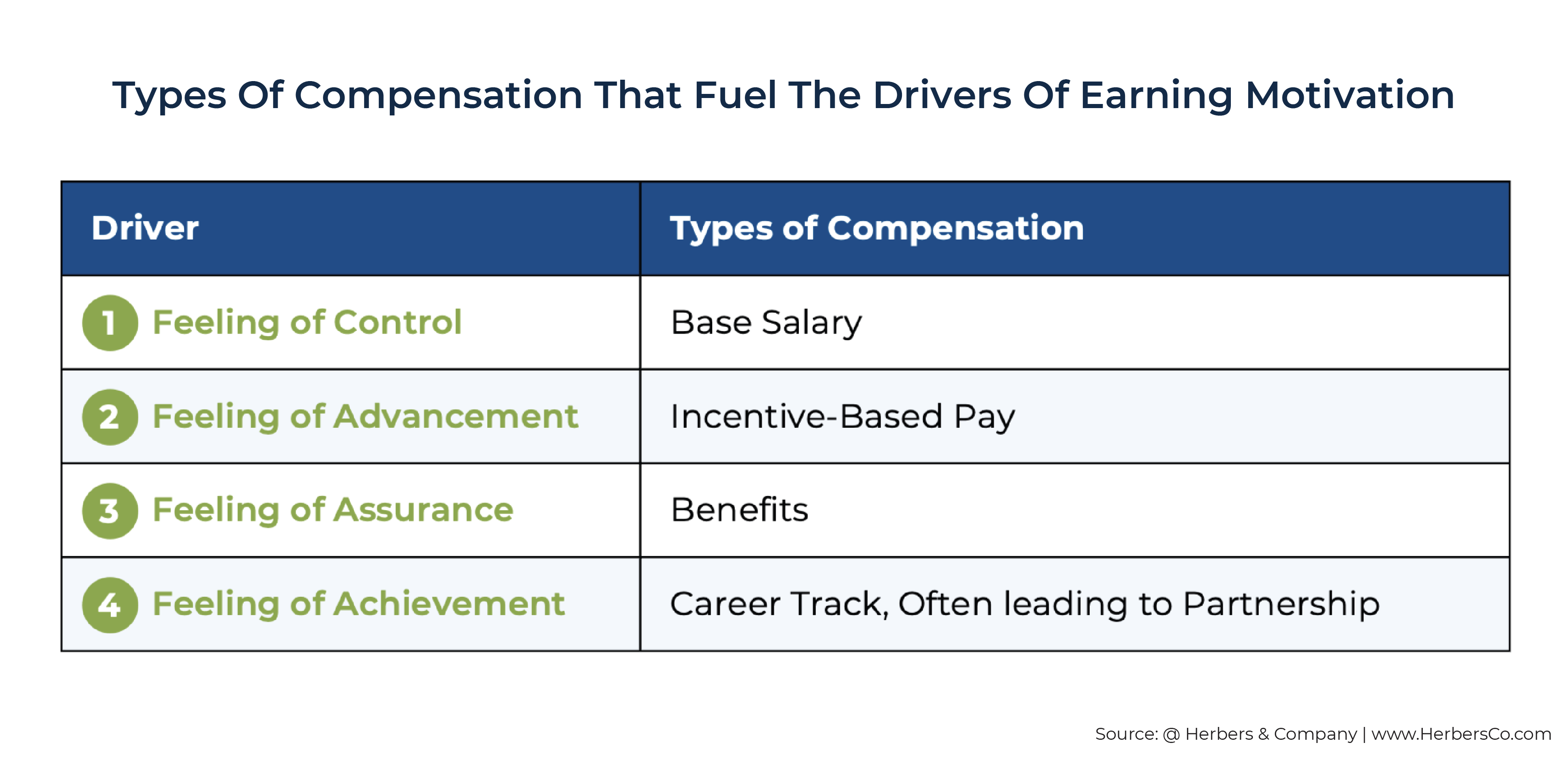
When candidates evaluate potential compensation, they consider the sum of these parts. The challenge for managers, then, is to create a compensation model that is both appealing and distinctive – and to stay competitive, they first need to understand the broader landscape.
The Current State Of Advisor Associate Compensation
In analyzing the state of associate advisor compensation, it helps to clarify both how the role is defined and where the data come from.
For the purposes of this discussion, associate advisor refers to advisors with 0–5 years of industry experience who assist senior or lead advisors with managing client relationships. They typically support existing clients rather than prospecting for new ones.
Each compensation study surveys a slightly different segment of the advisory profession. To provide a balanced view, the findings below draw from several industry studies: New Planner Recruiting's 2025 Salary Report, CFP Board's 2025 Compensation Study, Schwab's 2024 RIA Compensation Report, and the latest 2025 Kitces Research on What Really Contributes To Advisor Wellbeing.
In general, advisors with the CFP marks also tend to have higher compensation, regardless of job title. Within Kitces Research, 66% of associate advisor respondents are not yet CFP certificants.
New Planner Recruiting defines paraplanners as those who have 0–2 years of experience who have or are pursuing the CFP marks, while CFP Board's study focuses only on CFP professionals. (Notably, while CFP Board reports that “CFP professionals earn 13% more than other financial planners”, it's unclear what data they use to benchmark income earned by non-CFP professionals). Where relevant, any meaningful distinction between Kitces Research findings for associate advisors who hold the CFP marks and their peers will be denoted.
How Associate Advisor Pay Changes With Experience And Location
An ongoing conversation within the financial planning industry is a potential shortfall of advisors as the profession struggles to recruit and retain new financial planners. At the same time, demand for financial advice seems to keep increasing – the US Bureau of Labor projects that employment for financial advisors (at large) will grow by 10% between 2024 and 2034, much faster than the 3% average for all occupations.
As demand for new advisors has grown, their salary has also grown by 12% – with continued growth projected – as reported by New Planner Recruiting.
According to Kitces Research on What Actually Contributes to Financial Advisor Wellbeing, associate advisors without CFP marks earn an average salary of $73,750. This is comparable with the findings from New Planner Recruiting's 2025 Salary Report, which shows an average of $73,808 for planners with 0–2 years of experience (categorized as paraplanners in their study).
Notably, CFP Board's 2025 Compensation Study reports a higher base salary of $88,847 for advisors with less than five years of experience. This figure may be elevated because the experience requirement to become CFP certificants requires at least two years of experience, meaning that respondents to the survey are more likely to hold the CFP marks. This interpretation aligns with New Planner Recruiting's reported salary of $95,057 for associate advisors with their CFP marks.
Compensation also varies broadly by location. High cost-of-living areas tend to correlate with higher salaries, with the northeastern United States leading in advisor compensation salaries. For example, New Planner Recruiting found that an inexperienced advisor at a small RIA in the Midwest earns an average of $62,500, compared to $81,667 for an advisor with similar experience in the Northeast.
Notably, none of these surveys distinguishes between advisors who work in-office versus fully remote.
Analyzing Variable Compensation: Bonuses And Incentivized Pay
In addition to base wages, bonuses and incentive-based pay are crucial components of total compensation. Firms that award incentive pay must determine who qualifies and what performance metrics determine the payout. In sales- or prospecting-based roles, it's common to reward advisors who bring in new clientele – but should firms also extend those same incentives to the support staff who provide the structure to enable prospecting in the first place, even if they're not doing it directly?
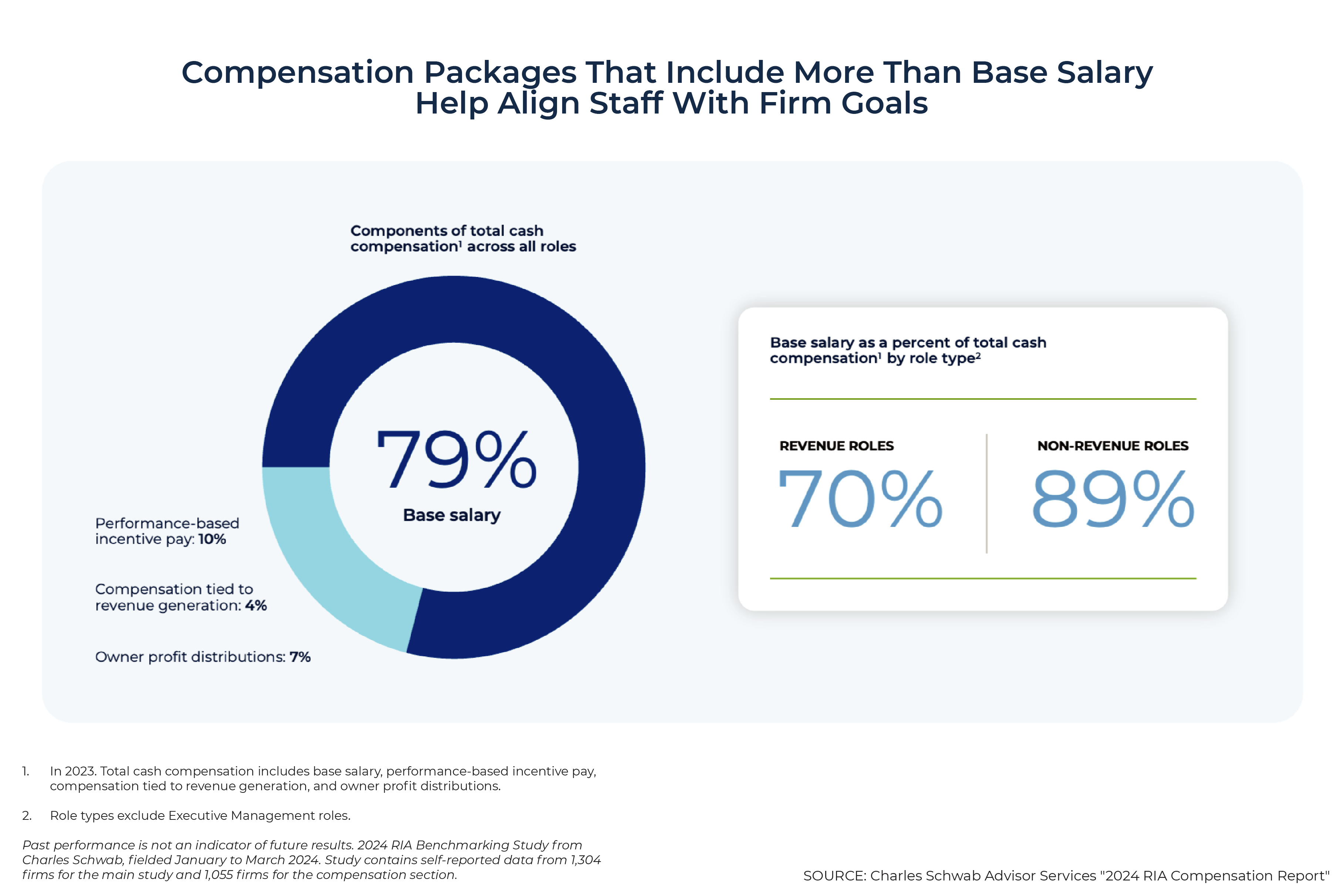
Schwab's 2024 industry data indicate that many roles blend fixed and variable pay. Employees with revenue-producing roles are paid an average of 30% of their compensation from incentive pay, revenue generation, or profit distribution. Non-revenue roles also participate, but to a lesser extent, earning an average of 11% of their compensation from either performance-based pay or based on the company's revenue.
While Schwab's findings offers a broad perspective on how incentive-based pay works in the aggregate of compensation, Kitces Research on Advisor Wellbeing provides a closer look at associate advisors specifically. Among respondents, 37% of advisors received only a fixed salary. Of those who received some level of incentive-based pay, it is most likely that the incentives are based on either individual or practice performance (or some combination of both).
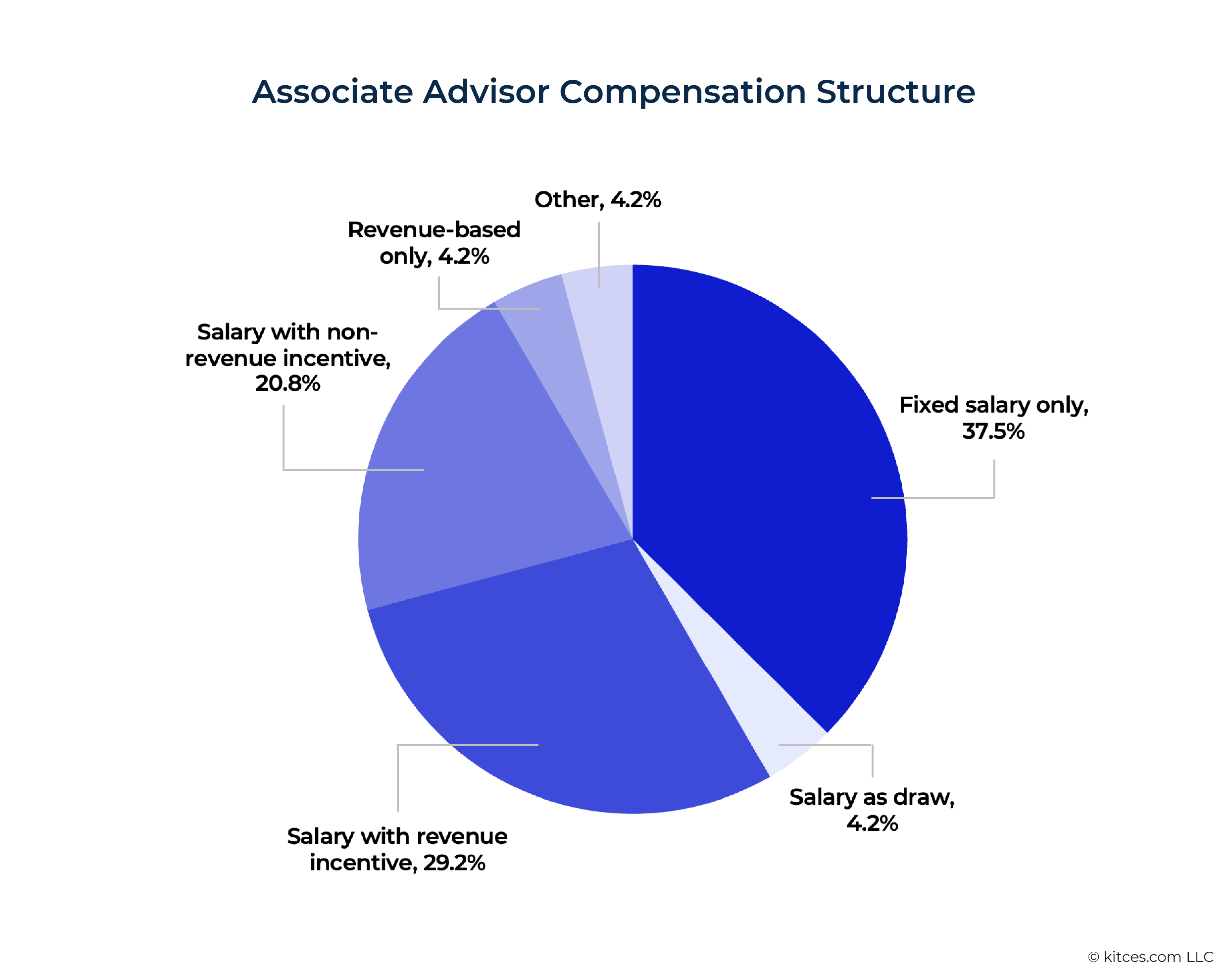
Put another way, while many associate advisors benefit from a firm's overall growth, their compensation isn't always directly tied to it. Even those who receive incentive compensation often find it linked to individual performance or other qualitative metrics rather than firm-wide revenue.
Healthcare And Other Benefits
Benefits can be a major differentiator when a candidate decides whether to accept a job offer. They typically include health insurance, retirement plan contributions, paid time off, and extended leave – as well as less conventional offerings that support professional development, wellness, or other behaviors the employer wants to encourage.
Unsurprisingly, the larger the firm, the greater the benefit coverage. Many firms offer medical, dental, and vision insurance, but larger firms are far more likely to contribute to the cost of premiums. According to Schwab's study, 41% of firms under $100M AUM (likely including many four-person teams) provide medical healthcare benefits, compared with 99% of firms over $1B in AUM.
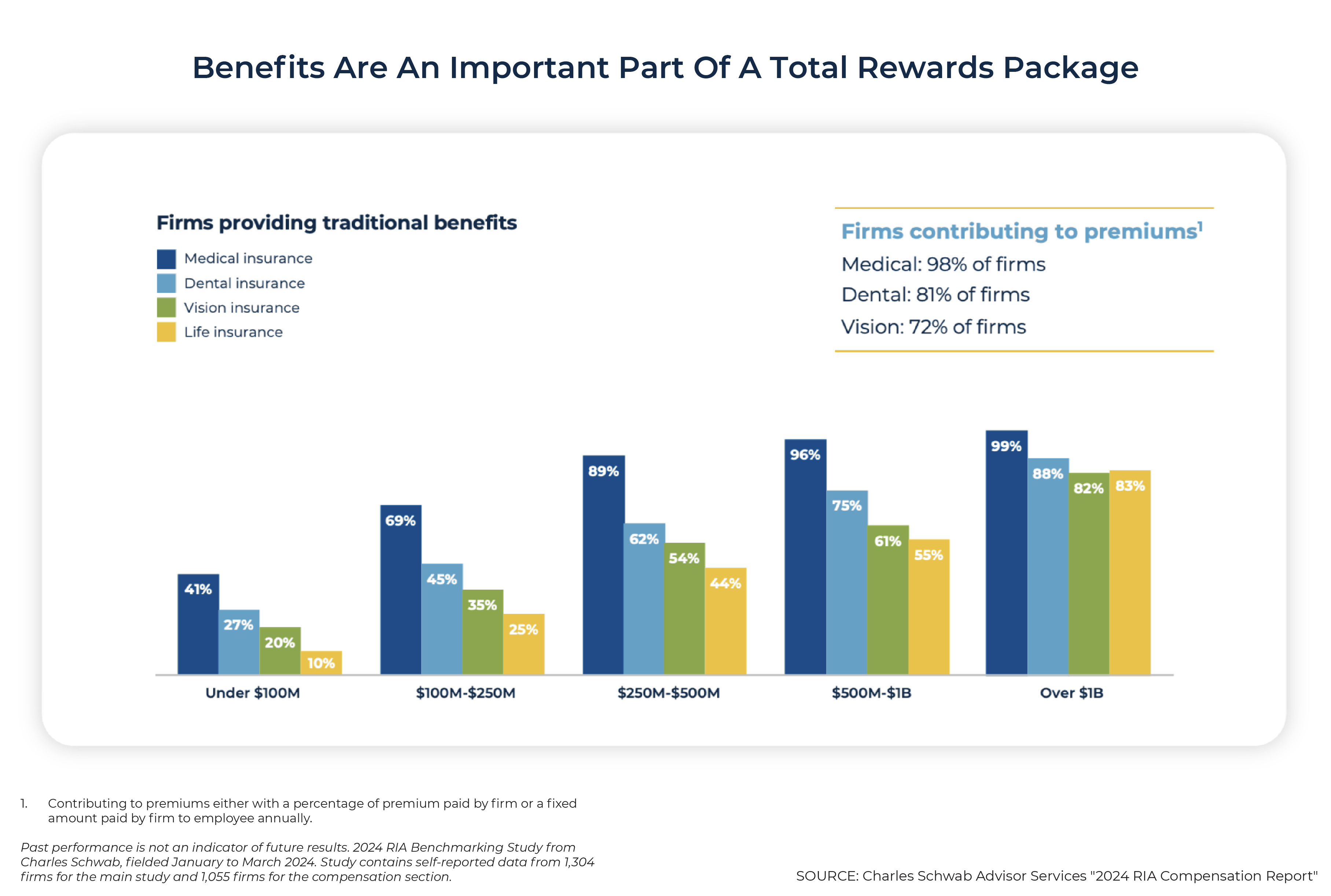
In many ways, it is unsurprising that benefits increase with the size of the company – not only are larger companies more likely to be legally required to offer certain benefits, but they also are more likely to have the resources in revenue, cash flow, and even full-time team members to curate and negotiate those benefits.
However, smaller firms often increase these benefits gradually as they scale. In those cases, understanding which benefits matter most to employees can help prioritize where to start.
CFP Board data show that health, dental, disability, and life insurance are among the most common types of coverage provided across advisory firms. The majority of firms subsidize these benefits at least partially.
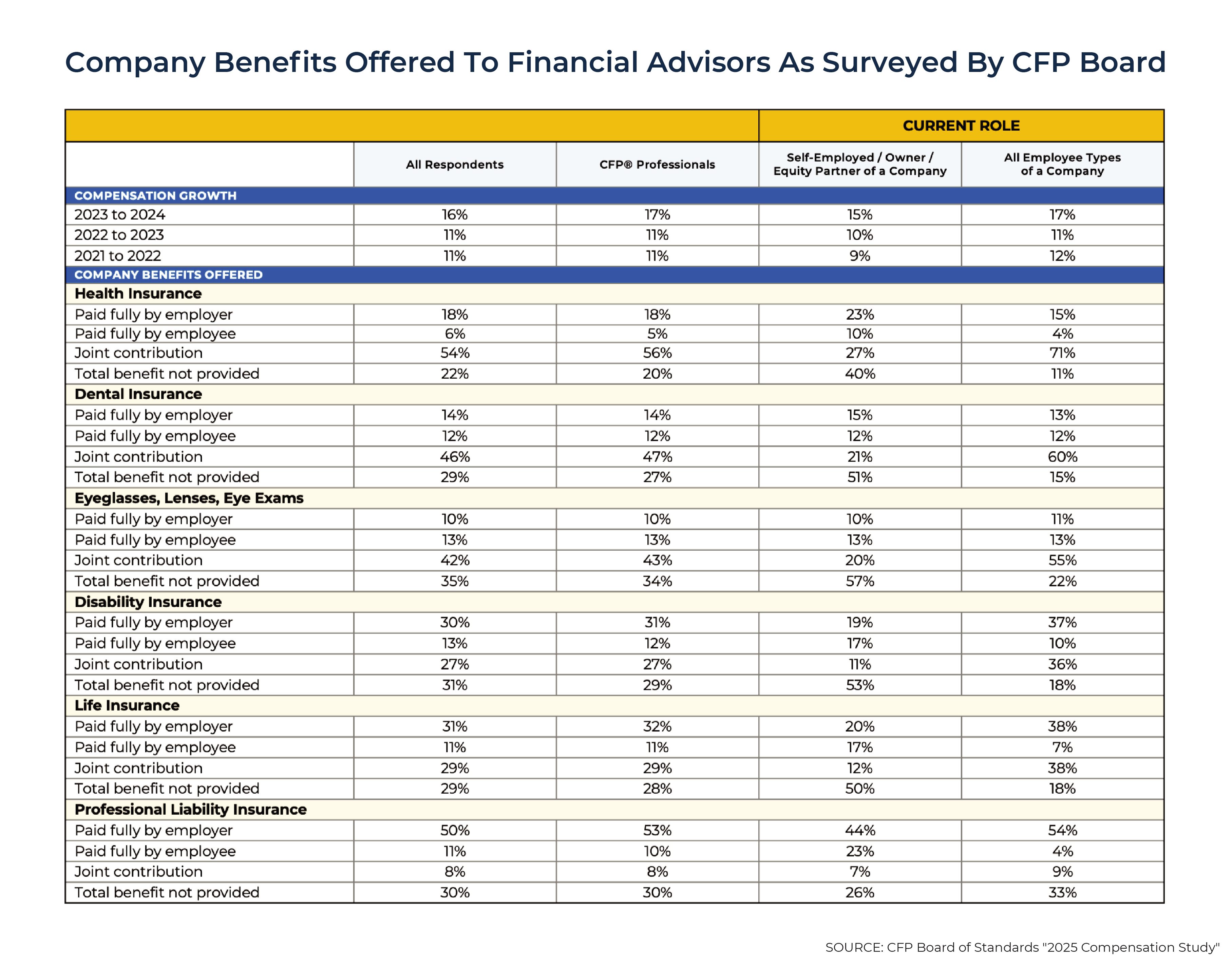
In other words, offering these benefits at all has become table stakes for attracting prospective employees. Subsidizing them is something that can be gradually fitted in as the firm and its cash flow grow, but these are benefits that can pay outsize dividends – both in employee satisfaction and in the firm's competitiveness when hiring in a crowded field.
Retirement Benefits
According to CFP Board data, the most common types of retirement benefits offered by advisory firms are 401(k), 403(b), and 457 salary reduction plans. 95% of all employees surveyed by CFP Board have the option to contribute to one of these plans through their employer, and 90% of them receive some form of employer contribution as well. Schwab's report similarly found that 80% of employees have a 401(k) plan, and that the median employer match is 4%.
Other types of retirement contribution plans are relatively rare – according to CFP Board, the next most common offerings are profit-sharing and nonqualified deferred compensation plans. Regardless of the specific plan type, most firms offer – and contribute to – some form of retirement benefit, emphasizing its important as a baseline expectation for employees.
Remote, Hybrid, And Flexible Work
Remote work has been a widely debated topic since the COVID-19 pandemic dramatically expanded the number of fully remote roles. While the share of fully remote positions dipped from 2021 to 2022 as the post-pandemic surge began to level out, overall remote work remains far more common than it was in 2019. Flexible work is a meaningful benefit to many employees, but it also increases the work required to foster team unity and integrate new employees effectively. At the associate advisor level, remote work can make it harder for advisors to develop client meeting skills and workplace professionalism through observation and feedback.
Schwab's report found that 75% of firms offered some form of remote or hybrid work (though the published study did not differentiate between the two). Kitces Research adds that associate advisors were equally likely to prefer working in a home office or outside the home. However, 71% still wanted at least a 'moderately flexible' work environment.
In short, this means that while some advisors actively seek remote work environments, firms with in-office requirements can still stay competitive by adding flexibility to the workday or workweek, which may be an 'easier' benefit that can meaningfully enhance employee satisfaction.
Paid Time Off
On average, most advisory firms offer 20 Paid Time Off (PTO) days and nine paid holidays, according to CFP Board. Schwab's report found that 20% of firms offer unlimited PTO.
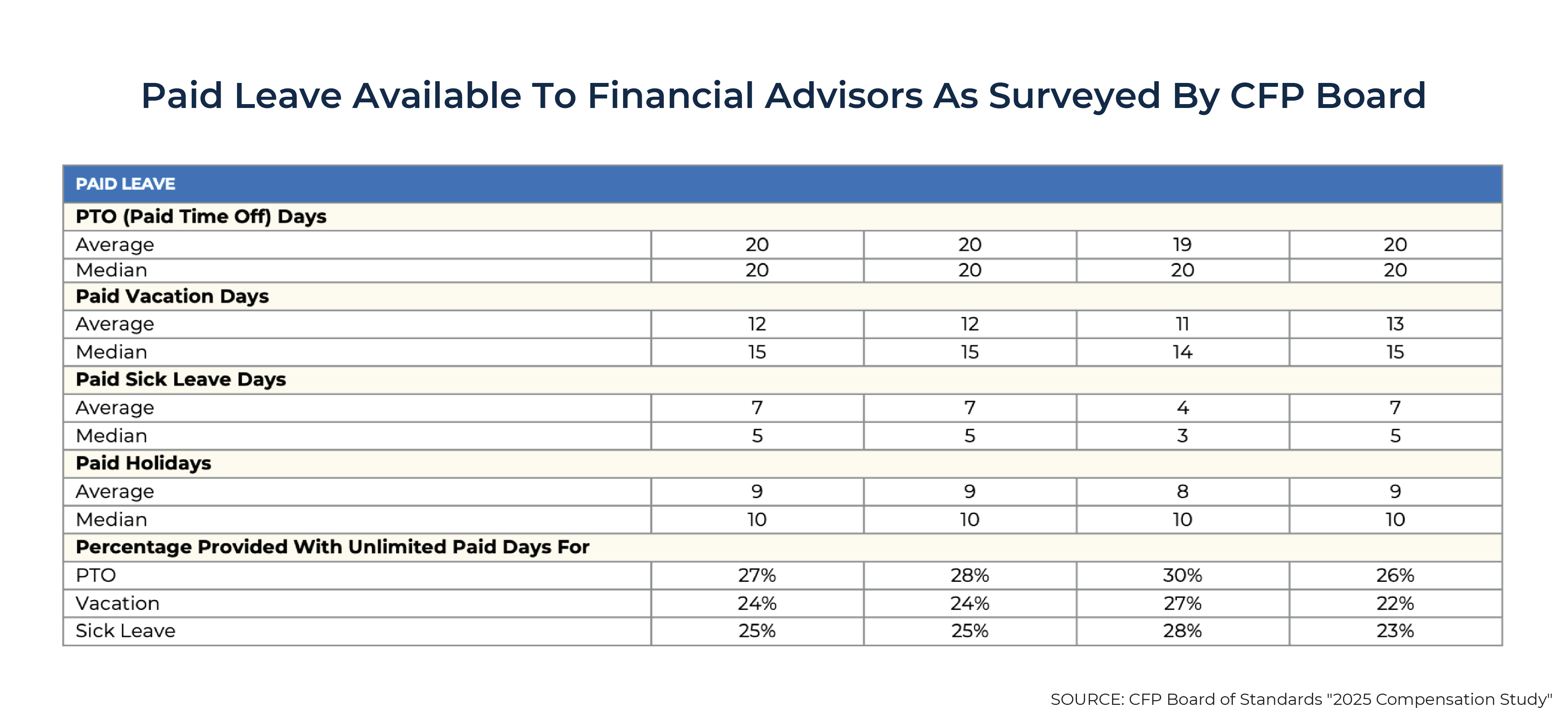
Smaller firms may offer PTO, but doing so may be challenging to ensure that employees can take off several days (or weeks!) at a time, if only because there are literally fewer people to absorb the work left undone. This can be especially true in some seasons, especially if the firm has 'surge' meetings during some parts of the year.
For firm owners, tracking not only how much PTO is offered but also how much is actually being used can be a helpful checkpoint on workload balance. If team members cannot take several days off in a row, why not? What would be required for team members to be out of office – including the owner themselves? Regardless of how passionate people are about their work, periods of rest and recovery are often necessary in order to prevent burnout, which, if left unchecked, can result in greater attrition and lower team morale.
Parental Leave
Parental and adoption leave are another key differentiator in compensation packages. Schwab reports that 69% of advisory firms offer fully paid parental leave, which is not dissimilar to CFP Board's data, which find that 74% of firms offered paid maternity leave, and 71% offered paid paternity leave.
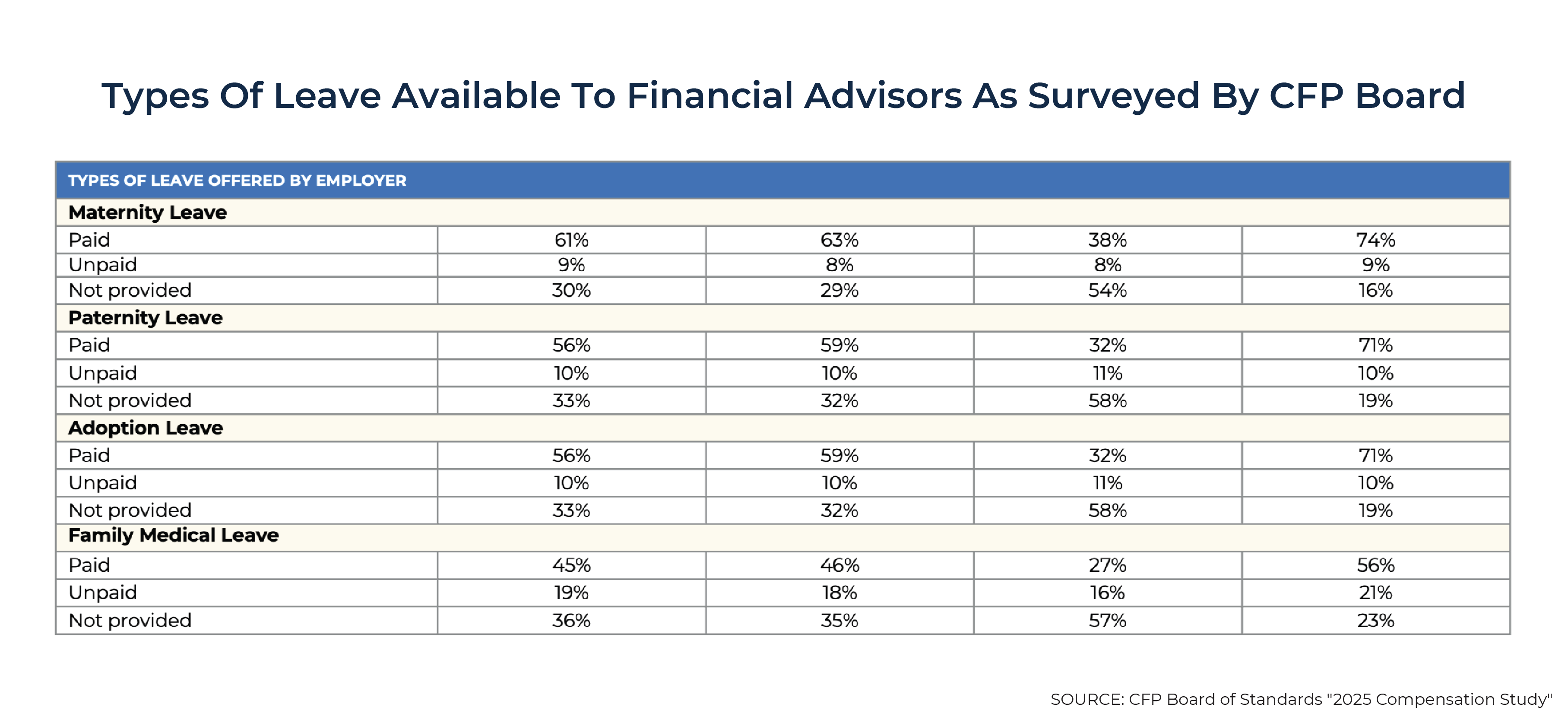
If a firm is looking to implement parental leave, it may be helpful to offer it as 'flex time' that can be taken over the first year of the child's life, which can allow parents to stagger their leave and allow both parents time to bond with their child and adjust to this new phase of life.
Together, these benefits – from retirement plans to parental leave – can shape how employees evaluate the overall value of their compensation, which influences both recruitment and long-term retention.
The Strategic Balancing Act Of Associate Advisor Compensation
In short, compensation is more than a base salary – it's a combination of salary, incentive-based pay, and a mix of benefits that form the firm's value proposition to current and prospective employees. Determining what to offer requires balancing ideal offerings against available resources. Larger firms often have more financial resources to fund more robust benefit packages, while smaller firms may have less room in the budget but can often provide greater flexibility in how roles are structured.
Furthermore, smaller firms may opt to 'build as they go' and slowly add in benefits as their size and cash flow allow for it. Many people are willing to take a chance on a small firm if they believe in its mission, but that goodwill may eventually need to be reinforced with tangible benefits – especially if the company doesn't offer ownership stakes to these early employees.
Smaller firms in particular might also consider using growth-related supplemental income as a part of their compensation package, which can shield the firm from being required to 'pay out' during market downturns.
While certain benefits – like health insurance, PTO, and retirement plans – are considered baseline expectations for most employees, others, like professional development stipends or wellness subsidies, can help firms stand out. Few firms can pay for everything – each of these benefits can be expensive in their own right – especially to advisory firms paying competitive salaries.
Notably, across Kitces Research on Advisor Wellbeing, autonomy, work/life balance, and purpose-driven work all play critical roles in advisor satisfaction and retention. If a job lacks any of these elements, the firm may need to strengthen compensation elsewhere to keep the overall package competitive.
Using Compensation In A Job Listing
When listing associate advisor roles, transparency is key. Clearly listing a realistic salary range and benefits offered can go a long way in aligning expectations early and in streamlining the hiring process. It may also be helpful to explain the reason behind certain offerings. For example, a wellness subsidy can signal the firm's belief that personal health supports every part of work and life. If the firm offers generous educational benefits, that can reflect the firm's commitment to invest in its employees' knowledge and professional growth. These details can be great indicators of what the firm values at a cultural level.
Ultimately, compensation is an ever-moving target as benefit and salary expectations shift over time. Aiming for salaries that are competitive locally – and supplementing them with a few core benefits – can help a firm attract and retain the right employees as it continues to grow. Compensation comprises many elements, and each one contributes to the firm's broader value proposition. The key is to consider which benefits offer a competitive edge and which are now baseline expectations among prospective employees. A well-rounded compensation package can be one of the most powerful ways to invest in the people who help build the company alongside its owner – an investment that, more often than not, pays worthwhile dividends in the long run!