
Executive Summary
The advent of artificial intelligence (AI) initially seemed like a breakthrough for advisors who liked doing content marketing yet struggled to find the time and focus to do so. However, the very technology that enhanced creation and distribution for advisors did the same for everyone. In an environment oversaturated with low-effort AI-generated content, financial advisors are finding that content marketing no longer delivers the impact it once did. What was once an effective way to connect with prospects and demonstrate expertise is increasingly becoming a source of noise – undermined by the very technology that was supposed to enhance it.
The widespread availability of AI tools has made it easier than ever to produce blog posts, newsletters, and social media content. But as the barriers to creation fall, the flood of undifferentiated, mediocre content has overwhelmed audiences, eroding trust, reducing engagement, and forcing advisors to rethink how they communicate value. As a result, many advisors now report declining engagement and fewer client conversions.
In this 184th episode of Kitces & Carl, Michael Kitces and client communication expert Carl Richards discuss how financial advisors' content marketing can continue to stand out amongst a saturated world. When everyone has access to the same tools, the signal-to-noise ratio plummets. Unless content is either outrageously bold or hyper-relevant to a clearly defined audience, it gets deleted, ignored, or filtered out.
What remains are two angles: outrageousness (provoking anger or 'spirited discussions') or relevance (deep, authentic, and personalized content). The latter is more sustainable than the former. But through that relevance, advisors must be ruthlessly specific about who their work is for and what it does. Broad content aimed at 'everyone' no longer cuts through the noise, but high-quality, consistent, and uniquely human content still stands out! Whether through long-form writing, clear idea distillation, or curated content, advisors can reassert their value through thoughtfulness and craftsmanship. AI can still be a powerful ally, but only when used strategically – as a tool for ideation, editing, and refinement – not as a substitute for the advisor's authentic voice.
As the marketing landscape shifts, substance, not volume, becomes the marker of distinction. Ultimately, the path forward requires advisors to either be radically unique or hyper-relevant – ideally both. AI isn't the enemy of content marketing, but a reminder that the human element is now more important than ever. By doubling down on quality, clarity, and audience fit, advisors can continue to use content to build trust, demonstrate expertise, and drive meaningful engagement. The firms that thrive will be those that resist the temptation to automate everything and instead focus on doing the deep work of creating content that truly matters.
Authors:


***Editor's Note: Can't get enough of Kitces & Carl? Neither can we, which is why we've released it as a podcast as well! Check it out on all the usual podcast platforms, including Apple Podcasts (iTunes), Spotify, and YouTube Music.
Show Notes
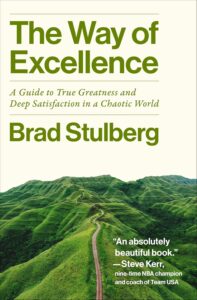
 The Way of Excellence: A Guide to True Greatness and Deep Satisfaction in a Chaotic World by Brad Stulberg
 - Tim Ferriss 5-Bullet Friday newsletter
- Seth Godin: The Smallest Viable Audience
Kitces & Carl Transcript
Carl: Michael Kitces.
Michael: David Carl Richards III.
Carl: That's exactly right. DCR III, please.
Michael: DCR III. I still, I have to be so careful not to turn it to DCF because I want you to be discounted cash flow apparently.
Carl: Yeah, then I could have a Halloween costume. The whole thing would just be so great.
Michael: Once I get to the D and the C, it's really hard to have an R after.
Carl: I'm sorry. I'm sorry about that.
Michael: I get there, but I have to keep reminding myself of your last name to...
Carl: For sure.
Carl: I have something I want to talk about.
Michael: Okay. What do you want to do today?
Carl: Have you noticed how bad...
Michael: Where are you going with this?
Carl: ...how bad the experience is with the internet lately?
Michael: How much the internet sucks? I feel like that's kind of been...
Carl: Just how bad? How bad?
Michael: ...probably been a challenge for a while.
Carl: I think particularly any engagement in LinkedIn or maybe this is the way to frame it. Content marketing. The thing that everybody's supposed to do is becoming incredibly hard precisely because there was a tool invented to make it easier.
Michael: So this is an AI conversation. This is AI...
Carl: Well, I'm trying really hard this year...
Michael: …I was going to say AI slop, but that might be a little harsh.
Carl: No, I think that's right. I think that's right. But I'm trying really hard not to ever say just AI. I'm trying to only say artificial intelligence because I think it's important to remind us what it stands for. So artificial intelligence made creating content "easier." I've always thought, I've been saying this for ten years, that in content marketing can either be outrageous or you can be relevant. And I think that has gotten critical now. You either need to be outrageous way out here on the spectrum, or you need to be relevant, really specifically relevant because there's so much garbage, so much noise and so little signal.
How Ease Of Content Creation Changes Audience Engagement [02:21]
Michael: All right. So you've queued this up. My brain goes a couple of different directions on this. [2:33] There is a fascinating evolution to me that I think is already playing out that in the first, I guess it would be year or two after ChatGPT and the like showed up, there is this sort of boon or expected boon of we are entering the next stage of all things content marketing. Finally, all of us who don't like to write and it takes too long to make a newsletter, it's cool. You basically just tell the AI what you want it to be about and it creates a thing and it fills out your content. And suddenly it was so much easier to create content. And a lot of advisors I know have used it. They're making more newsletters, they're writing more blog articles, they're putting more stuff out there. Maybe they just literally published the AI. I think most of us at least draft with AI and edit, but it expedited the content creation process and a lot of, "Yay, now I've got a newsletter or a blog", or all these things.
And then some of these conversations are showing up, "So I've been doing it now for a year or two and I'm not really getting clients. What's going on?" And to be fair, part of that is creating content and turning into clients entails a lot more than just creating content. There's a whole funnel and process, and multiple steps that some people were not executing in full. And one of the fascinating things to me when technology takes leaps like this, first it's really cool because it makes a hard thing easier. And then suddenly it becomes a problem because it turns out when it's easier for everyone, it's not special and unique and doesn't stand out anymore.
It reminds me, whenever it would have been, 20 or 30 years ago, if you're old enough, you remember what it was like when telemarketers literally called during dinner because they knew you're going to be home eating dinner at the family dinner table. And they can get you on the phone...
Carl: And the phone over on the wall would ring and you go grab it and you kick the cable all the way across...
Michael: Yeah, phone on the wall would ring. You pick it up. Yeah, wrap the cord around Dad to get it over. And then robo-telemarketing kicked in and suddenly it was so much easier to do telemarketing because you didn't have to pay all the expensive telemarketers anymore. You just started creating robo services or robo dollars, or at least you needed far few telemarketers because the robo service just war dialed everybody. And then the telemarketer only picked up on a connected call. They didn't have to dial all the disconnected calls. Drastically reduced the cost of telemarketing, was supposed to be this amazing boon to support telemarketing. And in reality, it obliterated telemarketing because it was so easy for everyone to do that everyone's kitchens got completely blasted. And then two years later, we made a do not call list and pulled everybody out of the system because suddenly the technology that was supposed to be the great breakthrough for this marketing strategy made it so easy for everyone to do at the same time. It literally broke the marketing strategy. And I don't know that it's exactly the same scenario here with AI making content marketing easier, but it starts to echo for me really fast that it suddenly feels very similar.
Carl: Yeah, it's interesting. Robo telemarketing didn't fix telemarketing, it ruined it.
Michael: To be fair on the receiving end, we never liked it much, but from the marketers' end it was supposed to be...
Carl: Right. That's exactly right.
Michael: ...the great boon and cost savings and all these businesses would now be able to grow because telemarketing was more cost effective and more accessible. And in reality, the true sense, it's so oversaturated the consumer because suddenly everybody could do it of high volume and relatively low quality because who cares, it's just a numbers game. But there was so much of in the aggregate that it actually broke the system. And I start to look at that now in email newsletters and social media and all the things that we sort of collectively started calling “AI slop”, I guess is the going label now. That applies more than just marketing. “Slop” is a particularly negative word. I'm not trying to totally bash people who are using AI to create some of their content, because you framed it well, if it's not outrageous or outrageously relevant, it just becomes noise. It's not necessarily signal that actually attracts people who would want to do business with you and makes them trust you more because they see the quality of your excellence and credibility shining through the AI-generated content.
Carl: Yeah. Yeah. I think that's a good framing. The reason I want to talk about this is I literally feel like I've watched the bottom fall out in terms of effectiveness. The number of people who are saying to me, "I just am not getting," whatever, views, clicks, conversion, whatever metric you want to use. I even noticed this, to be honest, with my book launch in October, the landscape had definitely changed. It was so much noisier, so much noisier. And I think I'm hearing this from friends that are in marketing. I've got two friends that have been really highly respected consultants for marketing firms for 20-plus years. And they're just like, they actually used that language. They said the bottom fell out this last six months at marketing firms and it was low-level copywriting sort of style marketing firms. I think what all of that's pointing to, at least my hypothesis is, and I'm sure we could find data on this. I'm sure if we went to Amazon singles, number of Amazon direct-published books, number of blog posts, number of Substacks, I'm just sure we'd see an explosion right now in terms of content creation. And so all that points to me is it's still the same. It's just more important now to be relevant. I think it's all about relevance. You better be… I was going to use farm language there. You better be really sure about who your work is for and what it does.
Because I am now seeing this landscape of stuff coming at me and I'm hitting delete faster than I possibly can. And the only thing that stops me from hitting delete is going, "Oh wait, that's relevant. That's relevant for me and my family." And so the idea, and Seth Godin has been saying this for 20-plus years, everyone doesn't exist. What's interesting is there was a time, there was a time when everyone existed. There was three channels on the television plus that third one that was educational, whatever that thing was called, PBS or whatever. And there were Super Bowl ads that everybody saw. There was a time when everyone did exist maybe, but now undoubtedly everyone doesn't exist. And so you better be really sure about either be outrageous. And we have some examples in our profession of people who try to be outrageous and pick fights and be outraged. And that seems to work if you're outrageous enough. But I think the way most of our listeners would approach this would be, how can I be relevantly helpful? How can I be relevant in people's lives? And that's because creating generated content... And I think it's going to be interesting for the newsletter service providers in our profession and industry speaking more broadly, it's going to be interesting to see how everybody adapts to the idea of ubiquitous content is just noise.
Michael: Yeah, the irony is I feel like there's a mini version of this that's played out in the other end for our industry as well. It's some combination of, I guess I would frame it, it's AI content and it's the ways that AI is being leveraged in marketing and prospecting. And any advisor with a firm north of about a hundred million of AUM is just getting blitzed by PE firms reaching out to them on a continuous basis. A lot of advisors I talk to are getting outreach a couple of times a month. Some are getting outreach a couple of times a week, I guess a denser metropolitan area that's more popular. And it's a version of the same thing. I can get an AI tool to scan the SEC databases to find all the advisors, especially if you're SEC registered. And then I can create an AI tool to make a realistic-sounding email to do an outreach to all the advisors who meet my qualification and every other PE firm and RA aggregator can do the same thing. And on the receiving end, we just get a continuous blitz of outreach and doesn't usually make anyone particularly want to engage. Even if you were thinking about selling, it's actually overwhelming how many people are reaching out and you need to find someone to help you run the process. And if you weren't thinking about selling, it's just really annoying and a continuous drum beat.
Carl: It's so interesting that, I just think...
Michael: And I got a wonder whether or how much that's going to start showing up in the ways that we market and prospect as well, right? When it's that easy to send a newsletter, everyone sends a newsletter and then a newsletter isn't distinct anymore or writing a blog or heck, soon it'll be podcasts because we can AI create those and YouTube because we can AI create, create those as well. And again, as you said, I don't think it all vanishes because outrageous still sticks and relevant still sticks and outrageous and at least I'll call it hyper relevant, tends not to be something that AI is very good at. It's too narrow. It's too specialized. It's too specific to the particular target market or people that you're trying to reach that AI tends to be too generalized to make hyper-relevant content. So I don't think it means all content marketing goes away. I look at our traffic from our platform for Kitces.com and our traffic and readership is up quite materially in December of this year versus December of a year ago. AI has not actually impaired us. We use no AI to create content. We try to be super focused and relevant for advisors, but we're having no adverse impact from AI. But I think we're the exception.
Carl: But I also think that points to relevance and I think another vector would be craft or quality, but I think to me, it's just increasingly: important, relevant and also uniquely you. We were talking earlier about AI can't draw like me. And whether that's good or bad or whether AI will be able to at some point, but I feel like you recognize my work because of that. And I was talking with Brad Stulberg, whose new book comes out in January: The Way of Excellence. Brad's amazing. And he cares deeply about the quality of his work and his approach on Instagram has changed. He now publishes these really long pieces on Instagram. They're photos of screenshots. And so you scroll through two or three different things, but they're really long. And I asked him why and he's like, "Well, because AI is not good at that. And I am really good at that." So I think it's interesting because I also think AI is not really good at taking a complex problem and getting the distillation right. And it could write really long things if you said, "Hey, write me an 1800 word..." It's not really good at writing good long stuff.
Michael: 1,800. That's short, Carl.
Carl: Exactly. Right. Whatever. Yeah, that's true. That's like you sneezing. But my point is AI is good at anything you...sorry, AI can produce mediocre stuff of any length. I think quality, consistency, relevance, deeply you. And relevance could be a function of... The other thing that's interesting to me is when you become a curator, right? When there's lots and lots of noise, if I can start relying on you to tell me, I think of Tim Ferriss's "5-Bullet Friday," you when I can start relying on you every Wednesday, I get an email from Sally CFP who says, "Here's three things I read this week that I think might be important for you," with a nice, tight summary. And those things are relevant to me. And I learned, "Wow, this is really high signal." So there's lots of ways to approach it. One is be highly relevant in solving problems. One could be really good, high quality, long-form writing. One could be really clear distillation. Another one could be curation. But the point is it involves you doing that work. I don't think content marketing goes away. I just think it's become more and more important, right? Because we've been saying forever, "Email is going to go away. I delete all my email." Oh, I delete all my email except for the ones I want to read. And the ones I want to read, I read because they're either really high quality or they're deeply relevant to me.
Why It's Challenging To Get Expertise From Artificial Intelligence [17:44]
Michael: That's the thing that's continued to fascinate me for, whatever it is now, almost 20 years of social media growing. We look at this for our platform as well. Email traffic still obliterates social media traffic.
Carl: Yeah, for sure. You mean, in terms of just call-to-action or conversion rates or response rates?
Michael: Yeah. How many people come and read the site and then how many people take some kind of action to do business with us? Traffic wise, it's probably three to one or five to one most months conversion to...
Carl: Not even close.
Michael: ...actual actions that drive business. Oh no.
Carl: Not even close.
Michael: Twenty to one? Thirty to one? It's remarkably not close. And to me, some of that gets to, because it's so easy to skim and browse and doom scroll social media, email is kind of an interesting thing because it is pretty easy to unsubscribe. No one doom scrolls through their email. That sucks. You're useful in their inbox or they remove you from their inbox pretty quickly, which means if you're earning the right to stay in their inbox, you tend to earn the right to do business with them.
Carl: That's right. Hey, can we footnote to, or I don't know what the right word is. Let's do an episode on the just cold, hard math of conversion. Because it'd be too long to do here, but I think when we talk about there's these two big numbers of conversion, right? How many people raise their hand to hear from you? How many people actually take action based on hearing from you, and playing with those two numbers is fascinating because you often realize, "Whoa, this game's harder than we thought." So let's put a pin in that. But I think to me the lesson of all of this is what Seth has been saying for 25 years. Who is your work for and what does it do? And boy, you better be specific about that.
Michael: So you take this back to some version of, therefore you have to have a really clear target market. Dare I say it?
Carl: No, no, no, no, no. Yeah, you have to be really clear about who your work is for, is exactly what I was going to say. I'm sure that's what you were going to say.
Michael: I was going to use different words to say it, but sure.
Carl: Yeah. That's right. We're going to make it. We're going to make it.
Iterating With AI To Expedite (But Not Replace) Thought Leadership Creation [20:16]
Michael: Does that take you down some other path though? Again, we don't have to open all of the math of conversion here. We can do that in the future, but most of us struggle and fear picking a target market because the only thing harder than converting businesses is converting business from fewer people in the pool in the first place, because you went and focused on a particular group and alienated or potentially alienated yourself from all the other prospects that might have done business with you that weren't in that group in the first place.
Carl: Yeah. But you're focused on, like you said earlier, that if we were just using language that sometimes we don't like to use, but if we were just talking about conversion rates, right? Your conversion rate goes way up if it's relevant. You're just noise if it's not. So I think that's what's so interesting to me is the idea. And I saw this a lot with the book and talking to publishers and marketing firms, people running around saying, "I've got a 100,000 people on my email list." That's just a place to hide when you've got a 10% open rate. You actually have 10,000 people on your email list is the way I think about it because we clean our email list. We get rid of people who don't open. So I often think it's more comforting to hide behind lots of activities. See, I'm trying lots of things instead of saying, "No, wait, wait, wait. You know what? I serve this group of people." So saying no to something that you're not saying yes to anyway, saying no to people who are not saying yes to you, right, is just being honest. It's just facing the cold, hard reality that those people weren't going to do anything with you anyway. But instead, if you're focused on a very targeted market of who your work is for, people you can help, you're deeply relevant in their world. They're going to tell, remember, we're only talking about needing a hundred people or something like that.
Michael: A hundred clients at the end of the day.
Carl: A hundred clients.
Michael: More people than that to get to a hundred clients.
Carl: That's right. And we'll do that in another episode, but yeah, that's exactly right. And so, yeah, if I'm deeply relevant, if you're deeply relevant in my life, and I hang out with people like me, I'm going to tell people like me about you.
Michael: So does that mean, would you ostracize AI out of content marketing?
Carl: Well, I think, look, when you use the word AI, I think the challenge is there's good ways and bad ways to do it, right? We've spent a lot of time training our AI tools to be very, very helpful for us. That doesn't mean I say, "Write an 1800-word article about asset allocation," but having AI be an incredible editor. No, so I wouldn't use AI to create slop, but I would use it as a tool to J-curve my production of anything I'm doing, right? Train it, train it, train it, train it so it helps me. Great editor. Great idea. It can help with the cold-start problem. “Hey, look at my 400 articles I've written in the past. I'm having a hard time thinking about something to write this week. Is there any hole that you think is interesting?” Oh, great. Here's ten ideas. Great. Thanks for the cold-start problem. Finding ways to use it as an effective tool, but not to replace you.
Michael: I feel like that may actually be a future episode unto itself. Literally what are you doing to train AI to write like you, write for you, improve your writing.
Carl: Just to be helpful in the creation process. Yeah. Just to be helpful, deeply helpful. I wouldn't have pulled off this last book without the AI tools that we use and largely as a thinking partner and editor.
Michael: But you still have to create yourself because you're the only one that makes the highly relevant...
Carl: Every single word.
Michael: ...or the outrageous.
Carl: Yeah. Every single word.
Michael: So someone's listening to this and getting really depressed because it means they can't do the content marketing thing that they wanted to do with AI.
Carl: Yeah. But they could probably do 80% of what they were thinking. At least in my mind, maybe you can't. I don't know. I think it's getting closer and closer, but it's a lot of training. I just remember the experience two years ago of saying, "Hey, AI, write an article that sounds like Carl," and getting it back and just be like, "This is garbage." And then working and working and working and working and working and getting to the point where you're like, "Okay, here's three things I've written in the past. Will you find an argument in here that I'm missing. Okay, great. That's a great idea. Based on the 500 articles I've uploaded or actually 8,000 pieces of data I've uploaded to you, tell me how you'd flesh this out using... Okay, great. And then now I'm going to record it and I'm going to get the transcripts, take the transcripts, help me edit this." There's a whole bunch of tools in there. Could you act as my writing room partner? I used to get humans together, buy them pizza and say, "Here, read this essay. Tell me what you like and what you didn't like," right? That part of the problem can be really helpful to have an AI tool help you.
Michael: Okay. But be careful that you don't just produce something that becomes noise lost in the noise, your takeaway?
Carl: Yeah. And to me, I'm continually interested and worried about that line. It would be very easy, and I'm sure I have made mistakes there already, and I think you have to continually be like, "No, no, no, no. Is this deeply me? Is this work that I've done?" I wanted to make sure that this latest book, because the book 11 years ago, there were parts of One-Page Financial Plan that I punted on, that I was like, "I'm just tired of writing." AI didn't exist. That wasn't an AI problem. That was a me problem. This book, I wanted to make sure every... And there is, now I've found some errors that I wish I would have caught before, but that's just standard for writing a book, but I'm proud of every word, right? So I don't think that was always an AI problem. I think that's just a, how much do you put into the projects you're working on? And so anyway, to wrap this up though, I think find ways to be outrageously outrageous or find ways to be deeply, deeply relevant.
Michael: Okay, which means being really clear who you want to be, outrageous or relevant for.
Carl: Yeah, like a target market.
Michael: I'm going to let you not say it for this episode.
Carl: Okay. Cheers, Michael.
Michael: Cheers, Carl. Thank you.
Carl: Yeah.





Leave a Reply