

Executive Summary
There is a juxtaposition in giving great financial advice: often, there is an objective 'right' answer to many financial planning questions… at least from a mathematical perspective. Yet the decision that best aligns with the client's real values is often less clear-cut. For example, there is an objective 'right' answer to whether to pay off a low-interest mortgage early or invest in the stock market, yet a client may prioritize being debt-free over the 'optimal' decision. For financial planners, the challenge lies in recognizing when clients need guidance versus when they need space to clarify what matters most to them. Advisors balance being the authority with being a facilitator, respecting the client's autonomy while also protecting them from avoidable missteps.
In this 183rd episode of Kitces & Carl, Michael Kitces and client communication expert Carl Richards discuss how advisors can walk the line between the advisor's personal opinion, the 'objective' answer (when there is one), and the client's values – especially when a client wants to make an 'inoptimal' decision. A planner's values can unintentionally influence client decisions. Even the presence of an expert in the room biases what clients say and how they process options. For example, issues such as debt repayment, funding education, or discretionary spending often elicit strong emotions and financial judgments from planners. One advisor may bristle at a client wanting to pay off a low-interest mortgage, seeing it as inefficient, while another empathizes deeply, having celebrated mortgage payoff milestones themselves. Every financial decision intersects with personal values, making it difficult for planners to remain truly neutral.
Financial planning decisions often do not have one objectively 'correct' answer (regardless of what the spreadsheet says!). Trade-offs – such as those between short-term experiences and long-term security – must be framed in ways that honor the client's goals and values, not just the planner's analytical framework. This is where coaching and planning intersect. Advisors can bring technical clarity and model outcomes, but must also develop the emotional and relational skills to help clients make decisions they can own. When clients ask, "What should I do?" the invitation is not necessarily to command, but to co-create clarity – ideally after deep exploration of their motivations, fears, and hopes.
Ultimately, financial planning exists in a hybrid space between coaching and technical expertise. They are guides who can – and sometimes must – offer strong recommendations, but only after the client feels fully seen and heard. The deeper responsibility lies in helping clients make well-informed, value-aligned decisions, not just efficient ones. Asking follow-up questions, illustrating the outcomes of various decisions, and helping clients dive deeply into the trade-offs are all crucial to helping them sound out the true consequences of their decisions. This approach not only fosters better outcomes but also strengthens the client's sense of ownership and agency. Advisors who can recognize their own biases and stay curious about their client's worldview are better positioned to offer advice that resonates and endures!
Authors:


***Editor's Note: Can't get enough of Kitces & Carl? Neither can we, which is why we've released it as a podcast as well! Check it out on all the usual podcast platforms, including Apple Podcasts (iTunes), Spotify, and YouTube Music.
Show Notes
 #FASuccess Ep 224: Crafting A 5-Step Process To Add Value As A "Thinking Partner" For Clients, With Amy Mullen
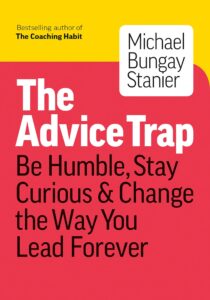
- The Advice Trap: Be Humble, Stay Curious & Change the Way You Lead Forever
- Fact, Situation, Feeling – Using The Iceberg Follow-Up Model To Connect With And Motivate Clients by Dr. Meghaan Lurtz
Kitces & Carl Transcript
Michael: Greetings, Carl.
Carl: Hello, Michael Kitces. How are you?
Michael: I'm doing well. We are kicking off 2026. So we'd probably be into February by the time everyone hears this, but we are here in January, fresh off the new year, planning for a new year. What's on the docket for you in 2026, Carl?
Carl: That's a fun question. My wife actually asked me that the other night, "We should make a plan." I was like, "I don't want to make a plan. Plans..." Anyway, she was like, "Isn't that your job?" I'm like, "No."
Michael: No. Planning is more of a process, really, thought process, and the journey.
Carl: I'm way more into... There's these polls, planning and emergence, and I'm way more into emergence, just seeing what shows up.
Carl: But, yeah, I'm really interested in deepening, having more...this is the year of conversation for me. So, getting 50 Fires back up and running in some form, keeping this going, enjoying the "Society of Advice." We really got an incredible line of guests this year, which I'm super excited about. So I'm just finding...I'm really enjoying conversations, and so I want to make it the year of conversations. After writing a book, it's the year of conversations.
Michael: Okay. Is it like an outtake thing? You write for a year, and then you talk for a year, and then you write for a year, and then you talk for a year.
Carl: It's interesting because we had that conversation. I've already started writing again, which shocked me. I was like, "What am I...?" I was getting up early. Maybe two weeks after the book came out, I noticed, for a week or two in a row, I had written a lot. So I'm working on another book, and yeah, I think we'll do that. Every 18 to 24 months, a book and talk about the book and write. It's just a great way to memorialize ideas.
Michael: Very cool.
Carl: And no, I'm not going to tell you what the book is about.
Michael: All right. I'll wait. I'll wait. I'll just bug you. I'll bug you in another month or two of episodes.
Carl: Exactly, exactly.
Client Scenarios In Which There's Truly No Right Answer? [2:15]
Michael: So, what would you like to talk about today then? Is there a theme that's been bubbling up for you, book-related or otherwise?
Carl: Yeah. I'm kind of interested in...let me just see if I can state this clearly. It's a tension, I think, is the right way. No, I'm a big fan of tension because I think tension, good tension, keeps bridges up, right? It's not something to be resolved or fixed or solved for. And the tension I'm interested in right now is this idea of opinionated advice. I want my doctor, my financial planner, the guy at the ski shop, I want them to tell me what to do, right? After they've understood what I'm trying to accomplish, I would love for somebody to say, "Hey, after all I know, you should do this." I like that. I'm a big fan of opinionated advice. But there's a tension with "I need to be the hero of my own story" and "Let's take me out of the middle of this."
Clients, I think, want to be...sometimes need to be told, "Hey, I've seen this story before. That's not going to end well," or, "Yes, that's a good idea," or, "After everything I've seen from you, you should do this." And we, as planners, need to be careful that it's their story, right? So we need to keep our story, and I've been fond of saying, keeping our values off their plans. And so I think that tension between those two is very interesting to me.
Michael: So, can you take that a little bit further? I guess, I want to start, what's the bad version of this? Apparently, it's putting my values on my client's plan, not keeping my values off my client's plan. What does that mean? Because I feel like, for a lot of us, maybe not all, we often have opinions and recommendations. We tend not to lack on that end. So I'm assuming, if we do this wrong, we tend to do it wrong in the other end. So I don't want to burn anyone's bridge or anything, but what's the not-good version of this look like? Because I'm wondering if we're doing the thing you're telling us not to do, we don't even realize that we're doing the thing that you're telling us not to do. And so you may need to call out the thing we're doing that we're not supposed to be doing. And then we could talk about the tension about how to do it better.
Carl: I'm shocked...
Michael: Be kind. Do it with a hug, as I know you will.
Carl: ...I'm shocked that I followed what you just said. So, easy, let's just... I don't know, because I don't know what we should or should not be doing. I'm just pointing to an experience.
Michael: What's the bad version?
Carl: Yeah. So let's just back up a little bit. And I believe Amy Mullen was the first person who said this to me. I think I have that right. Our very presence in the room is going to bias the things the client says.
Michael: Okay.
Carl: If, ultimately, the financial planning process is the never-ending process of helping people align their use of capital with what's important to them, that's this never-ending process. It's about what's important to them, clarifying what's helping them get clear. And we've talked about this before. We called it, a while ago, we called it goal clarification over time. Helping them clarify their goals, not the planner's goals but their goals, turns out, is actually...and I can hear myself 20 years ago listening to this just being, "I don't even know what you're talking about." It's actually harder than we think because the very presence of an expert in the room means I'm going to be giving you, as the client, I'm going to be giving you the answers I would expect you, as the expert, would want me to hear, right?
And so giving people permission, creating the space and the environment where we understand, what does it mean to them to live a valuable or a meaningful life? What are their goals? And so that's kind of context. Let me give you some examples that I've done and I've seen done. Education, paying off debts, both of those are really easy examples of you may believe that debt is the worst thing ever. As a planner, you may believe that. You may have come up, you've got some background, your family, your mom told you that, right? And so, therefore, you should never have any debt. Well, turns out, that's an opinion.
Michael: Not to use any particular high-profile personnel finance people who also espouse that view.
Carl: Yeah, exactly. The opposite could be true. You could believe that your spreadsheet that you built that says, "You should never pay off a 3.5% mortgage," you should always... The opposite could be true. But you may have a client who really, really values paying down debt. So those are examples. Let me give you one more quickly because these are easy ones. Education. How often have we seen this, where you might have come up where you paid your way through medical school, right? "Darn it, the kids are going to pay their way through medical school." And then, how often have you seen spouses learn in your office, in your presence, that they disagree about that?
Michael: Yep. Or I thought you were going to go with the other one. You can borrow to put the kids through college, but you can't borrow to pay your retirement.
Carl: Right.
Michael: So save for your retirement first, save your kids' college second.
Carl: Yeah. There's so many of these that are... I've heard you write about before, the danger of margin, investing on margin.
Michael: Yeah.
Carl: But what's the difference between that and taking money that could pay down the mortgage?
Michael: Yep.
Carl: Where are these lines?
Michael: Investing in margin is risky, but continuing to own a debt on my real estate while I continue to invest in my stock portfolio is totally fine. And it's literally the same leverage on your balance sheet. It might be fixed debt that's non-callable, but it's still... "Great, we're not borrowing against our portfolio to buy stocks. We're borrowing against our house to buy stocks."
Carl: Yeah. And then even further away, spending decisions. You, feeling like taking the kids on that trip, as the planner, you're like, "I don't understand why you're spending the money to go on that trip when you got this financial... Have you looked at your retirement projections?" And the client is saying, "Hey, I know, but it's more important to me to take the family on a trip." So those are some examples of that kind of tension.
Michael: So I'll admit to those... The one that resonates the most to me, I think, in kind of, I guess, the context, the tension that you're setting up or framing here is the client with the 3.5% mortgage from a bunch of years ago saying, "I hate debt, and I want to pay it down. Let me liquidate my portfolio to pay it down." And what I assume is a significant percentage of us who would be waving our hands and jumping up and down, saying, "Why would you liquidate stocks with a long-term return to pay down a 3.5% mortgage? This makes no financial sense from any financial planning spreadsheet projection we're going to do." And the client is like, "Yeah, but I just hate debt, and I don't sleep well at night."
Carl: Yeah. So I'm really curious in the tension. So let's use that one, and let's do another one, because I think that trip thing is very interesting to me.
Michael: Okay.
Carl: I want to take... I'm 48 years old, and based on all of your projections, I'm a little bit behind on my retirement savings, and yet I'm spending a chunk. I'm not going to use a dollar amount because everybody will get all up in arms about the dollar amount and miss the point. But I want to use a substantial chunk of money every year. I'm not fully funding my profit-sharing account because there's a chunk of money every year that I use to take my family of four on a trip. And you've run the numbers. So now you know, "Wait, you're a little behind." But also, you have deep empathy for me. You've known me really well. You know the kids. You've spent time. You understand. I may have even... I'm using this example because these are things that matter to me deeply, right? I may have even cried in your office about how much those trips add to my life and my kid's life. It's what they remember.
And I'm saying to you, "I know. I see your projections. I see it. And I'm willing to take that risk because this is more important to me." So where, and we're really trying to paint this tension, where is your job to say, "You know what, I hear you. Let's just make the most of it as we can. Can we split the difference?" Or is there some point... and one of my favorite financial planners the other day said to me when we were having this conversation, he's like, "No, I think, at some point, there's a job to say, 'Bro, I've seen this story before. You got to cut back on the trip. You got to fund the retirement.'"
How Personal Money Stories Weigh Into "Objective" Financial Advice [12:18]
Michael: So I find these fascinating, and maybe this is out of, literally, the point of the discussion and the exercise, because ironically, I have much more ease with the second scenario in the first year.
Carl: Tell me, yeah.
Michael: So, look, I think you set it up well, right? The client's retirement projections are looking a little shaky, they're a little behind, yet they're spending a big chunk of money to take the family on the big trip every year, because that's what they want to do and it's important. I know how to solve this for you. If you keep spending this way and markets don't happen to bail you out, you're going to need to retire a little later. You're making a decision. That means you're going to have to work a little bit longer later because you're spending a little bit more now. So I want to make sure you're clear on that, right? Let's make sure you're at least clear on the consequences of your actions. But if "work a little further into my 60s or 70s or whatever it is" is worthwhile to take the trips that I want to take in my 40s, I think you said I was 48, "Okay, you can make that trade-off."
Again, I feel like my obligation as a planner is to make sure you really understand the trade-off that you're engaging in and how your decisions now are going to impact your future. And then you get to decide whether you want to ride that ride and take that journey and do that trade-off.
Carl: Wait, let me pause you because I'm curious. Really curious. Try to be really honest here. Is there any part of you that...? Because I'm curious about...because the trade-off thing, to me, is exactly the right answer. My job is to help you understand the trade-offs. Is it our job to understand objectively the trade-offs? Is there any piece where you're...? There was a tiny, little sentence you used in there that I felt a teeny bit of...where you're like, "I hope you understand the consequences of your actions." And you probably didn't mean it that way. But is there any piece of it that's, "Oh, I kind of feel like you're making a silly decision?"
Michael: Well, so look, again, this may be my own expression of my values going all over the client's plan subconsciously in the process. Truly, I know I'm trying to do the internal reflection, and it's part of why your scenarios are so interesting. Look, you really want to do what. This is some version of "Die Broke." You really want to enjoy the money now, and you don't mind working a little bit later. You be you. Enjoy your money. That's a cool thing. Perkins wrote a giant book about this. A lot of people are doing this.
Carl: Is that hard?
Michael: Again, I just want to make sure you understand the trade-off. Do your thing. And here's where I contrast it, because then, when you get to the other one...
Carl: Wait, wait, wait. Don't lose where you are. Do you think that's hard? I feel like that's kind of hard to be really as objective as... Do you feel any of that tension in there to be really like, "No, I'm objectively just helping you with the trade-offs?"
Michael: Again, just me, in processing it, I really feel comfortable being objective...
Carl: Okay, cool. Okay, go to the second one then.
Michael: ...in that scenario. Until we get to the second one. Because when you liquidate high-return things to pay off a mortgage that's only 3.5% tax deductible, my brain starts breaking.
Carl: Okay, that's fascinating.
Michael: So maybe this is my, I don't know, math brain versus family experiences or something. This could be some version of my values subconsciously showing up here because I like to do the math that, "Look, you want to take more trips now and work longer? You be you. But for Christ's sake, do you really have to liquidate stocks to pay off a 3.5% mortgage?"
Carl: That is so...
Michael: Can I just explain? Can I just pull up the spreadsheet once more and show you how wrong this is before you proceed down this path? You be you and make your decision. I'm right back there. At the end of the day, it's your plan.
Carl: Whatever. If you want to do something that dumb, that's fine.
Michael: Yeah, yes. If you want to do something that dumb, go right ahead. And look, maybe to your example, for whatever things are buried deep down in my brain, psyche, and background life experiences, I find it fascinating that I am very comfortable to objectively frame the trade-off of the travel, and it's really irking the crap out of me to think about the client paying down that mortgage at 3.5%. And I am certain there are some folks out there who have different experiences and history around debt, and they are as on the opposite end of this...
Carl: And you're talking to one of them.
Michael: ...on the mortgage...
Carl: I'm finding this fascinating because I'm the exact opposite.
Michael: ...and struggling on the trip. So here's the passing way.
So tell me about these for you. Why is the mortgage one...and it sounds like the trip one is different for you as well?
Carl: Yeah. The mortgage thing, I would just be like, "Hey." I would actually be showing them that spreadsheet just purely to make sure I sort of cover the base, because I'd be like, "I totally get it. I've been to mortgage payoff parties. I've never been to an efficient markets portfolio party ever. I totally get it."
Michael: I will invite you to my next one.
Carl: I know, you've invited me before. I've never actually seen the invitation. So I totally get that. That's what I want. Now, on the trip one, that's exactly me, right? And I feel constant tension around, am I being irresponsible? Is it irresponsible? Because 99 out of 100 financial planners would show me this projection that would say I'm behind, and yet here I am.
Michael: All I'd say is I hope you've got some insurance in case you can't work as long as you thought. But short of that...
Carl: Totally, totally, totally got that covered.
Michael: ...do your thing, man.
Carl: Totally got that covered. So this is why I think those are... It's really fascinating to me how hard... And by the way, let's pretend for a minute. So we've pulled out two things. One, it's really hard to actually keep your values off people's plans. It's actually hard to be objective without any sort of shame.
Michael: Because the self, to me, at least, because the self-narrative that I'm being objective still gets colored by...
Carl: Your experience.
Michael: "...But to be clear, the second one is also dumb. I'm going to be objective, but to be clear, it's dumb, and I can prove it with a spreadsheet."
Carl: No, it's actually not dumb.
Michael: And I can't. My brain can't get away from that.
Carl: In fact, we could have a conversation.
Michael: And I'm not trying to bash anyone who's paying off the mortgage. I'm not trying to drag down any mortgage payoff party folks, right? But just my math brain processes that a certain way, and it processes the other scenario differently. And your brain does a different version. And that, in and of itself, is so fascinating to me.
Carl: Yeah. Well, let's just be clear here. Maybe in an interest rate environment where I could buy 5% CDs, suddenly, the discussion gets a little different for me. If I want to pay down a 3.1% mortgage and I can buy 5% CDs, the discussion gets slightly different.
Michael: I'm at least given the credit. We're doing a stock market thing. We don't have to have literal...
Carl: Okay, now, as soon as you introduce 3.5% mortgage, 8% equity market returns.
Michael: In the long term.
Carl: Okay. As soon as you do that, now I'm back to, "No, you're not comparing apples to apples, right? You're introducing...you are absolutely introducing some level of risk that's completely different from me, just dollar for dollar, paying down that mortgage."
Michael: Well, Carl. Okay. So I'll pull out a different spreadsheet that shows long-term return on stocks and how they average out over 10- and 20-year periods.
Carl: Come on, man.
Michael: It's a different one-pager, but I got a spreadsheet for this for you.
Carl: I wrote a whole book about this. I understand long-term stock market returns. I get it. And I get that that spreadsheet is right.
Michael: Yeah. And?
Carl: And I feel better, and I know lots of people will feel better, especially in that scenario. It's a different experience buying a CD or even a treasury, right? So just understand. But what the point here is, what's so interesting is, okay, let's go back to the trip example. What I'm curious about is when... Okay, so there's one pole...we're thinking about these as complementary opposites, right? Keep your values off other people's plans, give opinionated advice. These are complementary opposites. They can only reach their full expression because the other one exists, right? These aren't to be solved. They're to be tools used at different times. Let's think of an example where you're like, "Yeah, I get all that, I hear you, and I'm going to give you some opinionated advice. I've seen this story before." And maybe even to the point where...I know I've been in this situation twice in my career, where I had to say, "I'm sorry, I don't agree with that action to the point of I won't be your advisor anymore."
Michael: I feel like those usually get down to something to the effect of, "I just can't take this market volatility anymore. I'm going to cash."
Carl: You know what, my two examples are exactly that, right? But could you ever think of somebody maybe spending too much?
Conversational Tactics To Use Before Giving (Opinionated) Financial Advice [22:24]
Carl: So, when have you seen, "I've got to give you my opinion?"
Michael: Look, the other one that crops up to me that's maybe a little more opinion-oriented, it's the third scenario that I think you were highlighting earlier. Do I put all the money to the kids' college even at the cost of my retirement, or do I let the kids borrow and make other decisions because retirement needs to come first? Which I'm certainly not the first to say some version of, "Well, your kids can borrow money for college, but you can't borrow money for retirement." So that's the "right one" to save for first.
And to me, that at least feels closer to the scenario you're describing, because I think most of us that sat across either, say, clients or prospects who couldn't afford to become clients because they made the other version of that decision, and now we're living some version of, "I'm 67 years old, and I only have $72,000 in my account, but here's your chance to be a hero and save my retirement." Because they lived the version of that, and they made all of the sacrifices for the kids, and now they're in a retirement crisis, and someone's thinking some version of "I told you so."
So that, to me, crops up more. And to me, it's still an interesting one because, depending on our beliefs, views, family, culture, there are some very strong views about this in the direction that the kids come before the retirement.
Carl: Yeah, that's what I was just thinking of.
Michael: Unequivocally, no ifs, ands, or buts.
Carl: Yeah, that's what I was just thinking of. So I was just sort of wanting to paint that scenario. So I'm the client. We've heard this. You hear this a lot from maybe first-generation college goer. I'm the first person in my family to decide to go to college. And you'll hear this from the parents, "We don't care. The most important thing is they got into an Ivy League school, and we're going to make it happen." What are you saying to me after we've read all the numbers? It's going to have a material impact on my ability to save for retirement. And what are you saying to me? Are you saying, "Hey, I've laid out the trade-offs?" And at the end of the trade-offs, I'm like, "I see the trade-offs. Let me think."
Michael: Well, maybe it doesn't... or in that scenario, maybe they don't ask your views because they've just already got their family or cultural or other beliefs around it. But to me, the challenge point where this culminates, I guess I'm thinking about it a lot, I've heard it two ways, and I've never particularly tried to pay attention to which one comes up more. Either at some point, someone in a sheer moment of uncertainty asks, "What should I do?" They solicit the opinion. And as I reflect, sometimes they say, "What should I do?" And sometimes they say, "What would you do? What would you do in my situation?" And as I say that, I think I might answer that a little bit differently, and I'm not actually sure which one I get asked more because I don't think I was paying attention until I thought about it right now.
Carl: Let me ask you, because I want you to put... Let's frame this, coach, psychologist, therapist versus financial planner for a minute. And I just want to see, is there a difference? Is that a good framing? So if I say "What should I do?" to a really good coach, that coach will not answer.
Michael: Oh, correct. "Well, I can't answer that for you. You're on your own journey. Let's come back to, what are the values that would drive the decision for you? What else do you need to figure out and discover to get to this answer for yourself?" There's coaches who probably do this way better than I do; I'm riffing here. But yeah, right? At its core, the coach turns it back to the client, even including that exact moment in question. And for the advisor, "Oh, finally, I've been waiting for you to ask this. Let me roll up my sleeves and wind up here. We're going to crush this one." That's our moment of recommendation delivery.
Carl: Yeah, it's really interesting.
Michael: "Well, I would recommend that you..."
Carl: Yeah, it's really interesting because Michael Bungay Stanier, that book, The Advice Monster [editor's note: The Advice Trap], that's what he's referring to, is jumping out. So it's trying to figure out the difference between the coaching model and a financial planner model. Because, yeah, coach would probably say, "Gosh, that's a good question. I don't know. What do you think you should do? What have you thought of? What have you considered?" And I think there's some real value there, right? But is there a point at which you finally say, after you've done all that, you finally say, "Gosh, given all that, given everything you've just told me?" Michael – he goes by MBS – what Michael Bungay Stanier says sometimes is your advice... He actually said this on a Society of Advice call, he said, "Your advice almost always sucks because it's almost always too early." Just wait a little longer. Ask a few more questions.
He has it all written on his... I think it might even be tattooed on his forearm, "And what else?" where he's just like, "Can you just...? And what else is there? And tell me more about that. And what have you thought of? What have you tried?" And he's like, "You may still give the exact same advice. It's just you're now more clear about it, and the client is in a position to hear it." And so you may still say, "You know what, man, you should fund your retirement. Let's see what we can do to borrow money for education." You may say the exact same thing, just later. What do you think of that?
Michael: Ironically, I feel it more in the context of being a manager and leader of a business than even in the client context. Your advice is almost always too early. Actually, it hits home very hard for me in helping team members learn and grow, and sitting there, going, "You need to do it this way." And waiting to let them go through the learning journey to figure that out. I think the challenge I have with that in the context of planning is, "But isn't the whole point that we're planning for the future, not waiting for the future, to find out that that was a bad path to have taken?" Isn't the whole point, we're trying to plan, project, understand how this current path you're taking plays out so that I can show you, "This is not going to end well for you," and give you the recommendation to do something different, which is why you hired me to craft a financial plan for you and may, at some point, even get to the moment of literally saying, "What should I do? What would you do? What do you recommend?"
Financial Advisors: Coaches Or Surgeons? [29:54]
Carl: It's really fascinating. I was just thinking, one of my daughters is in med school, and she's in her rotations right now. She's thinking of a surgeon, "I don't know. How would you perform the surgery?"
Michael: Yeah. If the surgeon asked me that, I'm going to be fricking terrified, "Oh my God, you're supposed to know without asking me."
Carl: Exactly.
Michael: "I would like it to not hurt and have my shoulder work at the end. You're supposed to cover everything else in between."
Carl: So I think there's the domain that I've been curious about, is our domain closer to coaching, or is it closer to surgery? And it's very interesting, and it feels closer to coaching. Feels closer to coaching, but it still involves some surgery. "This is the thing. I want you to do this."
Michael: Well, I guess that's an interesting framing because you just naturally concluded it's closer to coaching than surgery. And I was probably going to take the other side of that.
Carl: Yeah, I would imagine. And as I was saying, I was like, "I'm not even sure. I'm not even sure this is right. I don't know."
Michael: I think, over the years of experience, there's a lot more coaching and question elements that I do now than certainly in my first five years. I'm like, "I did the analysis. I know the answer. If you don't realize it after I showed you all the spreadsheets, you're dumb." Clients are aggravating. So that has certainly evolved for me over time. But yeah, I don't know. I guess it's being in the seat of "I'm a financial planner, and you're literally paying me for advice recommendations. Aren't I supposed to give them?"
Carl: Yeah, it seems logical, right?
Michael: And not just do the coaching thing of, "Well, let's talk about the ramifications of your decisions, and you can reflect on that for yourself."
Carl: Yeah, I agree. I think it's interesting. I love that. It just brings back so many... I still believe that we're no longer getting paid for solutions. Clients don't care about our solutions. They care about their problems. And part of what we're talking about here is getting really clear about their problems, getting really clear.
Michael: Can't they care about our solutions to their problems?
Carl: Yeah, they care about our solutions after they know we understand their problems, which is Bungay Stanier's quote, "It's almost always too early." So I think I'm increasingly interested in the questions that I don't have answers to, and I think this is a fun one to play with. Because I think...framing it as, are you a surgeon, or are you an executive coach? And what's the difference?
Michael: I think, for me, just there is an interesting self-reflective moment, because again, you're just... I don't know if it was deliberate or happy accident. The examples you chose were very interesting because when I try to pay attention to real time, as I'm thinking about these conversations with clients, and I recognize, it's different for you and others, and that's the point, I'm quite comfortable to just show the 48-year-old, "This is a trade-off decision. You're going to work a little longer if you spend a little more now. Let's make sure you're insured so that that working journey doesn't get cut short." And I'll get there and help the client pay down their debt if that's really, really what they want to do, but I'm pretty sure there's going to be some passive-aggressive statements in there somewhere about how dumb this is. "If you want to make the dumb decision, we could totally help you do that. But to be clear, it's 3.5% deductible..."
Carl: It's dumb.
Michael: "...and the market rate, right?" Again, I'm so not trying to make light of people who have had debt challenges taken seriously, but there's just a math brain thing for me that kicks in there that's a very different script than other people who have other debt scripts. And so to just recognize that and I guess reflect back for folks who are listening, where do those scripts kick in for you that, without even realizing, "You have only one right answer" version is something that really probably could have more than one answer.
Carl: Yeah, I was just thinking of Klontz's work and Rick Kahler and how important that work is for us to do personally. And one thing that I think might be really valuable is just to notice that sense of conviction. If I'm really convicted about something, to maybe just pay attention to that, "Oh, that's interesting. Why am I responding that way?" And I think, to me, this is just a reminder of...it turns out all humans have baggage and experience and a lifetime of choices that cloud and bias the way they make decisions. And we are no different, right? So fun. Thanks, Michael.
Michael: Awesome. Thank you, Carl. Appreciate it.
Carl: Cheers.





Leave a Reply