
Executive Summary
Advisory firm teams are composed of individuals from a variety of backgrounds who each bring their unique personality, preferences, and work style to the client base. When a team is well-supported, and individuals can contribute their best work, satisfaction, productivity, and retention are typically high across the entire team. Yet the tool most commonly used to evaluate these issues – personality and aptitude assessments – is often deployed in superficial or inconsistent ways, rather than to fuel real business and work decisions.
In this article, Senior Financial Planning Nerd Sydney Squires discusses how to select an assessment that surfaces the team's needs… and how to use results to inform strategic decisions that actually make a difference for team satisfaction, productivity, and retention. Kitces Research on Advisor Wellbeing underscores that high job satisfaction is not just about the firm culture and vision… but also how the day-to-day feels. Team members who feel effective and engaged in their work are far more likely to avoid burnout and remain in their roles in the long term!
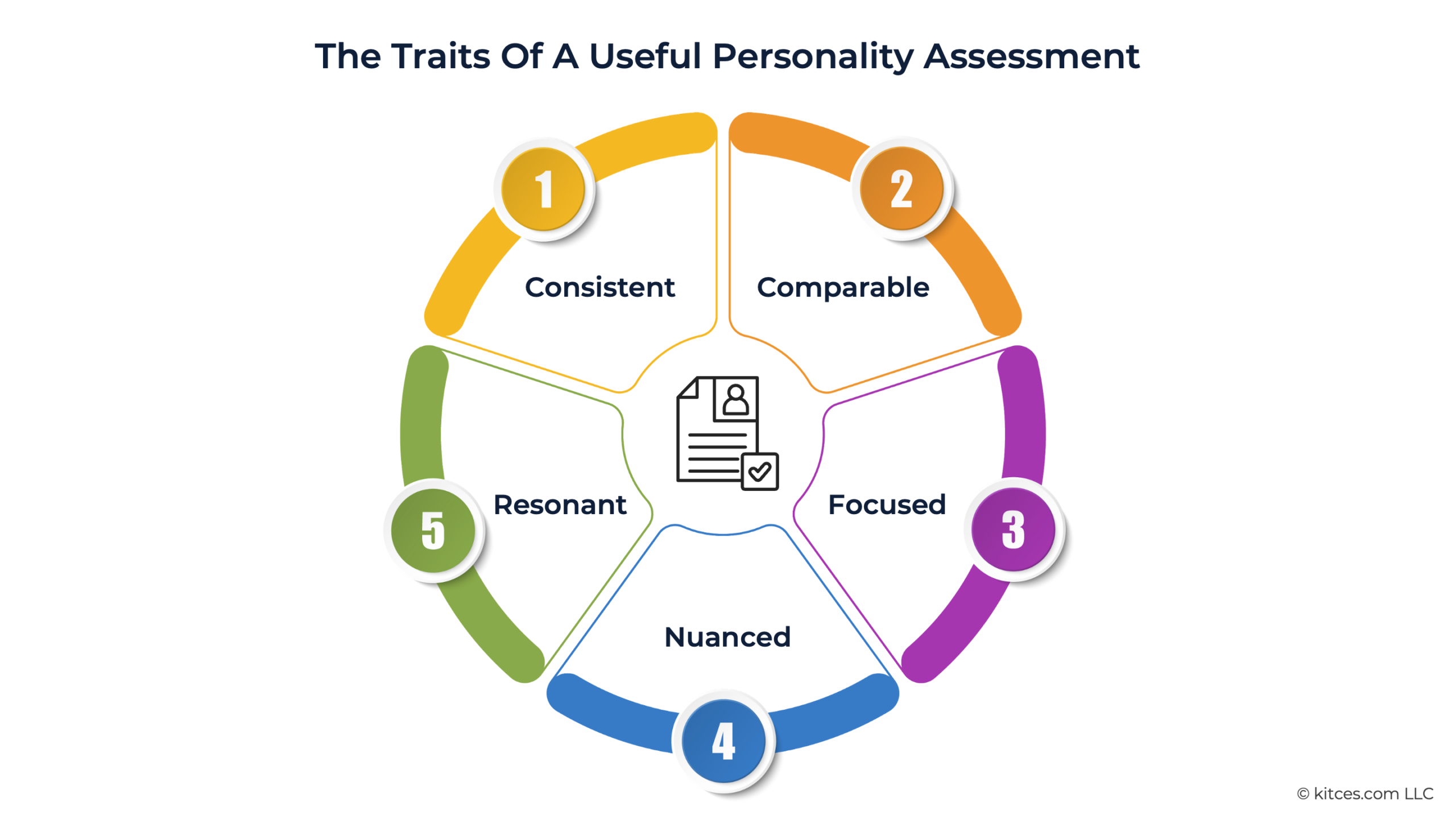
Not all assessments, however, are equally useful in practice. The most effective tools are psychometrically sound (i.e., producing consistent results), contrastable (able to show clear differences between individuals), and focused (avoiding overcomplication). They offer nuanced insights – avoiding false dichotomies like introvert versus extrovert – and resonate with the individuals being assessed. The most valuable assessments fall into two categories: communication style tools, which help teams navigate interpersonal dynamics; and aptitude tools, which clarify how individuals approach work tasks. Assessments like Insights Discovery, CliftonStrengths, Kolbe A Index, and Working Genius are especially well-suited for advisory teams, offering practical frameworks for workload allocation, role fit, and collaboration strategies.
Advisory firms benefit most when assessments are tied to a specific goal – such as improving communication or refining role fit – and followed by structured team conversations. These debriefs create opportunities for reflection and honest dialogue, helping team members understand their results, identify potential conflicts or synergies, and begin to articulate how their roles might better reflect their strengths. The most fruitful discussions happen not when assessments are used to box people in, but when they spark curiosity and collaborative problem-solving about how work gets done. In the long term, assessments can also be used in one-on-one conversations to evaluate seat fit. Sometimes, it can be difficult to 'admit to' or talk about friction in a role, but using assessments as a starting point can provide a helpful point of entry to highlight (potential) gaps between an employee's ideal and current role.
Ultimately, the real power of personality assessments lies not in the test results themselves, but in how those insights are applied. Used strategically, assessments can help managers diagnose sources of team friction, support more satisfying role design, and even inform smarter hiring decisions by identifying where gaps exist within the current team's mix of strengths. Most importantly, they create a common vocabulary for discussing the otherwise intangible elements of work – like communication, energy, and motivation – that drive both individual and firm-wide success. When woven into the rhythm of firm operations, assessments become not just a tool for understanding people, but a lever for unlocking better performance, stronger engagement, and more durable advisory teams.

Assessing personality and aptitude through the lens of the workplace is challenging for managers, team members, and interviewees alike. One of the most-Googled questions about job interviews is how to answer the infamous "Tell me about yourself" question (and how to explain strengths and weaknesses!). On the other end, hiring managers are trying to evaluate what the candidate would 'really' be like to work with. And advisory teams struggle to articulate their own differences and preferences in a uniform and productive way, which can lead to long-term dissatisfaction and even resentment.
The commonly-offered answer to any of these problems is personality assessments: a 2023 Deloitte study found that 80% of Fortune 500 companies used personality assessments in the workplace. These assessments influence hiring, promotions, or refining someone's current job responsibilities – in other words, these results influence very real business decisions.
Personality assessments are common for a reason: a good team member is about more than 'just' competence. Managers and leaders are also searching for people who are pleasant to work with and have an intrinsic inclination towards their work. High job satisfaction in the role is a key determinant in long-term retention – and the easiest way to ensure job satisfaction is to ensure that people like what they do.
Yet while these assessments are prolific, it is less common to use them well. For managers and team members alike, these surveys may feel one-and-done: that is, they are taken, but is anything actually being done with that information?
The Role Of Fit In Job Satisfaction
It is one thing to talk about work preferences on a one-to-one scale – odds are, team members have various ways of working and aspects about their role they would like to change. But it can be challenging to express this consistently in a way that drives change, or to evaluate weaknesses across the organization. Put another way, personality assessments are less concerned with articulating an individual's work style. Instead, they are powerful inasmuch as they create a shared language for advisory teams to discuss individual role fit, from workload to personality. This makes it easier to raise issues – and therefore, enact change in a timely manner.
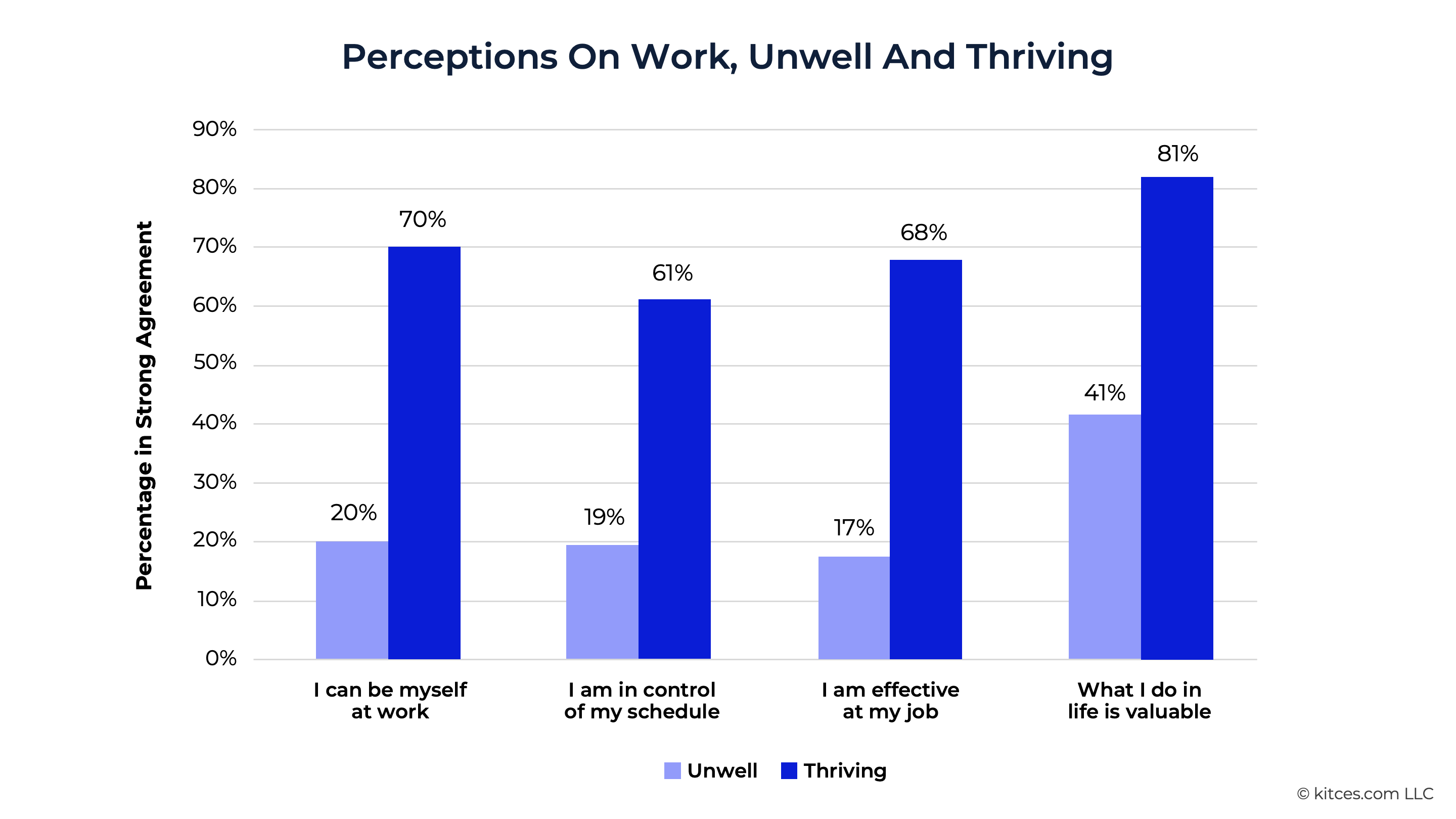
 The latest Kitces Research on What Actually Contributes To Advisor Wellbeing (2025) highlights this well. Advisors with higher levels of well-being were more likely to want to stay at their job. Perceptions of work – that is, how advisors felt in their day-to-day roles – were key to higher well-being. Advisors with high well-being were more likely to feel like they could be themselves at work, effective at their job, and that what they did in life is worthwhile.

Nerd Note:
Kitces Research on What Actually Contributes To Advisor Wellbeing finds that there are other core components that drive advisor wellbeing – namely, that they have enough autonomy over their day-to-day, are fairly compensated for their work, and work a sustainable number of hours. These well-being metrics are rarely either/or – each component is crucial and works in unison to increase advisor wellbeing!
Some of these traits are rooted in firm culture. However, many of them are rooted in the specific activities an advisor performs within their specific firm. Some advisors enjoy the face time of working with clients; others may prefer to focus on spreadsheets; still others may prefer prospecting and growth-focused work. No one preference is inherently better than another – but overall, spending time on work that is engaging and enjoyable leads to higher well-being and decreases the odds of burnout.
What Makes A Good Personality Assessment For Advisory Firms?
Personality assessments can be powerful tools for discussing team strengths and weaknesses – but there are many solutions out there, and they're not all created equal.
Good personality assessments are usually psychometric, meaning that the same person will get the same results each time they complete the assessment. They are also proven to more consistently predict performance than non-psychometric assessments. For workplace purposes, assessments also need to be contrastable and discrete. That is, a score can be expressed as a numeric value or an ordinal ranking, such as a point-based scale or a "high versus low" framework. At the same time, these assessments need to be focused: if they aim to capture too many data points, they become unwieldy as both a point of discussion and contrast. Without the ability to intuitively compare results for a few concrete insights, the results are neither actionable, nor do they foster productive discussion.
An effective personality assessment also provides some level of nuance. It is not helpful to grade someone as an 'either/or'. For example, 'extroverts versus introverts' is often used as a point of comparison, but extroversion (or lack thereof) is better discussed as a spectrum, given that people are neither 100% extroverted nor introverted.
Nerd Note:
This essay by Adam Grant provides a light-hearted explanation of why 'either/or' grading is insufficient, as well as other points on how to gauge the quality of a personality assessment.
Finally, personality assessments need to be resonant. No assessment will capture the full complexity of a human being, but the aggregate results should feel 'mostly right', especially if the end goal is to use them to inform business decisions!
How To Use Personality Assessments Well In An Advisory Team
Personality assessments have a number of uses for advisory firms. First, they can be used by hiring managers to assess candidates on their own inclinations and how they may jive with the established team members. Assessments can also be used to evaluate individual role satisfaction and create a shared language between the employee and their manager. Finally, they can be used to evaluate teams and firms on a more holistic level for potential opportunities, strengths, or weaknesses. In short, a personality assessment can solve a lot of jobs. Yet while a single assessment can be used in a number of ways, starting with a single problem and seeking just one insight will keep the firm focused (and will yield more fruitful discussions).
In the same vein, advisory firms do not need to use all of the below assessments – truthfully, using all of them would be impractical. Certain assessments are particularly well suited to specific problems. At most, advisory teams may opt for two assessments: one about communication style and one about aptitude. Pairing two assessments together can lead to complementary insights, but if the advisory firm has to choose just one, aptitude assessments tend to capture insights about work styles that are harder to articulate.
Regardless of the number of assessments intended to ultimately be used, it is best to start with one assessment at a time and space out personality assessments by at least 9 months. (Candidly, while managers and leaders tend to be quite enthusiastic about the assessments, team members only want to discuss these topics so much.) If intercommunication issues have been a consistent pain point, start with the communication styles assessments. If there have been issues with team retention, or if roles have shifted dramatically recently, then start with the aptitude assessments.
Nerd Note:
One natural weakness of personality assessments is that they're self-reported, which inherently creates some risks. First, employees may feel pressured to give the 'right' answers for the traits they believe the firm is seeking. Second, not everyone can self-describe accurately – some people may overestimate their positive traits, while others may struggle to identify their own strengths, which can alter responses.
Unfortunately, there are few scalable alternatives to personality assessments (e.g., having a group of sociologists conduct a study on an advisory team would be enlightening, but also expensive, time-consuming, and otherwise impractical). When assigning the assessment, reiterate that there are no 'wrong' scores and emphasize that the end goal is to help everyone across the team.
Personality Assessments That (Actually) Work
Given that effective personality assessments are focused and nuanced, they typically deliver one of two types of information: insights into a respondent's communication style or their aptitudes toward different types of work. The former focuses on conflict avoidance (or lack thereof) and how a person shows up at work; the latter emphasizes which types of work people gravitate toward and how they solve problems.
This list does not include every Communication Style or Aptitude assessment. However, these are the assessments that lend themselves particularly well to the consistency, comparability, and nuance needed for informed decisions. and are formatted in ways that allow for particularly useful comparison, allowing teams to highlight both points of strength and opportunities to improve.
As a part of the research for this article, I took all of these assessments (and many more besides). Sample assessment results will be linked below for those who would like a real example of what these assessments look like.
Communication Style Assessments
Assessments in this category include:
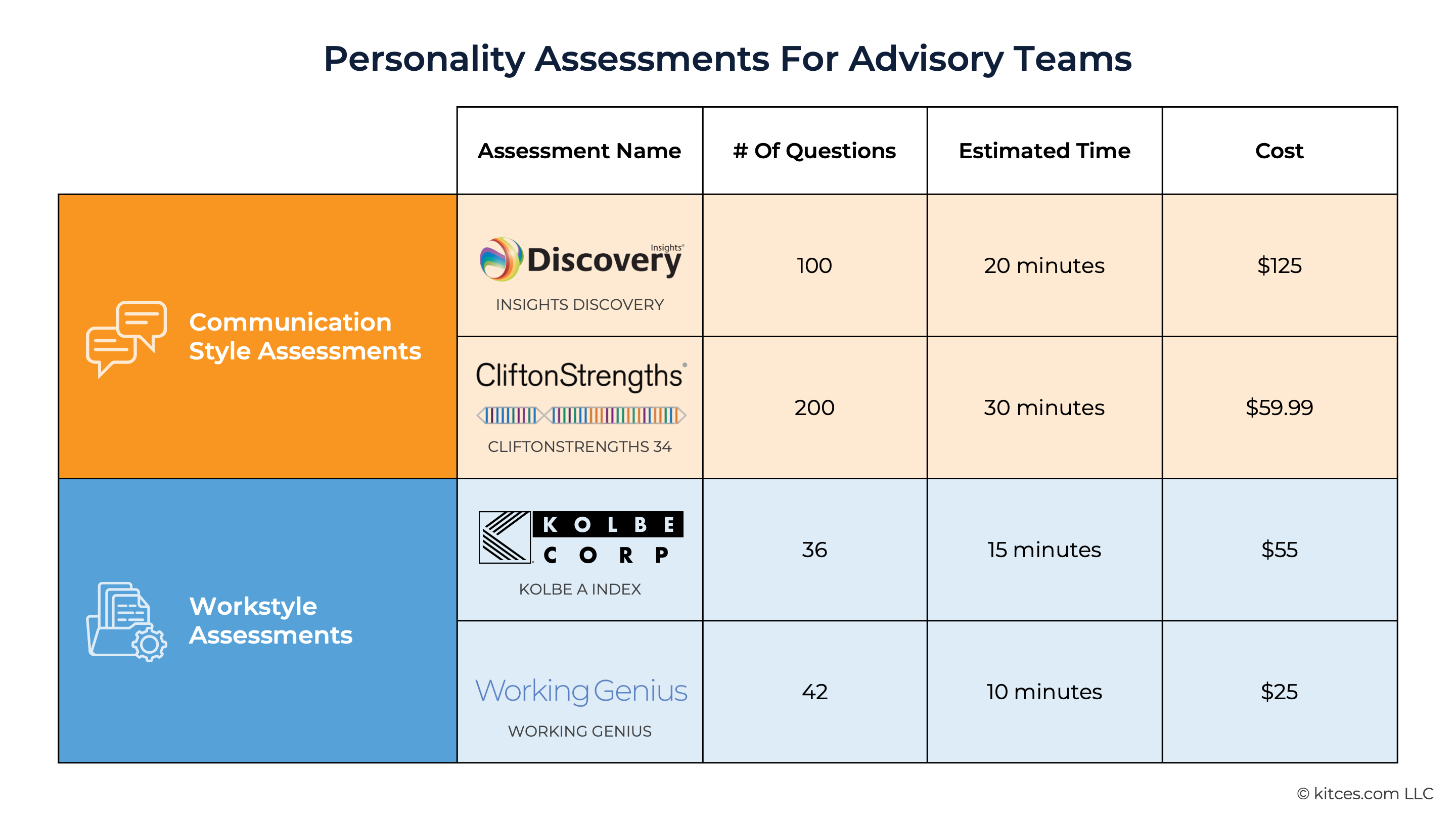
Length: 100 questions (estimated 20 minutes)
Cost: $125
Best for: Analyzing Intrapersonal Team Dynamics
The Insights Discovery assessment is all about communication styles, which are divided into four primary groups: sunshine yellow, fiery red, cool blue, and earth green. The assessment scores people as 'higher' or 'lower' than a central neutral line in various aptitudes. For example, someone who is very above the line in red will be assertive and to the point, while someone who is below it is more conflict-avoidant.
Insights' strengths primarily lie in highlighting potential points of conflict – for example, sunshine yellows are naturally the 'opposite' of cool blues. This provides a powerful framework for team communication styles – and for potentially resolving some team communication challenges!
Nerd Note:
Insights Discovery is very similar to the DISC assessment, although the two cite different inspirations – 'Insights' is based on Carl Jung's personality assessments, and DISC theory is based on Walter Clarke's work. Having taken both, I prefer the analysis provided by Insights Discovery, but DISC assessments can be a good option as well!
Example 1: Insights Discovery gave Dani (sunshine yellow) and Roy (fiery red) a great avenue to discuss their work preferences – Dani felt frustrated that Roy was so 'combative', whereas Roy described his communication styles as 'direct' since he "hates wasting time". They used Insights Discovery discussed their differences and agreed to meet in the middle: they would open the meeting with discussing business (so that Roy could feel that the meeting had been productive), then allocated five minutes at the end specifically to catch up (so that Dani could feel better connected to the team).
Length: 200 questions (estimated 30 minutes)
Cost: $59.99
Best for: In-depth Workload Analysis
CliftonStrengths is the longest assessment in this lineup, coming in at 200 questions. At first glance, the CliftonStrengths results can be dizzying – their design purposefully mimics a DNA sequence, ranking 34 possible traits from highest to lowest. More helpful than any individual result is their four themes: Executing (making things happen), Influence (taking charge), Relationship Building (building strong relationships), and Strategic Thinking (absorbing and analyzing information). Each trait is linked to a corresponding theme, so respondents can quickly review their results and see which theme they 'lead' in.
With CliftonStrengths, it is common to lead in one theme and have a very low score in another – for example, someone may be high in Strategic Thinking and low in Relationship Building. When comparing and contrasting results as a team, it may be less helpful to focus on individual traits and more helpful to focus on the thematic findings. That said, the assessment ultimately strikes a helpful balance between big-picture trends and granular ideas for improvement.
View a sample report (provided by CliftonStrengths) here.
Example 2: When Rebecca reviewed her CliftonStrengths results, she had a moment of clarity. She had been struggling with prospecting calls for months – they felt 'salesy' to her. Her CliftonStrengths revealed that she had very few Relationship Building traits, but she had high Influence and Strategic Thinking traits. She resolved to discuss with her manager whether there was an alternative approach to prospecting that better aligned with her communicative strengths.
Aptitude Assessments
Assessments in this category include:
Length: 36 questions (estimated 15 minutes)
Cost: $55
Best for: Workload Reviews And Discussions
The Kolbe Index is unique in its focus on how different people initially approach work problems, sorted into four categories: Fact Finder (how people gather and share information), Follow Thru (how people organize and design), Quick Start (how people deal with risk and uncertainty), and Implementor (how people handle space and tangibles). Surveyors can be 'long' or 'short' in their results, with 'long' representing a higher score. Someone who is long in Fact Finder may be inclined toward finding all the details, whereas someone who is short in Fact Finder may just want the key facts.
Several of the Kolbe A Index results are not immediately intuitive – for example, Follow Thru and Implementor can feel like misnomers compared to their actual, functional definitions. However, the Index's measurement of traits like Quick Start can be phenomenally helpful, especially in conversations about how workloads are allocated across a team.
View a sample report (provided by Kolbe Index) here.
Example 3: When Keeley reviewed her team's results from Kolbe, she realized that she only had one team member with a long Quick Start (someone who enjoys novelty and responds well to change). Suddenly, she realized why her new initiatives had been stressing out the rest of her planning team. She adjusted her workflows: she tested out new initiatives with the long Quick Start team member, then rolled out only the confirmed changes with the shorter Quick Starts in a gradual, planned way.
Length: 42 questions (10 minutes)
Cost: $25
Best for: Hiring And Big-Picture Evaluations
Working Genius is all about organizing the types of work people do into six categories: Wonder, Ideation, Discernment, Galvanizing, Enablement, and Tenacity. Results are grouped into two Geniuses (the work we do best and find energizing), two Competencies (the work we do well), and two Frustrations (the work we do poorly and find draining).
Working Genius is intuitive and easy to understand – just by reading over the six categories, one can reasonably assume which tasks fit into which categories, such as brainstorming being associated with Wonder and Ideation. However, in its quest for simplicity, its structure can also feel constraining – many people report that they have three areas of Genius or Frustration. That said, Working Genius lends remarkably clarifying language to discussing work tasks!
View a sample report (provided by Working Genius) here.
Example 4: Jamie's results revealed he had a frustration in Tenacity – detail-oriented, manual work. Worse, many of those tenacious tasks were administration and compliance-focused – not planning-focused. He realized he would need to utilize a blend of delegation and automation to take some of that work off his plate – allowing him to focus on Enablement and Galvanizing-focused client work. While some of his 'Tenacity tasks', as he called them, had to remain with him, just having a label for that work helped him stay cognizant of when suboptimal work was being placed on his plate.
Distributing Personality Assessments With An Advisory Team
Whether a firm is using the assessment as a hiring tool or within an established tool, it's best to start by explaining why the group ought to bother with the assessment at all. This explanation doesn't have to be overly elaborate, but it is important to share some fundamental reasons regarding why team members are being asked to fill out questionnaires about how they approach tasks, conflict, or change. Even an explanation as simple as "We're aiming to understand how communication styles vary by role at work" can go a long way!
If the assessment is used in hiring, then ensure that a deadline is provided with the assessment that fits with the hiring timeline and give the candidates a chance to review their results and speak to them in the next round of the interviews.
On the other hand, if the assessment is used internally, give the team members a few weeks to complete their assessments and ensure that everyone has the time to review their results. Then, gather everyone together for a synchronous debrief.
Holding A Team Discussion On Personality Assessments
Ideally, the first time an advisory team takes an assessment, a consultant leads the discussion. Many of these assessments offer certified consultants who can facilitate and lead the discussion! The consultant will be able to explain the results with much more detail while allowing management to join the discussion alongside the rest of the team.
Depending on the size of the team, it can be helpful to start with the entire company together, then divide into smaller teams or departments. If there are only a handful of people, divide into pairs.
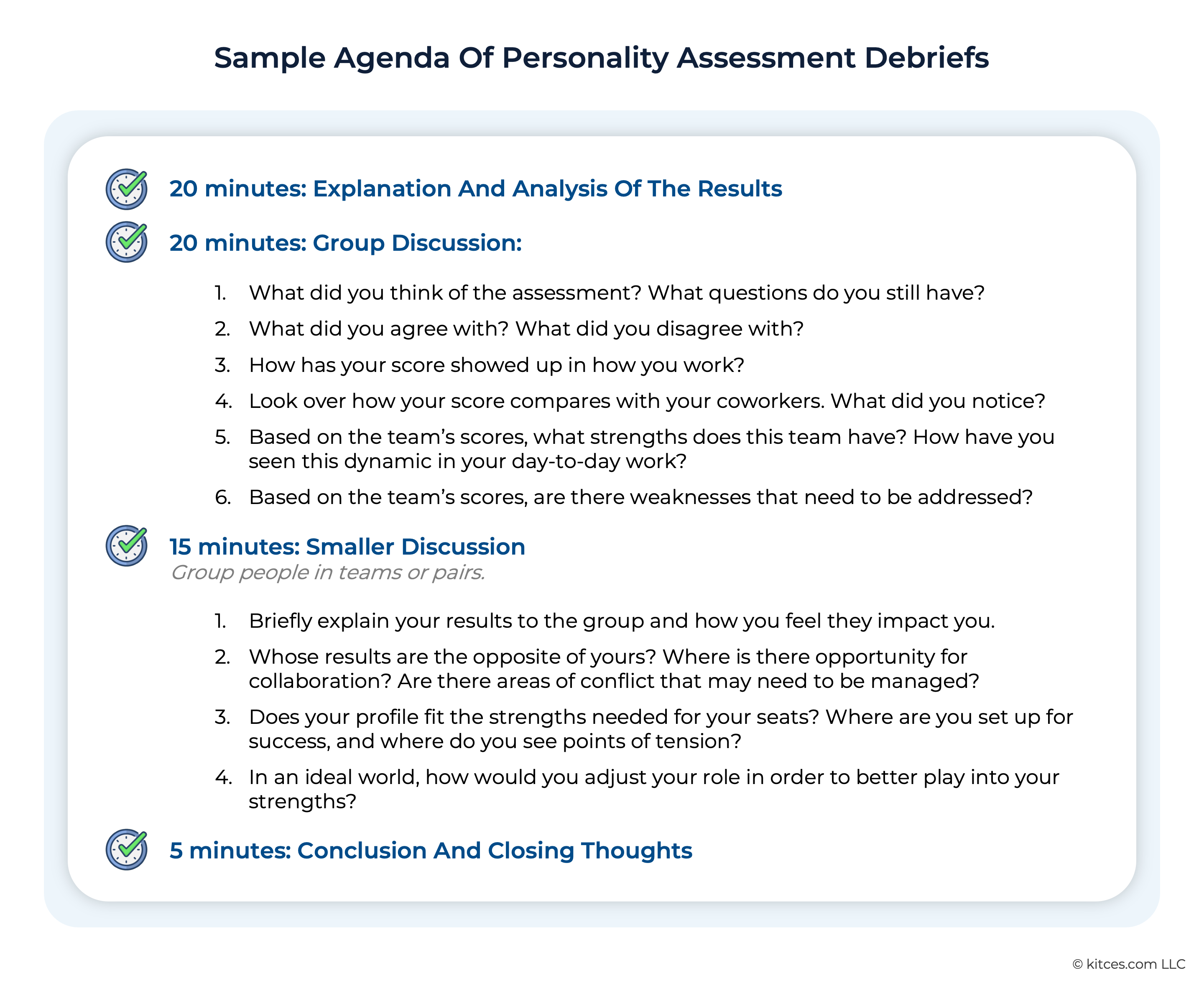
The following questions can help get the discussion started:
- What did you think of the assessment? What questions do you still have?
- What did you agree with? What did you disagree with?
- How has your score showed up in how you work?
- Look over how your score compares with your coworkers. What do you notice?
- Most test providers allow bulk team purchases that provide group analysis as a part of their product.
- Based on the team's scores, what strengths does this team have? How have you seen this dynamic in your day-to-day work?
- Based on the team's scores, are there weaknesses that need to be addressed?
- Whose results are the opposite of yours? Where is there opportunity for collaboration? Are there areas of conflict may need to be managed?
- Does your profile align with the strengths required for your role(s)? Where are you set up for success, and where do you see points of tension?
- In an ideal world, how would you adjust your role in order to better play into your strengths?
These questions can get the conversation started, but the best discussions will come from observation and follow-up questions. Aim to keep these discussions open-ended – envision the conversation to be a brainstorming meeting on how to optimize workflows.
During the conversation – and afterwards – be mindful not to box in team members too much. Avoid absolutes (e.g., don't say, "He cannot do that task") – instead, use language like "inclined toward" or "stronger with" to describe strengths and weaknesses. And keep in mind that everyone's strengths and scores will manifest differently. Team members may have similar results, but those results may manifest differently in their work preferences and behaviors. This is why it's important to ask team members how they understand the results as well as their work. To paraphrase the Working Genius language, some work may seem like a detailed, laborious task to one team member, and another may see that work as team-supporting Enablement. The real power to personality assessments, more than individual analytics, is how they create a shared language for work and work preferences.
Below is a sample agenda of an hour-long team discussion – though, if time permits, these conversations can easily go for longer!
Leveling Up The Advisory Team In The Long Term
A one-off team discussion about personality assessments can be fun and enlightening while helping to set expectations for how assessments will be used going forward – but it is after the conversation that the real work begins.
The first point to focus on is the existing team. Is there any visible tension between team members' responsibilities and their scores? Odds are, managers are already aware of some of the tensions their team members feel – so ideally, these results simply offer a better way to articulate those tensions. For obvious reasons, this discussion is best in a one-to-one conversation, rather than as a part of the team discussion.
The manager can start by noting potential points of tension between the team member's assessment score and their workload – or the team member may decide to bring it up themselves. Regardless, keep the conversation oriented around role adjustments for retention; if the employee feels that their place on the team is at stake, then they will be far less forthcoming about their struggles, which makes it harder to move towards resolution.
This is where a group assessment can be especially helpful – the work that one team member struggles with, another likely enjoys. Managers can take a big picture overview of workloads, aptitudes, and opportunities for growth as they help their team members determine how to redistribute assignments in a way that is both fair and more enjoyable.
If a personality assessment is to be used in the hiring process, before listing the role, review the team's results for any gaps that may need to be filled. Not every team needs to be perfectly balanced, but one or two counterweights can help neutralize the weaknesses and inefficiencies of having too many 'birds of a feather'. For example, in Kolbe, a short Fact Finder can help the long Fact Finders get to the point (and avoid rabbit holes).
Managers can probably guess which assessment results are likely to be effective in a role. When hiring, choose just one 'must have' and one 'cannot have' from a personality assessment; for example, if Working Genius is used, then choose one area of Genius and one Frustration that the ideal candidate would have. Near the end of the hiring process, it can pay to ask applicants to take assessments and see where there is a match – or potential points of tension – that can be addressed further in the final round interview.
Ultimately, the key point is that personality assessments can be a powerful tool for advisory teams in a variety of ways, from hiring to team assessments. Simply taking the assessment is the first step – the longer-term question is how an advisory firm can use the results to 'level up' the entire team.
Perhaps the most important result of an assessment is that they create a shared language to discuss individual strengths and work issues. At the end of the day, when the entire team can productively discuss issues, identify weaknesses, and work together in a way that is synchronized with their inclinations, long-term well-being and retention will likely be impacted in very positive ways!





Leave a Reply