
Executive Summary
Welcome everyone! Welcome to the 483rd episode of the Financial Advisor Success Podcast!
My guest on today's podcast is Erin Botsford. Erin is the founder of The Advisor Authority, a coaching platform that trains advisors on attracting more (and wealthier) clients while also scaling their businesses by building a successful team around them.
What's unique about Erin, though, is how, over the course of her career as an advisory firm owner herself, she developed what she calls the "approach talk" method to closing affluent clients in the first meeting by focusing on risk management exposures that create urgency to act.
In this episode, we talk in-depth about how Erin's "approach talk" method centers largely on making prospects aware of (up to) 26 risk management exposures (including potential estate planning and insurance items) they face that can create a strong incentive to act (though it often only takes reviewing two or three of them to get prospects to want to become clients), why Erin thinks it's important to meet with both members of a prospect couple (and to recognize that different factors that might spur each of them to want to take action), and how Erin, before entering the room for a prospect meeting, showed them a "founders video" that introduced her and her story to the prospects efficiently (removing the temptation for her to talk extensively about herself during the meeting itself).
We also talk about how Erin used a fee structure that includes both a flat planning fee (to orchestrate implementation of the risk management plan) and an AUM fee on the client's assets (to compensate for the advisor's work managing their portfolio and the risk exposures they take in doing so), how Erin finds that advisors often need to quote a higher planning fee than they might expect when meeting with a high-net-worth prospect (as doing so will help the prospect associate the advisor with the attorneys and other highly paid professionals they already work with), and how Erin found that while some prospects might have initially resisted moving all of their investible assets to her firm from their current advisor, they typically eventually would once they understood that she was raising planning issues that their current advisor never addressed (and would therefore likely provide a deeper level of service in the process).
And be certain to listen to the end, where Erin shares why it's important for founders to be able to eventually remove themselves from every client case in their firm (both to better scale and to ultimately increase the value of their business), why Erin encourages founders to think about what they want their last day in the business to look like and then work backwards to inform how to structure their firm today, and how working as an advisor coach has ultimately allowed Erin to give back to the profession and expand her own philanthropic goals.
So, whether you're interested in learning about a process to close more clients in the first meeting, using a fee structure that combines a flat planning fee with an asset-based fee, or how founders can effectively remove themselves from every client case as their firm grows, then we hope you enjoy this episode of the Financial Advisor Success podcast, with Erin Botsford.

Podcast Player:




Resources Featured In This Episode:
- Erin Botsford: LinkedIn | Website
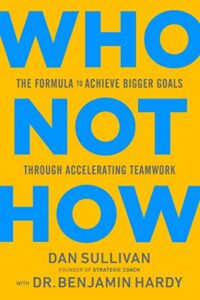
- "Who Not How"
 by Dan Sullivan and Benjamin Hardy
 - The Allianz Women, Money, and Power Study: Empowered and Undeserved
- Kitces Report: How Financial Planners Actually Do Financial Planning
- #FASuccess Ep 168: Building An Advisory Firm That Can Be Sold Even When Your Name Is Still On The Door, with Erin Botsford
Full Transcript:
Michael: Welcome, Erin Botsford, to the "Financial Advisor Success" podcast.
Erin: Well, thank you for having me.
Michael: I'm excited to have you join us, or I should really say, have you join us again. You were actually with us about six years ago, having talked about the growth journey of building what at the time was a nearly a billion dollar advisory firm. You had since retired, made some transitions into consulting back to the advisor community. And now, I'm kind of excited that you're back and we get to talk more about growing the business and, I guess, really, like, lessons learned from your building over the years that we can bring back to the advisor community.
And to me, the part that really sticks out is, like, the challenge that we go through when we want to attract and actually get higher dollar, higher-net-worth clients to agree to work with us than wherever we started originally in the business. I think the industry label we have for this now is, like, moving upmarket. And we find, from our productivity research on the Kitces platform, that that is actually one of the biggest predictors of high productivity advisors. Most of us try to get more productive by working faster and more efficiently with the clients we've got who, at the end of the day, just are still only willing to pay us so much for the value of our time in the first place. And in the end, if you do $250-an-hour work faster and better with technology, it's still $250-an-hour work.
And most of us don't get paid on an hourly basis, but if you take your AUM fees and divide by how many hours you spend servicing clients, you're still going to get to a number of how your clients value an hour of your time. And it turns out one of the biggest lifts of productivity is work with clients who value your time more, which usually means clients who are more affluent, greater complexity, and have the financial capability to pay you $500 an hour for your time instead of $250 an hour of your time. Which doesn't necessarily mean working with the ultra-high-net-worth, like, decamillionaires and up. For most advisors, it simply means going from working with $300,000 clients to $500,000 clients to million dollar clients to $2 million clients. And that can be world changing in the revenue economics for a business.
But the caveat that working with millionaires and getting them comfortable enough to entrust you with their life savings is different, is more challenging. And is the point where I see a lot of advisors struggle to get those clients to actually say yes. So, I would say, just I'm excited to get to dive in today about what it takes to evolve your practice from working with what's called the mass affluent to actually working with million-plus dollar clients. And when it comes to a sales process and approach talk with prospects, how do you actually get to the point of having them say yes to work with you?
Erin: That's a really good question. And I feel like I'm an expert in this area because I started a long, long time ago and I perfected the art. And the nice thing is now, I've trained over 2,000 advisors and they're able to do exactly what I was doing. So, Michael, the good news is it is a formula. And when you use the formula, it's kind of like baking a cake. As long as you put the ingredients in at the right time, you get the cake that you want, you get the outcome that you want. If you miss the eggs, okay, you get a flop, you get a mess. So, that's the really cool thing about this, is when I was doing it in practice, I was unconsciously competent. I didn't know that I had created a formula. It wasn't until I decided to start training advisors. And I had an advisor follow me around for two years and he documented the process. Because before that, I was just doing that. So, now, it is a documented process. And if you follow the process, you get a yes at the end of the meeting, which is awesome. So...
Michael: I love that framework. I was doing it. It was working. I didn't necessarily know how to translate it to others, so I just had someone follow me for two years and document it all. And it was their job to figure out how to take the thing that I'm just doing naturally and is working well for me and help me turn it into something that is teachable and trainable to others.
The Importance Of Meeting With Both Members Of A Prospect Couple [07:11]
Erin: Yeah, it really is a recipe. And so, if you want me to start, I think the one thing that advisors kind of either don't know, don't learn, is there's so much psychology in the sales process. And I think there's a lot of training on behavioral psychology, behavioral finance, etc. But it really is real. And that's where I always start because...a lot of people, they come to me and they say, "Hey, Erin, can you help me find those $10, $20, $30 million prospects?" And I'm like, "Of course, I can." But I'll always say to them, "What if I put you in a room, it's a Tiger 21 room full of prospects worth $20 million or more. The question is, would you have any idea what to say to them to get a meeting? And then once in the meeting, would you have any idea what to say to them to get a yes?" And most advisors, if they're honest, they'll go, "I'm not sure."
And so, that's why I think it's so important what I teach in my training is, let's learn how to close a prospect of any size in the first meeting. And I'm here to tell you, it's no harder to close a $30 million prospect than it is a $500,000 prospect. It's no harder because you're dealing with human psychology and that never changes. And so, the problem, I think, in our industry, is advisors don't deal and don't recognize human psychology, so they start with product or they start with data or they start with information. And that just puts people to sleep.
And so, I thought I'd share with you a couple of things that advisors really should know. And once they know this, it makes it so darn easy. And so, first of all, typically, we're planning for, let's call it a couple. And it really doesn't matter whether it's male or female, it's gay, it doesn't matter. When two people are together, they, typically, opposites attract. And so, let's just say, in a general heterosexual couple, male-female, the female is always way more risk averse than her male counterpart.
I don't know if you remember, Allianz did that study back in 2012. And I was shocked, and people should really Google that search or that study, it said 57% of college-educated, working women, their biggest fear is not only running out of money, but becoming a bag lady. Now, Michael, think about that. There's a long trajectory from, "I'm a college-educated, working woman now, I lose all my money, and I end up a bag lady." That's a long trajectory, but that is so real. And I saw that in my practice. I know it personally, you know, from my personal background. Yes, I can relate to that, but a lot of advisors, they may even know that information, but what they don't know is they don't know what to do with that information.
Now, her male counterpart, I always say, it's just a DNA thing. My husband, if somebody said, "Well, if you do this, you might run out of money," and he'd be like, "You know, as long as I had a big screen 85-inch TV and a futon, I'd be good." That's how my husband would feel. And I tell advisors, a woman will never ever feel that way. She wants to protect her money for herself, her children, and her grandchildren, and she will move mountains to make that happen.
And I think it really goes back. It's not a cultural thing. It's not a 2025, '26 thing. It goes back to the dawn of civilization where he went out with his buddies and killed the animal, brought it home, she fried up the pan, she fried up the bacon, and took care of the kids. And so, I think it goes back that deep in that DNA. And so, what I teach advisors is, let's understand what the DNA is, and then let's use it to our advantage. So, that's the first thing, is how different men and women feel about money, and especially, the fear of loss of money and the fear of loss of lifestyle. That's one thing.
Michael: Wait, but I want to understand this further for a moment. So, what am I doing with this in a meeting? What am I saying and doing differently? Because I'm envisioning a lot of things I could say. They're probably going to sound patronizing to a spouse if I don't open this conversation appropriately.
Erin: Well, you will see. That is to be determined, because there's only one other thing I want to point out, and then we'll go into what do you do with that information. So, the second piece of information that's really valuable is, again, in a couple...and the big thing is all advisors would say, "Yes, I'm going to be working with a couple that both of them need to be there at that first meeting." But how many advisors, Michael, do you think, they've scheduled an appointment, husband and wife are coming in, but the guy shows up? Do they do the meeting?
Michael: Most of us usually, yeah, you don't want to blow it up on the spot.
Erin: And the problem with that is if you do the meeting…I'm going to teach these people how to do the meeting in just a second…remember, as you know, I use things called disturbing tracks. I disturb them out of their slumber about things, and he can't be disturbed. So, she sends him, "Hey, go meet with that financial advisor." He goes in. The advisor does exactly what I'm going to share today. And then he goes home and she says, "How did that meeting go? What did he say?" He goes, "We're fine."
So, again, I always tell people if you want to use my technique which ends up in a yes at the end of the meeting, they both have to be there because each one of them, and we're going to talk today about using "disturbing tracks", each one of these will impact her or him or both, but they both have to be there for it to be effective. And I think it's unfair, really. I would be upset with my husband if he showed up with a financial advisor and I'm not there. I want my interest spoken at the same time. So, I wouldn't appreciate that at all.
The "Greeting And Seating" Part Of Erin's Formula For Converting Prospects To Clients [13:19]
So, anyway, the other thing about that is now, you get her to show up, they're both there, the couple's there. There's a very specific greeting and seating system that is part of this formula. And the reason for that is, first of all, people need to be greeted within two minutes of arrival. And we had a television screen in our lobby, and the television screen said, "Welcome Mr. and Mrs. Smith." So, as soon as the prospect walks in, they know that we are ready. We're expecting them.
And the reason this is important, Michael, I don't know if you've delved into this at all, but what I found was that a prospect coming in to see a financial advisor is probably one of the most scary meetings they've ever had in their life, even if it's from a strong referral. I think it's worse than going to a dentist for people. Because think about it, they walk in, they know at the end of the meeting, the advisor is going to, essentially, ask them for their business, ask them to trust them with their life savings. And prospects are like, "Oh, my gosh, this guy seems really nice, but what if he's the next Bernie Madoff?"
So, prospects are always looking, from the very get-go, they're looking for excuses not to do business with you. So, the key is, don't give them any excuses. So, that's why when they walk in the door and there's a television screen that says, "Welcome Mr. and Mrs. Smith," and they're like, "Okay, they're prepared, they're ready, they got their act together." Within a couple of minutes, somebody comes out and they greet them, and then they ask them for their drink of preference. And so, they leave them in the lobby. By the way, this also translates into a Zoom call because a lot of people are working remotely, but I'm just going to do a traditional. And they go get the drink, and you want to place the drinks where you want these people to sit.
And so, in my case, knowing what I know about women and men and DNA and all that, I always sat the woman at the head of the table and the man on the side of the table. When he's looking at me, there was nothing behind me to distract him. And Michael, you have to realize, I had two offices and seven conference rooms, and so, everybody on the team needed to know, in every single conference room, where did I want the woman and the man to be seated for the most effective outcome. So, a lot of times too, and the reason I want to sit her at the head of the table is, you know, 80% of our advisor population are men. Is that still correct?
Michael: Yeah, about that, 75% to 80%-ish. It hasn't moved much in about 30 years.
Erin: Yeah, I was a unicorn back in the day. But anyway, what happens, and this is just naturally, the male advisor, or even me, you go in and you find out he's the CFO for Toyota and she's a stay-at-home mom or whatever, and we tend to bond with the breadwinner, "Hey, so-and-so. How about the hockey team scoring the gold medal? How about the Cowboys? How about this? How about that?" And she kind of sits there and she's not included in the conversation. This is so normal, so traditional. So, the biggest thing we want to do is we want to make sure we include her.
Because, Michael, the other piece of psychology that is huge, and everybody listening to this podcast is going to understand what I say, and that is, at the end of the day, she has a superpower that she can use at will. I call it absolute veto power. And if she doesn't like you, she feels ignored, she feels marginalized in any way, by the time she gets to the car in the parking lot and shuts the door, you're going to be history. So, knowing that, it's, like, I want to make every attempt to make sure that doesn't happen. I don't want her to... Because I ignored her, I didn't get her input, I didn't get her feedback, etc. So, I'm going to place her in a position of honor as much as anything so I don't leave her out of the conversation. And I make sure that her input...because at the end of the day, in a couple situations like that, this is a broad statement, but she's your buyer, she is your buyer. And if she's not the CFO for a big company, she's a stay-at-home person, at the end of the day, she gets to nix the deal if she wants to.
And so, if there's only one thing an advisor that's listening to this podcast gets out of today is, always seat her at the head of the table, and make sure you bring her into the conversation immediately and her inputs are valued. And not be condescending toward her or patronize her, it's just make sure she's heard because she's a big part of the equation. The other thing we talk about is, why do you want to close a prospect in the first meeting? Why is that so important? Well, first of all, when you have two, three discovery meetings, all that really does, it gives your prospects more opportunities to say no to you. It also, if you can close a $2, $3, $10 million prospect in the first meeting, man, that creates a lot of efficiency. You don't have to wait for the money to come. So, it just makes sense.
Using A "Founders' Video" To Concisely Show Prospects Where The Advisor Is Coming From [18:29]
Michael: So, what about all the advisors who fear, who worry like, "I don't want to be pushy. I don't want to be seen as salesy." Like, a lot of folks I find struggle with, as they would probably frame it, like, pushing for a close on the first meeting and not giving clients time to digest, think it over, come back with more information, questions, etc.
Erin: Yes, we're going to take care of that problem right now. Okay, so here's the way that I approached it. And again, I'm just giving the real, live stuff, and that is, I would make sure that they were greeted and seated appropriately. Now, one thing that I think is super important is I encourage all my advisors to get what we call a founder's video. Because at some point in a meeting, you're going to have to tell a little bit about yourself. And so, what I would say, when I didn't have a founder's video, and what I teach advisors to say is, you want to, you know, of course, have the niceties and get a little information.
And by the way, write this down for anybody listening. There was only a few pieces of information that I needed to close a prospect. I needed their names, the names and ages of their children, and hopefully, an approximate net worth. But I really didn't need the approximate net worth. I'll show you how I overcame that. So, really, I mean, that's all I needed to know to close this prospect.
So, I would, you know, make the niceties. And then when it was appropriate, I would say, "You may be wondering how I got in this business and why I'm uniquely qualified to help you with your financial planning." And then I would tell my personal story. And, you know, we got into my personal story on the last podcast. But the thing about it is, sometimes when an advisor needs to do this, they need to tell their personal story, and what they want to do is tell maybe something kind of crappy that happened along the way, but then how the advisor overcame that. Because in our culture, overcoming adversity is still very much appreciated and applauded.
The problem is, advisors, they're nervous, especially, it's a higher-net-worth prospect than they're used to having. Like, it's an $8 million prospect and they're used to $500,000, so they get really nervous. And then they talk, talk, talk. They talk about themselves. They do talk about this adversity, but by the time they've talked about their third divorce, okay, what they forget to do is, is you want to tell something that happened, and that you want to show how you overcame it. And in their nervousness, they leave themselves in the proverbial mud puddle. And all they ended up doing was demonstrating that they showed bad judgment. And that happens all the time.
And so, I'm like, people, you only get one chance to make a first impression. So, get a founder's video done. Have a script. And we have a script writer on our team. It's professionally written script. It's only about a minute and a half or two minutes, but have that founder's video played before you even walk in the room, or played before you get on the Zoom call.
Michael: I was going to say, where do I put this or distribute this or share this?
Erin: It's going to be played. You know, in our conference rooms, we had a TV, so it would be streamed on the TV. Or it could be on a Zoom call. Your assistant opens up the Zoom call, "Hey, Michael will be here in just a second. In the meantime, I'd like to show you this two minute video," right? That's how you do it.
Michael: So, this isn't a, like, I'm sending them an email with a video link in advance or putting it on the website or something.
Erin: No.
Michael: You're doing this, like, to kick off the meeting. Hey, before you as the advisor come in the room, my team will say, "Hey, Erin will be here. Michael will be here in a moment. While you're waiting, here's a brief video you may find helpful just to understand a little bit more."
Erin: Totally. And in my case, again, I would have my team member tee up the video. And the big thing is, remember, they've greeted the people, they got their drink of choice, and they put her drink. She wanted coffee to put it at the head of the table. His drink was a Diet Coke. They seated where...so, those people would gravitate to where the drink was. I mean, this is all very scripted. They're sitting there. My team member would stay in the room with them, and then tee up the video. And so, when the video was done... I might be standing outside the door listening. I could hear the end of the video and then I'd walk in, "Dun, dun, dun, here I am." So, again, that got it out of the way, telling my story. Because it's important because at the end of this meeting, I'm going to be asking them a lot of personal questions about themselves. It's kind of like, how dare I ask them about themselves if I haven't revealed anything about me, right? So...
Michael: But the point of doing it in recorded video is, if I make it as a recording that I've scripted and delivered well, I can't go off the rails and accidentally talk for 17 minutes about my entire life history. Is that the point?
Erin: A hundred percent.
Michael: I'm bar railing myself to tell the right amount and not too much because I'm taking out of my own hands.
Erin: A hundred percent, yeah. And the funny thing is we have advisors, like, they'll write their own script, and they'll send it to us and I'm like, "Oh, my gosh, this is terrible." We've got to narrow it down. Because, yeah, you want to have one challenge you overcame, but you don't want to tell your entire life story and accidentally forget how you overcame it. It can be a disaster otherwise. So, it doesn't cost very much to have a video done. Trust me. And it's worth it. Because, again, every step counts and that's not the place where you want to screw it up, where they're sitting looking like, "This guy's a moron." You don't want that.
Closing Clients In The First Meeting By Focusing On Risk Management And "Disturbing Tracks" [23:59]
So, now, the story has been told. And so, then you begin what I call the approach talk. And Michael, I only used two slides where, basically, I would draw it out on a whiteboard or I would draw it out on a yellow, legal pad in front of them. And what I would say is I would draw a box and it had four quadrants in it. In the middle, there was the letters FD, financial director. On the top of the box, if anybody wants to write it out just for their own fun, the top was investments and retirement planning. On the right hand side of the box was RM for risk management. On the bottom of the box was estate planning. And on the other side of the box, the right hand side was, or I guess, it would be the left hand side, was family office services.
So, that's the box that I would draw out. And I'd say, "Mr. and Mrs. Smith, thank you for coming here." And I would say, "In our practice, and I know a lot of you, you've probably met with other advisors, and most advisors start up here." I'm going to point to the top, in the area of investments and retirement planning. I said, "In our practice, we always start over here in this quadrant we call risk management. You may be asking why. Well, it's my belief that whether you have a million dollars or $10 million or anywhere in between. If an event happened, and let me assure you those events happen in a split second of time, that would cause you to lose all your money, I don't really care how well your money is being managed, it's just that much more for you to lose."
Now, I want to pause here for just a second Michael. I want to point out something that I did. In this case, I said, "Whether you have a million or $10 million or anywhere in between," I'm making the assumption, I either know or I'm making the assumption that these people have one million dollars. And what I've done is I've said, "Whether you have a million or $10 million or anywhere in between," it gives the illusion that not only am I very comfortable working with somebody with a million dollars, what they have, I'm actually comfortable working with people who have ten times the amount of money that they have. So, do you see the psychology of how that sets the stage?
Michael: And so, that range gets re-anchored to whatever you know of their financial worth. That's why you said earlier.
Erin: That's correct.
Michael: I need their names, their kids, and their approximate net worth because I'm going to re-anchor that to wherever they are.
Erin: Correct. So, if know they have $2 million, my number is whether you have $2 million or $20 million. What's really fun is when you have a guy that comes in, he just sold his business for $10 million, and he thinks he's all that. He's kind of got his arms folded and he's kind of like, "Well, I'll listen, but I don't really want to be here." And you go, "Well, whether you have $10 million or $100 million or anywhere in between," it is amazing when you watch his reaction. He's like, "Oh, okay." Now, I haven't said I work with $100 million people, but just by positioning it that way, he kind of, like, unfolds his arms, kind of leans forward like, "Well, maybe she's credible. Maybe I should listen to her." It's just such an amazing, just these little nuances that drive the outcome.
So, again, I say, "You may be wondering…we operate in the area of risk management. Whether you have a million, $10 million, events happen." And so, I'll say...then my next chart, so that's all I've said at this point, we start in the area of risk management. And I'll have another drawing. If people want to draw it out, I draw a circle, very simple, with an L in it. And on the side of the circle, I have all these arrows kind of pointing into the circle. And I'll look at them, I'll say, "Mr. and Mrs. Prospect, here is your life, that circle with the L. And by virtue of the fact that you're sitting here with me, it probably means that you're well on your way to having a nice, comfortable, wonderful retirement, whatever your goals may be. But life has a way of throwing little barbs at us. I call those risks.
And in our process of starting in the area of risk management, should we decide to work together, we would take you through a conversation. We call it our visions and values conversation. Because essentially what I'm going to be looking for is I'm looking for potential train wrecks. What could come along and disrupt your plans for this nice, comfortable, wonderful retirement? Or either opportunities, either in lifetime or death, to take care of the people and the causes that you care about. That's why I'm going to have, in our process, should we decide to work together, this visions and values conversation.
Because here's the thing that we have found with risk, Mr. and Mrs. Prospect, and that is this. We want to be able to identify any potential risk, any vulnerabilities that might be out there sort of lurking in the shadows that maybe you're not even aware of. Because when we find a risk, what we want to do is quantify that risk and say, 'What would it take to make that risk go away?' Because really and truly, there's only two things that you can do. Once you identify a risk, you can either transfer the risk through some means. Maybe that's buying a term life insurance policy on your 40-year-old son who has four kids and no life insurance. I don't know. Or maybe it's buying 529 plans on all your nieces and nephews because you want to make sure they can go to college. I don't know what those risks are going to be and how we resolve it. Because the only other thing you can do with a risk is just assume it and pray that that thing doesn't happen to you. So, one of the risks we all have to assume is the risk of our health. So, we eat well, we exercise, we do whatever. In the spirit of that, Mr. and Mrs. Smith, would you mind if I asked you a couple of questions?"
Now, I stopped there and get their permission to start asking these questions that I call disturbing tracks. Now, remember, this should start bringing things together. What I know about her is she's very risk averse, right? If she thinks there's anything out there that could come along and disrupt her plans, force her to change her lifestyle, remember, she's the one that thinks she's going to end up a bag lady, she will say "Yes, I want to know. Basically, yes, ask any question that you want." She wants to know if there's any risks out there.
So, Michael, in my career, I've found there's 26 potential, let's say, risks that might be out there that might affect her lifestyle, her children's lifestyle. And so, I teach these 26 different risks, but in the conversation, I'll end up doing two, three, or four. And if I do this, and I'm happy to share with you and your audience right now or today, after two or three, he's going to be sweating, and she's going to be pounding him in the side going, "Okay, we need to get this stuff fixed." Again, these are called disturbing tracks. Because a lot of times, what you're trying to do is create a triggering event in their head to say, "Oh, my gosh, I have some unfinished business out there. Nobody's ever talked to me about this stuff. And we need to work with this person because they've identified potential threats to our financial security that nobody ever talked to us about before." Does that make sense?
Michael: Yeah.
Erin: So, what I do is I always start with her. There's, again, going back to, she's my buyer. She has absolute veto power. She is risk averse. She wants to protect her money for her, her children, her grandchildren, and she'll do anything to make that happen. I know that about her. So, I'm going to start with her. I'm going to start a disturbing track literally about a super simple conversation about the distribution of their assets to their children, their estate plan.
Now, I do want to caveat something and say you never, ever, ever want to ask these people to send in their estate planning documents. I know a lot of advisors, they'll say that, "Oh, we'll do a free review of your estate planning documents." They put it in Wealth.com or Vanilla or something. If you did that, that would completely nullify the effectiveness of what I'm going to do next. So, don't ever ask them. Because if you ask for their estate planning documents, they would expect that you've already read them and you wouldn't know what's in the estate planning documents, so I don't want to do that.
Basically, I'm going to say to her, "So, Mr. and Mrs. Smith, can I assume that if the first of you dies, the majority of the money is there for the lifestyle of the survivor, the two of you." "Yeah, yeah. If I die, she gets it all," they'll say. "So, let me ask you a question, when the money then goes to your children, how does it go to them? Does it go to them outright, like they get it all at once at the second death, or does it go to them in some kind of a graduated distribution, like they get some at 30, some at 35, some at 40? How is the money distributed?"
And then I just wait. I always think it's like those TV shows. It's like, "Da, na, na, na." I wait for them to answer, right? And they'll look at each other and they typically don't know. They don't remember. Their estate planning documents are 14 years old. But they have to guess. And you notice, Michael, what I gave them was, is it A or is it B? So, they have to answer me outright or graduated. Those were the two choices. And it really doesn't matter how they answer me, but a lot of times they'll say, if they think it's more sophisticated, "Oh, yeah, it's graduated. That's right. Yeah, I think they get some at 30, some at 35, some at 40."
And I always answer, "Huh, I find that interesting." They're like, "Why?" I go, "Okay, well, let's just play this out." I will actually draw it out on a whiteboard or on my piece of paper. I'll say, "So, you just told me you have three kids. And let's say when the second of you dies, your youngest child is age 42. And so, if it's graduated distribution, do you see that he would have gotten some at 30, 35, 40? He's blown through all those graduations, and now, at age 42 he gets all the money outright. Do you see that?" They're like, "Yeah." "What if, at the time of your death or two years later, what if he happens to be going through a divorce? Would you really want your soon to be ex-daughter-in-law to get half of the money that you intended to leave to your son? Was that an outcome you'd be happy with?" And she'll be like, "No, no. No, I wouldn't want that." And I'll say, "Or let's say your middle child, she ends up being a medical doctor. She's now 45. She's being sued for malpractice. Would you really want the money you were leaving to your now doctor daughter to be available to satisfy a malpractice lawsuit? Is that an outcome you'd be happy with?"
So, the bottom line, there's four different scenarios that I can take them down, none of which is ideal. And they're like, "No, we don't want that." I'm like, "Not to worry. If we work together, we can get that fixed." And then I'll go on, I'll say, "Most of our clients that we work with, they would rather have any money that is inherited by their children, they would like to have it protected. We call it bulletproofing. We want to make sure it's protected from things like their future divorce, liability suit, creditor, bankruptcy action. Is that something that you'd be interested in?" "Oh, yes." She's going to say, "Are you kidding? Yes, I want my money protected for my children. How soon can we get this done?"
I can stop right there, Michael. I can stop right there. She's made the decision. And she will make that decision every single time. So, but in case I don't see that body language, I'll go on to another one for her. Then I go on to one that addresses his. And I don't know how deep you want me to go into this, but it's just like taking candy from babies. It seriously is. And so, there's 26 places I can go, but there's 3 that I do in sequential order. And I'll usually get a yes after the first one, but I always get a yes after the third.
Michael: So, what are the second and third in this sequence?
Erin: The second one has to do with...okay, this is kind of funny. And, again, I know my buyer. I know my female. I know she's my decision maker. So, this is a fun one, and it involves... I asked them, I said, "Okay, so let me ask you this. Okay, you've already told me how your assets are distributed to your children, but let's say this. So, Mrs. Smith, let's pretend you die first. Is there a provision in your current estate planning documents that if your husband gets remarried, that he has to sign a valid prenuptial agreement with his next spouse or he loses access to your half of the money? Does that provision exist in your current estate planning documents?"
First of all, they're not going to understand what I'm saying at all. They're just like, "What? What? I don't understand." So, I'm like, "Okay, let me just give an example. Let's say I die first. And my husband Bob, let's say, he's now 86 years old, and he starts dating a 20-year-old Dallas Cowboy cheerleader." And I'll say, "So, my son Kevin knows there is a provision in my estate planning documents that if Bob is so delusional and he marries this gold digger, that he must sign a valid prenuptial agreement with this gold digger, otherwise he loses all access to my half of the money. Because I want my money to go to my son Kevin and my three grandsons. Does that provision exist in your documents?" What do you think she's going to say? First of all, it never exists, never. And she's going to say, "I want that. I don't want her to get my money." She can already picture her. That's the crazy thing. "I don't want her. I don't like her. I don't want her to get my money."
And the funny thing is, I can bring out this statistic, and I don't know if you've done this, that the average male, if he's a 60-year-old male, his spouse dies, he will be remarried within 2 to 5 years. A woman on the other hand, if her husband dies, it's 10 to 15 years, but more often than not, she never gets remarried. So, again, we can go more into the details of all this. The nice thing is I was given the language about this from a California attorney. And we give this language that would be put into the documents to our advisors. And they go to the attorney and say, "Will you put this in?" The attorney is like, "Yeah, sure, I'll put it in." But it's super effective because she doesn't want to think that her money, after she's dead, is going to go to some gold digger. She wants that money to go to her kids and her grandkids. So, we just have a nice little discussion about that. She goes, "How do we make sure that that happens?" "Well, if we work together, we can get that fixed."
So, those are her two she has to have. She's sold, I'm done with her. Okay, now, I could move on to the guy. And what's interesting about the male, again, he's kind of sitting there. He's impacted by the stuff that we've talked about because now his side hurts. She's digging into his side going, "We got to get this stuff fixed." And then I say to him, so he's worth however much money, he's worth $20 million, $5 million, whatever he's worth, I go, "So, let me ask you this. How much umbrella liability insurance do you have?" And he'll be like, "Oh, we got a million. Yeah, we got a million." I go, "Well, you're worth $10 million. Is that what you just told me?" He goes, "Yeah, yeah, we're worth, we got a million dollars."
I go, "So, you also told me that you have an 18-year-old son driving a car down at Texas A&M. Did you mention that?" "Yeah, we sent him off with a brand new Corvette." I said, "So, what happens one night if he ends up he's sleepy, tired, he's been studying all night, he's driving home and he hits a plastic surgeon, and now, you're being sued for $25 million. What's your plan around that?" That's what I say, "What's your plan around that?" He's like... What's interesting, Michael, these guys, men, he is not worried about a 10%, 20%, 30% decline in the stock market, his portfolio. He is mentally prepared for that. But what he's not prepared for is a catastrophic loss as a result of a $25 million lawsuit.
And I've done some research on this. And to a higher-net-worth at the $10 million...no, I'm sorry, $5 million level or above, lawsuits as a result of accidents are the third most damaging thing. In other words, they cause catastrophic failure, lawsuits. Now, it doesn't impact the lower end as much. It's just when you have $10 million or $20 million, you're visible, and anything that happens to you, you are now a prime target for a lawsuit. That is the third most prevalent threat to a higher-net-worth person. So, let's deal with it. And so, she'll be like, "What do you mean we only have a million dollars? We need to get this fixed." He's like, "Okay, okay, we'll get it. What do we do now? Where do we go from here?" That's your buying signal. What he's really asking is, how do we work together? What's your financial planning fee? Etc., etc. I've got a new client. It's just so easy.
Handling The Fee Conversation And Objections Raised By Prospects [40:33]
Michael: So, how do I, ultimately, relate this back to…my recollection was you were predominantly on an AUM model. So, when or how do I ultimately route this conversation to the portfolio management side of things as well?
Erin: Yeah. Well, the really funny thing about it is I probably closed 90% to 95% of my cases without ever talking about investments. Never said the word investment, portfolio management. What I would do once I know I've got a potential buyer, I'm going to say, "Okay, would it be helpful if I showed you our plan?" So, I have the steps of our process. So, the next thing I do is I go through, "We do comprehensive financial planning and I'd like to show you the steps of our process." So, the steps of my process are two pages long. Again, I can get everything done in 30 days.
But I'm going to ask, I charge financial planning fees separate and apart from a product sale. So, I want them to see the exhaustive, comprehensive nature of our planning process. So, I go through each step. Each step is named. And I kind of give them a brief description of the two pages. "And then we'll do this, and then we do this, and then we do this. Sometimes we do these two meetings together, da, da, da." After I show them the comprehensive nature of my planning process, then I quote them a fee.
And I'll say, "We get paid in three ways. One, we get paid a financial planning fee for the work we're going to do. And in your case, based on what you've told me today, you would qualify for our minimum financial planning fee which is X." And X really is whatever X is. You make it up on the fly. When I sold my firm in 2017, my minimum financial planning fee was $7,500. But then I charged many multiples of that based on the complexity, their net worth, etc., but minimum is $7,500. But then I always added $1,000 if they had out-of-state property. For any out-of-state property, I would add an additional $1,000. If they were a blended couple from a divorce, I always added another $1,000 because the estate planning, especially if they had a yours, mine, and ours children, that was more complex and took more time.
The second way I get paid is through assets under management and, potentially, product revenue. And, again, way back in the day, we did things, like REITs, we got commissionable products, whatever. But we did mostly...and so, as we managed your money, they never even asked about it. We would expect you to place that money with us. We're not interested in training or helping our competitors.
The third way we get paid is through personal introductions. No money exchanges hands there, but it's the most important part of our compensation. "If you're exceedingly happy with the process that we're going to take you through, we would expect you to introduce this to other people just like you who could benefit from this process. Do you understand the three ways I get paid?" So, they have to understand, I get paid a fee, I get paid revenue from assets that I manage, and I get paid in personal introductions on a favorable basis. "Do you understand the three ways I get paid?" And we don't go any further until they acknowledge the three ways we get paid. So, that's it.
Michael: And then no objections crop up?
Erin: Yes, sometimes.
Michael: Where do you get the pushback?
Erin: Yeah, let's talk about some of these objections. So, yeah, I have all my money managed. And this can be an objection that comes up early. So, let's just say I've got a husband and wife there. I met her at a networking event. I got her to come in and bring her husband. He doesn't want to be there because he plays golf with his Merrill Lynch broker every Wednesday. He's got his arms folded. He doesn't want to listen. And he'll say, "I'm here to listen, but I've got an advisor. I don't really need you to manage my money." So, here's what I'll say, and only in this instance will I say this, "Here's the deal, Mr. and Mrs. Smith, in order to do business with my firm, it's not necessary that we manage all of your money. It is necessary that we know where all the money is and how it's being managed."
And he can go, he goes, "Oh, okay." So, now, that gives him permission to listen to what I have to say. Because what he's worried about is having that awkward conversation with his advisor at the golf course. But here's the thing, so in practice, I say that I only say it in that situation where I can read the room. At the end of the day, I'm going to get every dime of that money. Because remember, he has given me this objection early in the conversation or early in the meeting. Now, I've just disturbed the heck out of him. And by the way, I can keep going and going and going.
You know, like, I find out that they have a lake house in their personal names. And I'll say, because that's another disturbing track, "Okay, did you realize...?" They brag about it, "Yeah, we got a cigar boat. We got this lake house in our personal name. It's paid for." And I'm like, "So, did you realize that if you have a boating accident, somebody gets hurt on your property, not only can you be sued for the value of that beautiful lake house, but because it's in your personal name, now, you've opened up, you can be sued for every other asset in your personal name? Were you aware of that?" "No, no." And a lot of times, they'll go, "How come our current advisor never told us that?"
So, I'm overcoming this objection for him early in the meeting, "I don't want to be here." By the time I'm down with two, three, four, five disturbing tracks, he's like, "My advisor never mentioned this to me. What is he advising me on? He's left me completely vulnerable to all these things that could happen. How come he's never talked to us about that?" So, I'm going to end up with all the money. I can tell you that right now. And, again, it's a different way to get there. And then in my process, at least, they're going to pay me, I get to look over the entire portfolio. I get to pick it apart as part of my planning process. And when I go in, I'm going to say, "This is what you're doing right now with your money, but this is not at all what I would do. I would do X or I would do Y." So, I get the opportunity to see the entire portfolio, and then disturb when I get there. Does that make sense?
Michael: It does. It does. And so, does that mean like...so, I guess I'm trying to piece together. Do prospects have to make a decision and a commitment about whether they're proceeding with assets under management, moving assets, or sort of like upfront in this initial meeting and closing process. Or is it enough for you to start with a financial planning fee and a planning engagement because you know the planning engagement will take you deep enough to earn the rest of the business later anyways?
Erin: Both. Okay, I know... And I would say, let's say, 70% of the time, I went straight to the planning process knowing the money is going to come. I've got their buy-in. They're questioning their current advisor because he left them vulnerable. I don't have to even go to the...now, let's say I've got a guy who's an engineer and he goes, "So, tell me about your investment philosophy." So, I can go right into my investment philosophy. I wrote a book about it. I'll give him my book. I do lifestyle-driven investing and, "Here's how we think about money." I can go into that. And I did it, let's call it 30% of the time maybe, but it's just interesting.
Let me just give you a visual. So, when a prospect comes in to see an advisor, they have a hierarchy of expertise in their head. They see their attorney at the very top, then they see their CPA next in line below the attorney, then they have their Mercedes dealer, and then they have us. And the purpose of the way my approach, I call it my approach talk was, I wanted to catapult myself from where they saw me walking in the door to on par with their most highly regarded advisor, their attorney. So, I'm talking about estate planning. I'm talking about risk management, the titling of their account or their lake house. I'm talking about stuff like that up there.
So, I can put any advisor, I can catapult them right up there to top. And a lot of times they'll say, "How come my attorney drafted these documents that didn't include this? How come my attorney never talked to me about this?" My answer always was, "I don't know, but if we work together, we can get that fixed." Now, here's the problem, because I don't know how many of your advisors actually charge a financial planning fee that's separate and apart from an AUM fee, but once you're way up there on top with their highest value advisor and they say, "Okay, how do we work together?" If they say, "What's the next step? How do we work together?" If you say, "Oh, yeah, I do all this work for free." What you've done is now catapult yourself way back down to where you started off in their heads.
I'm going to give you an example of this. An advisor that came through my program. It was about two years ago. And he's been in business 15 years. And his average client had $2 to $3 million with him. But he decided to join my program. And five weeks into it, he had the opportunity to get in front of a $40 million business owner. He told me, he goes, "Erin," he goes, "before I started your program, I wouldn't have any idea what to say to a $40 million prospect of any kind." He said, "So, I stay home all weekend, and I binge watch what we call the secret sauce." He goes, "I wanted to know those disturbing tracks. I wanted to be Uber prepared. I listened to it over and over and over." He gets there on Monday and he goes through exactly what I just went through with your audience.
At the end, the guy goes, "Oh, my gosh, Justin, what's it going to take to fix these problems?" What he was saying is, "What's your financial planning fee?" Justin tells me, he goes, "Erin, I could hear your voice running through my head and saying, 'When you get in that situation with a $40 million prospect, you have to say the biggest number that can come out of your mouth.'" He goes, "So I go, my annual financial planning fee will be $44,500," and the guy goes, "Done." Justin said he was shaking in his boots when he said it, the guy goes, "Done." That one client has referred... I mean, Justin's business just changed overnight. His minimum case size now is $10 million. And his minimum financial planning fee is $10,500 per year. Because here's the deal. If Justin would have said, "Oh, Mr. Prospect, I do all this planning for free," that would have been the catapult down to all the way to the bottom. Because these guys, he's used to paying his attorney hundreds of thousands of dollars, the CPA, thousands of dollars.
Michael: I was going to say, the one thing I never, ever, ever, ever hear from a really good attorney is, "Oh, I'll just do a couple hours of work for you for free," right? I mean, very seriously, you never hear that. The good attorney is like, "The number is the number and it's a big number, and if you don't want it, that's cool," because there's plenty other people who appreciate their expertise and are willing to pay them that number.
Erin: Yeah, you know, the other thing too is, I tell people, let's say Justin had said, "My fee is $7,500." It's not relevant to his net worth. He can't comprehend that. And if you say something like that, what's going to happen is, when he actually does the work and presents the plan, now, this guy is going to go, "Well, let me check with my CPA," or, "Let me check with my attorney." When you don't charge upfront and they don't see you as equal to these other people, so you get relegated to this less-than class. And, yeah, maybe they'll take some of your little advice over here, but they're going to check with these other people who they respect. And it's just a terrible, terrible feeling.
Michael: In essence, because you're actually, I guess so, so literally, your fee is so low that it doesn't seem like you could be as credible as there are other professionals. Because you charge $7,500 for a plan that took you 20 or 30 hours of work, and their attorney charges $1,200 an hour.
Erin: Correct. Yeah, it's like, yeah, you can't do that. I mean, you can. You can do whatever you want to, but I'm just saying, you're not credible. And the result of not being credible is your advice being less than their other advisors. And so, I never wanted to be less than. That's why I called myself the financial director. I wanted to be almost like a concierge service. If there's a decision that's going to involve a dollar, I want it to be run through my firm. I want to know about every single thing that happened.
And I even had people...my sister almost died of chemotherapy, and so, we had to get her alternative cancer treatment. And so, I know a ton about alternative cancer treatment. And my clients for some reason would know that I knew about that. And I'd get a call, "Hey, so-and-so's been diagnosed. Where was that clinic?" And every single thing...because that would also impact their finances too, right? So, I wanted to be the first call for everybody, so I wanted to be right in the middle.
I want to give you another illustration, because a lot of advisors, right now, they're squeamy. They're like, "Oh, my God, I don't know enough about estate planning," or, "I don't have a CFP," or whatever. I had advisors kind of going through my program that had that sort of objection like, "I wouldn't know how to fix those problems. I don't know enough about it." So, here's what I tell people. Right now, you and I were talking earlier, I'm in my home in Park City, Utah, but I split my time between here and Dallas. And when I'm not here in Park City, I have a property manager. His name is Harry. And he comes every week, every Friday, and he goes into my house and he looks around. He flushes all the toilets. He looks under the sink. He looks for leaks. he goes around the perimeter of my home.
And about two years ago, Harry called me up and goes, "Erin…" I'm in Dallas. He goes, "We got a couple of problems at your house." I'm like, "What? Harry, what?" He goes, "Well, one of your downstairs toilets got a little small leak." He said, "If we don't get that fixed, you could have a flood in your basement." I'm like, "Oh, my gosh, Harry, how quickly can we get this done?" Because I really had two neighbors that had floods in their basement, and it was a half a million dollar process.
Michael: So, this was very top of mind for you.
Erin: Oh, yeah.
Michael: This is an exposed risk.
Erin: This is what I'm talking about, vulnerabilities. And then he said, he goes, "You've got some heat tape on the top of your roof that's not working. If we have another big snowstorm like we did the year before, oh, my gosh, your roof could collapse." I'm like, "Oh, my gosh, Harry, thank you. Let's get that fixed." Now, I tell advisors, think of yourself, like, a property manager, like Harry. Now, do you think for a moment, Michael, that Harry went in, got on his hands and knees and fixed my toilet? No. He hired a guy, an expert called a plumber that came in and fixed my toilet. Neither did Harry, he didn't get on the ladder and fix my heat tape on my roof. He hired an electrician that specializes in heat tape that got up on my roof and fixed that.
So, Harry brought in outside experts to fix the problems that he found in my home. And that's what I teach advisors to do. You don't have to be an expert in anything, estate planning, tax planning, title insurance company, whatever. But you do need to be able to identify a weakness, identify a problem that may exist, and then be prepared to bring in the experts to fix those problems. In fact, I'm not an attorney. I'm not allowed to give legal advice, but I am allowed to hire an attorney and say, "I think there's a problem here. Should we get this fixed?" Or, "Let's get this fixed." And they're like, "Yeah, we need to get this fixed." And of course, they love the work. So, that's to alleviate any concern for an advisor that you have to know anything. You don't have to know anything. You just ask questions. You got to know how to ask questions.
And I'll give you an example of another situation that happened. So, Michael, I ended up walking into incredible opportunities. I fell into them. For one, I ended up working with a lot of Dallas Cowboys, and it started with one. And that's what I also tell advisors. You only have to get one of these high-net-worth people, one. But you have to be prepared for that one, because then birds of a feather flock together.
I live in a very wealthy neighborhood here in Park City, and I got a billionaire next door to me. He flies in private jets. Birds of a feather, they go on vacation together. They drink fine wine together. They go to dinner. And they refer people. But you have to be prepared for the one. So, about five years now, about 10 years before I sold my firm, I did a seminar, and there was a woman there. She was the bookkeeper for, I'll say, the most famous Dallas Cowboy out there. I signed an NDA, so I can't say the name, but everybody would know his name.
So, after this seminar she attended, she invited me to lunch. And we went to lunch. And I have a technique that I use at lunch. I call it compliment and ask questions. And I asked her all about her. I never mentioned her boss ever, because I was assuming, I made the assumption that everybody probably used her to get to this famous Cowboy. So, I just asked about her. And where does she like to vacation? What does she do for fun? Da, da, da. And at the end of the meeting... And this is a gift that you can give people, this is a prospecting tip, is when you take somebody to lunch, talk about them, ask them all kinds of questions about themselves. If they ask anything about you, say, answer the question quickly, and then take it back to them.
And at the end, she goes, "Oh, my gosh," she said, "Erin, this has been the most amazing conversation." Of course it is, because we talked all about you, right? She goes, "I really think," and this is not their name, "I think Joe and Pat could use your advice, could use your help." She goes, "I'd like to set up a meeting with this very famous Dallas Cowboy." And I'm thinking, I'm like, "Okay, yeah, set up the meeting." And I knew this person. I knew he was just completely covered with advisors. He had unbelievable business interests, da, da, da. I'm like, "Oh, my gosh." So, the meeting is set up for next week, and I told my husband, "I'm going to get to meet with so-and-so." And my husband was like, "Oh, my God, that's cool." I said, "Honey, you know he's covered up with advisors. And I figured, it's going to be cool. I'll probably go into his office, and 15 minutes later, I'll be back in my car."
So, I want to point something out, Michael. At the time I did this, I was a very, very experienced advisor. I had people worth $100 million, but just his celebrity, I was really nervous, right? But I knew my stuff. I knew my approach to it. I knew my disturbing track. I walk in there, and two and a half hours later, I walked out with a new client. And what was interesting was, even I wasn't prepared when he goes, "Oh, my gosh, Erin." Again, I just cast doubt in what might be in their estate planning documents or might not. This happened to be a second marriage for the both of them. And "What happens if one of you dies?" We just went through scenarios. And at the end, he said, "Oh, my gosh, what's it going to take to fix these problems?" What he was asking me was, "What's the financial planning fee?" And in the moment, I wasn't prepared. I wasn't ready for it. Because walking in, I didn't think he'd ask that question.
And so, I looked down the wall, and there was his jersey. And I just added three zeros to the number. And I said, "My annual financial planning fee is going to be whatever, $47,000 a year." And he's like, "Okay, done." And so, now we're talking. He's asking me about my husband and my son, da, da, da. And he looks up, and he sees his jersey and goes, "Oh, I get it." He knew what I did. I'm like, "Well, whatever." And he became a wonderful client. He referred lots of Cowboys to me. And, again, all I did was use the exact words that I teach advisors. And even in the midst of, he had tons of advisors, tons of attorneys working, tons of, you know...he became my great client. So, anyway, because at this point then, I'm directing these people. And it was really fun.
Michael: I guess, so my takeaway from all this in sort of processing through is that, as the clients get more affluent, the conversation shifts, I mean, the simplest sense, I guess, from, how do we grow the wealth, right? How do we grow the dollars and invest them in all the things that we do that are growthy? And you're fundamentally shifting into, "You've got wealth now. We're much more in preservation, survival mode." So, the conversation shifts to how do we preserve it? How do we protect it? What are the risks that can come at the dollars and deplete the dollars, not in an investment way, but in a catastrophic way? And we're focusing there.
Erin: Well, you know, it's not just higher-net-worth people. You know, here's the thing. They view us financial advisors, they think they're going to walk in and they're going to talk about investments, right? Everybody, that's what you think you're...what I want to do is I want to differentiate myself from everybody out there. I want to flip the switch. I don't want to sound just like this guy or this guy, this guy.
And by the way, you know, I ended up working with some very large corporate executives, and I was always in a competitive situation. They were always interviewing three people. I'm like, "That's fine, let me go last. I want to just go last." I knew exactly what my competitors were going to do. They're going to pull out their pitch deck and their calendar chart and talk about their firm's philosophy, etc., etc., etc. And so, they come in and they're kind of exhausted and they're like, "Okay, we got to go through yet another one." And I approach it completely different. I won the business every single time.
And here's another thing, because I know that your advisors listening are probably having this hard time putting together, but how do I get to the money? Like, how do I translate this and get the AUM dollars? And I failed to answer that question, so I'll answer it this way. When you flip the switch and you have these conversations they're not expecting, and you disturb them that there may be things awry in their life. And you know what? The million-dollar guy is just as worried about his money as a $10 million guy. Nobody wants to think, he's worked his entire life and this is what he's put away, and something could come along and take that away from him. Nobody wants that feeling, nobody, okay?
But what ends up happening is when you lead them through this conversation, it's like you've changed the entire environment. The atmosphere has shifted and they, for whatever reason... Now, again, remember, I've put myself up on par with their most trusted advisor, and they make this mental leap, "Oh, my God, if she could point this stuff out, she must be really good at managing money." I swear to God, that's the impression that they're left with. It's this mental leap that they make because all these other people have missed this stuff. Nobody's brought this to their attention, and I must be super good at managing money. I don't know any other way to say it. They do make that mental leap.
Michael: And I guess the other takeaway I draw from this is, is not to underestimate how much the way we price ourselves becomes a credibility marker of how good or credible we are, must be, how capable we must be compared to other advisors they might be talking to. That this shows up, price shows up here because...
Erin: Yeah, there's always an association.
Michael: ... right or wrong, I'm getting compared to others.
Erin: Yeah, I mean, think about it, especially as you move up market, higher-net-worth people don't shop for the cheapest cardiologist. A woman having a facelift doesn't shop the cheapest surgeon. People, in our culture, we associate value and price. And so, as you move up market... I mean, I've got friends in my neighborhood, they buy, like, $10,000 purses, and they associate the value of that purse or whatever this perceived value with the cost of it. And that's the same thing in our business.
Michael: So, as the advisor, how do I get comfortable with this when these are different numbers than what I'm used to charging, than when I charge other clients? I know a lot of advisors really struggle with, like, it's not going to take me that much more time than some of my other clients that I've already got. How do I charge a different, much bigger number to this client just because they have more?
Erin: Well, again, your fee has to be based on the complexity of the case, the time. But the biggest thing is, it's really got to...sometimes you're pulling it out of thin air to have it be relative to what they pay other people who they value. So, again, that $44,500 quote that Justin made, again, if he would have said, "Yeah, and my..." You know, again, like you're saying, "Oh, this is easy for me. I do this all the time. This situation isn't any more complex than my $2 million case. And so, I was going to charge you $7,500." Well, you're just not credible in his world. So, you're really kind of doing it for his benefit, so he will associate value with what you do. $7,500, he pays that, you know, for a nice dinner with his friends. So, it's got to be relative. If you want him to take your advice, value your advice, the cost of your advice, the price has got to be relative to the other people that he pays in his life. Now, again, most advisors on this call listening, they might not be working with $40 million people. So, they're working with...
Michael: I think about just going from half million dollar clients to million dollar clients to $2 million clients. That's world changing for most practices.
Erin: Yeah, and that's what I teach. The goal when somebody comes through my program is, in the next 12 months to double the average client size. So, if you're working with $500,000, by the end of the year, I want it to be your minimum account size is a million dollars. If it's a million dollars, the minimum is $2 million. And that is, like, you said, it's unbelievable what that will do for your practice. So, let's give an example. So, a $2 million person, your fee...on a million dollars, I tell everybody, everybody can charge $2,500. Come on, I mean, it's really just almost, that's ridiculous not to charge something. And people say, "Well, I'm getting paid my assets under management." Can we talk about that for just a second, Michael? Like, why would I charge this fee? So...
Michael: Sure. So, you're saying a $2,500 planning fee on top of an asset your dealing with.
Erin: On top of, yeah. Because here's how I always see things, so if you raise your two hands and you look at them... Again, there's two sides to a balance sheet. There's the investment side and there's the risk side, okay? And on the investment side, the 1% of whatever you charge, that's paying you adequately, for one, your expertise in that area, for choosing the investments, but also, it's compensating you for the risk you as the advisor take in advising on that money. Because let me tell you something, if you have a million dollars and the market goes down 50%, and now, your people have $500,000, you're probably going to get sued. So, the 1% fee you get on that side is adequate compensation for the risk you personally are taking by managing money. There is a risk to that as a business owner. So, 1% is adequate compensation.
On the other side, dealing with the risk side of the balance sheet, you know what? Again, there's no money for me to be made over here. I'm not going to place umbrella liability insurance that they need, but I'm going to bring in Joe insurance agent to do that. They have a property in Colorado that needs to be titled. I'm going to bring in a title insurance company from Denver to retitle that property. I got to get paid for that. There's work to be done on that side of the balance sheet. So, that's how I see it. And so, the...
Michael: So, the planning fee is to orchestrate implementation of the risk management, and the advisory fee is to manage the asset side of the balance sheet.
Erin: Correct, correct.
Michael: I like that. That's a neat framing. I like that framing.
Erin: Yeah. That's what we do.
What Erin's Business Looks Like Today [1:08:49]
Michael: So, now, Erin, let me then take a step back and just understand, so what do you do at this point? What is your business today? When you joined us six years ago, you were with the advisory firm. You were actually talking about the transition and sale process of exiting a billion-dollar firm. That was episode 168. So, folks, any folks that want to go back and listen, kitces.com/168 and you can hear sort of Erin's full advisor story. But Erin, help us understand, what is your business? What do you do now? What do you do today?
Erin: So, what happened, Michael, was that when I started getting to the Barron's Top 100 level and as a female, I started getting asked to give industry speeches. And at the time, I think they were paying $10,000 for a speech or whatever. And I used to think...it was never $10,000 for a speech. It was a day to travel someplace, a day to do the speech, a day to fly home. And I was like, "No, I don't think so. I could call a client and make $10,000. I don't need to get on a plane to do it." Well, in just all transparency, my husband and I at the time, since 2009, we've been supporting an orphanage in Africa with 500 children. And I remember waking up in the middle of the night...because somebody asked me to give six speeches in a row or something. And so, I woke up in the middle of the night and I said to my husband, "What if every time I got on a plane, we gave 50% of that money to this orphanage that we support?" He's like, "Oh, my God, that's a great idea." Suddenly I had purpose to get on a plane. So, my first speech-
Michael: To get on a plane to speak.
Erin: To speak, yeah. And so, first speech, I woke up in the middle of the night and I put up a slide and I said, "Come spend the day with me and my team." And I was going to charge $3,000. I literally made this up on the fly. And I gave this speech and I had 18 advisors sign up to come spend the day with me and my team. I was like, "Oh, my gosh, we have 18 people coming." I didn't have a program. I had nothing. But from then on, so the 18 came, and after that, about every two months, we had between 15 and 20 advisors come spend the day with us.
And so, literally all I did, Michael, was I just paraded my team through, "This is what I do for the firm. This is what I do for the firm." Then I gave each of the advisors, I gave them two hours of time afterwards with any member of my staff, but they had to submit their questions in advance. Well, after doing this for two years, I realized they all had the same questions. And it was like, "Oh, my gosh, does every advisor...is this the rite of passage that you all have to make the same mistakes?"
At the time, I was actually taking an online course about crypto, believe it or not, way back in the day. And I called this guy that was doing this online course and I said, "Hey, can you teach me how to do an online course?" He goes, "Well, I happen to have a training on how to do an online course." So, I took this training because I decided, "You know what? What if I could do some kind of a course and went through all of these questions?" etc., etc. That's what I ended up doing. It took me two years to write and film this course. And then in 2019, I went live with it.
And the truth of the matter, Michael, was that, it's one thing to create this product, this course, it's another entire thing to market it. Because think about it, for 31 years, I had my head down in my first business. I didn't have access to an advisor database. I didn't know the head of any broker dealer. I mean, I didn't... So, anyway, we went live in 2019, and we had 40 or 50 guys. I gave them, I said, "I want you to go through this program in an accelerated way. Tell me if I have anything." The feedback was just astounding.
And so, since 2019, we've been training financial advisors in everything from, how do you have to think about this business? The big thing I try and train, I start off with, "Okay, guys, the number one question you have to ask yourself is, what do you want to have happen on the last day? And on the last day you're in business, I want you to really picture it. You walk in your office, you turn on the lights, you make the coffee, what happens? Do you want to get a big check like I got? Do you want to leave your firm to your son, your daughter? What happens?" Once you think about, what do you want to have happen on that last day, now you have to back into, okay, what does your business need to look like in order for that to happen?
And you probably know the story that the day that I sold my firm, the firm that bought my firm, they bought another woman's practice. And I'm told she had about the same amount of assets under management as me, but she had two big things going against her. One, she'd had a massive stroke, so she had to sell. But the second thing was all of her clients were used to and dependent on her for all their reviews. She was the person. She was the guy. She was it. She ended up getting 25 cents on the dollar compared to me. Same amount of money because the buyer had to price in all those clients going away.
So, I teach advisors, like, begin with the end in mind. What do you want to have happen? Okay, now, let's construct things. So, we know what we want to have happen. So, the first thing that we have to do...and so, my system has four different courses in it, and then we have a fifth course. We actually train the assistants or the team members of our advisors. So, once an advisor has gone through the program, then they can buy or purchase the team member training that aligns with everything they've learned. So, you know...
Michael: So, what are the main four courses in the program?
Erin: The main four is this mindset, is, what do we want to have happen? We got to get real clarity on that. Second one is, we used to have prospecting second. We thought that made sense, how to find these people. But now, we have this secret sauce, which is how to close a prospect of any size in the first meeting. And again, going back to the question, it's like, "Yeah, can you help me find those $20 million prospects?" "Of course I can, but would you have any idea what to say to them?" So, let's learn to close anything that we're in front of. And then the third course is prospect. Okay, let's go find them.
And so, it's a very robust course. And then, again, my expectation is at the end of...the course actually lasts six months. You can get it all done. And it's about 40 hours of learning, but we've spread it out over six months so that people never get lost. And then my expectation is you're going to double your average client size within 12 months. So, six plus six within the first year. And then after that, once you've moved up market, you can close anything you're in front of, what happens is you create a new problem. You create a capacity problem.
And so, then my last course is called The Machine. It's how to build out your team, who to hire first, second, third. How to compensate them so they'll jump through fiery hoops for you. And eventually, how to transition all of your clients from you to licensed people in your team. You want to have... In my case I had two offices, seven conference rooms filled with clients of my firm, and I wasn't in any one of them. And that is the absolute hardest place for these advisors to go. They're scared to death. But, again, I think the credibility I have is I did it. I was just as scared as you, so let me tell you how I got through that and got it done.
Michael: So, are these all virtual, self-directed, just I can go through on my own time. I can do it fast if I want to do it fast. I can take my time if I want to take my time.
Erin: Yes. So, you buy a login. You log on. You're given access to all of the material. But it's very...and actually, there's an app on your phone. And what I want advisors to do is I really don't want them sitting in front of a laptop learning this stuff. And I want them on the treadmill, at the gym. Because if you're sitting in front of your laptop, there's a lot of distractions. You see emails popping up. I don't want that. I want you at the gym getting the gist of all this. Get off the treadmill and go implement something. So, every Monday, I will send the advisor, every advisor gets an email from me saying, "This week, at a minimum, you should be setting X, Module 7 of Secret Sauce."
But you can move... I always tell them...because I mostly work with fast starters. These guys, they want to grow. They're committed to growing. And I say, "Get through the material as fast as you can. Go, go, go. Take a long walk every single night. Listen to the material." Because then there's so much, then they can narrow down, "Okay, I want to work on this first, and then I'll work on this, and then I'll work on that." So, they get the material. And then it is an online course, but everything, the transcripts, you can print every transcript out. So, I'm a visual learner. I like to print things and highlight it, underline. There's PowerPoints. There's every media. There's your voice. You can listen to the material. You can print. You can highlight, underline.
And then I get on a live call. It's a group setting. I have two different tracks. So, the first track, when you're done with the course, you have an option to continue on. And what that gives you is live access to me. So, the first track is we call Deep Dive. We want to get really good at this approach talk and all the disturbing tracks. They want to learn, how do I fix this problem? They do want to know. So, I'm going to show, "Okay, this is how you fix this problem. This is how you fix this one." So, that's the first track. It's called Deep Dive. Once they get through that, we have a second track that can go. It's Elite Advanced Mastery. And in that one, so I have two different calls a month. Like I have one this afternoon. My Elite Advanced Mastery people are coming. And there's many, many hundreds of advisors that will be on this call. And we go through a concept…sometimes I'll bring in, like, an outside speaker. I've got speakers coming in and they have businesses where they will find assistance, licensed people. So, I bring resources to these people.
And then in addition, this is really cool, Michael, about four years ago, there was two or three of my advisors who had gone through the program. And they started meeting on a Facebook group, like, a GroupMe or something like that. And they call themselves... I'm not even going to say the name because lots of people end up asking to be a part of that group and they don't want…the only way you can get a part of that group is if you've gone through my program. They have, like, 500 people that are members of this group. And they meet every Friday at 10:00. And they go through...this is community. I didn't even start it. It grew organically. And I remember last year about this time, they called me and go, "Hey, Erin, we love each other. We've been with you for four years or five years or whatever. And we want to meet each other, so we're going to do a retreat. Would you like to come to our retreat?"
Michael: Would you like to come to our retreat for going through your program?
Erin: I'm like, "Well, considering my name is on your group, yeah." So, it ended up, I said, "Why don't you host it in Park City? Let's do it here." And there was about 40 advisors that came. And I hosted them all for a catered dinner at my home. And then we did three days of, in the mornings we met from 8 to 2 and did really cool things. In the afternoon, I took them to the Olympic Park. I took them on a hike. And it was amazing, right? So, what's really fun for me is these guys, I love them, and they love me. And I've made huge difference in their life. And that is so meaningful for me.
Because I decided...you know my backstory. Coming in from a life of poverty and having nothing and starting with nothing, that I said, if I ever made it, I made a promise that I would give back to the industry that allowed me to become successful. And the really cool part about it, Michael, is that Bob and I, when we started this, we had 500 orphans. Now, we have 5,500 orphans that we support. And my next goal is 15,000. So, it's kind of like I'm giving back to an industry that allowed me to be successful and I'm feeding kids. And it's pretty amazing. It's very purposeful.
Michael: And in that context, just can I ask, what do you charge?
Erin: Not enough.
Michael: How does the price thing work for these purposes?
Erin: Yeah. No, I'll tell you right now, we have two different programs that advisors can buy. And I made it purposefully inexpensive. Because you know what? I started with nothing. I would have given anything to have the training that I have. And I never wanted cost or price to be an indicator. So, the first course they can go through is, we call it The Accelerator. And simply it's 12 weeks and it's the secret sauce. Okay, let's learn how to close a process of any size in the first meeting immediately. Twelve weeks, you're done. And what happens, what's really interesting is, about the five-week part, five-week moment, like I said, this Justin had a $40 million prospect. Another woman named Katrina had a $20 million... For some reason, this five week has this magical, they become this prospect magnet. They have this like just new aura because they know exactly what to say in any given situation.
Bottom line is I charge $3,000 for that 12 weeks. Then they can upgrade. If they want to buy the full package, it's a whopping $5,000 literally for everything I know. And I know that's really inexpensive, but I never wanted...a decision had to be made. I wanted everything to be, "Yes, I want this. I want to know. I want to do." And then, of course, I charge monthly. Once they've gone through either of the programs, if they want to continue to have access to me, they pay a whopping $100 a month. But I got a lot of people paying $100 a month. So, it works for me, and I never wanted...again, it's almost like my philanthropy to an industry that helped me become successful. And I'm not going to charge zero, because again, people value what they pay for. But I also don't want it to be...and again, they're not getting me one-on-one. I do charge $1,000 an hour if somebody wants me to do some private training, private coaching. And I do that, but not a lot. So, yeah, that's what I charge.
What's Surprised Erin The Most In Her Advisor Coaching Business [1:22:25]
Michael: So, having gone down this path now, what has surprised you the most about building a second business in this vein of advisor, coaching, consulting after having built the advisory business?
Erin: I think the biggest thing that has surprised me is that, I think that I'm kind of surprised that it feels like advisors, they get to a level of personal comfort, and they don't want to move beyond that. They think there's this extra cost in terms of time or money. Let's say they're at $500,000 and they have a house, they have two cars, they put their kids through college. It's surprised me that they don't want more. They don't want to take it to a million, $2 million, $5 million, whatever, they don't... That has surprised me because I always felt like...and I will say this, I believe that if the only reason you do anything is about your own personal comfort, I don't believe that will ever be a big enough driver to become a superstar. I think that you have to have something, you have to care about something other than yourself to do the work that's necessary to do it.
So, in my Mindset course, I really do try and say, "Okay, if you had $10 million in the bank today, what would you do with the money?" I do try and inspire them to greater things like, for Bob and I, starting in year 2000, we made a commitment, because I'm one of six, he's one of five, we're the only ones that made it financially. Since 2000, every five years, we've taken both of our families on a trip. Turns out we've taken them on a lot of cruises because that's just easy. You just get them on the boat and they're good. We took 66 people in 2000. We took 77 people in 2005. I mean, we care about our families. And so, the money is a conduit, it's a resource for us to help the people and the causes that we care about.
So, that's been the surprising thing is... And I try and inspire advisors, like, let's take a little bit of time and say, if you had surplus, think... I mean, I think about my orphans. There's 1.7 million orphans in the country of Zambia alone. There's a lot of people, I tell advisors, there's so many people out there that are rooting for your success. Think about our industry, what other industry can we be in where we have unlimited potential? Nobody's writing us a paycheck, so we are only limited by our imaginations.
And I always think, and I've traveled the world extensively, and 90% of the world's population lives in abject poverty, and they could use a little help. So, find a cause, find something that you care about. And that will be the thing that will propel you to do what it takes to make more money. Because the world revolves around money, and there's a lot of people who could use a little help.
So, I mean, that was the surprising thing is that... The other thing is, I'm a lifelong learner. I'm always learning. Last week I learned Mahjong. Over the weekend I did a marathon. I probably played 16 hours of mahjong because I want to learn it, because a lot of my friends are playing mahjong. But I was asking a friend of mine, "Hey, is your sister, is she learning mahjong?" She's a widow. She said, she goes, "No, she says she never wants to learn another thing in her life." I'm like, "Oh, my God, that's so sad." So, I just encourage people to become lifelong learners. Anyway, that surprised me.
Erin's Advice For Her Younger Self When Starting Her Coaching Business [1:25:41]
Michael: So, what else then that you know now that you wish you knew seven or eight years ago, like, when you were starting down this path of, how do I take my expertise and communicate it back to the advisor community?
Erin: I mean, of course, the technology piece kicked my behind because I didn't know it. But we were very lucky. I flew to Chicago and I hired a woman there who would worked with Tony Robbins. And she really gave me the platform that I should use, and I hired a tech guy that would do that. So, I feel like I did my research and I looked for mentors. And I didn't want to reinvent the wheel. I didn't want to make a lot of mistakes, so I paid for advice. So, I would say that to every advisor. I think find a mentor and get training and get coaching or whatever it is. Quit reinventing the wheel. Spend the money so that you don't have to make all the mistakes.
Michael: Yeah, just it reminds me. That felt very Dan Sullivan, "Who Not How". I need to make courses, so I found a mentor who made courses. I need to find the system, so I flew to Chicago and met the woman that did Tony Robbins thing. Then I had to set the platform, so I hired a tech guy to build the platform. I'm struck. It just seems to flow naturally for you.
Erin: I spent 15 years with Dan Sullivan, so it would flow naturally. But the funny thing about it is we are, actually my whole group, we're reading the book "Who Not How" for the second time. Next month, one of my advisors is going to do the book review because it's such a great book.
What Success Means To Erin [1:27:17]
Michael: And so, as we wrap up, this is a podcast about success. And look, one of the themes that comes up is that word success means different things to different people. Sometimes it changes for us as we go through stages, seasons of life. And so, you built one very successful business and sold and exited. You're now building another successful business. So, the business parts seem to be in a really good place. How do you define success for yourself personally at this point?
Erin: That's very easy for me. So, my husband and I were actually just talking about this the other day. And that is, success to me is being able to provide for your own needs and having margin so you can help the people and the causes you care about. To me, that is absolute success. So, that's super easy for me to define.
Michael: That sounds like a very intentionally crafted statement. Where did that come from?
Erin: Well, in 2000, I wrote what is called my statement of purpose, and on the bottom, I wrote that out. And so, that's super easy for me. My statement of purpose is how I live every single day. I read my statement of purpose every single day. And it's really cool. It reminds me, God has given me this day to do with whatever I want to, but at the end of the day, that day will be gone forever. I never get to redo it. So, make sure whatever you're doing is meaningful and purposeful because you don't get that day back. So, I try to live my life with a lot of purpose. And like I said, that's how I defined success years and years ago.
Michael: Amen. Amen, I love it. Well, thank you so much, Erin, for rejoining us on the "Financial Advisor Success" Podcast.
Erin: Well, it's been a joy being here. And I hope the advisors that are listening will gain some benefit. If nothing else, just be a lifelong learner. Find somebody who has done what you want to do and just copy. Be a learner. It's my best advice.
Michael: I love that. I love that. Thank you.
Erin: You're welcome.





Leave a Reply