Executive Summary
 Welcome everyone! Welcome to the 498th episode of the Financial Advisor Success Podcast!
My guest on today's podcast is Christine DeMao. Christine is the Chief Operating Officer of Gibson Capital, an RIA based in Wexford, Pennsylvania, that oversees approximately $3 billion in assets under management for 200 client households.
What's unique about Christine, though, is how her firm since its early days has taken an intentional approach to succession planning, including by creating a "Path to Partnership" document that clearly outlines what the firm is looking for in new partners.
In this episode, we talk in-depth about how Christine's firm has had four rounds of partnership offerings (which have included not only executives and senior advisors, but also operations professionals as well), how Christine's "Path to Partnership" document lists the prerequisites for becoming a partner (including embracing a client-first philosophy, having strong character, being effective in one's functional job, and adding to enterprise value) as well as other positive factors (such as making intellectual or culture contributions to the firm), and how Christine's firm introduces this document to new hires early in their tenure to set expectations (and to help color performance management conversations).
We also talk about how Christine and her partners keep an open dialogue going to identify team members who might make good partners one day, how Christine's firm cultivated next-generation leaders by bringing them into management conversations on a regular basis before offering them a partnership opportunity, and how Christine created a "role grid" to map out responsibilities across the firm (which helps avoid pitfalls that can come with a distributed leadership structure).
And be certain to listen to the end, where Christine shares how Gibson Capital's culture has changed for the better following its post-pandemic transition to a hybrid environment, how Christine has found significant value from participating in groups with other operations professionals in the wealth management community, and how a near-death experience led Christine to pursue better work-life balance (and model a healthier approach for staff at her firm).
So, whether you're interested in learning about creating a clear path to partnership for next-gen employees, building the firm infrastructure to serve high-net-worth clients, or adding enterprise value to a firm from the operational side of the business, then we hope you enjoy this episode of the Financial Advisor Success podcast, with Christine DeMao.
Podcast Player:




Resources Featured In This Episode:
 Christine DeMao: LinkedIn
- Gibson Capital's Path To Partnership Overview and Presentation – Download (PDFs)
- Gibson Capital
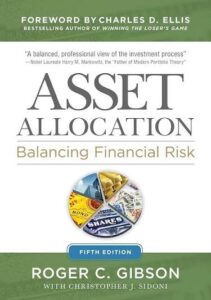
- "Asset Allocation: Balancing Financial Risk" by Roger C. Gibson
- Emigrant Partners
- HIFON Group
- Fidelity Finteract group
- Canva
Full Transcript:
Michael: Welcome, Christine DeMao, to the "Financial Advisor Success" podcast.
Christine: Hello there. Thank you for having me.
Michael: I'm really excited to have you join us today and to get to talk about what it takes, operationally, systematically, systems-wise, to turn an advisory firm into something that actually has lasting enterprise value, with multiple generations of owners all involved in building the business together.
Because I find there's been this big shift, I think, in what it means to have and create enterprise value at a firm over the past decade or so. Maybe in part because all the private equity has suddenly made advisory firms remarkably liquid. You don't even necessarily have to spend ten-plus years developing your own internal successors in order to harvest the value of the advisory business that you create as a founder. Except as it turns out, even the private equity firms often will pay a little bit more for a firm that does have internal successors in the firm who can take over serving clients and management of the business, and support ongoing growth of the enterprise.
But as I know a lot of founders have experienced, sometimes it's quite hard to get the next generation to really understand and appreciate what it means to try to build enterprise value, in part because they're not necessarily founders themselves. They joined as employees on a different kind of path. And then even for the founders, also sometimes really have trouble visualizing what it truly means to build enterprise value beyond bringing more advisors or bringing more revenue, and sometimes neglect all the other parts of what it takes to really run the business well.
And I know, Christine, you have lived this journey, retiring an outbound founding advisor, transitioning to the next generation, introducing new owners, trying to drive value across the organization as a COO. So I'm excited to talk about what it really takes for a firm to instill a firm-wide, team-wide focus on building enterprise value across an advisor enterprise as you grow.
Launching A Firm Alongside A Trailblazing Book [04:31]
Christine: Yeah, so we have...for folks who may not be familiar with Gibson Capital or who Roger Gibson is, he founded the firm in 1989, 37 years ago. And he was unusual in that he was an early adopter, or he recognized early the importance of dedicated practice management. And he was way ahead of the curve on succession planning.
So now, of course, most firms like us are getting emails and calls every week from PE (Private Equity) firms. Everybody is, "We're interested in buying you. Are you interested in M&A activity?" And Roger was just way ahead of the curve. So he really began our succession plan process in earnest 18 years ago, so back in 2008.
So I've been the fortunate beneficiary of a structure that thought about these things early enough that we had a really long runway to implement and formalize a succession plan and be really intentional about building leadership muscle in the next gen.
Michael: Well, and to me, it's a great testament to Roger and all the things that he built. For advisors who've been in the business a little bit longer, you might recognize Gibson Capital name or Roger Gibson by name. He wrote a book, I guess, basically back when he was starting the firm, Christine. So I think it was the late '80s.
Christine: Yes, the same year. Yeah, 1989.
Michael: Yeah, called "Asset Allocation." And it was the book on doing strategic asset allocation back in the, I guess, late '80s and 1990s when advisors didn't do that. This was still the tail end of the stock picking era, "I can get you a great set of stocks," or the mutual fund picker era, like, "I'll find you the next Peter Lynch fund manager."
And here was this guy who came along and said, "No, no, no, you should really just own a diversified asset allocated portfolio and stick to that and just not stop trying to pick the winners." And it was kind of heresy at the time, like that's not what people had done.
I think Beebower, Brinson, Hood had just come out with their famous study that 90-something percent of variability in a portfolio comes from the asset allocation, and set this anchor of, well, maybe just getting the asset allocation right matters more than all the individual stock and fund picking that everyone else was doing at the time.
But for all the firms that just take for granted, like, well, yeah, the anchor of what we do is you build asset-allocation diversified portfolios for clients, that wasn't a thing back when Roger made the firm. And Roger wrote the book that made that a thing...
Christine: That's right, yeah.
Michael: ...in our business.
Christine: Yeah, this was really trailblazing. It was the first book written on the topic of asset allocation. It's now in its fifth edition. It was last updated in 2013. And it's been translated into six other languages. And, of course, broad asset allocation, diversification, it's just table stakes now, but at the time, it was...
Michael: It was so forward-thinking.
Christine: It was.
Michael: It was so different. Someone put it into my hands and said, "You need to read this to learn more about the business," when I started in 2000. I think someone gave it to me a year later. It was my second firm in '01. So I guess for anyone who wants some of the broader context, this is Episode 498. So if you go to kitces.com/498, we'll have a link out to Roger's book. I think it's good perspective.
Christine's Path To Gibson Capital [08:46]
Michael: So in this theme, the firm was also very forward-looking around dedicated practice management. Talk to us about your path. So when did you come to the firm? And when did these practice management things start becoming a thing in the firm?
Christine: Well, so they began before I got to Gibson Capital. So in 1998, the firm was around eight years old. And Roger had recognized that he really needed to...most firms like Roger's were one-man shops, right? He was the face of the firm. He was the one advisor. And he really recognized, hey, I've got to build a legitimate practice around me so that I'm not the guy.
So he hired our late CEO, Brenda Gibson, when the firm was eight years old. And she had a really interesting background in the nonprofit world. And she was also this amazing force, a real organizational development expert. And so she went about the business of building a practice, building a legitimate enterprise with structure and processes and people to support that.
So my career, I had a very transient, both geographically and professionally, career. I started as a part-time bank teller when I was in college, trying to put myself through school. And it just led from one position to the next. When I was there, I started helping the guy in the corner of the branch open retirement accounts at American Funds. And he was like, "If you like this, you might want to go work at American Funds." And so I did.
Michael: Oh, and you actually went to work for...this wasn't just, hey, everyone is doing American Funds. We're going to do American Funds too. This was everyone is working at American Funds, so I'm literally going to go work at American Funds.
Christine: Well, at the time, they were the preeminent fund family.
Michael: Oh, absolutely.
Christine: When I was there, I worked in the shareholder services team supporting advisors. And so it was this fascinating introduction.
And their training program. They hired you, and you went through a 16-week program. And every Friday, you had an exam. And they basically culled the herd. So you made it through those 16 weeks, week by week. And it was such an incredible learning experience. And that was just like the springboard. So...
Michael: Wait. I just want to make sure I understand this process. So they bring in a giant group of recruits. You train on some things. You learn a little bit of stuff. Every Friday, there's a quiz. And if you don't pass that week's quiz with that information, you're gone. And so they just spend 16 weeks actively culling until they get to the people who learn the stuff.
Christine: Yeah, and it was incredibly competitive. They hired 1 out of every 1,000 people who applied. And so it was really competitive. But it's funny. To this day, I can still recite to you the fund numbers for Growth Fund of America, New Economy, New Perspectives. But it was such a formative experience. And that opened so many doors for me.
So from there, after spending a year there, I kind of had my pick. Any regional firm that I went to interview at, they were like, "Oh, my God, you worked at American Funds. We want you." So I went and worked...
Michael: Wait, you survived all 16 weeks. You've already run the gauntlet. Come on in. I love hiring people that someone else took the time to train. Thank you.
Christine: Yeah, exactly. So I worked for one of the most storied regional brokerage firms here in Pittsburgh. Then I went and spent a year at Federated Funds, again, in the institutional group supporting advisors. And while I was there, I got an offer. Federated, at the time, set up money market funds for some of the brokerage firms, Schwab and Fidelity in particular. And so I got an offer to move to San Francisco and help Fidelity establish their first regional institutional office. And the idea was they were trying to steal market share from Schwab, and they needed a West Coast presence so that the firms there had service during their business hours.
So it was this crazy startup experience where we literally went and rented an office in the financial district in San Francisco. I was personally responsible for 16 of the biggest, best, most amazing RIA firms on the West Coast. And it was very startup. If you have any entrepreneurial leaning at all, it was just the coolest experience. And it was also exhausting. So surviving that period was super intense.
So by 2005, I was ready. I was like, "I'm pooped. I'm ready to go back home." And so I happened to see this ad for an entry-level portfolio administrator position in Pittsburgh. And I thought, "Oh, my gosh, it's this tiny firm, five people."
Michael: This is Gibson. This is Gibson.
Christine: This is Gibson Capital, yeah.
Michael: So their whole firm is smaller than the startup branch that Fidelity was winging with you all. They just said, "Here's some space. Go capture everything west of the Mississippi."
Christine: Yes. And so we were around $300 million, 5 people, entry-level portfolio administrator, and I thought...and they custodied at Fidelity... So I was like, "I could do this in my sleep. This is going to be a cakewalk. I'm going to come home and have a really simple life. It'll be great."
And so I took the job as a portfolio administrator, and I moved home, and I had no idea. I didn't know who Roger Gibson was. I didn't know... I had no idea what I was signing up for, but that's how I made my way to Gibson Capital. And, of course...
Michael: Because you'd built all this behind the scenes, portfolio administration skill sets at American Funds, at Federated, at Fidelity, this was bread and butter space for you now.
Christine: Exactly. Yeah. I was like, "Oh, yeah. I literally have been spending my days teaching advisors how to use Fidelity's platform, what the product offering is. This will be a cakewalk." And it was one of the most humbling experiences of my professional career.
Michael: So what didn't turn out as expected besides...I'm going to guess at this time. So you discovered the joy of daily portfolio center downloads and reconciliation.
Christine: Well, we were on Access at the time, but...
Michael: Oh, you were on Access, even better.
Christine: Yeah, we were on the point-to-point interface. So we didn't even...this was not even a real daily download. This is old school. And I did not...one of the hallmarks of Gibson Capital is that it is really a team of the highest performers that exist in our space, in our profession. And I had always been a hustler, but I was not prepared for the pace at which I would have to swim to keep up with the rest of the crew and the exactitude, just the standard and pair that with a really crazy growth trajectory.
So when I joined the firm, we were at around $300 million, and within 5 years, we had more than doubled in staff. And pretty early in my tenure, our CEO at the time recognized that I would be able to help more broadly on the practice management side of the business, not just purely operational.
So within a year, I had been promoted to operations manager. And in a small firm, probably most of your audience can relate to this, you've got to wear a lot of hats, and there are a lot of things that need done. And so you have a real opportunity to contribute on a lot of dimensions that may not be narrowly prescribed by your job description.
Michael: Yes, which I find is interesting. Some of us get in those moments, and it's like, "Oh, my gosh, and they're making me do this, and they're making me do this, and they're making me do this," because you get pulled in all these different ways in a small firm. And then for some of us, it's like, "I get to do this. I get to do this. I also get to do this. It's not even my job description, but I'm getting to do this as well." I don't know, there's a mindset framing that for some folks, when they get into the small firm environments, it's a bunch of like, "And I have to also..." And I feel like you were on the other end of this, Christine. You were in the "I get to."
Christine: Oh, I loved it, yeah.
Michael: Like, "I get to also do this and also do this and also I'm not stuck in some pigeon hole where I only do one thing. Look at all the things I get to do."
How Gibson Capital Started Down The Succession Planning Path Early On [20:04]
Christine: Yeah, I loved it. Even today, I'm 18 years in, the notion that I can put my fingerprints on so many parts of the firm is super exciting to me. And so back to your question, when Roger realized that, and Brenda Gibson, our late CEO, realized, "Okay, we've got to turn this into a legitimate enterprise," he actually began evaluating the mousetraps that existed to finance succession planning very early.
So we were a Fiduciary Network firm back in 2008. And that's a full 18 years before he retired. So Fiduciary Network is now Emigrant Partners. So we're one of the 20 or so Emigrant partner firms.
Michael: Can you explain just what that is or was for folks who may not be familiar with the Fiduciary Network, Mark Hurley background?
Christine: Yeah, so they were one of the... I'll describe them as a strategic acquirer who provided financing, like sweat equity for founders to transition ownership to their next generation of leaders. And so today, Emigrant, beyond just financing to allow the passing of ownership, they provide a lot of resources, benchmarking. They're a consortium of firms where you can leverage the collective expertise of the group. And they make it possible for firms to identify and award partnership.
Michael: Yeah, in a world today where so many firms, like external financing firms, are of the PE variety, where they just want to buy a stake in the firm and participate in the growth of the firm. I know Fiduciary Network was unique at the time because they wanted to not only give founders at least some partial liquidity event, they would also help finance the next generation stake as well. So it wasn't just like someone came in externally and said, "I want to buy, whatever, 40% of your firm." It was more like, "We would like to buy 20% of your firm and then help your next generation finance the other 20%, so that we can get next generation folks going at the same time. But hey, it's gotten big, and it's gotten more expensive. So maybe it's hard for them to buy the whole thing. So we'll buy part, we'll finance the other part, and we'll help jumpstart your succession plan."
Christine: That's right. And I'll add two more comments to that. As a young person, 18 years ago, it would not have been possible for most of us at those ages or stages of our career to buy in without that financing. And both Fiduciary Networks and Emigrant offer a lot of autonomy. For Roger, it was especially important that the firm be able to maintain our independence to make decisions that are best for our clients and our staff. And they did and do offer that.
Michael: So now keep me moving forward in the progression. So Roger and Brenda are saying, "We're going to have to figure out some of this long-term transition stuff. We just had this huge growth spurt because we were $300 million and 5 people, and now we're more than double those assets and more than double those people." So Fiduciary Network comes in and says, "Let us help with this. We'll buy a stake, we'll finance some of your next generation folks for a stake, so that you can start this succession path."
Christine: Yeah, so they went about the business of identifying potential future leaders in the firm and building a container for us to learn how to manage, lead, and run the firm. So we have always had a very distributed leadership structure, meaning lots of collaborative decision-making, which isn't without its challenges.
So they identified a certain number of us as potential future leaders. And then they gave us a lot of room to learn how they thought about things, how they made decisions, how they...everything from hiring, to budgeting, to culture. They built this obstacle course where they taught us how to do what they had done. And they had a really clear vision of the principles of the firm, the values of the firm, what they were trying to do, why it mattered. And they made room at the table for those of us who were emerging leaders to help to carry that load. And it wasn't always pretty.
Michael: So can you give us a little more context or examples here? What happened? What were they doing? What did you get to do on this new environment?
Christine: Yeah. So literally, we had a regular cadence. And I think in the beginning, it was weekly. We would have a weekly leadership group meeting where every dimension of the firm was represented. So we had investment advisors, we had our chief compliance officer today, myself. So we would meet once a week and address all of the pressing issues of the firm. And we would come with proposals, we would make recommendations, we would debate issues.
And this was before we were partners. So they recognized who were the people within the firm today who carry the work like owners. Let's create a regular cadence where we are coming together collaboratively. Roger and Brenda were teaching us how to make the decisions and then watching us and seeing how we performed.
And so for myself, I was in that forum for probably five years before I formally was invited to be a partner. And it was a testing ground. So it could be, do we need to hire? Should we hire? What should we hire? How much should we pay that person? Everything that was a really foundational decision for the firm, we were discussing, and debating, and deciding in that forum. And we've continued that process for the last 18 years. So we still do that today with emerging leaders in the firm.
Michael: So this is functionally like a management team structure?
Christine: It is, yeah.
Michael: And how long are you meeting to go through all the things?
Creating A "Role Grid" To Map Out Responsibilities In A Distributed Leadership Structure [28:15]
Christine: So the process has evolved over the years, in part because today... we've evolved. Our governance structure has also evolved. So back then, ultimately, Roger and Brenda were the deciders, right? We could make a case, but they had veto power. And so today, what it has evolved into is we meet monthly on the third Monday of every month for an hour and a half, and that is sufficient time for us to get through all the pressing issues of the firm. And it's also the forum for us being really intentional about building leadership skills, which I can talk a bit about, too.
So we have that meeting monthly, and we also have a three-person...our governance structure is a three-person board of managers, managing partners, which today is myself, our Chief Investment Officer, Chris Sidoni, and our Chief Compliance Officer, Daniel Berczik.
So we have a fairly robust matrix, spreadsheet, for lack of a more elegant term, that we describe as our role grid that prescribes every element of the firm and who has decision-making authority over those decisions. So one example would be client reporting. What are we using? How often are we doing it? What does it look like? Who gets to say?
Because when you have a collaborative or distributed leadership model, decision-making can get really thorny, and it's so important for everyone in the firm to have a lot of clarity about who decides what. So we refer to that matrix, that role grid, and that decision-making spreadsheet so that it's easy to say, "Oh, no, this is a board decision," or "Oh no, these are the three people who have input. These are the two people who decide." And although it's complicated, it's been a fairly elegant solution to help the staff have clarity about who do they need input from on any particular decision.
Michael: I'm intrigued by this. So I guess, what do you call it? Do you literally just call it a matrix spreadsheet?
Christine: It's called the role grid.
Michael: It's called the role grid. Okay. Okay.
Christine: Yeah.
Michael: So then, talk to us a little bit more. I guess it sounds like there's, let me guess, grid style. There's rows that are like levels in the firm, board versus not, and there's columns of various functional areas or decisions, I'm assuming. So can you just walk us through a little further? What are the rows and the columns on the grid? How does this work?
Christine: Yeah, so the rows are functional tasks and responsibilities.
Michael: Okay. So can you give me some examples?
Christine: Sure. Investment philosophy, client billing, hiring and firing, marketing and advertising, regulatory compliance agenda. Every one of the functional categories of work are represented. And then, left to right are the columns that represent every person in the firm.
And then we have a color scheme. So in our parlance, the red box is the decider on any one of those things. So defining our investment philosophy, that is our chief investment officer. He really is setting the vision for that, guiding that. He's doing that with input from other members of our advisory team, particularly our director of investment philosophy. So it's a really easy way to go, "Okay, we want to hire a person. Who do I have to get input from? Who gets to ultimately say yes or no? Who gets to decide what our starting salary is?" So we can go to that, and it's shared with our staff. It's a public thing that everyone can see and refer to.
Michael: Yeah. So in the coloring scheme, if I'm following this line of defining our investment philosophy, Chris is the red box because he's the CIO decider, but then there are other team members in columns who have some other colored box that basically says they get to be consulted or have input on this. They may not be the decider, but Chris should be including them as part of the conversation because they've got their color of the box.
Christine: Yeah, and there are other colors. So there's manager, who's actually implementing the work. And so there are a series of colors that represent...
Michael: What are all the different color roles then? Now I'm intrigued. So there's a decider, deciders are red. There's a manager.
Christine: Yes, there's a red box. Input is the yellow box. Manager is the blue box.
Michael: Is there a version that's just like who needs to be told about it at the end or something? Something like there's a report out.
Christine: Information, input, manager, and decider.
Michael: Okay. Oh, so there's an information and an input.
Christine: Yes.
Michael: So what's the... So this is a RACI style chart, Responsible, Accountable...
Christine: That's right.
Michael: ...Consulting, Informed. Okay. So every person's got a column. All the major functions have rows. And so then if I want to hire someone or I have a compliance update or I've got a marketing question, I just have to pull the charms, like, "Oh, I talked to this person, and I need input from these people, and we should make sure that this person knows what it is at the end."
Christine: That's right. And it's evolving as the firm is growing, as people's roles and titles change, as the dimensions that they're contributing in change. It's a living thing. So it keeps growing with the firm. And it also is helpful, particularly... I'll use myself as the example. I am in the last inning of my career at Gibson Capital. So as we are looking forward and planning for transitions, it's easy to go, "Oh, crap. Okay. These are the 17 things in my backpack that we've got to find. They've got to shift to other rows." So when you're planning for transitions, when you're planning for retirements, when you're like, "Okay, this person just has way too much in their backpack," it creates an elegant framework for plotting out what you need.
Deciding To Leave Gibson Capital But Boomeranging Back [35:34]
Michael: So I want to come back to, I guess, the transition out as it were, the retirement, but I'd still like to hear a little bit more about the transition in. So you said you were a couple of years on this management structure, grooming space where Roger and Brenda are giving you opportunities to do things and have all the experiences in the business, and I like to say, get the reps in, right, get the repetitions in, get your school of hard knocks experience learning. And then you got added as a partner. So talk to us more about this journey.
Christine: Well, so the journey, I jumped ship. So five years...
Michael: Okay, now I really want to hear more about this journey.
Christine: So five years in...so I joined the firm in 2005, and by 2010, we had grown from around $300 million to nearly a billion. We'd gone from 5 people to 13, and we also had gone through just really dramatic tech stack changes, going from old...in 2005, we were still getting mailed paper statements for fun. It was just this insane rocket ship ride, and I was fried. And I hadn't really taken any breaks. I'd gone from one rocket ship to the next.
And also in 2010, Roger and Brenda had approached me about partnership, and I was terrified. I had had this runaway bride career where I just kept moving to the next great thing, and I choked, and I knew I needed a break, and so I quit. I quit, and I decided that I was going to go... I took an internship as a pastry chef in San Francisco, and I really... I knew I needed to do something different, a real reset, and so I quit, and I moved to San Francisco.
Michael: I just wanted to...so it's like the firm has more than doubled, everything's going great. Roger and Brenda are like, "So Christine, how about partnership?" And you're like, "How about a pastry chef 2,000 miles from here?"
Christine: Yeah, and that was pretty much it. And to their credit, literally, they threw me a farewell shower and showered me with gifts, everything I would have needed. I could have started my own bakery at that point, and I was still...even when I left, I stayed very connected to them and to the firm. But yeah, so I went out to San Francisco and discovered that my interest in being a pastry chef was much greater than my ability.
But I took a three-year break. I spent a year in San Francisco. I dabbled in event planning. I started my own event planning company. I went back to school to get my meeting and event planning certificate. I moved to Texas and took a job as a COO at a great wealth management firm in Austin. And then my dad died in a motorcycle accident in 2012.
Michael: Oh, God. That's awful.
Christine: And it was one of those thunderbolt moments where you realize, oh, shit, time is finite. And I had real clarity that I needed to move back home and be close to my mom. So it was one of these crazy kismet things where... I don't even know if I said it out loud to anybody, but I was like, "Okay, I'm going to move back home to Pittsburgh." And I had posted my resume, maybe on monster.com at the time. And I got a call from Daniel Berczik, my dear partner and friend. And he said, "You're not going to believe this. We put an ad out, and we put a search filter on it, and there was only one person's resume who came up, and it was you. We need an ops manager. Would you come back?" And I...
Michael: Wow. So just your path back in was not calling Roger and Brenda back and saying, "Hey, I've decided to come back to the Pittsburgh area. Is there an opportunity?" They literally just independently coincidentally found you because you put your resume on monster.com, I guess, at least for a job in the Pittsburgh area.
Christine: Yes, yes. And I'll be honest, I wrestled. I was not sure that I... And so I agreed to come back on a trial basis. And that was 2013. And I've been back on a trial basis ever since.
Michael: So I'd love to hear more about these conversations as they went with Roger and Brenda, I guess, both on the way out and the way back in, right? Just to go through a growth cycle like that and get the offer, right? Like, "Hey, we want to talk to you about partnership," and to say, "Nope, I can't do it. I'm burned out. I think I need to leave the state." Talk to us about that conversation. How did...?
Christine: Oh, it was horrible.
Michael: How did you have that conversation?
Christine: It was profoundly hard. And it's funny because I'm one of three boomerangs at Gibson Capital. We're very pro-boomerang. I was just really honest. And coming back, and maybe some of this is maturing, getting older, growing up, I think I really didn't realize...coming back, it forced me to reconcile with the things that were hard for me, the things that I struggled with in my first tour of duty. I think I didn't necessarily understand the things that I had more control over, or the ways that I might have made my path more difficult than it needed to be. And so coming back...
Michael: How so? What were the realizations?
Christine: I think things like differences of opinion are not a character assessment. I've always been the person who really deeply identified with my work. It's always been one of the biggest parts of my identity. And so if Roger and Brenda didn't agree with how I saw something, those things were just really difficult for me.
How A Near-Death Experience Forced Christine To Rethink Balance In Her Life [43:38]
Christine: And I have had a really difficult relationship with balance. Moderation, in any way, has never been easy for me. And so I was not good…it's taken me my whole career, and frankly, almost dying, to develop a real, healthy sense of balance with respect to work.
Michael: Because you had a almost dying health event from burnout?
Christine: Yeah, yeah. So I came back in 2013, and it was really like I had never left. Just came back in and just kept moving. And almost immediately was offered partnership and accepted. And so I just kept marching. And I had not learned the lessons that I needed to the first time.
So in 2022... I was always prone to overwork, hypervigilance. I love what I do, and it's my favorite thing to do and talk about. And living through the pandemic, COVID, having to make an overnight transition. We were a fully paper-based firm. We believed the cloud was the devil. Like, "No, everything exists on our servers here. We will never be remote workers." We didn't even have...our people didn't even have laptops. So going through that overnight transition, what it meant from a people, processes, and technology perspective, it was difficult.
So in 2022, I woke up one morning and literally could not get out of bed, and called 911 and was taken by ambulance to the hospital, where they determined that I was in chronic heart and lung failure. I spent about 30 days total in the hospital and rehab facility. And I nearly died.
So I had this major wake-up call. The universe made it clear to me that I really needed to get this lesson and that I needed to understand that rest, self-care, delegation, all of those things are just as, maybe more important of a leadership skill than all the others I had always prized.
So I got the message. So since then, I've developed... I'm still working on it, and I probably always will be until I retire, developing a really healthy relationship with balance. I've lost 200 and almost 30 pounds since then.
Michael: Wow, congratulations.
Christine: So it's been a real...thank you. It's been a very transformational experience, but it took that for me to get the message.
Michael: So what's changed since? What have you done to change your...? I'm wondering both lifestyle and work style.
Christine: Yeah, I think for me, part of the underbelly of being in a firm where people are exceptional was this notion that I had to really perform to earn my spot and be worthy of my spot. And so post near-death experience, I have a different understanding for why...as a leader in the firm, I would never want anyone on our staff to work the way that I did or experience what I did.
So I understand now that some of my tendencies, what I was modeling for other people, was not the standard that we should model, that I should model. And so I've really tried hard to do that differently.
Michael: So in retrospect, at least, what were you modeling then and what's different now?
Christine: Oh, I was modeling that a 10-to-14-hour day with 2 or more meals at your desk was the expectation, and that balance was a character flaw. I held myself to a standard that is not a sustainable one. And I recognize now that it's not a sprint, it's a marathon. And for people to really maintain the stamina that is needed to have a really great career in this profession, you have to have periods of rest and recovery.
And even time…I realize now that I didn't...there's a benefit of time to think, to process without just continually being turned up to 11. It's so crucial to making strategic decisions. So I have a much... I'm able to disconnect in a way now that I really wasn't for the first chunk of my career.
Michael: So how hard was it to change these habits?
Christine: It was, and probably always will be. It's not my natural instinct. And so having accountability partners, having my partner say, "Hey, what are you doing?" And inviting people to do that, to say, "Hey, if you see me backsliding, call me on it." Having my...
Michael: You actually said that to them, like, "I'm trying to change. If you see me backsliding, call me on it."
Christine: Yeah. And it's funny, even when I was in the hospital, our chief compliance officer turned off my access to the company email, and I was so mad.
Michael: And you were mad. You're in the hospital.
Christine: I was mad.
Michael: But you're still upset that you can't work on your email from the hospital.
Christine: Yes. But the shift has saved my life. And my goal now is, by the time I retire, I want to be in the best physical shape of my adult life. And I'm on that track.
Creating A "Path To Partnership" For Gibson Capital Employees [1:00:40]
Michael: So now, take me back to just these partner dynamics. I'm still intrigued to know ultimately, because as I understand today, Roger is retired as a founder. So you did this, but it was 15 to 20-year journey of starting with Roger, doing something with Fiduciary Network to begin the process, to now he's retired, and there are more partners. So just how does that work?
Christine: Yeah, so we have had, I want to say, four rounds of offerings. So the first partnership offers, when I was gone the first time, went to two of our advisors, our senior advisors. So they were the first two in the pool. So one of those was Chris Sidoni, our CIO, and Keith Goldner, who has now retired. They were the first two partners. And then the next round, they added three more, which was Chad Hileman, our director of investment research, Daniel Berczik, our chief compliance officer, and me.
And then we had another round with another one of our senior advisors, Eric DeMico. Then we had another round with one of our advisors, Blake Curle. And then we just recently had our most recent partnership offer to our director of client service, Brian Franklin, which I get super excited. It's still atypical for operations professionals to be extended partnership, but it makes me particularly delighted to see that happening.
So we've had each of those rounds. And again, each of those people have been folded into our leadership group and that process for collaborative decision-making before they were offered partnership.
Michael: Okay. So part of the path for you is if you want to be a future partner here, you actually have to do a round on the leadership team for some period of time to show you can make contributing, like trust-building decisions.
Christine: To learn. It's an interesting dance, right? And we talk about this often, there's this...it's almost like a dating phase where you're like, "Hey, we see something. We think you could be great, but do you want to do this? Are you interested in doing this?" And it's not right for everyone, right? There are elements of partnership. There's a lot of financial complexity that impacts your life. It is a real significant commitment in terms of your career. You're essentially contractually marrying yourself to the firm. It's not for everyone. So there's this awkward period where both sides are feeling out.
And people need enough information about what partnership means to make an informed decision. So sometimes we're approached by people, which we love. We will have...part of the reason that we really tried to create some framework to share with staff is that people would come to us. Sometimes it would come up in interviewing and hiring. Sometimes it would come up early in someone's career, where they would be like, "Hey, can I be a partner? How do I become a partner? What does that mean?"
So there's this period where you're paying attention to what you see as the characteristics that could make someone a great partner, and just having real candid conversations about if it's something that interests them and what that path looks like.
Michael: And so I guess I'm still struggling. Who decides when a person...? Who decides who gets a dating opportunity, when they get a dating opportunity? Are there dating criteria here?
Christine: There are, yeah. And this is the other...partnership offers have to be approved by all current partners. So one of the things that we're talking about in those monthly meetings is what are we seeing? And so someone can come to the group and say, "Hey, you know what? I think this person could be a great partner someday." And so we're using that forum to talk about what we're seeing, what the firm needs, and how people are coming along in their process.
But we created maybe eight years or so ago, because we...there's a certain level of subjectivity. And I think if people approached every partner...if someone approached any of the partners with a question, "Hey, what does it take?" They might get different answers. And so we started talking about, well, could we...? Is it even possible for us to put to paper what we're actually looking for? And so even the process of negotiating that was a really interesting experience because all of the partners had to agree to it.
So there were seven partners at the time, and we needed Roger and Brenda to look at it and say, "Yeah, that sounds right." And frankly, we were skeptical that we could articulate it and agree upon it. And it was shocking once we started. So once we sat down…and I went to the group and said, "I think I could do it. I think we've had enough conversations together that I think I know what we actually want." And so I did that exercise.
So I wrote a paper that we called the "Path to Partnership." And we talked about what are our deal breakers? What are the absolute prerequisites? What do they have to have? And then, beyond that, what are the dimensions of contributions that people could make that add to the enterprise value of the firm?
And I talk about Brian, our director of client service, getting partnership. One of the harder things or challenging things as an ops person is you don't have... I'm not out prospecting, I'm not closing deals. It's not my role to actually grow the assets of the firm through prospecting or new business development, but I can, and Brian can make really meaningful contributions in other dimensions.
So we started thinking about, well, okay, somebody could contribute in one dimension that really impacts the value of the firm, but they don't need to do all of them. So as we started talking through this process, it was also a way to be able to show our staff, hey, there are a whole bunch of cool ways where you can do really important valued work.
Michael: So can you share with us a little bit more…what are the prerequisites? How do you define contributions that are enterprise-building enough you too can be on a path to partnership?
Christine: Sure. Yeah. Well, so the prerequisites, the table stakes, the must-haves. First is that they have to really embrace our philosophy that clients come first. It's a deal breaker. We have this mantra, clients come ahead of the firm, the firm comes ahead of the individual, and professional commitments come ahead of financial rewards. That is just the core foundation of everything we do. So it's a way for us to say, "Hey, you've really got to have your priorities aligned with the firm's priorities to even be considered."
And then we get into character. We describe ourselves and talk about ourselves and think of ourselves as the good guys. We put what's best for the client at the center of everything we do. So by that prerequisite, we're looking for people who really respect and follow our regulatory policies and processes. They are thoughtfully prepared for everything they do. They have the highest ethical standards. They acknowledge when they make mistakes. They don't bluff or bluster. They are people who really act with integrity.
Then you've got to be really great at your functional job. Everybody who's a partner has an actual functional responsibility. So we're looking for folks who are really high performers in their day job. We are looking for people who...again, back to this notion that there's a lot of stuff that needs done in a small firm. Today we're still only 17 people, including our founder, Roger. So folks have to wear a lot of hats. So we're looking for folks who are coming to work every day, looking around and saying, "What else can I help carry?"
So it's the folks who have that owner mentality before they're an owner. They're people who are really generous with their time and talent. And we always describe this as a farmhand mentality. Somebody needs to change the light bulbs in the conference rooms. So we're looking for people who carry their work in that way. We're looking for people who are really engaged in personal development. We want people who are coachable, who are really engaged.
And part of this ties back to some of the processes that we have formalized as the tools we're using for leadership development. So we're looking for people who are really not fighting against the notion that there's a lot of deep internal work that you need to do if you want to be an exceptional leader. So we're looking for people who are really open to feedback, open to coaching, embrace the performance review process. And we do that for every person in the firm, including partners.
And then the last prerequisite for us is enterprise value. So we're looking for folks who are, through their work, making the pie bigger for everybody. They're adding to the overall enterprise value of the firm. And that could be minimizing risks to the firm, managing our budget, controlling, and reducing expenses. It isn't exclusively advisors, because there are a lot of ways…if you are helping to train and develop people, for instance, that's a really key way to add enterprise value. So those are the core prerequisites. That's the starting place. You've got to have those things.
And then beyond that, we think about a series of other more, I guess, broad dimensions where people could contribute. One of them is strategic. So these are the people who are driving the firm into the future. They're leading us into the uncharted territories. They're people who are really plugged into what are the risks? What are the opportunities that exist? And what should we be thinking about, discussing, deciding, and doing? And a big part of that is courage to maybe suggest unpopular or scary decisions, but folks who are really strategic thinkers.
The next dimension is management contribution. So the people who are doing the hard but important work of developing people and processes that make the engine run. It could be people who are developing career paths, training, teaching, mentoring, people who are making really important suggestions about our tech stack, our processes. Those are folks who really keep both our people and our processes moving forward.
Client service contributions. So these are folks who really hit it out of the park when it comes to client service. They are developing, maintaining really sticky relationships with our current clients, both to retain revenue and generate referrals. Our referrals have really, for most of our firm's history, been the way we grew. So the people who are building those really lasting connections with the next generation family members are so important for us.
And there are also...you don't have to just be an advisor or only an advisor to make meaningful client service contributions. So any way that our people can find creative ways to deepen and enhance that client experience can fall into this dimension of contributions.
Then we have intellectual contributions. So these are the people who help us maintain our legacy as a thought leader. They're people who are writing about the work that we do, researching what we should be doing, speaking. Just the people who help us maintain that reputation as smart.
Michael: Right. Still, you're Gibson Capital. Everybody gets to stand on Roger's shoulders, but there's a legacy there to maintain. So that becomes a particularly meaningful contribution in your world.
Christine: That's right. Yeah. Then we've got just a couple more. Community development contributions…so the people who are evangelizing the work that we do and expanding brand recognition, whether it's networking, prospecting, marketing, even recruiting staff to the firm. They're the people who are helping to build our network and bring both new clients and employees to the firm.
And then my favorite is culture contributions. My academic background is in organizational behavior and psychology. And so this is one of the ones that gets me so jazzed up. You need culture champions to keep everything moving along, to keep people really engaged in and attentive to the kind of workplace that we're building. And we have a long legacy of really deep intention around culture, and we have lots of rites and rituals and stories that we tell to affirm that. So this is also a way to remind everybody, "Hey, everybody's got to help, particularly partners, to keep the culture alive."
So I put this document together, and like everything else, we revisit it every so often and just see, does this still ring true? Has something changed? Are these still the things that we're looking for? But it was shocking that the partnership group unanimously said, "Yeah, that is actually it."
And so we actually turned it into a presentation that we share with new hires anytime somebody new joins the firm. And it's also a way to drive engagement, right? And again, it's not for everybody, but for some people, seeing a firm that's really committed to being transparent about what it takes to be a partner and what the opportunity looks like is a really compelling hiring tactic, right? Most places want to be...most people want to work at a firm where ownership is broadly distributed.
Michael: And so you said this came together in a document, in a presentation.
Christine: Yeah. So...
Michael: And just how do you package this together? Because it's a neat list. There's a lot of things there for a new team member to absorb.
Christine: Yeah, so I developed it as a Word document and then turned it into just a short PowerPoint pitch deck that we talk through and share with staff. So right when we created it, we literally sat down, and this was just a... I made it in Canva, not terribly complicated.
Michael: Bless Canva. Yeah.
Christine: Bless Canva. We love Canva. And so we presented it to everybody on the staff. And we will, from time to time, particularly as somebody is moving along that continuum from a potential partner to now we've made an offer, we would revisit it during the performance review process. And we folded it in because, again, some of this can be subjective, although we need broad consensus from the partner group to bring anybody into the fold.
Folding it into the annual performance review process is a way for us to just say...people may say, "Hey, how am I doing? Where do you see me contributing? Where do you see it? Where might I be missing an opportunity to contribute?" So between the PowerPoint presentation that we turned it into and the Word document, it's a touchstone for us to refer back to and say, "Well, let's look at it." People can come to us with questions, and if and when it evolves or changes, which we've really only had one edit over the years.
Michael: I was going to ask, has it changed? What edited? What changed?
Christine: Yeah, one of the things that has evolved a bit is particularly this thought leadership, the intellectual contributions dimension. And part of that, when Roger began the firm, he had a real serious commitment to contributions to the profession. And it was an expectation that if you joined the firm, you were required to go out and speak about asset allocation.
And the broad adoption of the...there's nobody who's like, "Where do I sign up to talk?" Everybody knows what that is, why you do it, what the benefits are. So we realized, okay, this isn't a requirement. You can do this, but you don't have to. So that's one thing that has evolved over the years. And those writing and speaking is not really how we are...it's not our business development strategy today, the way it was 40 years ago, 37 years ago.
Michael: Okay. And so that's why it is a contribution, but it is not a prereq.
Christine: That's right.
Michael: Okay. And out of curiosity, just if you've crafted this into a Word doc, putting it all out, is that something you'd be comfortable sharing with folks who are listening if they want to see what this looks like?
Christine: Yeah. I'd be happy to share both the Word document and the slides.
Michael: Well, awesome. Thank you. So I guess... So a reminder for folks who are listening, so this is Episode 498. So if you go to kitces.com/498 and scroll down a tiny bit to the show notes section, we'll have links out to the Word doc, PowerPoint presentations, if you want to see what the list of prerequisites and the list of contributions coming together actually looks like.
What Gibson Capital Looks Like Today [1:13:29]
Michael: So Christine, then I guess just bring us present now. So what does the firm look like as it exists today in terms of team size, and assets, and staff, and revenue?
Christine: Sure. So in terms of team size and structure. So we've got 17 people today, that includes our retired founder, because he is still a partner. We have eight partners in total. We have an advisory team of six people that includes our chief investment officer and four advisors, one analyst, one associate. So our CIO is also an advisor. Our operations team is five people. That includes our director of client service, our client service team leader, and our client service administrators.
On the practice management side, we have five people. That includes our chief compliance officer, our director of finance, a business operations associate, our records administrator, and me. In terms of revenue size, where we are, so we're creeping up right on around $3 billion. We serve around 220 households. We're not a regional firm. We're a national firm. So we're in more than 30 states. I think we're at around 34. And our projected revenue for this year is around $8.5 million.
Michael: Okay. Oh, interesting. So it's like you've got very high-dollar clients that, at least on average, are just $3 billion in assets with 220 households. This usually has a skewness for everyone. Your client sizes are millions, and with some tens of millions folks to get that, to get the number.
Christine: Yes. Yeah. Our minimum portfolio size is $3 million, and our average client size is around $13 million. So this again was really a testament to Roger's focus and discipline. His goal was always fewer, larger clients. And we describe ourselves as built to deliver uncommonly attentive advice. And so really, we are very disciplined about focusing on really bigger clients, and we're really disciplined about that. And I'll be honest, as a next gen, that was a very scary...yeah, I think it was maybe easier for Roger to be courageous about that discipline. At least it felt less difficult than it felt to me as a next-gen partner.
Turning away business and being really laser-focused on that was hard and scary. But that discipline has allowed our advisors... We shoot for a target of a client-to-advisor ratio of around 50 clients per advisor. And that is what has allowed us to go really deep on issues for those clients.
What Surprised Christine The Most On Her Journey [1:17:10]
Michael: Okay. So as you reflect on this journey, what surprised you the most about the path of building an advisory business, of creating this enterprise?
Christine: Well, I think I talked a bit about my bewilderment and surprise at what I was signing up for. I think I was really woefully unprepared for just how hard it would be. I think one of the surprises has been just the complexity and the challenges of leading and managing a team as a collaborative leadership group. Sometimes I think of it as like I have seven spouses managing money issues together. Everybody has such different biases and preferences for how you approach everything. So navigating all of that complexity has been fascinating and interesting and a really rich learning experience.
I think one of the other surprising things for me has been, and this is really specifically on the operation side, I have been really surprised by how generous and collaborative the RIA operations community is. I'm a huge fan and supporter of things like the HIFON group, the Fidelity Finteract group, even the early Advent users group.
The work as a COO or operations manager, it can often be lonely, and oftentimes, you feel like you've got three or four choices and they all have upsides and downsides. And so being able to call upon those groups. And just the generosity of those people is shocking to me, and I feel really fortunate that they exist and that I've had them as a resource throughout my career. But I would never have predicted that.
And I love the notion that there is plenty of business for all of us. We get far more from collaborating than competing, but I would not have expected that. If somebody had told me that that would be true early in my career, I'm not sure I would have believed them.
The Low Point On Christine's Journey [1:19:45]
Michael: So tell us more about the low point on this journey.
Christine: Early in my career, I felt a lot of inadequacy. And although I was super excited to be surrounded by people who were just so damn smart, I really felt like I had to work really hard to earn my spot. And I've said this often to some of the younger people who work at the firm now, it took me far too long to really have real confidence in what I bring to the table, what I contribute, what I'm capable of doing. And I always say... And part of this, I think, is being at this last inning of my career, and frankly just leaning in with absolute delight to this age and this stage of my life. I tell folks, "Don't take as long as I did to really own your confidence in what you know and what you're capable of."
Christine's Advice For Her Younger Self And For Aspiring Operations Professionals [1:20:59]
Michael: So given that context and the pearls of wisdom you know now from your experience going down this road, what do you wish you could go back and impart to younger you 10, 15 years ago to have helped with that evolution, supported that evolution?
Christine: Oh, I would go back and just say, "Honey, take a knee." It is okay. Balance is not a character flaw or a failure. Balance, moderation, delegation, rest, self-care. These are core leadership skills that you really need to embrace and master with the same ferocity and fervor that you did all the other ones. Pace yourself. This is a long game. It's a team sport. You got to make room at the table, and it's okay. That's what I would tell the younger me.
Michael: But the pressure at the time was, "Oh, my gosh, I'm in this firm with all these amazing, super smart people."
Christine: Keep up.
Michael: Yay, but so much pressure to keep up.
Christine: Yeah. Yeah. You got to hustle. And it's interesting because we talk about this as a leadership group. This was not a unique experience for me. This really was...in some ways, we carried it as a badge of honor, a rite of passage. And so we've had to really work, and I'm very proud of the work that we've done to make that experience different for the people who come today. And part of that, I think, is the post-COVID world for us is different than it was. So today we are hybrid. Our people love hybrid. I think it has been one of the best things that happened to our firm in the history of our firm. And so we're a much more hospitable environment to create space for better balance.
Michael: So one of the things I love about this journey for you is that you followed it in an operations path all the way to partnership in a world where I think our industry does still have a stronger tendency to partner up the advisors called the "revenue-generating" side of the business, rather than the operational side. So having navigated this journey, what advice would you give younger folks coming into the industry today who maybe are starting in similar operations backgrounds, but have hopes to do a similar journey someday?
Christine: Yeah, I would say look for the gaps. Look for the gaps that exist in the firm and try to fill them. Raise your hand, volunteer. Don't feel constrained by your job description. There's so much that needs done. So be bold about where you look for opportunities to contribute.
And I really think that is how and why I am where I am now. I would also say, and I want all the women listening to really hear me when I say this, apply for the jobs that you want. If you really believe you could do it, if you're really passionate about what it is, apply, even if you don't meet 100% of the qualifications. Be bold in the choices that you take and the risks that you take about where you want to take your career.
Get an executive coach. I think working with a coach has been one of the most impactful experiences of my career. And particularly if you are or aspire to be in a people management role, that is such an important developmental opportunity and experience. I feel the same way about therapy. People management is really hard, and people are wild, surprising, complex. In our business, we totally get that when it comes to clients, right? We understand how wildly complex clients are, but we don't always apply that same lens to the people in our staff.
And so really looking at the baggage that you have, what your tendencies are, what your creative or reactive leadership's defaults are. That is one of the most valuable things you could do. Get in therapy, get an executive coach, and then really invest in building a community for yourself. Especially in ops, there are so many fantastic...whether it's HIFON, Finteract users group, focus groups, or even…we like to have breakfast once or twice a year with our biggest local competitors. Make friends with the people who understand your work life and be generous with them. Your work will be much less lonely, and you will find a really generous community of people who are really happy to share what they know, what they've tried, what worked, and what didn't.
What Success Means To Christine [1:26:49]
Michael: So as we come to the end, this is a podcast about success. And just one of the themes that comes up blurry, that word success means very different things to different people, right? It can change for ourselves through our seasons of life.
So you've been down the path of this wonderfully successful career with the business as the firm comes up on $3 billion, and you follow the partnership path. And now you've been looking at retirement on the other end in a few years. And so the business and career seem to be in a wonderful place. How do you define success for yourself personally at this point?
Christine: Oh, such a good question. Because I am in this last inning, I find myself just reflecting on this journey and thinking a lot about this question. And I hope that my legacy is being a good steward of the firm that I was fortunate to inherit for a short time. I will consider myself successful if I can sustain our firm as a force for good in the world, a place where people feel a deep sense of purpose, where they're excited to come to work every day, and they're rewarded for those efforts, and one that continues to put the best interest of our clients and their kids and grandkids at the forefront of everything we do. They're coming into such a storied organization. They're like, "Hey, just don't blow it."
And then there's one other element, and it's almost like impolite or crass, but I'm going to say it anyway, because I think it's important for us to normalize women talking about money, wealth, and ambition. Those are still sort of taboo, but I hope that along the way, for me, another barometer of my success is if I'm able to use my career as a tool to accumulate enough wealth to give me and the people I love more choices and control over our destiny. And I would be delighted if we could do that also for all the people who work for us.
Michael: I love that. I love that. Well, thank you so much, Christine, for joining us on the "Financial Advisor Success" podcast.
Christine: Well, thank you. I really love this conversation. Thank you for having me.
Michael: Likewise. Thank you.