Executive Summary
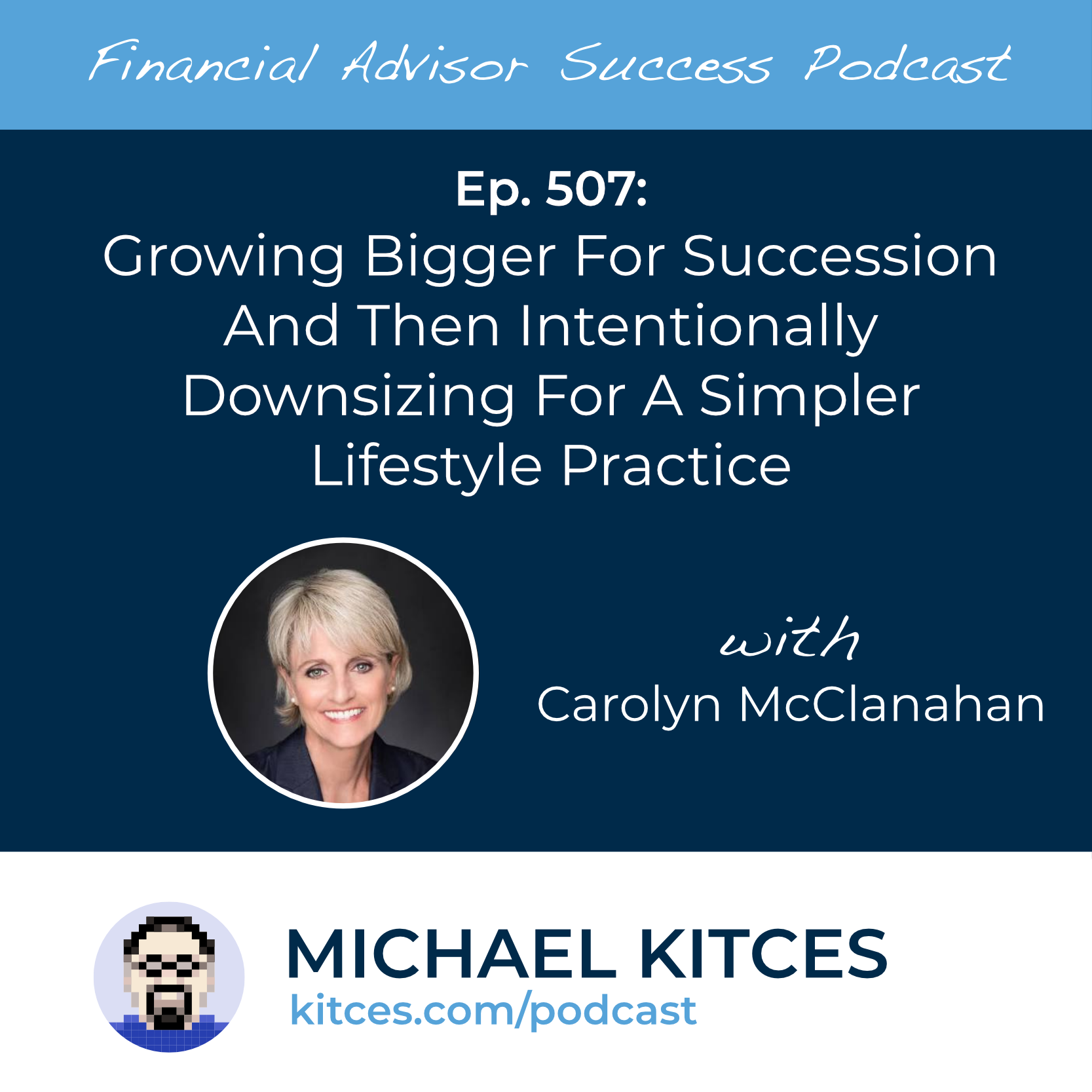 Welcome everyone! Welcome to the 507th episode of the Financial Advisor Success Podcast!
My guest on today's podcast is Carolyn McClanahan. Carolyn is the founder of Life Planning Partners, an RIA based in Jacksonville, Florida, that oversees $300 million in assets under management for 65 client households.
What's unique about Carolyn, though, is how she grew her firm to more than 100 clients before deciding to downsize to improve her work-life balance as she also executes a succession plan.
In this episode, we talk in-depth about how Carolyn initially planned to grow her advisor team to handle increased client demand (with her firm closing and reopening to new clients over time), how Carolyn invested significant effort in training new employees on her high-touch planning process (hoping that doing so would pay off by developing potential successors), and how Carolyn ultimately had to face the prospect of departures of younger employees who wanted to pursue different paths (forcing her to start over with new hires).
We also talk about how Carolyn worked with business coaches to ensure that she offered competitive compensation and development plans for employees and to help her and her staff align their life goals with their professional paths, how Carolyn ultimately made the decision to downsize her client base to have more free time for herself and to pursue her goals supporting the planning industry, and how Carolyn has created a new succession plan that allows her to continue serving clients while transferring ownership to employees at her firm.
And be certain to listen to the end, where Carolyn shares how she set criteria to determine which clients to keep at her firm and which to let go, how Carolyn evaluated other firms to help departing clients find an appropriate advisory home, and how Carolyn (who is also a physician) advocates for medical-style residency programs in the financial planning industry.
So, whether you're interested in learning about navigating hiring challenges while also planning for succession, downsizing a client base in a tactful manner, or thinking about what you truly want to get out of firm ownership, then we hope you enjoy this episode of the Financial Advisor Success podcast, with Carolyn McClanahan.
Podcast Player:




Resources Featured In This Episode:
 Carolyn McClanahan: LinkedIn | Life Planning Partners
- #FASuccess Ep 009: Carolyn McClanahan On Using A Complexity-Based Retainer Model To Deliver Holistic Financial Planning
- Cruz Consulting Group
- Andrea Millar Life Planning
- Creating A Financial Planning Residency Program To Develop The Next Generation Of Advisors
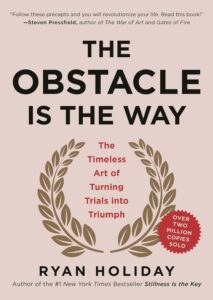
- "The Obstacle Is the Way: The Timeless Art of Turning Trials into Triumph" by Ryan Holiday
Full Transcript:
Michael: Welcome, Carolyn McClanahan, to the "Financial Advisor Success" podcast.
Carolyn: Michael, I am so excited to be here. Thank you for having me back.
Michael: I am excited to have you back. You were one of our first ten episodes, all the way back just shy of ten years ago when we started the podcast. And you were in a growth mode, but at a very good place in the business. It was $1 million of revenue, with a core team. You didn't necessarily want to grow it a whole bunch bigger beyond that at the time. And I know, in the years since, it has been a little bit more of a roller coaster journey. It got bigger. You decided to make it smaller.
And I'm particularly intrigued to talk about the decisions that drove you to make it bigger and then the decisions that drove you to downsize and make it smaller. Because I find just the overwhelming focus in the industry these days is growth, growth, growth, how to size up, how to scale up, which is great for a subset of advisors who want to do all the things it takes to build a large team and support a large advisory business. What we've seen for years in our advisor wellbeing research is that the unhappiest advisors have an average of about $2 million to $3 million of revenue, because it's the size where your client base is getting big, you've hired up your team, you got half a dozen team or more, and now you're working a huge number of hours to manage 18 members and 172 clients all at once.
And we keep hearing this refrain of, "It's grown bigger than I ever thought it would. I'm making more money than I ever expected I would. And I'm burning out on all the hours it takes to run this business, and I've never been more miserable."
Carolyn: Right.
Michael: And often the most straightforward solution from the business perspective is, well, maybe if this is really bigger than you wanted, just downsize to have fewer clients and fewer team members and a simpler practice and get your life back. And that's really easy to say on paper and really hard to do in practice, because most of us do this out of a desire to serve others. So the idea of downsizing staff, downsizing clients is anathema to a lot of us. But I know, Carolyn, you have had to navigate this journey up the hill, down the hill, as it were, and go through the downsizing process. And so I'm excited to talk to you today about what brought you the decision to make it bigger, what brought you the decision to make it smaller, and how you actually did it and what you learned through the process.
Carolyn: I lived the story, so happy to tell it.
What Life Planning Partners Looks Like Today [04:54]
Michael: So I think, as a starting point, help us understand the advisory firm as it exists today, just so we have a snapshot of where it is. And then I'm going to kind of jump back to where we were ten years ago and understand how this journey played out.
Carolyn: Sure. Well, right now, we are a RIA that charges flat fee based on complexity. Our revenue is about $1.6 million, I think it's going to end up being, because we just downsized clients. We had 100 clients at the beginning of the year, and we'll get into it more in depth, but now we are going to be at 65 clients. And our AUM before we downsized, we don't charge on AUM, but we manage all our assets for our clients. It was about $360 million before I decided to downsize. After we finish downsizing, which we're not totally done yet, I'm estimating it's going to be at about $300 million.
Michael: Okay. And how many team members is it?
Carolyn: So I have now two other advisors, two full-time admin, and one halftime admin. And we had two people leave the firm, and I'll get into that, of the why, and it was all on good standing and good footing. And they landed in good places.
Michael: Okay. And so I'm looking at this relative to where we were ten years ago. So for folks who even want to go back and listen, episode nine, so kitces.com/9, for the original episode. And back then, you were running the same complexity-based model. It was about 80 clients. You had $1 million of revenue. I think it was two or three team members then as well. So if I just look as a snapshot from then versus now, you had a focused practice that leveraged you. Now you have a focused practice that leverages you. You've got slightly fewer clients today, but the revenue is higher as we honed in on clients who will fully pay to appreciate the fees of what we do.
So if I just look at the two points, it's like, okay, you continue to hone in and focus the business. Seems like it's running great. A couple of teams supporting $1.6 million of revenue with 65 clients is a wonderful high-touch service practice. So now, connect the two dots for us of, how did this actually play out from where you were ten years ago to get to where we are today?
Carolyn: Yeah. It's funny when you go back and tell me where I was ten years ago, it looks like things haven't changed, and I probably had a great ten years.
Michael: Yeah. Awesome, Carolyn.
Challenges Cultivating Younger Employees To Become Successors [07:57]
Carolyn: Yeah. I've had a wonderful life the last ten years, but it definitely has been a roller coaster. I want to step back and say how I got to where I was, and it'll take me two minutes, ten years ago. I started my practice in 2004, and when I started, I planned on just being a solo practitioner, taking care of my buddies. I was a former doctor, and I was taking care of my ER buddies and running buddies. But then, all of a sudden, things went a little crazy because so many people were looking for real financial planning, which there weren't a lot of people doing real financial planning in Jacksonville. The business of medicine had gotten really hard. And I loved patient care, but I decided I really loved financial planning more.
So I went full bore in 2005 to being a full-time financial planner. And as you know, I love this profession, and so many people helped me get started that I started speaking on the intersections of health and finance. And all of a sudden, I had two jobs, speaking at conferences and running my practice. And I love, love teaching advisors. In 2010, I'd been asked to join Capstone, which is a study group of a bunch of really large firms, firms that were a billion dollars. And people might not know, back then, Norm Boone, Elaine Bedel had very big, beautiful firms. Saw this potential that I could have a big, beautiful firm, and I thought, "I should do that." Because at that point in my career, I had this crazy waiting list for clients. People were just trying to knock down the door, and I thought, "Okay, do I want to be a big firm?"
And after joining that study group, wonderful people, but I realized mostly what they did was run a big business. And what I love doing is taking care of the clients, and I love teaching advisors. So I made an active decision at that point to stay small, and it was to grow to 100 clients. And I believe I had an ensemble firm because there was no way I could go do all that teaching, plus, I didn't think it was fair for the clients to be just me. And what happens if the bus hits me? So I hired an investment manager, who was just an amazing guy that worked with me. He's now retired, and I have a new one. And then I hired another planner. And the challenge was, what happens when I need succession? So things went smoothly, fairly, until 2019.
Michael: Okay. I was going to say, when you were on in 2017, this was still very much the discussion. I think you literally said then, "My plan is to never grow beyond 100 clients." You had your investment manager. There was another planner. So you had the continuity elements. What happens if you get hit by a bus? So help us understand further what changed, so 2019 and starting to think about succession.
Carolyn: Right. Which I had already thought about succession. And so I thought my young planner that I hired would be the succession plan. And so here is...I am here to share everything, all my works and problems and mistakes I made. So the big mistake I made is not really good communication around the succession plan. I've done well throughout my career. I've saved well. I don't need to make a ton of money off the firm. Back then, I didn't. Now, I don't need to make any money off my firm. I could retire today if I wanted to and just close the door and walk away.
But I did a very poor job of explaining to my succession plan back then that I basically was going to give him the practice, maybe one-times revenue. And he was a great young man, but he needed a lot more development. I think we just kind of had a disagreement on where he thought he was and where I could see that he was. And so he left. And that was a wonderful kick in the butt for me because I needed to take business planning a lot more seriously and really lay out the succession plan, lay out the metrics of what the advisors who were working for me needed to do and what they need to deliver and what I was going to deliver to them. So that was my first big mistake.
Michael: So the gap was you had expectations, at least in your head, of the level people needed to be at in their development, the things they need to be doing, or the capabilities they needed to show up with. But that hadn't been as clear. So you ended up with a mismatch. And he thought he was there, and you thought he wasn't there, and that became a problem.
Carolyn: Right.
Michael: So, can you help us understand what kinds of development or capabilities were you looking for even then? What were you watching for? What are you trying to identify to say, "This person's a good fit," or at the right stage, right level?
Carolyn: Well, the biggest challenge I think in our firm is we truly are comprehensive. People talk about being comprehensive. We're almost a family office, except we don't pay people's bills. So we know everything about the client. We did very in-depth tax planning before it was vogue. We coordinate all of our clients' estate planning and go to the attorney with the clients. We do projections every year and monitor what clients are spending, how they're spending money, and monitor their spending to make sure they're keeping it in the road. And we do in-depth insurance planning. So we also look at the client's property and casualty and health insurance in addition to their life and disability and all that. And we don't sell any products, so we basically become the client's advocate when they need stuff.
So a lot of advisors don't do that. And the most important thing to me and a skill that an advisor needs to have is being able to keep all those pieces in view when you're making a decision about one thing. For example, and most people know this, but you have to really know the client well, when you make a tax decision, how does that affect estate? Sometimes it can affect cash flow. Likewise, with insurance, you can affect estate. You can affect liabilities. There's just so much that you have to understand. And you also need to understand what the client's values and goals are when you're making these decisions. So the big link that was missing is being able to put that big picture together and know how all the pieces have to work together and how to communicate that well to the clients of what you were doing for them and what they needed to do.
Michael: And so this becomes, to me, a challenging, somewhat fuzzy thing to measure and evaluate in a prospective successor.
Carolyn: Exactly. Basically teaching young advisors how to keep all those plates in the air, making sure that you're not letting balls drop with certain things that you're doing with clients, how to manage the workflow. So they may get the nuts and bolts of doing a tax plan or doing an insurance report. But being able to be a collaborative advisor with the client and knowing how all the pieces fit together, that takes experience. And I'm sorry, you can have one or two years of experience and be a really smart person and have passed the CFP exam, but it takes sitting in the seat and really working with people to know how to do a great job to work with people.
Michael: Okay. And the challenge was you had younger folks coming in who didn't necessarily want to spend the number of years that you thought it takes to really get to that level of experience.
Carolyn: Yes.
Michael: Okay. Okay. And so the blocking point or the concern for succession in your context, I guess, relative to your earlier comments, it's not an affordability, "Can we afford to buy the practice at the valuation issue that crops up for some people in succession planning?" It was a, "No, no, just the standards are quite high for the depth of what we do, and we need a good amount of years in experience and putting the proverbial reps in to be at the level it takes to handle the clients, the service standard we deliver."
Carolyn: Right. And on my side, the mistake that I truly made was I did not have good measurables for them. And I hired a business coach after that, which we can get into, to help me develop that, and it was invaluable. It's just, "Here's what you need to be doing and why," and making sure that I'm tying pay to that. Because the other challenge is people felt like I should be paid more. And because this is what the industry standard is paying, I have three years of experience, then I should be getting paid this by now. And I laugh because they actually point to Kitces' studies when they look at how much...what you guys are saying people should be paid.
And it's a challenge for small firms like mine to hire people and bring them in and have to develop their skill set and being able to pay them appropriately when they can go down the street and work for a Fidelity or a huge firm and do basically cookie-cutter stuff and get paid a lot more. But their opportunity going forward in those firms isn't the same. Their autonomy is not the same. So there's intangibles that I feel like a lot of young people don't understand until they're in those shoes.
Ensuring That Her Firm Offered Fair Compensation To Next-Gen Staff [18:25]
Michael: Right. So then talk to us a little bit further about what came next. You have a version of these that doesn't work out. So I don't know if you realized, "I need more measurables," and went to find a consultant, or you went to find a consultant, and they helped you realize you needed more measurables. How did it move forward from here?
Carolyn: Yeah. So I'm very active in the profession, go to a lot of conferences, so I know a lot of people. And so I had another young advisor who was with me. Because when I retired, my succession plan was going to need somebody working under him with him to help. So we actually had two young advisors and my investment manager at the time. And I thought, "Okay, hopefully, she'll work out. But I'm going to hire a business coach to make sure that I get it right this time." So I hired Kelli Cruz, and I hired Andrew Miller. So two business coaches. I started with Kelli.
Michael: What do each of those folks do?
Carolyn: Yeah. So Kelli Cruz is a compensation consultant because that was the big sticking point. Am I paying people well enough? And so she did a very deep analysis on what everybody's roles were in the firm, and so not just the advisors, but the admin and all that, what everybody's roles were, what the current market in Jacksonville was, and how much I should be paying. And so she gave this range, and I actually was paying very well, in the high percentiles for each of my spots that I had. And so it wasn't a pay thing. But the other thing she also helps people do is create compensation guides and measurables for when people get raises, measurables for when people get bonuses, and what that looks like. So she built these beautiful Excel spreadsheets of what advisors need to be doing. And we created very detailed job descriptions and what's it look like to move up.
So that was beautiful, and I'm so grateful I did that. She did a very good job dragging me. She didn't have to drag me through, but it was a lot of work. You had to really think and put pen to paper of, "What is it that I need? What are the roles? And where does that fit in?" And the challenge when you're a small firm, you've got to wear a lot of hats. And so you can't have just a chief compliance officer. So my investment advisor, who was the chief compliance officer, how much of his role did he get paid for chief compliance officer versus being investment manager? So little things like that, having to really parse out how people are spending their time and how they should be spending their time on what they're doing based on what they're getting paid.
Michael: Okay. And so, if part of the anchor point was measurables and more clarity to figure out when our advisor is ready to move up, what did you end out with? What were the triggers or the measurables that came forth?
Carolyn: Well, the big thing is owning more of the responsibility of the client relationship. And I know you and I have talked in the past. We really truly are an ensemble in that I was doing tax and estate, and then one of the other planners was doing the projections and the cash flow planning. And then somebody, the investment person, was doing the investments, and then the other advisor was doing the insurance. And we all knew all the clients. And the key, though, is I was still the lead problem solver. So the advisor who did their insurance plan would be communicating with the client about the insurance plan, and everybody knew their story. So we always communicated about, how does this fit in with everything else?
But when people have poop hit the fan, when clients have something bad happen, that's when I get called. And we're not saying bad as far as something we've done, bad in their life. They get diagnosed with an illness, or they lose their job, or whatever. I was the lead problem solver. And the challenge was we are so efficient with our planning processes and how we manage investments and educate clients on investments that that part was easy. The big work, though, was when a problem would come up. And so I was training all these young advisors and having to be the lead problem solver. And so the big, big trigger for them moving up is they had to learn how to be more of a problem solver.
Michael: Okay. Which means deal with complex issues when the poop hits the fan and actually be able to handle this on your own.
Carolyn: Correct.
Michael: Okay. Which you evaluate just by looking in practice when those situations have come up, have they been able to handle them?
Carolyn: Yeah. Well, so what happens is when I get something landing in my inbox that I think you have easy poops, and then you have sometimes somebody has a gastrointestinal illness. And so I started with handing over, "Okay, here's this problem. How would you solve it?" And it was Cheryl Holland that taught me a long time ago, "You can't guide them. You have to let them guide themselves and step in if they start to get in trouble." Because people need to learn to think critically and think through problems. And so that's part of the process.
The other thing is making sure people are good at managing workflow. And some people, they just don't have that skill set to know where all the pieces of the puzzle are. And so that was the other challenge that we're having. When this client called about this issue, did you think to bring up Salesforce and look at the five other tasks that we have so you could check in on those?
Michael: Okay.
Carolyn: So, one, learning how to solve problems. Two, learning how to manage the workflow so that we weren't all piecemealing the client and nickeling and diming their time because they weren't doing a good job communicating and looking at what's going on with the client.
Michael: So I guess I'm trying to visualize, in retrospect, what would this have changed or altered or improved with the prior person who had left?
Carolyn: Well, I don't know that it could have fixed it because I just think that...and so this is where a maturity thing matters. He was a great guy, not immature, but as far as on his professional glide path, he needed more time in the seat. And I think had I maybe had clear career paths and clear expectations, and tying those pieces, it might've worked. I don't know. But I'll tell you where we are now and why it's working, why I hope and I think it's working now.
Carolyn's Decision To Grow Her Advisory Team [26:05]
Carolyn: So let me fill you in on the years after he left. That's where I worked with Kelli, and I said, "Okay, I cannot rely on one person for my succession plan." And the other young advisor, now she's, what, two years out of school and still...she's super smart but needed a lot more experience. And so we're talking 2022 or something like that. So I said, "I'm going to go ahead and just bite the bullet and create a team." And so we were going to grow to five advisors, three admin. And so I started hiring.
Michael: So that's a big shift from...you were two advisors and two supports?
Carolyn: Well, no, it was the investment manager, two other financial planners, and me.
Michael: Okay.
Carolyn: So now it was going to be the investment manager, three other advisors. Is that right?
Michael: Okay.
Carolyn: Me.
Michael: Plus you.
Carolyn: Me and three admin.
Michael: Okay. Okay.
Carolyn: Right. We had 100 clients at this point, right? And just a reminder, I have been closed to new clients for more years of my practice than I've been open to new clients. And every time we re-open to new clients, our waiting list for a year gets immediately filled. It's a good problem to have.
Michael: So the adding advisors part here, so it's you, investment manager, and now going to not one other but three others, was because you wanted to have multiple horses in the race for a potential successor.
Carolyn: All of them, ideally. Yeah.
Michael: All of them, ideally. We're diversifying our risk that, at least, if one doesn't work out, there are others, and my only option is now at the door.
Carolyn: Right. Right.
Michael: Okay.
Carolyn: So that was another. And to do that, I did all the financials and all that. We'd need 150 clients. That's it.
Michael: Okay.
Carolyn: Our typical clients now, and again, we charge flat fee, we don't charge based on AUM, but since the world operates on AUM, our typical clients average $4 million to $5 million. Most of them are five. Most of our newer clients are $5 million to $20 million. So these are people who are the millionaire-next-door, do-it-yourselfers who know they're too complex to do it themselves well, and they basically need a family office, except somebody not...they're okay paying their bills. They don't want a real family office.
Michael: Okay.
Approaching Burnout And Finding Ways To Resolve It [28:57]
Carolyn: And so that's where we were planning to go. And so what ended up happening is we hired quickly, trying to train, and the first one I hired failed. So after a year, that was painful. My investment manager also retired. He hired his replacement. His replacement was amazing. So that was a success. It's like, "I need to be the one not hiring. Maybe that's the issue." But we all hired as a team. Then hired another advisor. So now I have three advisors working for me and the investment manager. And the problem was it's hard to get anybody with experience, and especially the experience that's coming out of what's out there. They don't know true comprehensive planning. So teaching them how to put all those pieces together.
So many firms don't do insurance. Estate planning is telling the clients to go to the estate planning attorney. Doing insurance planning is telling them to go to the insurance agent. Tax planning is tax loss selling. And so our planning was very in-depth, and the people who have come work for me, it's like, "Wow, this is way more than any other advisor does." It's like, "Well, that's how we get the clients that we get because we're very..."
Michael: That's why we work with $5 million to $20 million clients who pay us a lot of money. Yes.
Carolyn: Right, exactly. And if you don't want to lose your lunch to AI, be a problem solver and help...do those things that other people won't do. And so that was a big challenge. So now I'm having to manage these very complicated clients to make sure no balls are dropped and teach these young advisors. So the last 2 years, so '24 and '25, I was working 60, 70 hours a week sometimes, and averaging over 55 hours a week for the whole year. This was in addition to me still speaking at conferences. I had cut it down. I could never be like you. You're amazing. At my height of conference speaking, it was 25 a year.
Michael: That's a lot.
Carolyn: Yeah. After COVID, I cut back, and I would do no more than eight a year. That's still eight conferences and running a practice and trying to train all these people. I was like, "Oh, my God, what did I do here?" So it was...and I was still hopeful. And you know me. I'm the happiest person I know, but man, I was getting burned out.
Michael: So, what was causing all the hours to be so high at the end of the day?
Carolyn: Well, because, for example...and again, all good people working for me. I know how long it should take to do a projection, how long it should take to do a tax plan. Actually, I measure everything, and people laugh. I have this spreadsheet that goes back to 2006 of how I have spent every 15 minutes of my workday, and I don't do that.
Michael: Wow.
Carolyn: Yeah. Because I want to know how I'm spending my time. Where am I wasting my time, right? So I know how long, on average, it takes me to do estate review. I know how long, on average, it takes to do a tax plan and all that. And I don't expect them to be as fast as me because I'm way more experienced, but there's a certain level you have to reach. And so, basically, they were still learning, I'm still teaching them, and I just had to keep picking up a lot of the balls and doing the regular work while they were learning. And it wasn't progressing fast enough.
Michael: And at the same time, you expanded the client base to bring in the revenue to cover the additional salaries of the additional advisors in training. So there's also just more clients on board now than previously.
Carolyn: Yeah, all the new clients. And so they were responsible for doing the new client plans, but I still had to go through everything and make sure that nothing was missed. Because again, they were learning, and they were smart. But when you don't have years of experience, then you don't understand the nuance and the important little things that you need to catch. "Oh, this client has a life insurance policy at work that you didn't ask about because you didn't pay attention to the pay stub that they sent us that shows life insurance premiums being deducted." Little things like that that we need to know about. And that's what learning is about, but I bit off way more than I should have, and I expected way more than I should have, I think, of the people working for me given their years of experience.
The other end is, "Well, why didn't I hire up, hire a more experienced person?" The challenge with that is they still, even more experienced people, didn't have a lot of the in-depth knowledge of the way we do things. And they expected these huge paychecks, where it still was going to take them a year or two to kind of get what we do and how we do it.
Michael: So ironically, from your end, the experienced people still need a lot of the training and development. They're just more expensive.
Carolyn: Right. Right. Plus, they're coming from trying to...I tried to get people out of the broker-dealer and insurance world. They're coming with these preconceived ways of doing things. So you not only have to teach them new, you have to un-teach them the old. And so that was challenging. And I am grateful that the people I hired were good people. I just feel like I set the expectations too high for them and too high for myself.
Michael: For how quickly they could get to where they needed to be.
Carolyn: Exactly.
Michael: And I guess the pain for you because now you're running three at once and more clients to handle the three at once, and so that's what makes all the hours go up.
Carolyn: Right.
Michael: So, did it feel like it was making...was it making progress as you were going? Was it 70 hours, 65 hours, 60 hours, moving in the right direction?
Carolyn: Yeah. Well, we were adding these new clients, and so the end of '25 is when I hired Andrea Millar. She's a CPA formerly, and she worked for the AICPA. And she was there...you might know her actually.
Michael: Yeah.
Carolyn: Yeah. And she ended up leaving there and becoming a life coach for financial planners. And I read about the work...and I knew her through the AICPA because I speak for the AICPA, and I read an article about what she was doing through Bob Veres' newsletter. And I'm like, "Hmm, I might need that." So I said, "Andrea, I have a challenge for you. I know you're working one-on-one with people, but I wonder if you would help me work with my entire team to help them develop where they need to go so they can lift the hours off me."
Michael: Okay.
Carolyn: So we hired her the end of...it was end of 2024, sorry. And so we created this path of what needs to happen when it needs to happen. And then she helped as far as working with each of them individually to make sure that what they were doing is what they really wanted to be doing. And how did they feel about how we'd be going? How could Carolyn do better to make sure to help you? I just felt like I needed an outside objective person to help us all put things in perspective that I couldn't be working this way. And I was going to give them this great deal on the practice. So they needed to really step up because I couldn't keep doing it.
And so, at the end of last year, the end of '25 is when, "Okay, team, what's going to happen next year? Because Carolyn needs to cut some hours." I didn't even take my vacation time in '25. So, crazy hours. I took time off, but basically, I worked so many hours on the weeks I was here that it was like I got my vacation time back. And I said, "I, at least, want to be able to take my '25 and '26 vacation time in '26." And that's my goal. If I could just have that, that'd be great. And I want to throw one thing in there. My husband doesn't mind me sharing. He's developed some neurological problems. It's not life-threatening, but it's going to affect his mobility in the future. And I'm like, "Okay, how many more good years do we have?" Because we're very active, hiking, kayaking, biking. How many more good years do we have that he's going to be able to get around to do things we want to do? I can't do this. And that's where I said to myself, "I'm not going to hire another person." I ran all the financials. I looked at the client list. And we really...
I know we've talked before about my client engagement standards. We do a great job of making sure we pick clients we'd like to work with, that when they call, you want to pick up the phone. And so it's like, "Okay, how am I going to do this?" Because I like everybody. And I just looked at the client list, and I said, "Okay, I'm going to keep the two-thirds and help a third find new people." And then I had another young advisor. He was wonderful. And I just basically had to say to him, because he wanted high-growth fast, and I'm like, "I'm not going to be able to deliver that to you. So I will happily help you find a new job." And I said, "Or if you feel you're up to it, you can open your own practice. I will help steer some of the clients to you." I said, "I can't promise they're going to come to you. But I'll say you're opening your own practice. And I bet a fair number will help you get started."
But he ended up going to work for another firm. So that's what ended up happening. So now we're down to one advisor, my investment manager, and me. And the one advisor I have left, he actually was a hire late last year. He did not know the hornet's nest he was walking into of where we were, but he knew what the plan was. And I basically said to him, and so he's in his 50s. He was at Merrill forever. And then he went to Edward Jones on his own because he wanted to be an independent advisor. Realized that that setup didn't really allow him to be a true fiduciary, so he jumped at the chance to work here. And the beautiful thing about him being in his 50s, seeing it all, doing it all, his maturity level, the understanding of what it took to really be here is there.
Michael: Right. So take me back for a moment. You did this work with Kelli to try to set clarity of the career track, the measurables, what they needed to do. You brought in Andrea to help further create paths for them. So, right, "it's all the things you're supposed to do."
Carolyn: Right.
Michael: So, what wasn't working? Now, with the lens of hindsight, at least, what wasn't working? Too many who were too early stage at once?
Carolyn: Yes.
Michael: Okay. Because you'd expanded the client base to cover them, but they're all in the same learning mode at the same time.
Carolyn: Right. And we hadn't fully...we had only added maybe, gosh, eight clients since we started all this, because we were doing it very thoughtfully, because I'm very big into, "Make sure we never neglect our current clients." So we want to add thoughtfully. So we were adding a client every two months. And of course, these are complicated clients, so you got a lot to do with them.
Michael: Okay. I guess that's helpful context. You hadn't gone already and ramped from 100 to 150 clients off the waitlist.
Carolyn: No, no, no, no. I could never. I would have died. And I wouldn't have been able to do a good job. We wouldn't have been able to do a good job. So we were adding a new client about every two months. And between that and doing a great job taking care of current clients, it was a lot.
Michael: I guess I'm just trying to understand. If you'd only gone from about 100 to 108 clients, just what made the hours skyrocket so much that you're working 60-hour weeks and can't take vacation? In the time tracking spirit of your magic spreadsheet, where was all the time going that blew this out for you in such a challenging way?
Carolyn: The client, the regular client care, the client poops, the problem-solving, having to teach them and oversee all their work, having to review all the reports.
Michael: Okay. Because before you went and hired them, you also had 100 clients, but you weren't working 60 hours a week.
Carolyn: Right. But we weren't taking new clients. So new clients took a lot. I wasn't having to train a lot because my younger advisor was very good at what she did. She just wasn't very fast. And Brett was doing a great job. We were going through the transition from Tim retiring to Brett taking over. But I still had to kind of watch out for him just to make sure.
Michael: That was your new investment manager?
Carolyn: Yeah.
Michael: Okay. So I guess, in retrospect, at least, just too many new team at once?
Carolyn: Too many new team, too much just as far as regular client care. I was doing all the tax planning still. So having to do 100 tax plans, that's a lot of work at the end of the year.
Michael: And what was the path that Andrea was trying to build to get through this?
Carolyn: So for them to get better about their workflow, to help them think through how they want to step up in leadership roles. So a good example, one of the good transitions that happened is Brett took over basically being our CFO. So that took that off my plate. Just getting them to think more about all the practice management stuff and how important it was to not let any balls drop, instead of just staying in their lane of doing reports. So she was working with them on that.
Michael: Okay. So all in, just developing them as talent and focusing more on the practice beyond just the client work itself.
Carolyn: Right.
Michael: While they're also learning the client work and how to deal with more complex clients.
Carolyn: Right. And communication, learning how to write better emails, how to talk to clients, learning who the clients were so they can communicate better with the clients.
Michael: And so I guess I can see the context. So the pain is so much time it takes to do the training and development with all the new people on as the new investment manager is getting up to speed, and you've got two new younger advisors on board that you're heavily training. And then the most experienced one you had decides to leave.
Carolyn: Right.
Michael: But otherwise, you're basically in new advisor training overwhelm. If you want to continue down this path, the best-case scenario is hiring another newer advisor and having three in training, where the ones that are still coming up to speed now are your most experienced.
Carolyn: Right.
Michael: Okay.
Carolyn: Yeah. Could I have stuck it out another two years? Probably. Did I want to? No. Life was calling. And I speak about the intersections of health and finance, and I have, for years, talked about you don't know when things are going to hit the fan for you. And they haven't yet. My husband is doing great. And we don't know what the time frame of how long he's going to do great. And I'm like, "I'm not going to wait anymore. I want to make..." I'm fine. I love my job. I love financial planning. I love teaching advisors. I'm not quitting. My goal is to stay around another six to eight years. And again, I believe we should quit before we have to quit, because I teach people about cognitive decline and all that. But I want to work a reasonable life. So our goal is to get me down to three days a week.
Making The Decision To Downsize Her Client Base [48:56]
Michael: Okay. So now, we get to the end of last year, we're rolling into this year, and the news comes. So now take us through the thought process, the decision process. So, what did you do? What are you analyzing? How are you choosing the path forward from here now?
Carolyn: Yep. So I talked with Andrea and Kelli, and I said, "I'm going to downsize the practice. And Kelli's mouth dropped. Andrea smiled real big, "Yay." And I went through the financials of, "Okay, which clients are going to help move on?" And I decided to keep all my very old clients, because I'm a fiduciary to the core, and I care very deeply about my clients. So all my clients in their late 70s, early 80s, I'm keeping them because I'll hopefully outlast them, not that I want them to go, but we're just looking at statistics.
Michael: So oldest clients doesn't mean long-standing clients. We're talking chronologically oldest.
Carolyn: Yeah. Yeah.
Michael: Oldest clients, the ones in their 70s and 80s. Okay.
Carolyn: Late 70s and 80s. Because people, especially clients of advisors, are usually healthier. A 70-year-old client may have a 20-year runway for you, depending on their health. And so that was the first ones I knew I was going to keep. Then the very complicated ones, because I know we do a great job for them, and they pay us well for what we do. Then I also favored local because about a third of our clients are long distance, and I adore them, but I've also found it's just fun having people local. And so that took care of some of the... I didn't get rid of all of our long-distance clients. I kept our complicated long-distance clients. And then I got rid of...rid, I hate saying that. I helped move on some of our really young clients, because we actually had a very diverse age group of clients, because I figured they're going to need somebody to grow old with.
So we were left with this group of 65 core clients. And all of us, we each made a list of, "Okay, which 35 would you move on?" And it was a very hard and well-compared list. And there are some people that was just...and some people who need lots of hand-holding and/or don't always listen to us. And so it's like, why are you paying us? Those are very few. So that was a handful we all agreed on that anybody could serve them because they don't quite get what we do after all these years. But the majority of clients were very hard. Hard to say, "Hey, I got to find you a new home." Everybody was very gracious, minus one person. They were not happy. But everybody was very gracious, especially understanding the issues with my husband. And I've got to have a life, and the succession plan is not working.
I went through the clients that we're going to keep, and I said, "Here's what's happening. Here's what I'm doing. You may not like our new succession plan." And one thing I've always done has been very transparent with clients about my plans and the succession plans. And they've always been very appreciative. So all the clients, I said, "I would like for you to stay a client, but if this makes you concerned and you don't want to be a client, please let me know because I'm going to let somebody else stay a client if you don't want to stay." So I kind of had to triage, call down the list. Everybody that I asked, I said, "We want to keep you," they stayed. And then the 35, I've moved all but about...now it's about a quarter of people I still am trying to find homes for. They have weird situations that an hourly person can't quite serve them well.
Most everybody came to us because they love our flat fee structure. So I'm gravitating towards flat fee advisors, but not all flat fee advisors manage assets. So it's just kind of been a challenge finding a home that they would feel good about, but it's a work in progress. And already, though, my life is so much better. The way I worked with the team on this is if Brett... Brett's the investment manager. If he wasn't going to be happy and stay, that was going to be a problem. I was actually going to downsize to 20 clients. So I went to Brett first, my office manager who's been with me forever and ever, and I said, "Here's what I want to do. And how do you feel about that?" And Brett said, "Bring it on. I would love a lifestyle practice." So he was on board, and that's why I decided the 65.
Then I went to Steve, my new hire. I'm like, "You're a mature guy. Are you in for this?" And he says, "Yep, let's do this." And so everybody is very happy. And Andrea has worked with the team to make sure that we all feel good. And it just feels like all the right people are on the bus.
Michael: So I guess I'm wondering. I see so many advisors who are in some version of this, and it seems like the almost automatic conclusion is we just have to grow through this. We just got to grow a little bigger. We got to get a little further, and it'll get better. I guess I'm just trying to understand how hard or maybe not hard it was for you to decide, "No, I just need to go the other direction. We're going to downsize and simplify this."
Carolyn: This is where an advisor really needs to look at what are their goals and values. I get a call from private equity every week. It's like, "Please quit calling me." I think private equity is killing the profession. I am not a fan of it. Yes, they will offer me a heck of a lot of money, but I'm not here for that. I'm plenty fine. But other advisors may need that, and they may want that. So that's okay. To me, there's no judgment. We all want different things. But for me, I have enough. I could retire today. I don't want to. And so it gives me lots of options, having that financial freedom. And so I did not have to grow through this. The only reason I would have is I wanted to make sure that my clients were well taken care of and that my employees were well taken care of.
And once I knew that, especially my key employees, my office manager, who I adore, she's just been with me through thick and thin, and our other admin person, who is amazing, once they were all on board and excited about it, I'm like, "Okay, this really is the right decision. So you've just got to understand your goals and values when you decide, "Am I going to grow through this and go through the same pain I went through?" Or maybe you have more success because you'll do it smarter than I did, or realize that you only get one life and you don't have to do all that.
How Carolyn Broke The News To Clients From Whom She Was Moving On [54:15]
Michael: And how did you actually break the news to clients who weren't making the cut?
Carolyn: It was painful. Yeah.
Michael: What was the process? How did you explain this?
Carolyn: I called every client, even the clients we kept. I called everybody, and I just broke it down. I had to be careful because a lot of clients know each other. So I didn't want to... I grouped them by, "Okay, who's going to talk to each other?" So I had to call them quickly first. And then, basically, I just said, "Here's what's happening. I have to move 35 clients to new advisors. And here's who I'm picking. I'm keeping my old people, my really complicated people. And you're not old, and you're not complicated."
Michael: And you really framed it to them that way, "This is my criteria, and you don't fit those."
Carolyn: Right. And I said, "And I'm not just making you go out on your own. I'm going to help you find a new advisor. I'll give you names. Or if you guys come to me with names, I will tell you what I think about how their practice is. And then once you pick somebody, we'll do a warm handoff of all your information. You're not going to have to gather all your documents or any of that. And we're going to make this super smooth." And we've done that with every client.
Carolyn's Push For Financial Planning Residency Programs [59:47]
Carolyn: And I want to say one more thing about what I think the problem is with small firms, is you can't go out and hire ten people and have eight of them work, which the very big firms can do that. You have to hire one or two at a time. And I've complained, and I've been very vocal about it since the beginning of me entering this profession, that the CFP board needs real residency programs, two-to-three-year real, like we do in medicine, real residencies where people are actively practicing, learning the communication skills, learning how to put the big picture together, not just one capstone plan, but learning how to be a financial planner. Because that's what small firms need to bring in, are people who have some experience. And we don't have to train from the bottom up.
So that's my plug for, hopefully, one day, to make this a real profession, the CFP board will create real residency programs.
Michael: But literally where the CFP Board runs it and takes on clients to give to the residents?
Carolyn: No, it would do exactly like we do the medical graduate training system at university programs, which now teach CFP Board certification, and financial planning would have practices where the students and then now the residents would actively practice.
Michael: Okay.
Carolyn: Yeah. Actually, I know...
Michael: It's not literally something CFP Board would run. It's something that the CFP Board-registered college programs would run.
Carolyn: They would run, but they would have, just like we have in medicine, they would have a standardized curriculum. In medicine, we have the ACGME, which supervises all the residency programs. The CFP Board will service that. And, Michael, I know you have a million pieces of education on your website, but I wrote an article on your website a few years ago about this.
Michael: Yes. We'll pull those into the notes. But I'm just distinguishing, because a lot, even for some financial planning firms out there that have built various versions of residency programs, it's individual firms that are taking on an advisor or a few in a cohort, which is different than CFP Board runs it or CFP Board creates a framework where the colleges that currently do CFP classes run it.
Carolyn: Right. Well, you could have individual practices do that. Because in medicine, you actually have community-based practices that take on residents. But the CFP Board would have a standardized curriculum of everything that needs to be met for somebody to successfully graduate from residency.
Michael: Okay. And so, what do you think is missing that, "We don't have this," or, "We haven't been able to get to it already?" Is it just specifically the, "We just need a clearer curriculum of what it's going to be," or do you see other blocking points?
Carolyn: No, I think that we need young advisors to have time in the seat of doing real financial planning in a supervised setting with a standardized curriculum, making sure they know how to do real estate, not real estate, real estate planning, tax planning, making sure they know how to put the pictures together. One capstone plan does not make a person a financial planner. And especially learning communication skills. Behavioral finance is huge. That's such a big part of what we do, and that's a part that, as we see AI take over more of the mundane planning processes, that it's going to be very important for advisors to have those skills to actually...people motivate. AI doesn't do a great job motivating.
Michael: Right.
Carolyn: So teaching more of those type of skills and how to problem solve, I think a lot of the critical problem-solving skills that advisors need are not being developed. And especially in these super big firms where they just want to do cookie-cutter planning, a lot is not being done for the clients. That would be very valuable for the clients. And if advisors learn how to do that, we'd be serving them better.
Evaluating Other Firms To Help Clients Find New Advisory Homes [1:00:13]
Michael: So now take me back a moment to the transitions you're doing. So as you go to the 35 who have not made the cut because they're not too old and they're not too complicated, how is this transition working? Are you selling clients? Is this a partial book sale transaction? Are you just referring them out and sending them to a new home? How does this actually work?
Carolyn: Yeah. It didn't feel like... I'm not selling them at all, no. I'm referring them out. I'm trying to match personalities. I've reached out to advisors and interviewed them and talked to them. I've spent a lot of time trying to figure out who would be a good fit. And it's been beautiful, and these advisors are like, "Are you sure?" It's like, "Yes. Please take my client." And these are good clients. And again, like I said, some of them are a little bit more challenging, but every client has a different type of challenge.
Michael: So now I'm surely curious. You're now out scanning advisors' websites and interviewing advisors. So, any learnings of what it takes to find a financial advisor as a financial advisor finding financial advisors?
Carolyn: Yeah. To me, there is such a diversity in what people are doing for their clients. And it's amazing to me how many, especially all the new flat fee advisors, basically want to work with do-it-yourself people to just validate them and then send them on their way. And so that was a little disappointing to me, because there are a lot of people who don't want to do it themselves, who would benefit from a flat fee advisor. And they just need somebody to make sure everything's getting done right. So that was a little disappointing.
Michael: So I guess just the distinction that you are a flat fee advisor that doesn't charge on AUM, but you're still doing portfolios and a lot of other implementation and follow-through. It's not, "I'll give you the advice, and you can go forth and do it." You are still very hands-on with more delegator-style or just retail-style clients, as opposed to some of the folks emerging in the advice-only space where the whole model is you work with the DIYs and validators who want to come for second opinions and get advice. But they don't want you to do it. They don't need you to do it. They're just literally here for the advice.
Carolyn: Right. And so, for example, some of the clients I'm helping find new homes, they would be fine to have an advisor help them rebalance once a year, right? But there are advisors out there that won't help them rebalance. I tried to send a $6 million client to somebody, and maybe it was too big for them. I don't know whether the guy is super smart and can do it, but he wanted somebody that was going to help him rebalance. And it's like, "Nope, not going to do that. I will send you down to the street to an investment manager." I'm like, "It's not that hard." And one thing is we use passively managed portfolios. We do individual bonds.
So that scares a lot of people off. And I had some advisors insist that the clients need to sell their bonds off because they need to be in bond ETFs. I'm like, "These are great bonds. You're going to take a huge haircut if you sell them. Why don't you just let them mature, and then you can reinvest them in bond ETFs?" So there was just some disappointing things in what some of the advisors are doing. But again, I found some really great people for people to go to. So it just was trying to figure out who was going to do what.
Michael: So, any other discoveries and learnings as you're reading websites and interviewing advisors to try to figure out who's a good fit for your clients?
Carolyn: Right. A lot of advisors have really bad websites.
Michael: So, what's missing that you're looking for?
Carolyn: Some of them don't really say what their fees are. Some of them, they don't spell out their services, and people want to know what they're getting. One thing that shocked me about some of the flat fee people that are doing investment management is they say, "I'm going to charge you $9,600 a year, no matter what the size of your portfolio." I'm like, "That doesn't seem very smart." Because once you get clients that are over $10 million, $15 million, you've got to be thinking asset protection and setting up ways to protect them and making sure they're more tax-efficient. They are a lot more work, maybe not on the investment side, but on everything else they are. And so, to set a true flat fee that doesn't take how complex those clients are going to be and how much more of a liability they could be to you if you're not doing the right thing for them, I think isn't real smart on those advisors' part.
Michael: So, what do you look for in the services context? I feel like most of us have our services, right? I'm comprehensive financial planning, including tax and retirement insurance and estate and investment management of your portfolio. I feel like most of us have something in the context of services that covers that. And my impression is that that's not doing it for you.
Carolyn: Right. Well, so tax planning, they say, "Oh, we do tax planning." Well, you find out it's only tax loss selling. They're not helping people determine what's the ideal IRA distribution in retirement to manage lower tax brackets. They're not doing ACA tax credit planning because you have millionaire-next-door clients that are under 65 that you can still qualify for ACA tax credits. It's harder now that they didn't expand the tax credits, but it's still doable. And nobody's...there's a lot of people that have no idea how to do that. I spoke at NorCal this last May on all the things you could be doing for your clients on health planning side, and a lot of that was tax stuff. And people had no clue how to file an IRMAA appeal. It was amazing to me.
What Carolyn's Succession Plan Looks Like Today [1:06:48]
Michael: So now bring us forward to today. What is the succession plan now?
Carolyn: So it's very close to what it was going to be. I am actually giving all of my employees a total of 15% of stock.
Michael: Okay.
Carolyn: And so it's a gift, and they each...they're not getting 15% each. It's broken up. The advisors get more. My long-time office manager gets more. I'm even giving the admin people stock. Now, if they leave, they lose that stock. It just goes away. But if the business gets sold, they benefit from it, which I'm not going to sell, except internally. But just in case, that protects them. But they also get dividends along the way because we still have very good profitability. So it helps them invest in that growth next year. So this year, I've already taken a big chunk of my...I finally finished my 2025 vacation days. Now I started on my 2026. So that's been amazing. Went to Greece for two weeks. It was great. And been taking days off here and there.
And next year, January 1st, I'm going four days a week. And I'll be cutting my base pay to reflect working four days a week, which is going to increase profitability. And Steve and Brett are going to start buying in 34% over the next 6 years. They're just going to buy it a chunk at a time, which they should be able to do with their pay because they're going to get pay increases from taking over more of the work I'm leaving. And again, we're using very clear measures of what that looks like. Thank goodness, I learned that lesson. And so they'll have lots of time to buy that. So they'll own 40%. The crew will own 49% of the practice by the end. And then, when I'm ready to walk out of the door, they're going to buy the other 51%.
And again, they're going to get a good valuation on it. I'm going to take it as low as we can legally for them to get a good deal and for me to get something out of it. And so they shouldn't have any problems as long as we can keep that profitability going forward, being able to pay that 51%.
Michael: So the goal is not necessarily to give all of the stock over the 15% as initial seeding of their buying power to buy the next 34%?
Carolyn: Part of it, and part of it is more the incentive to continue to make us efficient, have good profitability, and have that ownership. And we're not going to take new clients. But like I said, some of our clients are in their 80s. We'll probably lose a few clients over the next few years. I said, "Whenever you guys are confident and confident to fully onboard new clients, and you guys want to take new clients without me having anything to do with that, you can do that." And we all agreed that that's not going to be any time in the next couple of years. And so they can grow the practice, and they're going to need to. And they know that. Because you have to replace clients. We did, and again, we still have a broad range of clients. And we looked at what's the potential longevity of the current clients we're keeping. A lot of our clients are in their early 50s and early 60s. And again, you're looking at a 20-year-runway-plus on those people.
Michael: Right.
Carolyn: Right? So they have plenty to keep them in good financial shape if they do a good job and keep the clients. That's their goal, is learning how to replace what I do.
Michael: I guess I'm just curious...as all this has flowed through, how did the economics of the practice end up? I'm just trying to visualize. Is it actually more profitable now as well? Because you downsized clients, but you also reduced headcount. It's a little less profitable, but you got from 60 hours down to 4 days a week, so quality of life is through the roof, and the economics are simpler. I'm just trying to visualize. Is this a step back in dollars for quality of life improvement? Did this actually improve the economics as you went through all of it? Where does it stand?
Carolyn: It's going to be a wash.
Michael: Okay,
Carolyn: Pretty much a wash. Yep.
Michael: But your hours go from the 60-hour weeks to 4 days a week.
Carolyn: Four days a week. Yep.
The Challenges Carolyn Faced In Hiring [1:11:28]
Michael: Okay, Okay. So as you've now gone down this path, what surprised you the most of this journey of trying to create the succession plan and the transition from ten years ago? You're like, "I don't want more than 100 clients." We're still there with a bit of a roller coaster along the way. But what surprised you the most about this journey?
Carolyn: I think, for me, how hard it was to get good people. And everybody I hired was good, but how hard it was just to hire in general. And is that because my firm is small? Is it because we're in Jacksonville, Florida? It was just a challenge. Hiring was a huge challenge. So that was a surprise because, especially, we were doing everything right. I was offering equity, had clear career paths, had great quality of life. We're hybrid, so people get to work from home two days a week. Great vacation, all the benefits. And Kelli said, "Your package is amazing. Why aren't people coming here?" And so I don't know. That was surprising. We had so much to offer, and we couldn't get the type of candidates that would be a good fit. So that was one surprise.
And my advice to people who are facing succession, start super, super early. You always hear that, and I thought I was starting early enough. But give your chance for one blow-up because it's going to happen. And you've got to just roll with the flow, but make sure you protect your health and yourself and what is of value to you along the way. I never considered selling to private equity, but every now and then, it's like, "God, I wish I could just sell to somebody." But it was going to be hard. And I have to say, part of that problem is probably because we're flat fee and manage the assets that we do. Because if somebody who's looking from an AUM perspective, it's like, "Wow, that's a great practice to buy." But when you actually get in and look, "Okay, they're flat fee. What's that look like?" People don't want to touch that. So if selling your practice is a big thing, I feel like flat fee advisors are going to face challenges in that, given how the market looks at practices.
Michael: So I am struck on the dynamics of hard-to-hire people. You did ultimately find good folks that fit, that you're successioning to. So if I'm understanding right, it's not that ultimately you couldn't find some people, but it was very hard and challenging along the way with some turnover just to get to the ones that you got to.
Carolyn: Yes. And, though, I want to say that we are not done because Steve and Brett still have a lot to learn. Brett's an investment manager. So with it being the two of them, he's learning how to do the financial planning. He is a CFP, but he's always focused on investments. And I said, "There's no way you can just do it"…make what you need to make and just do investments for 65 clients, especially given we're passively managed. We don't even do performance reporting. So Brett's job is not...the big part of his job is we do use individual bond portfolios. So that's how he spends the bulk of his time, is getting bonds as far as on the investment side. But now that he's down 35 clients, it opened up a lot of bandwidth for him. And so he's learning financial planning, and he's doing it. He's super smart, and he's doing a great job.
Steve still has holes to fill coming from the broker-dealer world because they did zero estate and zero tax. And he's picking up very, very quickly, and he's very productive. And I think coming from that world...and also, he really, truly loves financial planning. Both of them love what we do. So that makes me very optimistic, but they still have the skill to learn the skills of communication, making sure they're knowing how to spin the plates of which...where we are right now and where they are right now is way further than where we were the past two years. So I'm optimistic, but we're still not 100%. And I'm hoping it happens. And we all feel good about it. We're all still working with Andrea. So it feels good, but maybe I'll be back on your podcast in six years to tell you how it all turned out.
The Low Point On Carolyn's Journey [1:16:34]
Michael: So you're 20 years in now on the financial planning career. What was the low point of this journey overall for you? I don't know if the succession challenges or something else on the journey.
Carolyn: I think it really was the succession challenges. The challenge I had is I came into this profession knowing I was going to do it very differently than how other financial planners did it. When I did flat fee from the beginning, everybody said I was crazy. The way I do engagement standards, when we quit performance reporting, everybody's always called me crazy all along. And my push in the profession about how important incorporating health conversations are, there's just a lot that I've done that's been very different. And so that has ended up, to me, creating a challenge for me of getting people into the practice to really visualize what this practice looks like.
And people say, "How do you have the time to do everything you do for your clients?" And the reason why is we do such a great job on investment education. We have zero investment meetings. We don't do quarterly reports. We are very consistent in how we deliver planning, and it's an ongoing service. And that's where we spend our time. And I looked at it, where other advisors spend their time is, trying to justify their investment management and all that, which we never have to do. So we spend the same amount of time as other advisors. We just have a more fun job.
Michael: I like how you didn't just frame it like, "We spend more time on the planning." It's like, "We have a more fun job."
Carolyn: We do. And that's what people want. They don't want to...they don't care about whether their portfolio outperforms. The ones that say they care, that's because they've been trained. That's what I'm supposed to care about. But when it comes down to it, what people really want is somebody that's going to make sure that they're going to have financial security in their lifetime and that they're enjoying life now and they're doing smart things financially now. And that's being a financial problem solver. And I can tell you, that's why we've never had a problem getting clients, that's why our waiting list was out, the yin-yang, because people understood that we really cared about them and their outcome. It wasn't just about their money and growing their portfolio.
Carolyn's Advice For Her Younger Self And For Newer Advisors [1:19:06]
Michael: So any other pearls of wisdom from hard-fought experience that you wish you could go back and tell you ten years ago as you were starting down the succession path?
Carolyn: I think I've shared everything. I love the journey I've taken, and I've realized that life is always going to have obstacles. And I've been big into stoicism, reading stoic philosophy the last few years. And Ryan Holiday wrote the book, "The Obstacle Is the Way," which Marcus Aurelius talked about, and learning to approach obstacles as opportunities instead of problems. I think that. I wish I would have learned that a lot sooner in life because now, what we're doing now is fun. And the decision I made to downsize, it felt good and right. And so making sure that you understand who you are and what you want and following your heart with those decisions. And so I just wish I would have started that a lot sooner.
Michael: Any other advice you would give younger, newer advisors coming into the profession today?
Carolyn: The most important thing, I think, is to learn good communication skills. I think so much of that is being lost as far as how to have hard conversations with clients, how to ask the hard questions. Because if you're comfortable having hard conversations with clients, you're going to be able to do a better job for them, and they're going to value your services a lot more.
What's Next For Carolyn [1:27:00]
Michael: So, what comes next for you? What else is on your horizon as your time recovers in this transition?
Carolyn: Yes, I know. Super excited. Yes. So as you know, I've been very big into teaching advisors about the intersections of health and finance. I did join the CFP Board Resource Commission a couple of years ago, and they brought me on specifically to help develop a guide for working with clients facing cognitive decline. And to me, I've never been big about what's my legacy going to be. But if anything's going to be my legacy, I think that that issue is it. And I'm super excited that the guide is going to be released this fall. And I'll be speaking at the CFP conference on the guide and working with clients with cognitive decline on how to prepare in advance.
One of the goals I also have, I have about 20 talks I do on intersections of health and finance and just ways to...how I practice use of engagement standards, everything we do in our practice. And I want to record all of those on YouTube videos and put them out there for free because there's really nobody out there still talking about the intersections of health and finance like I do. And I don't want that to be lost because I think a lot of that's valuable, and I want to make it widely available to any advisor who wants to get better in that realm. So those are my plans, and I'm always dabbling in other fun things like politics and health policy and do some of that. And of course, spend a heck of a lot more time with my husband. We're kayaking a lot, taking trips, more trips, and having a good time.
What Success Means To Carolyn [1:22:36]
Michael: So, as we come to the end here, this is a podcast about success. And just one of the themes is that word success means different things to different people. It evolves for us sometimes through our lives. And so you have this objectively very successful practice now in a hopefully successful succession transition. So the business seems to be in a great place for you now. How do you define success for yourself personally at this point?
Carolyn: Oh, goodness. For me, did I do good in the world? And so much was given to me as far as, in my young life, the number of people that helped me, the number of advisors who helped me when I first got started. It was Cheryl Holland that always said, "When you give without the expectation of getting anything back, it just comes back to you a gazillion fold." And that's happened to me. I have lived a very full life, and I just learned that doing good just to do good is its own reward. And so I feel like I'm a huge success. And by creating the practice that I created and by being bold and doing it differently and not being afraid to do it differently, things to me have happened beyond my wildest dreams. And so, yeah, I'm just grateful. And thanks to people like you. You have been just a standard-bearer in this profession and have been kind of my guiding light through the years. And for all of us that are giving back to this profession, it's a wonderful profession to be in. And we're just making it better and better.
Michael: Amen. Amen. Thank you so much, Carolyn, for joining us on the "Financial Advisor Success."
Carolyn: Thank you for having me back. And I look forward to seeing your path over the next 10, 20, 30 years. So it'll be fun.
Michael: I still got a lot of gas in the tank. There's a lot more. Awesome. Thank you.