Executive Summary
2025 proved to be a fruitful year for investors, with a wide range of asset classes generating positive returns. However, some investors might be nervous heading into 2026, with regular news headlines raising potential threats to the market, from elevated valuations to uncertainty around U.S. government policy. With this in mind, financial advisors can provide their clients with context surrounding these issues to help them make better-informed investment decisions in the year ahead.
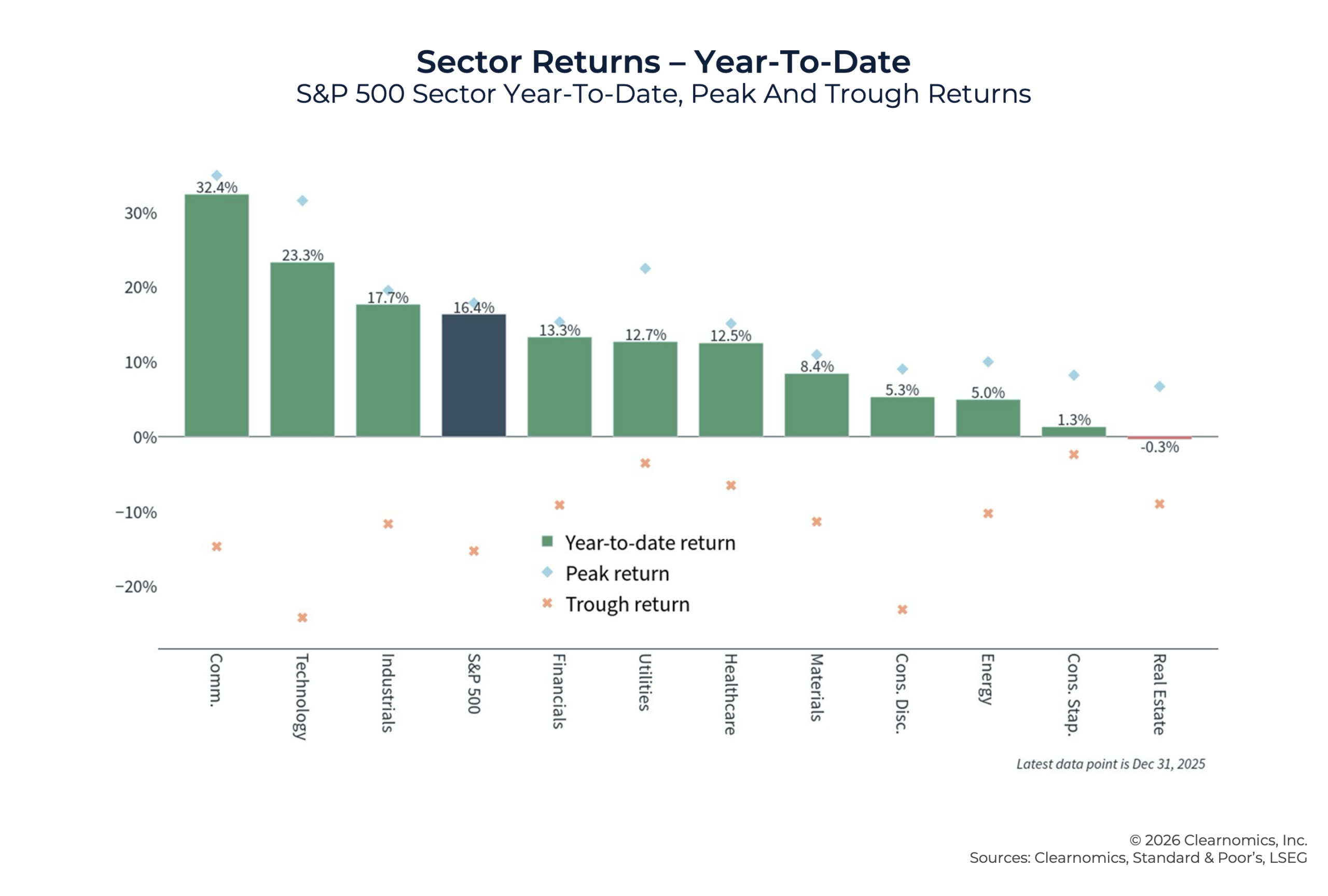
One of the hottest topics in 2025 was the unprecedented level of capital expenditures into Artificial Intelligence (AI)-related businesses, including data centers, equipment (e.g., GPUs), and more. Which has made AI investment not only a key driver of the U.S. economy, but also of stock market returns (with sectors including Communication Services, Technology, and Industrials also seeing above-market returns on the year). Nonetheless, history offers important context for the AI boom, with previous transformative technologies (e.g., railroads in the 1860s and the dot-com bubble of the 1990s) following similar patterns of skepticism, rapid adoption, market exuberance, and adjustment of expectations. Which suggests that AI presents both a growth opportunity and a portfolio risk that should be managed carefully (e.g., by staying true to an appropriate asset allocation aligned with long-term goals).
Another potential concern for investors is the current level of market valuations, with the Cyclically Adjusted Price-to-Earnings (CAPE) ratio hovering just above 39, the second-highest level in over 150 years (trailing only the peak of the dot-com bubble). Notably, though, while certain market sectors are trading at relatively higher P/E ratios (e.g., Information Technology trading at a forward P/E of 26.8x), other sectors have lower valuations (e.g., Financials and Energy trading closer to 16x). Also, a key difference between today and the dot-com era is that current valuations are supported by earnings growth and business fundamentals, not just speculation. Nevertheless, maintaining appropriate diversification and avoiding overconcentration in high-valuation sectors remains essential for managing risk.
Market headlines in the first half of 2025 were driven in large part by ongoing tariff announcements, which led to an initial sharp market decline. While the market has bounced back and inflation measures such as the Consumer Price Index have ticked up only slightly, the full effects of U.S. tariff policy have likely not yet been felt (e.g., in terms of companies making longer-term adjustments to prices or in tariffs' impact on global GDP). Also, in the world of government policy, investors may be looking ahead to a leadership change at the Federal Reserve in 2026 and to the Fed's interest rate policy. However, history shows that different Fed Chairs have presided over steady economic growth over the past several decades. Similarly, while the 2026 U.S. midterm elections represent a 'known unknown', market history suggests that the trends that affect portfolios remain unaffected by politics, even if control of Congress changes.
Ultimately, the key point is that many asset classes are supporting portfolios as we enter 2026 (with international stocks actually outperforming their U.S. counterparts in 2025 and fixed income playing a stabilizing role). For longer-term investors, this broader participation across asset classes reinforces the fundamental principle that diversification matters – no matter where news headlines might lead in 2026!

The S&P 500 has now delivered double-digit returns in six of the past seven years, demonstrating the resilience of long-term investing. Better yet, many asset classes contributed to portfolio growth last year, including international equities and fixed income. However, this has created new challenges: elevated valuations, concentrated market leadership, and growing uncertainty around monetary policy, currencies, and geopolitics. For financial advisors, 2026 presents a unique opportunity to help clients navigate an increasingly complex landscape.
Looking back on the past year, investors faced many worries that could have derailed financial plans. Tariff announcements created significant volatility. Questions about artificial intelligence (AI) valuations sparked debates about a bubble. The U.S. dollar experienced its largest decline in over half a century. Despite these concerns, markets continued to climb, rewarding those who maintained discipline and stayed invested through the uncertainty.

Click to download PDF
This is where charts with talking points can help. In partnering with thousands of financial advisors to create their own client chartbooks and commentaries, it's easy to see the numerous benefits of painting the big picture and contextualizing market performance. We've included 10 charts below, all available in a full PDF. Advisors can also add their own branding to these charts using a free version of the insights platform, Clearnomics Community.
As we enter 2026, many of the same market themes are likely to persist, joined (as ever) by new sources of uncertainty. The November midterm election will dominate headlines and could create short-term volatility. Federal Reserve leadership will change for the first time since 2018, raising questions about the future path of monetary policy. Stock market valuations are approaching dot-com era levels, prompting legitimate questions about earnings expectations and investor euphoria. International diversification has become increasingly relevant as currency dynamics shift. And the AI investment cycle continues to reshape markets, creating both opportunities and concentration risks.
This environment underscores why investors – now more than ever – need guidance. When markets are performing well and economic conditions appear stable, it can be tempting to believe that investment success is easy or that current trends will continue indefinitely. The reality is that navigating periods of strength requires just as much discipline as weathering downturns – perhaps even more, since complacency can lead to portfolio drift, overconcentration, and misaligned risk exposure.
To help advisors navigate conversations with clients, here are 10 key themes likely to shape markets and portfolios throughout 2026.
1. AI Investment Continues To Drive Markets And The Economy
Perhaps no single trend has captured investor attention more over the past year than AI. What began as a technological breakthrough has evolved into unprecedented capital expenditures across data centers, equipment (e.g., GPUs), and more. AI is already a meaningful contributor to GDP, although questions remain about its long-term returns and whether current valuations mean that markets have gotten ahead of themselves.
History offers important context for understanding today's AI boom. From the railroad era of the 1860s, to the dot-com bubble of the 1990s, transformative technologies have consistently followed similar patterns: skepticism, rapid adoption, market exuberance, and an adjustment of expectations. The key lesson is that while the long-term potential of these innovations is often real, markets can overestimate the speed at which profits materialize. The current AI investment cycle appears to be following this familiar trajectory.
Looking ahead into 2026, it is important to acknowledge that outsized growth has largely been concentrated in a few key areas. The chart below shows 2025 returns across various sectors, including their corresponding peaks and troughs. Leading sectors that experienced above-market returns include Communication Services, Technology, and Industrials. Still, most other sectors, apart from Real Estate, experienced strong annual returns.
To help understand the scale and implications of unprecedented AI investment, here are some key points that advisors can reference in client conversations:
- Tech giants, like the Magnificent 7, have committed hundreds of billions of dollars, fueling a global race for AI dominance that extends beyond traditional U.S. tech giants to include Chinese companies and new AI cloud providers.
- Business adoption of AI is accelerating but remains in early stages when surveying all businesses. According to the Census Bureau's Business Trend and Outlook Survey, the share of businesses reporting AI use more than doubled from 4% in September 2023 to 10% in September 2025, while those anticipating use over the next six months rose from 6% to 14%. However, these numbers remain lower than some might expect.
- Investment in AI infrastructure is easily in the hundreds of billions. For instance, Stargate, an American multinational AI joint venture announced in early 2025, intends to invest $500 billion over the next four years toward building new AI infrastructure. There are also many "circular deals" involving large AI companies and hyperscalers investing in and buying from one another.
- The Magnificent 7 technology companies continue to lead markets higher, but this concentration creates vulnerability as these companies now represent about one-third of the market capitalization of the S&P 500.
For long-term investors, AI presents both a growth opportunity and a portfolio risk that should be managed carefully. The reality is that most investors likely have exposure to AI stocks, whether directly or through major indices. Being aware of this concentration and staying true to an appropriate asset allocation that fits with long-term goals will be essential for navigating the year ahead.
2. The Midterm Election Is A Known Unknown
The November 2026 U.S. midterm elections are fast approaching, and with them comes the inevitable rise in political noise. This adds to existing political developments impacting markets, including tariffs, regulation, government spending, and tax policy changes. While these dynamics can generate short-term market volatility and capture media attention, history teaches us an important lesson: midterm elections have historically had very little impact on overall market performance.
Understanding this pattern can help investors maintain discipline during periods of political uncertainty. Political changes and election cycles are often considered a 'known unknown', meaning we are aware of the event, but don't know the outcome. Even in these circumstances, investors can prepare in advance by remembering that politics play less of a role in determining portfolio outcomes than some might expect.
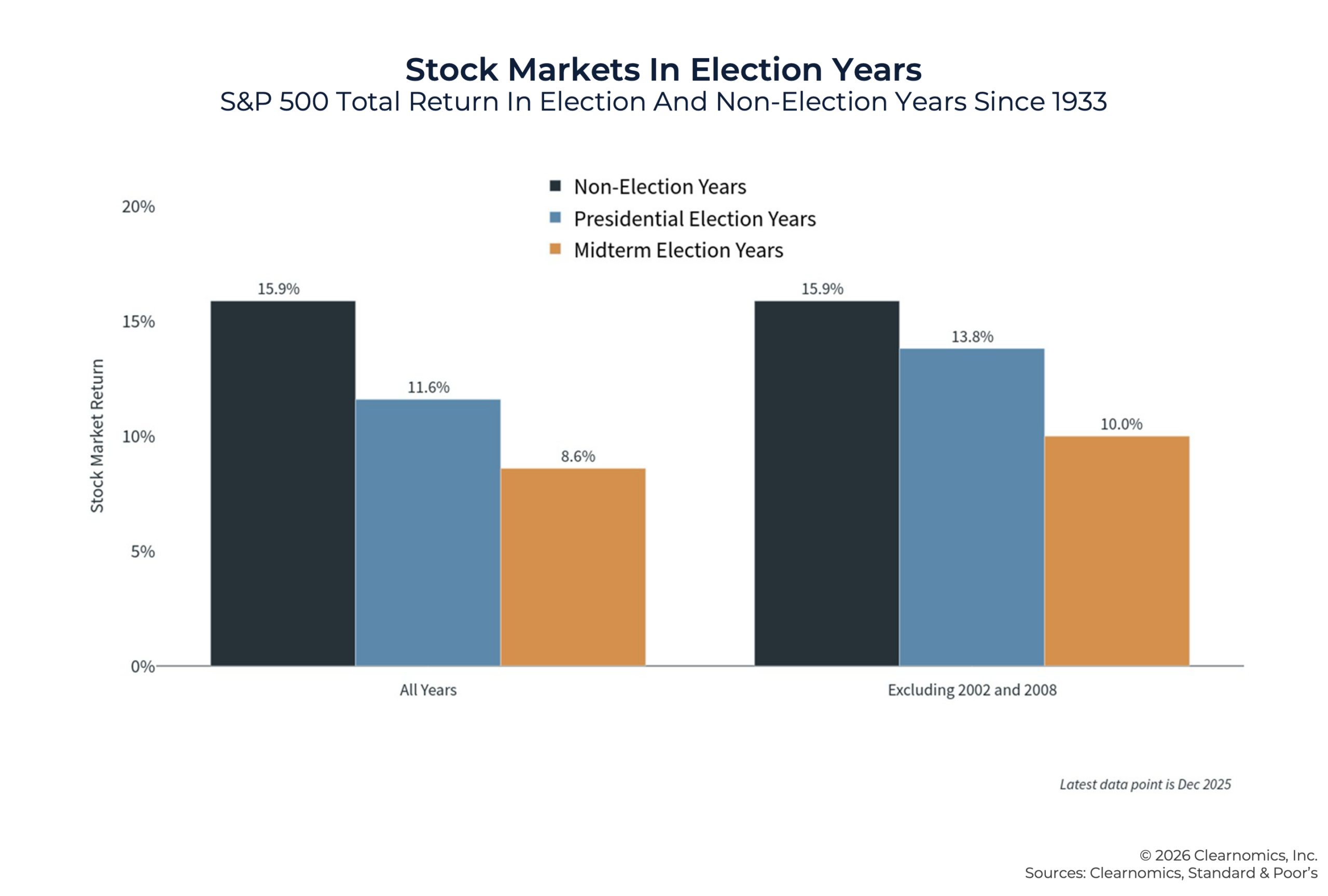
The chart below reinforces this principle, showing that markets have performed well across different political environments. Key takeaways from the chart include:
- From 1933 to 2025, the S&P 500 has averaged 8.6% annual total returns during midterm election years, demonstrating that markets continue to advance even during periods of political transition.
- While midterm returns are slightly lower than in other years, they remain positive and healthy by historical standards. Looking at the details, the performance in these years was not the result of midterm elections, but other factors.
- These patterns underscore that market performance is primarily driven by corporate earnings, economic fundamentals, and business conditions rather than election outcomes or political party control.
Midterm elections are an opportunity to reinforce a disciplined investment approach rather than a reason to adjust portfolios based on political news. In most cases, the economic and market trends that affect portfolios remain unaffected by politics, even if control of Congress changes. Instead, investors should focus on what they can control, such as how their financial and tax plans account for new tax policies.
3. Fed Leadership Change And Rate Cuts
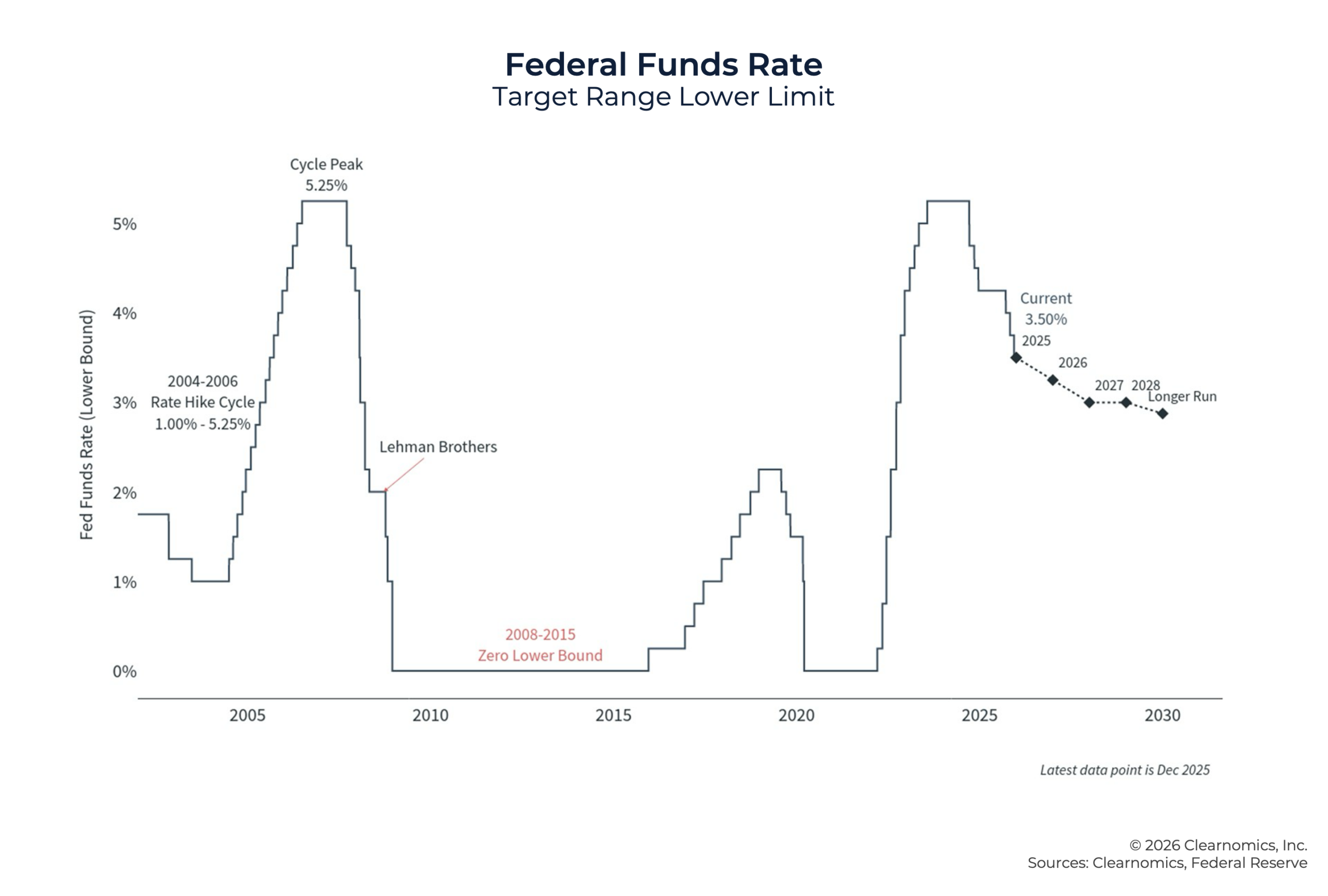
As we enter 2026, the path of monetary policy has become less certain. This is because the risk of runaway inflation may no longer be the primary concern as a weaker job market has grown in importance. This requires tweaks to policy rates rather than dramatic shifts, such as those seen in 2022 when the Fed raised rates. An additional complication is that Fed Chair Jerome Powell's term ends on May 15, 2026, paving the way for new leadership at the Fed. History shows that the economy has performed well across Fed Chairs appointed by both parties.
The following chart shows the current trend of monetary policy after the Fed began cutting rates again last September. Based on the FOMC's Summary of Economic Projections, Fed officials only expect to cut rates once in 2026. It's important to note that the Fed primarily controls the 'short end' of the yield curve with its interest rate policies. While the Fed can buy and sell bonds to influence long-term interest rates, these rates depend on many other factors, such as economic growth, inflation, and productivity.
Here are additional crucial points for investors to pay attention to in 2026:
- The White House is expected to appoint a successor who may favor additional rate cuts to support the administration's economic agenda of lower interest rates. At the moment, the frontrunners include Kevin Hassett, Director of the National Economic Council at the White House, Kevin Warsh, a former Fed governor, and Christopher Waller, a current Fed governor. Much could change between now and the final decision, and the frontrunners have shifted in just the past few months.
- The Fed has been allowing its balance sheet to run off, which is a form of "quantitative tightening" since it provides less stimulus to the financial system. However, more recently, the Fed has curtailed this activity and is now buying Treasury securities at the short end of the curve under what is known as an "ample reserves" regime.
- Rather than following the Fed's every move and parsing every statement, investors should understand how monetary policy interacts with policy drivers such as interest rates. Short-term speculation about Fed decisions rarely improves long-term investment outcomes.
Uncertainty around interest rates and monetary policy leadership can sometimes translate into hesitation. However, instead of focusing on short-term speculation, it is useful to remind clients of similar patterns that have occurred throughout history. Different Fed Chairs, nominated by presidents of each party, have presided over steady economic growth over the past several decades.
4. The U.S. Dollar Depreciation And Global Diversification
The dollar has experienced its most significant decline in over half a century, marking a potential turning point in global currency dynamics. This shift generally follows a 15-year bull cycle, during which the dollar increases in value relative to global peers. While the exact drivers of the recent decline are a topic of debate, it reflects mounting concerns about U.S. economic fundamentals, including labor market weakness and policy uncertainty surrounding tariff negotiations. For long-term investors, this trend carries important implications for portfolio construction and underscores the value of international diversification.
To summarize the key developments in dollar depreciation, the following points should be considered:
- The dollar fell roughly 9% in 2025 relative to a basket of developed-market currencies including the euro, Japanese yen, British pound, Canadian dollar, Swedish krona, and Swiss franc. This pullback represents the largest decline in more than 50 years.
- Dollar volatility in the first half of 2025 was driven by policy uncertainty, trade shifts, and delayed effects from the 2024 rate cuts. The slight rebound in the second half of the year was supported by a resilient U.S. economy.
- The euro showed strong gains, up about 13% against the dollar. On the other hand, the yen has declined significantly since April 2025.
The chart below tracks the performance of several major currencies over the past 24 months. Currencies, including the euro and pound, experienced considerable gains in 2025, highlighting the importance of global diversification. For investors, dollar depreciation matters because it changes the relative attractiveness of different asset classes. When the dollar weakens, foreign currencies become more valuable when converted back into U.S. dollars, boosting the returns of unhedged international investments.

This reinforces the fact that international diversification is a core principle of sound portfolio construction. Not only is there a direct effect on portfolios, but a weaker dollar can also support the international sales of U.S.-based companies, since their goods and services become cheaper for foreign buyers. Investors should also recognize that maintaining exposure across different currencies and regions can help smooth portfolio returns across different economic periods.
5. Market Valuations Approaching Dot-Com Levels
The stock market delivered impressive returns in 2025, with the S&P 500 gaining 17.9% for the year with dividends and achieving 39 record closing highs by mid-December. The Nasdaq composite and Dow Jones Industrial Average also reached new records throughout the year. This performance has been fueled by strong corporate earnings growth, particularly in technology, and continued enthusiasm for AI investments.
The chart below tracks the Shiller price-to-earnings (P/E) ratio, a popular way to measure price to earnings on a cyclically adjusted basis; hence, it's sometimes known as the cyclically adjusted P/E ratio (CAPE). Specifically, the denominator of the valuation metric is calculated using ten years of inflation-adjusted earnings to reduce cyclicality. It is currently hovering just above 39, the second-highest level in over 150 years. It has only been higher once before, during the peak of the dot-com bubble in 1999, when it reached approximately 44.
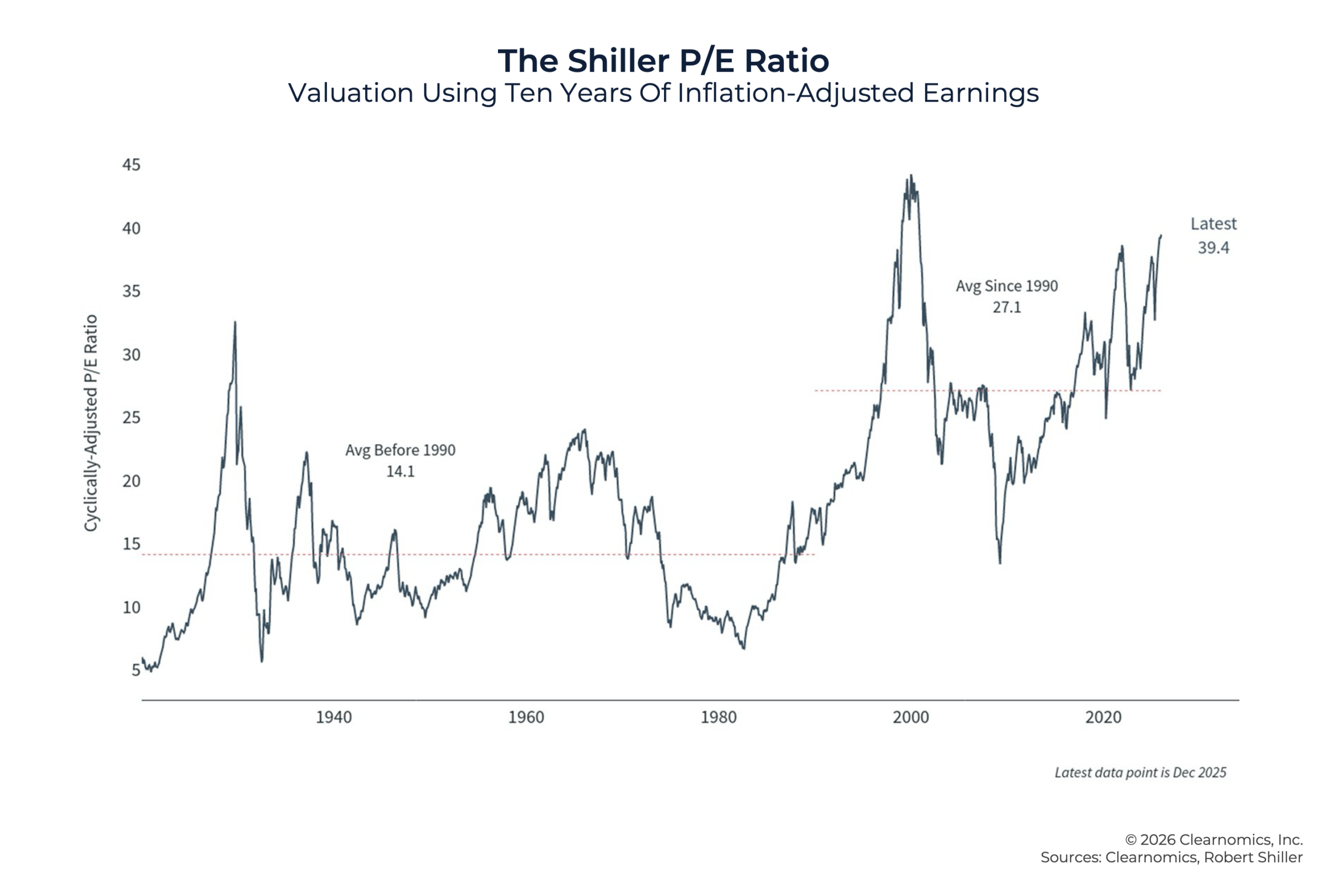
While recent gains have undoubtedly been positive for investors, driving record levels of household net worth, they have also pushed valuations to elevated levels that warrant attention. By definition, this means investors are paying more for each dollar of future earnings than in recent years. Here are some key considerations to contextualize these high valuations:
- Corporate fundamentals remain strong despite high valuations. S&P 500 companies have delivered healthy earnings growth, with consensus estimates projecting continued double-digit growth in the coming years, according to LSEG data.
- Using the traditional price-earnings ratio, the S&P 500 currently trades at 22.5x, approaching the all-time high of 24.5x reached during the dot-com bubble. However, other areas of the market are less affected. For example, international stocks have a much lower price-earnings ratio, as do U.S. small cap stocks.
- AI-related valuations show extreme optimism in some cases. For example, OpenAI's $500 billion valuation following its October 2025 secondary share sale made it the world's most valuable private company, representing 38 times its projected $13 billion revenue – despite needing over $200 billion more in funding to reach profitability by 2030.
- At a sector level, Information Technology is trading at a forward P/E of 26.8x and Communication Services at 22.2x. In contrast, Financials and Energy each trade closer to 16x.
For long-term investors, elevated valuations don't predict an imminent decline, but they do require careful portfolio management. The key difference between today and the dot-com era is that current valuations are supported by earnings growth and business fundamentals, not just speculation. However, maintaining appropriate diversification and avoiding overconcentration in high-valuation sectors remains essential for managing risk as markets continue to climb.
6. Economic Growth Is Healthy, But The Job Market Has Weakened
Despite continued concerns surrounding the jobs market, economic growth remains stronger than many projected. After a weak start to 2025, U.S. economic activity rebounded sharply, with this momentum expected to carry into 2026. Beyond near-term GDP figures, perhaps the most important question for long-term investors is whether productivity will rise as a result of recent technological advances, particularly AI.
Although positive in the aggregate, U.S. economic growth has been uneven across income groups. This concept is often referred to as a "two-speed" or "K-shaped" economy, since some experience growth while others struggle. In today's economy, this divergence is primarily driven by technology trends, as those positioned to benefit from AI growth may have greater job prospects than those in traditional industries. The job market has also softened since the summer, with unemployment ticking up to 4.6% as of last November and with three months in 2025 experiencing negative job gains.
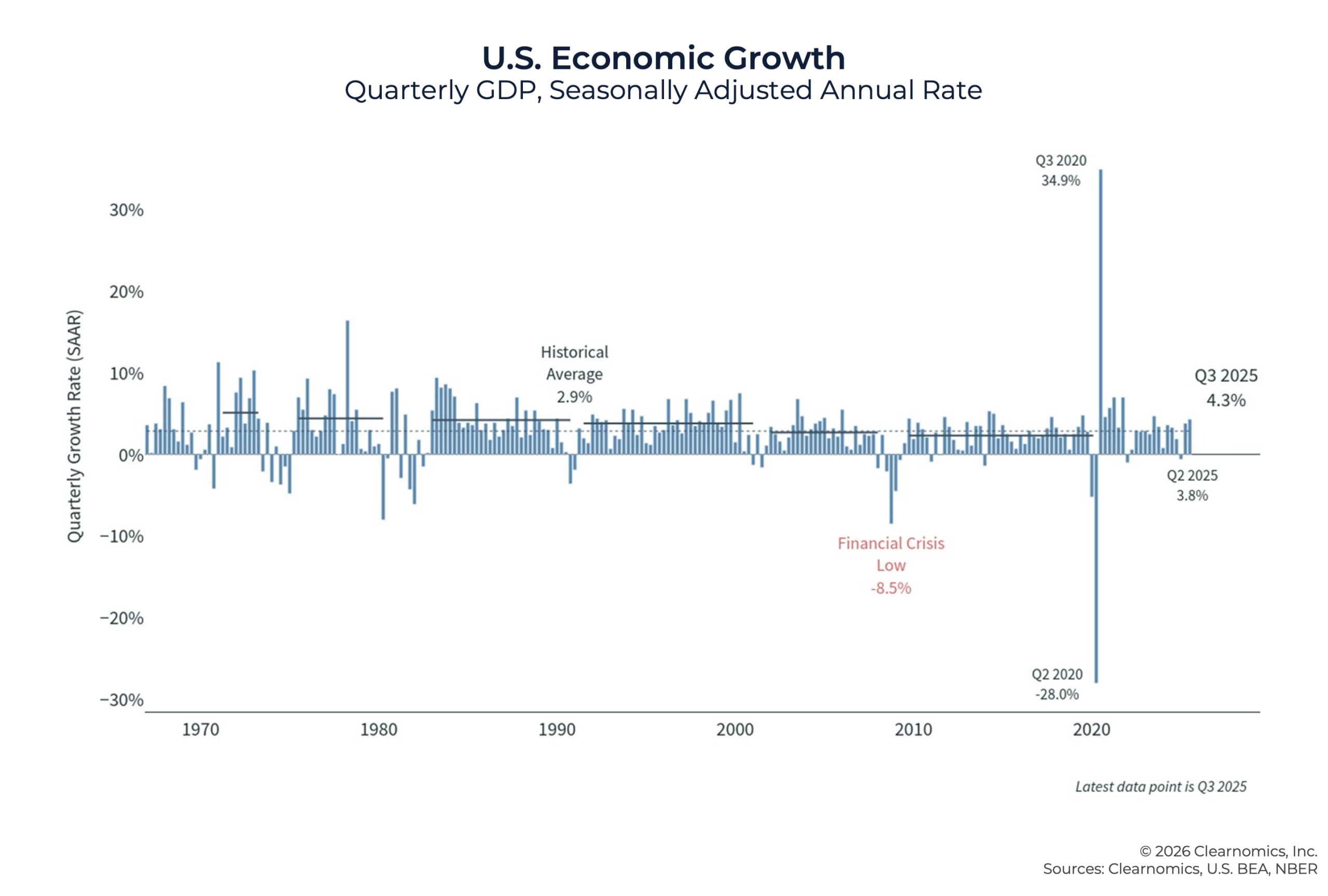
The chart below shows quarterly U.S. GDP growth on a seasonally adjusted annual rate. The third quarter's figure was revised up to 4.3%, exceeding consensus expectations. Looking ahead, the hope is that AI and new technologies will boost worker productivity and efficiency. While productivity has been quite strong in recent years, history shows that additional gains may take longer to materialize than expected and may not benefit all sectors equally. For investors, the promise of greater productivity is higher profit margins that support both corporate earnings and portfolio returns over time.
Key economic developments include:
- U.S. GDP experienced a slight contraction of 0.6% in the first quarter of 2025, but this weakness proved temporary. As tariff uncertainty faded, the economy rebounded quickly, with second- and third-quarter growth of 3.8% and 4.3%, respectively, which not only exceeded expectations but represented two of the strongest quarterly growth rates in years.
- Global growth is also expected to remain steady. The International Monetary Fund projects that worldwide GDP growth will ease only slightly from 3.2% in 2024 to 3.1% in 2026. Advanced economies are projected to grow around 1.5%, while emerging markets are expected to maintain growth above 4%.
- Productivity growth remains a critical factor for long-term economic health. While AI investments are substantial, the full economic benefits typically emerge gradually as businesses learn to integrate new technologies effectively.
Staying focused on the long-term economic trends is far more important than individual GDP reports, which tend to be backward-looking. While growth has moderated from pandemic-era extremes, the trajectory remains positive. The key is to benefit from steady economic expansion while remaining prepared for the normal fluctuations that occur across business cycles.
7. The Impact Of Tariffs Has Yet To Be Fully Felt
Tariffs were the primary driver of stock market volatility in 2025, yet one of the ongoing puzzles has been how little immediate impact they have had on inflation and economic growth. Despite tariff costs increasing to ten times their average historical level in April, measures such as the Consumer Price Index have ticked up only slightly. This disconnect highlights the uncertainty around how and when tariff effects will feed through to the real economy.
Understanding why tariffs function as they do provides important context. Tariffs are charges on imported goods that aim to protect domestic industries, raise government revenue, and serve as a negotiating tool on the global stage. Over time, these costs can be passed on to consumers and businesses via increased prices. However, their full effects on inflation and growth may take time to materialize as companies adjust their supply chains and pricing strategies. In the current economic environment, tariffs have risen during a period when inflation has been improving over the past few years.
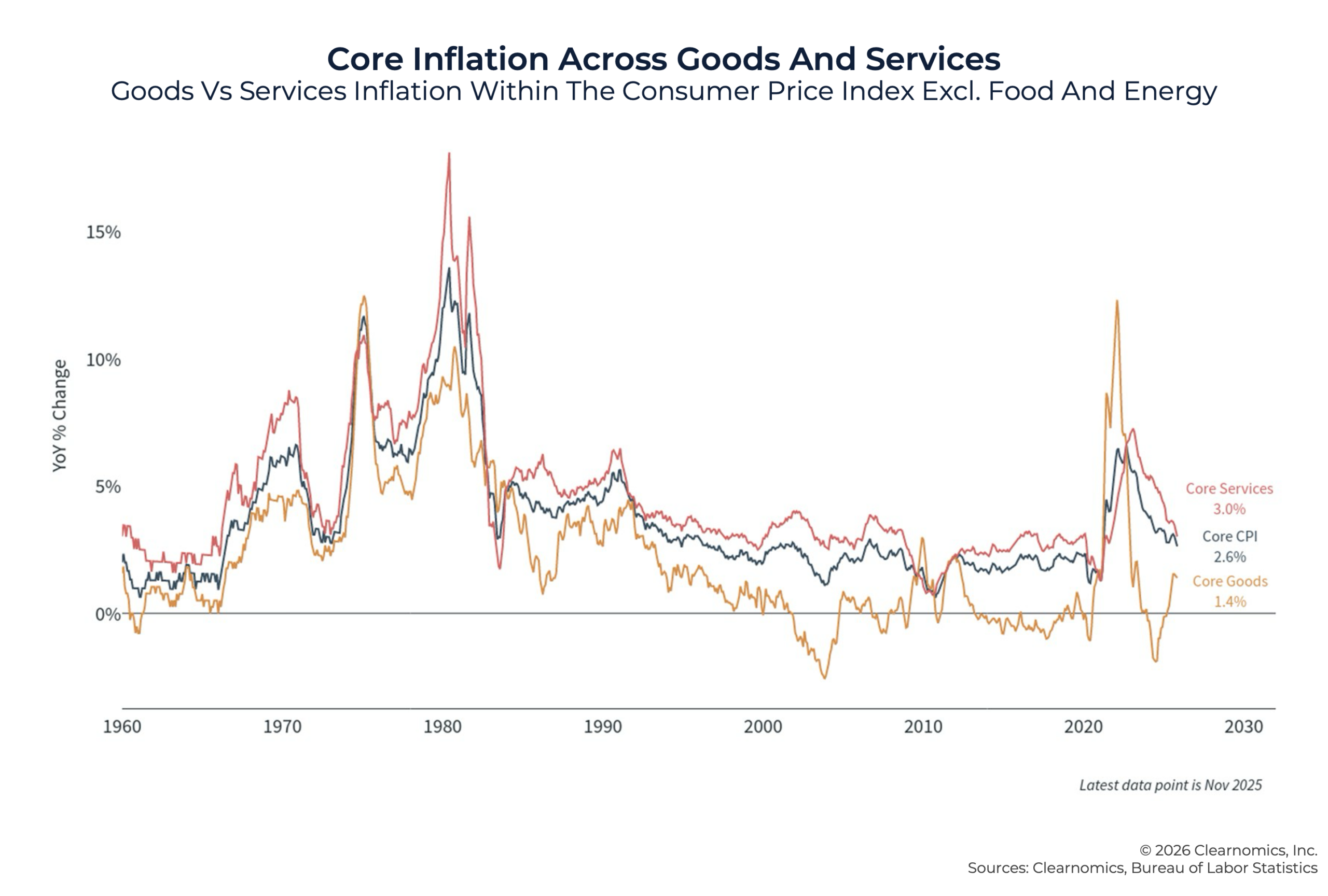
The chart below tracks the year-over-year changes in the Consumer Price Index (CPI) excluding volatile food and energy prices, typically referred to as core CPI. It also breaks it down into core goods and core services to understand its drivers. Core CPI has decelerated to an annual rate of 2.6%, which is a significant improvement from the post-pandemic peak. However, core goods inflation has accelerated to 1.4% annually (after a deflationary period) while core services inflation has slowed to 3.0%.
Several key factors explain the current situation surrounding tariffs:
- Many announced tariffs were quickly paused or scaled back following initial market reactions and trade negotiations, reducing their actual implementation.
- Companies absorbed initial tariff costs by keeping prices steady and importing goods ahead of announcements, delaying the pass-through to consumers.
- Strong consumer spending, fiscal stimulus, and healthy growth in AI-related sectors helped offset any negative impact on overall growth.
- Globally, the Federal Reserve projects that higher U.S. tariffs could reduce global GDP by 0.8% under a broad-based tariff scenario as supply chains and trade dynamics adjust. The U.S. and China face the greatest economic losses.
For long-term investors, these developments highlight an important point: rather than viewing tariffs as a fundamental shift in the world, they represent instruments the administration uses to support broader policy goals. After all, this topic has been on the minds of investors since the Trump administration enacted new tariff rules in 2018. While tariffs aren't going away entirely, their impact on day-to-day market activity could diminish as companies and markets adapt to the new reality.
8. Government Debt Remains A Significant Investor Concern
The ever-growing national debt continues to capture headlines and investor attention, particularly as fiscal deficits persist and interest costs rise. Total federal debt now stands at approximately $38.5 trillion, representing roughly $111,000 per American. While these figures may seem alarming, it's important to understand that high debt levels do not necessarily signal imminent crisis and can remain manageable for extended periods. They do, however, create greater polarization in Washington, which may be top of mind again when the short-term government funding bill expires at the end of January 2026.
The chart below shows the federal debt as a percentage of GDP. Measuring this on a gross basis includes all government debt, while the net figure excludes debt the federal government owes itself. Total debt now stands at 119% of GDP, while net debt is hovering slightly below 100%. The steady rise in the ratio through multiple economic cycles indicates that the national debt is becoming a heavier burden relative to the economy's growth.
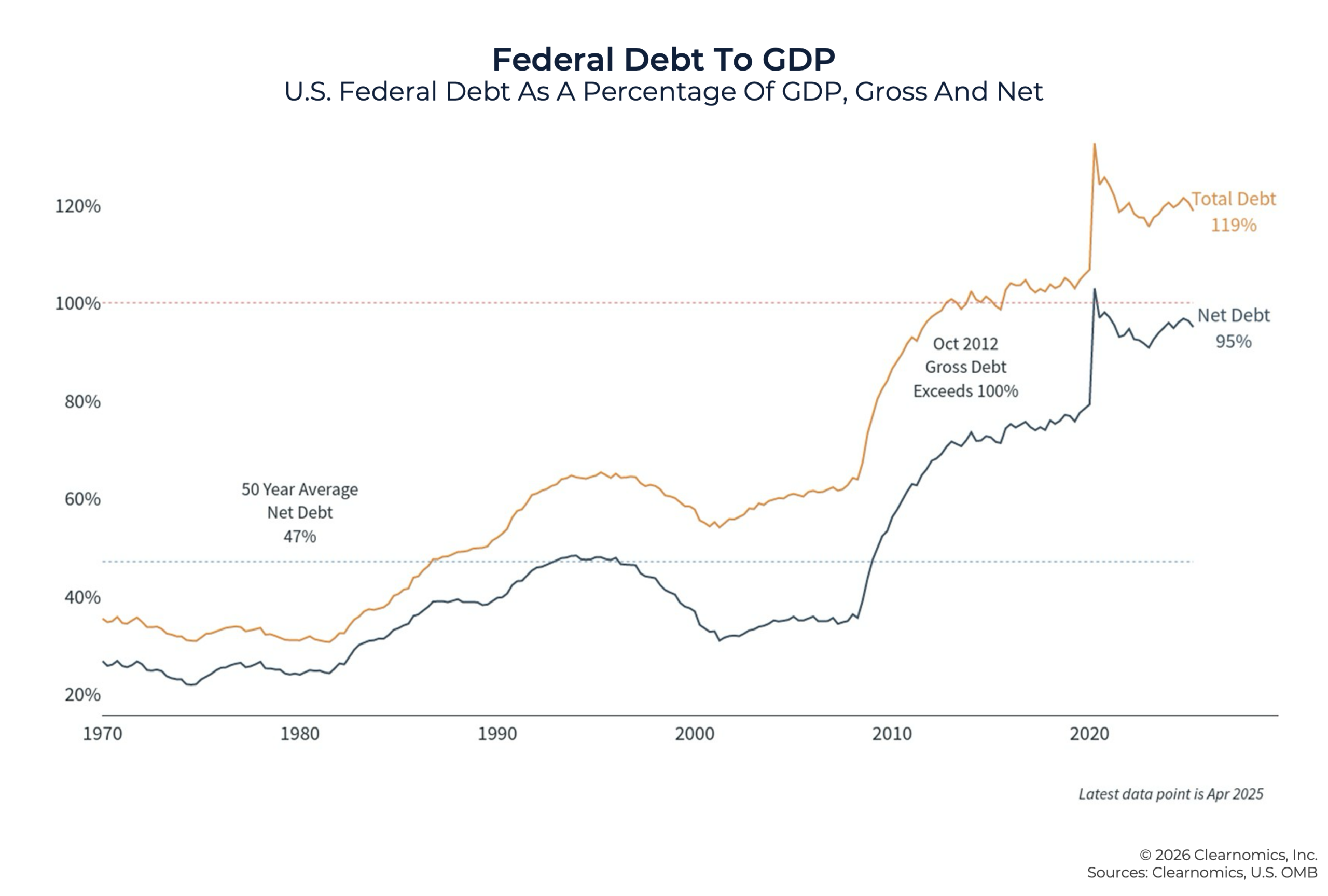
Historically, significant deficits have often been triggered by economic crises and recessions. During these periods, the U.S. government's capacity for deficit spending has helped mitigate the depth of downturns and provided essential support to households and businesses, preventing more protracted economic collapses. The concern today isn't necessarily the current debt level itself, but rather how rising debt might influence future policy decisions and interest rates.
Recent developments have added both clarity and concern to the fiscal outlook:
- The recently passed One Big Beautiful Bill Act (OBBBA) has provided more certainty for investors and taxpayers by making many provisions permanent, including lower tax rates from the Tax Cuts and Jobs Act, higher estate tax exemption levels, and increased SALT deduction caps.
- However, the Congressional Budget Office estimates that OBBBA could increase the national debt by over $4 trillion in the next decade, adding to existing fiscal pressures.
- Political uncertainty persists following the historic 43-day government shutdown in 2025, with more potential turbulence ahead as the short-term funding bill expires in January.
For long-term investors, the key lesson is that while debt sustainability may have implications for economic growth and interest rates over time, it should not be the primary driver of portfolio positioning. History shows that attempting to time investments based on fiscal concerns often results in missed opportunities. In the extreme, investors worried about this topic would have missed out on the strong bull markets of the past two cycles.
Instead, investors should focus on two practical actions: First, maintain diversified portfolios that can perform across different economic and policy environments. Second, review their tax strategies and take full advantage of the new provisions in the OBBBA, since these changes create immediate planning opportunities that can meaningfully impact after-tax returns and wealth transfer strategies.
9. The Growth Of Private Credit Raises Concerns
Private credit has emerged as a significant force, growing from a niche lending alternative into a multi-trillion-dollar industry. Unlike traditional bank loans, private credit allows institutional lenders to provide customized financing solutions directly to companies, offering flexibility that banks often cannot match due to regulations put in place after the 2008 global financial crisis. This rapid expansion has created new opportunities for investors seeking yield and diversification, but has also sparked important debates about risk management, transparency, and the potential for systemic vulnerabilities in this largely opaque corner of the market.
As more clients gain exposure to private credit through their portfolios, it is essential to understand both the appeal and the risks. Here are the key developments shaping this market:
- According to a report by the Federal Reserve Bank of Boston, the U.S. private credit market grew in real terms from $46 billion in 2000 to approximately $1 trillion in 2023, with the growth accelerating notably after 2019 due mostly to direct lending.
- The sector faces a critical test in 2028 when private credit maturities are expected to peak with around $50 billion coming due. This concentration of repayment obligations could reveal weaknesses in underwriting standards established during the recent period of rapid growth.
- Recent high-profile difficulties underscore emerging concerns. The bankruptcy of First Brands, a midsize automotive parts maker, has exposed hidden losses at private credit lenders and sparked debate about the quality of underwriting across the industry.
- While private credit shares similar credit risk factors with public markets – including default risk, economic sensitivity, and borrower quality – the weight of these factors differs depending on where borrowers sit on the credit spectrum and broader market conditions.
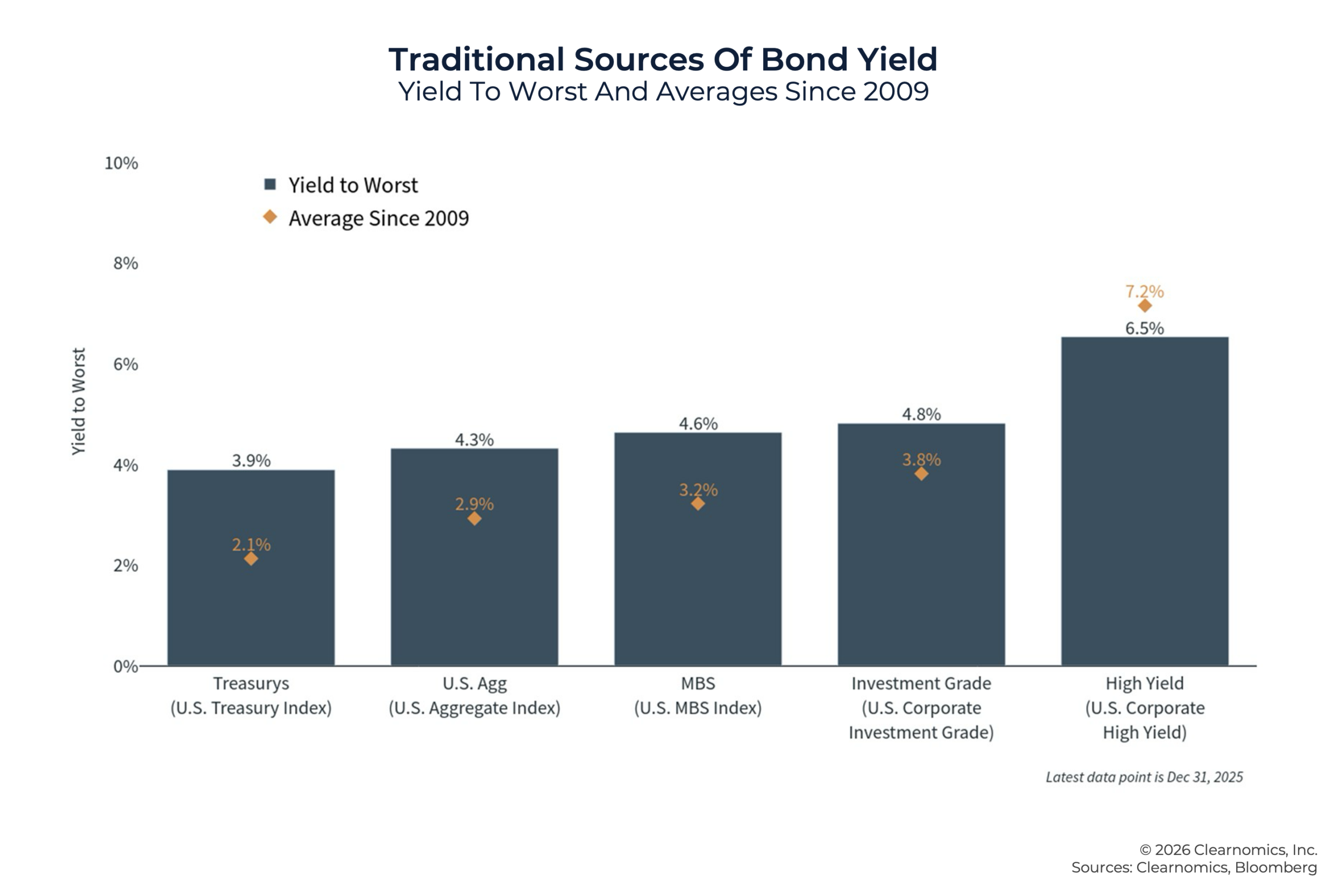
For long-term investors, private credit represents a complex trade-off. The asset class can offer attractive yields and portfolio diversification benefits. However, the lack of transparency, limited liquidity, and concentration of maturities in the coming years warrant careful consideration. As the following chart shows, while there may be opportunities to generate higher yields in sectors such as private credit, the yields on traditional bonds are still quite attractive by historical standards and thus still form the foundation of balanced portfolios.
Advisors can help clients better understand that returns in private credit come with specific risks that differ from public markets, including illiquidity and the potential for losses that may not be immediately visible. As this market continues to mature, maintaining appropriate allocation sizes and understanding the underlying credit quality remains essential for managing portfolio risk effectively.
10. Many Asset Classes Are Supporting Portfolios As We Enter 2026
For much of the past decade, U.S. stocks dominated global markets, often leaving international equities and other asset classes trailing. This created a challenging environment for diversified portfolios, as the benefits of holding multiple asset classes were less apparent. However, 2025 marked a notable shift, with returns broadening across regions and asset classes. This diversification is providing more balanced portfolio performance as we enter 2026.
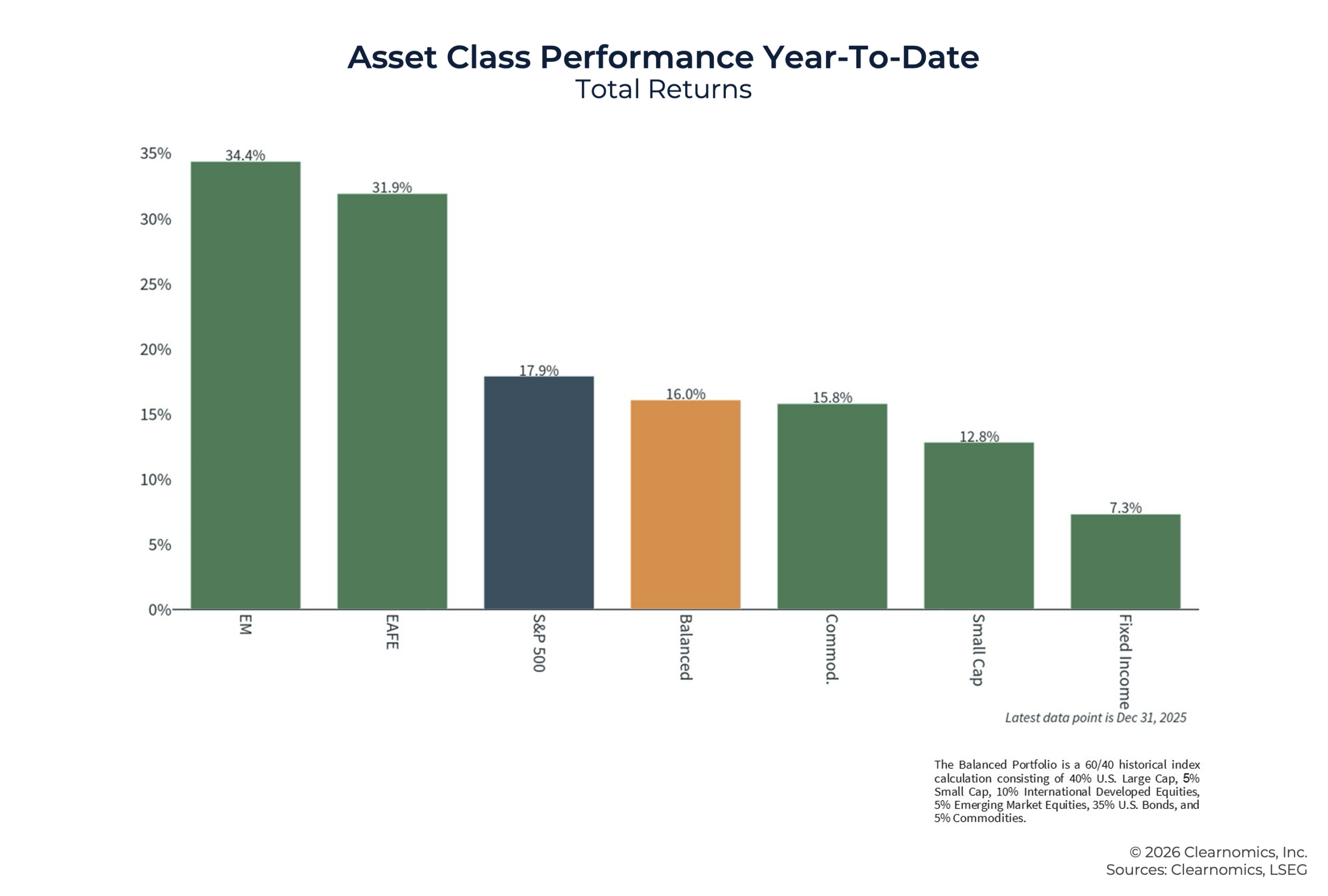
The chart below shows the total returns for 2025 across varying asset classes, including the MSCI Emerging Markets Index (EM), MSCI Developed Markets Index (EAFE), S&P 500, balanced portfolio, MSCI World Small Cap Index (Small Cap), MSCI World Commodity Producers Index (Comm), and Bloomberg U.S. Aggregate Bond Index (Fixed Income). All asset classes experienced strong performance, with international equities leading, signaling a shift for many investors and highlighting the importance of balance and diversification.
Several key trends are driving this broader market participation:
- International stocks outperformed U.S. markets in 2025, with developed market stocks (MSCI EAFE) and emerging market stocks (MSCI EM) each gaining approximately 30% in U.S. dollar terms. This strong performance reflects two important factors: improving growth expectations in many economies around the world, and the weakening dollar, which boosts returns for U.S.-based investors when foreign currency gains are converted back to dollars.
- Fixed income has played an important stabilizing role, with the Bloomberg U.S. Aggregate Bond Index gaining 7% for the year. As the Federal Reserve continues cutting interest rates and inflation stabilizes, higher-quality bonds have been serving their traditional purpose by providing income and helping to offset stock market volatility during periods of uncertainty.
- Most major asset classes have experienced positive returns this year, with only a few exceptions, such as cryptocurrencies, which have faced significant volatility.
For long-term investors, this broader participation across asset classes reinforces a fundamental principle that diversification matters. While it may be tempting to make sudden portfolio changes based on recent performance or headlines, investors who maintain balance and stay on track with their financial plans are likely to be rewarded. The current environment demonstrates why holding a mix of U.S. stocks, international equities, and fixed income can help portfolios weather different market conditions and capitalize on opportunities.
Looking Ahead
As we look toward 2026, the investment landscape presents both familiar and new challenges. History reminds us that uncertainty is not new. Markets have navigated waves of innovation, political transitions, monetary policy shifts, currency fluctuations, and financial disruptions many times before. What matters most is not predicting every twist and turn, but maintaining disciplined investment strategies aligned with long-term financial goals. For financial advisors, 2026 offers an opportunity to reinforce these timeless principles with clients.